Multi-Function LCR-T4/LCR-MF9/TC1/T7 Component Tester
Official Store Deal
Expert Analysis Overview
Precision Component Characterization for Electronics Enthusiasts
The LCR-T4/LCR-MF9/TC1/T7 series represents a foundational yet highly capable suite of multi-function component testers, meticulously engineered for hobbyists and entry-level technicians requiring precise characterization of discrete electronic components. These devices consolidate several measurement functions into a single, portable unit. This significantly streamlines the diagnostic process.
Unpacking Measurement Capabilities
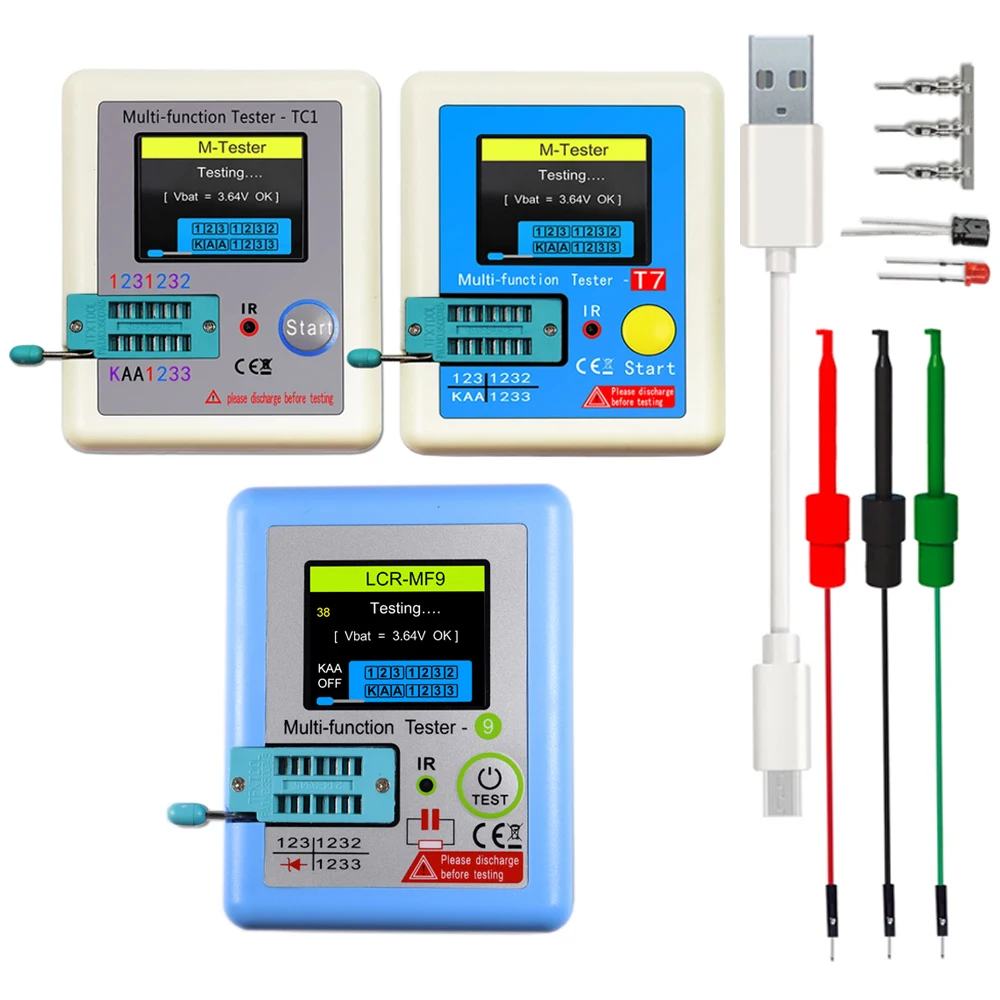
These testers are designed to identify and measure a broad spectrum of electronic components. They handle transistors, diodes, triodes, capacitors, SCRs, and inductors. The visual input confirms the presence of dedicated test sockets, including a ZIF (Zero Insertion Force) socket for through-hole components and often an SMD (Surface Mount Device) test area. This dual capability is crucial.
Unlike basic multimeters that offer limited component testing, these dedicated testers provide detailed parameters for a wide array of components, ensuring accurate circuit design and repair. A standard multimeter might only give a continuity check or a basic resistance reading. These units go much further.
For instance, when testing a capacitor, the device not only measures capacitance but also its Equivalent Series Resistance (ESR). ESR is a critical parameter for electrolytic capacitors, indicating their health and performance. High ESR often points to a failing capacitor. This level of detail is invaluable for troubleshooting power supplies and audio equipment.
Operational Ergonomics and Display Clarity
Several models are depicted, showcasing variations in display technology and button layout. Some units feature a 128x64 LCD, while others boast a 160x128 TFT display. A clear display is paramount.
The TFT display offers superior contrast and viewing angles, which can be advantageous in various lighting conditions. The LCD, while more basic, is typically sufficient for displaying numerical values and component types. Both display types present test results clearly.
Operation is simplified through a single-button interface for initiating tests. This design choice prioritizes ease of use, making the devices accessible even to those new to component testing. Complex menus are avoided. The intuitive nature reduces the learning curve.
Compared to older, more complex benchtop LCR meters, these handheld units offer a significantly more user-friendly experience for quick checks. They are designed for rapid assessment. This makes them ideal for field service or hobbyist benches where space is at a premium.
Power Management and Portability
Powering these testers is flexible, with options including a 9V battery or USB charging. The inclusion of a micro USB charging port on some models enhances convenience. This allows for charging from common power sources.
Battery operation ensures complete portability, allowing technicians to diagnose components away from a power outlet. The 9V battery clip is a common accessory. USB charging provides a modern, versatile power solution. This dual approach caters to different user needs.
Many generic component testers rely solely on disposable batteries, increasing operational costs over time. The USB charging option, where available, significantly reduces this recurring expense. It is a cost-effective feature. This also aligns with modern electronic device charging standards.
Durability and Longevity Considerations
The visible enclosures appear to be constructed from ABS plastic, a common material for electronic housings due to its balance of durability and cost-effectiveness. The cases protect the internal circuitry. This material choice offers reasonable impact resistance.
While not designed for industrial-grade abuse, the plastic casing provides adequate protection for typical workshop or hobbyist environments. The compact form factor also inherently reduces the risk of damage during transport. Small devices are less prone to drops. Proper handling extends the lifespan of the unit.
Compared to bare PCB component testers, the enclosed versions offer superior protection against dust, accidental spills, and static discharge. This enclosure is a significant upgrade. It safeguards sensitive internal components from environmental factors.
Value Proposition and Application Scenarios
These multi-function testers offer exceptional value for their price point, providing capabilities that would traditionally require multiple dedicated instruments. They are an economical solution. The ability to test a wide range of components with a single device saves both money and bench space.
For electronics repair, these testers quickly identify faulty components, speeding up diagnostic times. Imagine troubleshooting a dead circuit board. A quick test can pinpoint a shorted transistor or a leaky capacitor. This efficiency is critical.
In educational settings, these devices serve as excellent tools for students to understand component characteristics firsthand. They provide immediate feedback. This hands-on experience reinforces theoretical knowledge. They are also perfect for component sorting and verification in small-scale production or prototyping.
Consider the scenario of building a new circuit. Verifying each component before soldering prevents frustrating debugging later. These testers ensure component integrity. This proactive approach saves considerable time and effort. The investment in such a tool quickly pays for itself through reduced rework and improved project success rates.
The Metrologist's Perspective on Accuracy and Resolution
From a metrological standpoint, the primary concern for these testers revolves around their accuracy, resolution, and repeatability. While specific calibration certificates are not typically provided at this price point, the devices are generally designed for relative accuracy suitable for hobbyist and basic repair tasks. They offer sufficient precision.
The resolution of the capacitance measurement, for example, is often down to picofarads, allowing for the characterization of small signal capacitors. Inductance measurements typically resolve to microhenries. This fine granularity is impressive for a handheld unit. Resistance measurements are usually highly accurate.
Repeatable results are crucial for reliable diagnostics. These testers generally provide consistent readings for stable components, which is a hallmark of a useful measurement instrument. Minor variations can occur. However, these are usually within acceptable tolerances for their intended applications. The internal algorithms compensate for some environmental factors.
For critical applications requiring NIST-traceable calibration, a higher-tier laboratory instrument would be necessary. However, for identifying component values, checking for shorts, opens, or basic functionality, these testers perform admirably. They fill a vital niche. Their utility far outweighs their cost for most users.
Imagine the confidence gained from knowing your components are within spec before committing them to a circuit board. This prevents costly errors. The ability to quickly verify component health is a significant advantage. These testers empower users to work with greater precision and fewer unknowns, transforming a potentially frustrating task into a straightforward diagnostic process. The peace of mind is invaluable. This allows for more efficient and successful electronic projects, from simple repairs to complex builds.