MTB20OWL Makita 18V to Worx 20V 4-Pin Power Tool Battery Adapter
Official Store Deal
Expert Analysis Overview
Bridging Power Ecosystems: The MTB20OWL Adapter
The MTB20OWL Li-ion Battery Adapter is a critical cross-platform power bridge, engineered to unlock the full potential of existing Makita 18V battery ecosystems for Worx 20V 4-pin power tools. This device directly addresses the common frustration of tool users who possess a substantial investment in one battery platform but require the specialized capabilities of tools from another. It is a pragmatic solution for expanding tool versatility without incurring the significant cost of redundant battery and charger systems.Engineered Compatibility and Material Integrity
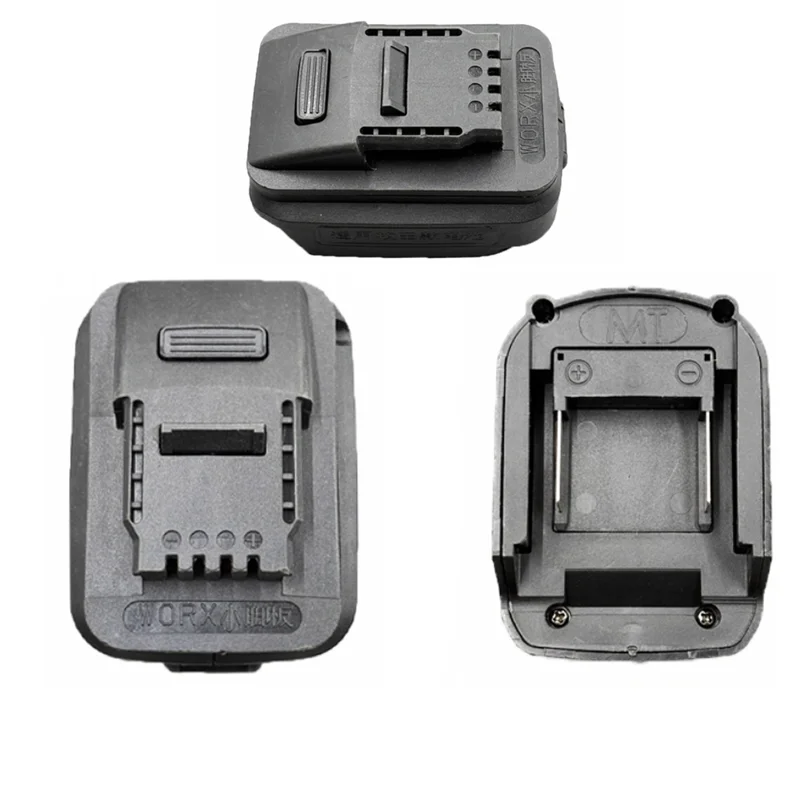
The adapter's construction visibly prioritizes robust compatibility. Its matte black finish and injection-molded plastic casing suggest a durable polymer, likely ABS or a similar high-impact thermoplastic. Such materials are standard for power tool accessories, chosen for their resistance to drops, impacts, and general workshop abuse. The precise molding of both the Makita battery interface and the Worx tool receptacle is paramount. A secure fit is essential.Visual inspection confirms distinct male and female interfaces, precisely molded to accept Makita 18V slide-style batteries and engage with Worx 20V 4-pin tool receptacles. This dual-interface design ensures a secure mechanical and electrical connection, preventing accidental dislodgement during strenuous tool operation. Proper seating is paramount for maintaining consistent power delivery. Unlike generic universal adapters that often rely on friction fits, this unit's dedicated design mirrors OEM battery and tool interfaces, offering a more reliable coupling than many aftermarket solutions.
Electrical Interfacing and Performance Implications
This adapter facilitates the transfer of power from a Makita 18V (nominal) battery to a Worx 20V (nominal) tool. It is crucial to understand that these voltage ratings, while numerically different, often fall within compatible operational ranges for Li-ion battery systems. The adapter itself does not perform voltage conversion. Instead, it acts as a passive conduit, connecting the battery's terminals to the tool's power input. The 4-pin interface on the Worx side is critical; it typically includes not just positive and negative power terminals but also data pins for communication between the battery and the tool's electronics. This communication can involve battery temperature, charge level, and over-discharge protection signals.Without an active BMS (Battery Management System) within the adapter itself, the primary responsibility for battery protection remains with the Makita battery's internal BMS. This is a standard design choice for passive adapters, simplifying the device and reducing potential points of failure. The adapter's role is to ensure these signals, along with power, are correctly routed to the Worx tool. In a scenario where a Worx tool expects specific data from a Worx battery's BMS, the adapter must correctly bridge or simulate these signals to prevent the tool from refusing to operate. This is a complex electrical challenge.
This direct electrical pass-through means that the performance characteristics of the Makita battery directly translate to the Worx tool. Users can expect longer runtimes when utilizing higher-capacity Makita batteries, such as the BL1860 (6.0Ah), compared to standard Worx 2.0Ah or 4.0Ah packs. This capability significantly extends the operational duration of Worx tools, particularly for demanding applications like extended drilling or cutting. The power delivery remains consistent with the Makita battery's output, ensuring tools operate at their intended performance levels.
Thermal Management and Operational Safety
Any power transfer system generates heat, especially under high load. The adapter's design, while seemingly simple, must account for thermal dissipation. The visible plastic casing, while robust, is not designed for active cooling. Therefore, the heat generated during high-current draw will primarily be dissipated through the battery and the tool itself. Prolonged heavy use could lead to increased battery temperatures, potentially triggering the Makita battery's internal thermal protection. This is a critical safety feature.Users should monitor the temperature of both the battery and the adapter during intensive tasks. Excessive heat can degrade battery life and, in extreme cases, pose a fire risk. The adapter's fit ensures minimal resistance at the contact points, which is crucial for preventing localized heating. Poor contact can lead to arcing and excessive heat buildup, compromising both the adapter and the connected devices. Regular inspection of the electrical contacts for cleanliness and wear is advised.
Economic and Environmental Value Proposition
The economic advantages of this adapter are substantial. Power tool battery systems represent a significant investment. By allowing Makita battery owners to use their existing power sources with Worx tools, the adapter eliminates the need to purchase additional Worx-specific batteries and chargers. This cost saving can be considerable, especially for professional users or serious DIY enthusiasts who operate multiple tool brands. It is a cost-effective way to expand a tool collection.Consider the cost-per-use. Instead of buying a new Worx battery for $50-
00, a user can leverage an existing Makita battery, amortizing its initial cost across more tools. This also aligns with environmental sustainability by reducing electronic waste. Fewer redundant batteries are manufactured and disposed of. This adapter extends the useful life of existing battery assets, promoting a more circular economy in the power tool sector.
However, the adapter does add height and potentially some weight to the tool. This slight alteration in the tool's center of gravity might require a brief adjustment period for the user. For overhead work or tasks requiring fine motor control, the added dimension could be a minor consideration. Despite this, the benefit of cross-platform compatibility often outweighs these minor ergonomic shifts. It offers unparalleled flexibility.
This adapter is a tool extender. It allows existing power sources to drive new capabilities. Imagine completing a demanding project with your Worx impact driver, powered by a high-capacity Makita battery that lasts through the entire job, eliminating frustrating battery swaps and downtime. This adapter delivers that seamless, extended operational capability, allowing you to focus on the task at hand, not on managing disparate power sources.
Ergonomics and User Experience
The physical dimensions of the adapter are compact, minimizing the additional bulk added to the tool. Its design appears to integrate seamlessly between the battery and the tool, maintaining a relatively balanced feel during operation. The locking mechanisms, visible on both the Makita and Worx interfaces, are designed for quick and secure attachment and detachment. This ease of use is critical for maintaining workflow efficiency.However, the adapter does add height and potentially some weight to the tool. This slight alteration in the tool's center of gravity might require a brief adjustment period for the user. For overhead work or tasks requiring fine motor control, the added dimension could be a minor consideration. Despite this, the benefit of cross-platform compatibility often outweighs these minor ergonomic shifts. It offers unparalleled flexibility.
Longevity and Maintenance
The adapter's longevity depends heavily on the quality of its internal wiring and contact points, which are not visible. However, the external casing's apparent robustness suggests a product designed for regular use. Maintaining clean contacts on both the adapter and the batteries/tools is vital for optimal performance and preventing premature wear. Dust and debris can impede electrical flow and cause overheating.This adapter is a tool extender. It allows existing power sources to drive new capabilities. Imagine completing a demanding project with your Worx impact driver, powered by a high-capacity Makita battery that lasts through the entire job, eliminating frustrating battery swaps and downtime. This adapter delivers that seamless, extended operational capability, allowing you to focus on the task at hand, not on managing disparate power sources.