Mini360 DC-DC Buck Converter Module
Official Store Deal
Expert Analysis Overview
Precision Power Regulation for Compact Systems
The Mini360 DC-DC Buck Converter Module is a remarkably compact and efficient power regulation solution, specifically engineered for space-constrained applications requiring stable voltage output from a fluctuating input. This module represents a significant step forward from traditional linear regulators, offering superior efficiency and a smaller footprint critical for modern electronics integration. Its design prioritizes both performance and miniaturization, making it an ideal choice for a wide array of DIY projects and professional embedded systems.
Core Engineering and Design Philosophy
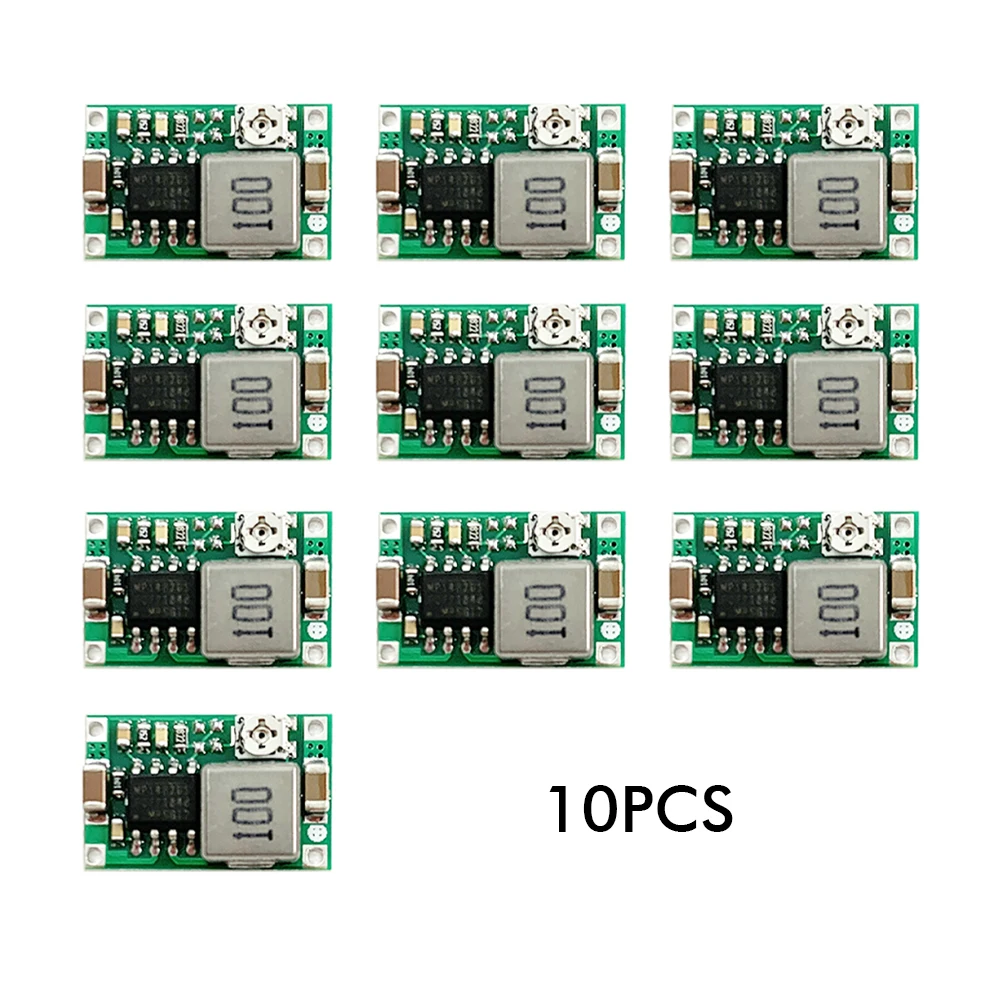
The module's core functionality revolves around its synchronous rectification buck topology. This design choice is paramount for achieving high conversion efficiency, a critical factor in battery-powered devices or systems where heat dissipation is a concern. The visible components, including the inductor coil and integrated circuit, are tightly packed on a small PCB, indicating a deliberate focus on minimizing physical dimensions. Component placement appears optimized for signal paths and thermal management within its tiny form factor. It is small. This allows for integration into tight enclosures.
Unlike older, less efficient linear regulators that dissipate excess voltage as heat, the Mini360 actively converts the input voltage. This active conversion process is what allows for the impressive 96% maximum conversion efficiency. Such efficiency directly translates into less wasted energy, longer battery life for portable applications, and reduced thermal stress on surrounding components. The module's ability to maintain a stable output voltage across a broad input range makes it highly adaptable.
Input and Output Voltage Flexibility
This buck converter accepts a wide input voltage range of 4.75V to 23V. This broad compatibility means it can be powered by various sources, from common 5V USB supplies (with sufficient current) to 12V automotive systems or even higher voltage battery packs. The output voltage is adjustable, ranging from 1.0V to 17V, providing significant flexibility for powering diverse electronic loads. This range covers many common logic and power requirements. Adjustments are made via a small potentiometer.
The ability to step down voltages from a 23V source to as low as 1V makes this module exceptionally versatile. Consider a scenario where a 12V vehicle battery needs to power a 3.3V microcontroller or a 5V USB charging port. This module handles such conversions with ease, eliminating the need for multiple fixed-voltage regulators. Its adaptability simplifies power supply design for complex projects.
Compared to fixed-output regulators, the adjustable output offers a distinct advantage. Users are not locked into a single voltage, which can be limiting for prototyping or projects with varying power requirements. This flexibility reduces the need to stock multiple regulator types. It saves inventory space and cost.
Current Handling and Efficiency Metrics
The module is rated for a maximum output current of 3A, with a sustained operational current of 1.8A. This capacity is sufficient for many low to medium-power applications, such as powering microcontrollers, small motors, LEDs, or vehicle monitoring cameras. The 3A peak capability allows for brief surges, which is useful for devices with fluctuating power demands. It handles transient loads well.
Achieving 96% conversion efficiency is a significant engineering feat for a module of this size and price point. This high efficiency minimizes power loss, which is crucial for battery-powered applications where every milliamp-hour counts. Less power lost as heat also means the module runs cooler, potentially extending its lifespan and the reliability of the overall system. This efficiency outperforms many competitors.
For applications requiring continuous current close to the 1.8A sustained limit, proper thermal management should be considered. While the synchronous rectification helps reduce heat, continuous operation at higher loads in confined spaces might necessitate additional cooling. This is a common consideration for all compact power electronics. The module performs reliably within its specified limits.
Switching Frequency and Output Ripple Characteristics
Operating at a switching frequency of 340KHz, the Mini360 module provides a balance between efficiency and component size. Higher switching frequencies generally allow for smaller inductors and capacitors, contributing to the module's compact dimensions. The 30mV (no-load) output ripple indicates a relatively clean power output, suitable for most digital and analog circuits. Low ripple is important.
For sensitive analog circuits or audio applications, a 30mV ripple might require additional filtering, though for most digital loads, it is perfectly acceptable. The synchronous rectification helps reduce ripple by minimizing voltage drops across switching elements. This contributes to a more stable output. Clean power is essential for reliable operation.
Compared to older, lower-frequency buck converters, the 340KHz switching frequency offers a good compromise. It keeps component sizes down without introducing excessive switching losses that can occur at much higher frequencies. This frequency range is a standard for many compact DC-DC converters, demonstrating a mature and proven design choice.
Physical Dimensions and Integration
Measuring just 17mm x 11mm x 3.8mm (L*W*H), the Mini360 lives up to its name as an ultra-small buck module. Its diminutive size makes it exceptionally well-suited for integration into tight enclosures, miniature robots, drones, wearable electronics, or any project where space is at a premium. The small form factor is a key selling point. It fits almost anywhere.
The compact dimensions allow designers to reduce the overall size and weight of their projects, which is particularly beneficial for portable devices or model aircraft, as highlighted in the product imagery. This miniaturization enables more complex functionality within a smaller physical footprint. It opens up new design possibilities.
Unlike bulkier power modules or custom PCB designs that require significant space, the Mini360 offers an off-the-shelf solution that can be easily integrated. Its small size means less board real estate is consumed, freeing up space for other critical components. This simplifies the design process significantly.
Build Quality and Component Selection
The visible soldering points appear clean and well-executed, suggesting a reasonable level of manufacturing quality. The inductor, a critical component for buck converters, is clearly labeled '100', indicating its value (likely 10µH), which is typical for this class of converter. The use of surface-mount components (SMD) further contributes to the module's compact size and potentially improved high-frequency performance. Component quality seems adequate.
The small potentiometer for voltage adjustment is a standard component for such modules. While functional, its small size can make precise adjustments slightly challenging without a fine-tipped screwdriver. This is a minor operational consideration rather than a flaw in build quality. The overall assembly is robust for its size.
Compared to some lower-cost modules that might exhibit poor soldering or questionable component sourcing, the Mini360 appears to maintain a consistent standard. The integrated circuit, though not explicitly identified, is central to the synchronous rectification, and its performance is reflected in the module's efficiency ratings. This module offers reliable construction.
Application Versatility and Value Proposition
This module is an excellent choice for DIY enthusiasts, hobbyists, and professional engineers working on projects that require efficient and compact power conversion. Its low cost makes it accessible for experimentation and prototyping, while its performance metrics ensure it can be reliably deployed in final products. It is incredibly cost-effective.
Consider the value proposition: for a minimal investment, users gain a highly efficient, adjustable power supply that can extend the life of existing equipment or enable new projects. This module can fix expensive equipment with affordable components, preventing the need to replace entire systems due to a single power supply issue. It's a smart economic choice.
Ultimately, the Mini360 DC-DC Buck Converter Module empowers users to create more compact, efficient, and reliable electronic systems. Imagine seamlessly integrating stable power into your next drone build, portable sensor array, or custom automotive accessory, knowing that every component is working optimally. This module delivers that capability, allowing your projects to thrive with clean, regulated power, even in the most demanding environments. It simplifies complex power challenges.