MEGA 3D Printer Filament Vacuum Storage System
Official Store Deal
Expert Analysis Overview
The MEGA 3D Printer Filament Vacuum Storage System is an essential humidity control solution designed for serious 3D printing enthusiasts and professionals who demand consistent material performance. This system directly addresses the critical issue of filament degradation due to moisture absorption, a common culprit behind print failures and compromised part quality. Unlike generic storage methods that offer minimal protection, this vacuum sealing kit actively removes ambient air, creating a low-humidity environment crucial for maintaining filament integrity over extended periods. It ensures that materials like PLA, ABS, and PETG retain their optimal properties, leading to dimensionally accurate engineering parts and significantly minimizing print failures.
Filament, particularly hygroscopic types like nylon, PETG, and even PLA, readily absorbs moisture from the air. This absorption leads to a host of printing problems: stringing, oozing, brittle prints, poor layer adhesion, and visible bubbles or steam during extrusion. These issues not only waste material and time but also undermine the structural integrity and aesthetic finish of printed objects. A print that feels flimsy or looks inconsistent often points to moisture-laden filament. This system offers a proactive defense against these common frustrations.
When filament absorbs water, the water molecules vaporize at the hot end of the 3D printer. This creates steam bubbles within the molten plastic. These bubbles cause inconsistent extrusion, leading to visible voids, rough surfaces, and weakened layer bonds. The resulting parts lack the desired mechanical strength and visual appeal. Imagine printing a critical functional prototype, only for it to snap under minimal stress due to internal voids. This system prevents such scenarios.
Compared to simply storing filament in its original box or a standard airtight container, vacuum sealing actively removes the air and its associated humidity. This creates a far more effective barrier against moisture ingress. Standard containers might slow down moisture absorption, but they do not eliminate the existing humid air within the container itself. The hand pump ensures a truly low-humidity environment.
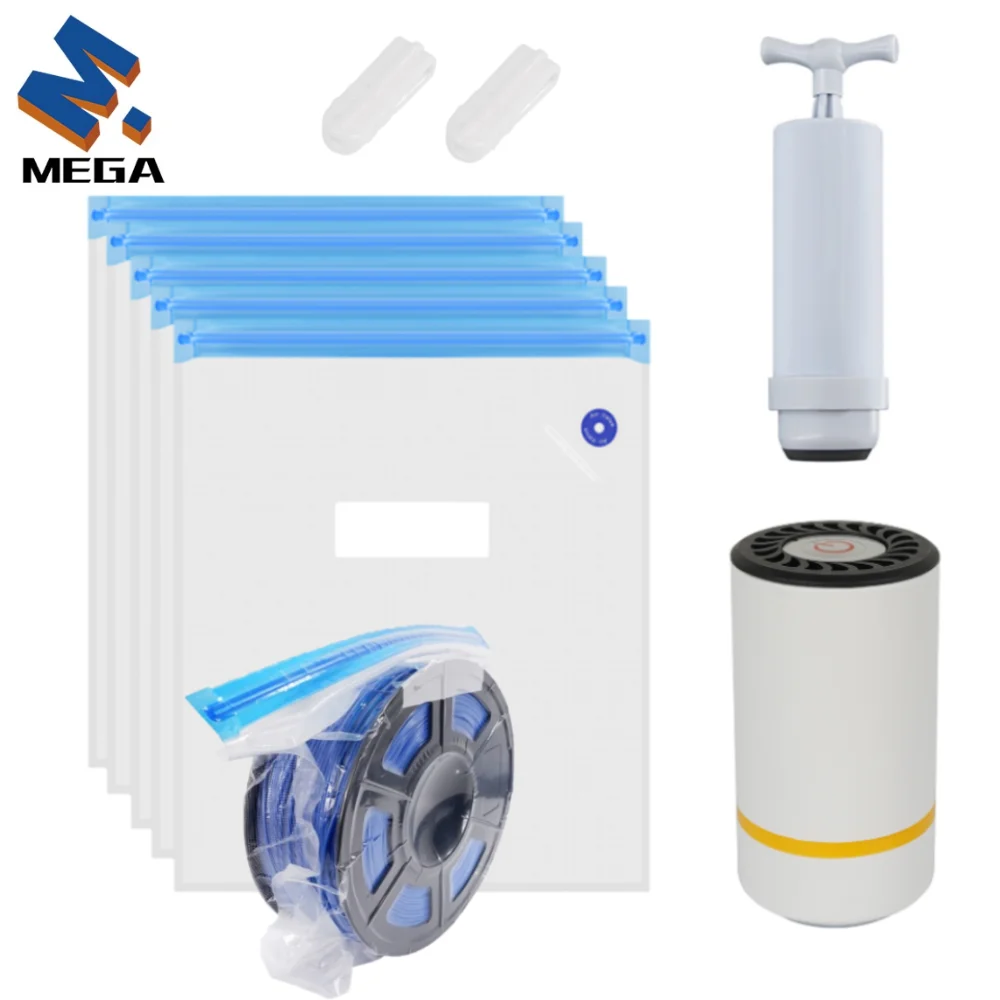
The system comprises robust vacuum bags, a manual hand pump, and sealing clips. Each component is engineered for ease of use and effective moisture exclusion. The bags feature a double zipper seal, providing an extra layer of protection against air leakage. A secure seal is paramount. The pumping valve, clearly visible on each bag, is designed for efficient air extraction using the included hand pump.
The vacuum bags are constructed from durable, multi-layer plastic, designed to withstand repeated vacuum cycles without compromising their integrity. The material feels substantial, not flimsy. The transparency of the bags allows for quick identification of the filament spool inside, eliminating the need to open each bag to check its contents. This saves time and reduces unnecessary exposure to ambient air. Each bag measures approximately 300mm by 340mm, accommodating most standard 1kg filament spools.
When handling the bags, the plastic exhibits a noticeable thickness, suggesting resistance to punctures and tears that could compromise the vacuum. The double zipper closure requires a firm, deliberate action to ensure a complete seal, a tactile confirmation of its effectiveness. The included sealing clip slides smoothly along the zipper, ensuring even pressure across the entire length, which is critical for maintaining a long-term vacuum. This attention to sealing mechanism detail is a significant upgrade over single-track zippers found on less specialized storage solutions.
The included hand pump is a compact, cylindrical device, approximately 136.5mm tall with a 33mm diameter plunger. Its design prioritizes portability and straightforward operation. The pump's plunger mechanism creates a strong vacuum with minimal effort, quickly evacuating air from the storage bags. The pump head fits snugly over the bag's valve, creating an airtight connection during the pumping process. The plastic feels dense and solid, indicating durability for repeated use.
Operating the pump is intuitive. The user places the pump over the valve, then pulls and pushes the plunger repeatedly. Air is visibly drawn out, causing the bag to compress around the filament spool. This direct visual feedback confirms the system is working. Compared to electric vacuum sealers, the manual pump offers precise control over the vacuum level and requires no power source, making it ideal for any workshop or storage location. It is a simple, effective tool.
The operational steps are straightforward, ensuring even novice users can effectively protect their filament. First, place the filament spool into the bag. Second, use the sealing clip to secure the double zipper. Third, position the hand pump over the air valve and pump until the bag is compressed. Finally, store the vacuum-sealed filament. This process takes less than a minute per spool, making it a practical routine for filament management.
While the vacuum seal itself is highly effective, incorporating desiccant packets (two small packets are shown in the primary image) within the bag provides an additional layer of humidity control. Desiccants, such as silica gel, actively absorb any residual moisture or moisture that might slowly permeate the bag over very long periods. This dual approach ensures the lowest possible humidity environment for the filament. The small white desiccant packets appear to be standard silica gel, a proven moisture absorbent. These packets are reusable if dried in an oven, extending their utility.
Consider a scenario where a spool of specialty filament, perhaps a high-cost carbon fiber blend, needs to be stored for several months. The combination of vacuum sealing and desiccant provides maximum assurance that the material will be ready for use without degradation. This level of protection is critical for sensitive materials that are prone to rapid moisture absorption, such as Nylon or PVA. The small label area on each bag allows for clear identification of filament type, color, and date of sealing, streamlining inventory management.
Investing in a reliable filament storage system like this directly translates into savings and improved print quality. By preventing moisture absorption, users avoid wasted filament from failed prints, reduce the need for time-consuming troubleshooting, and produce higher-quality parts. The cost of a few failed prints quickly outweighs the initial investment in this storage solution. This system is a long-term investment in print reliability.
Dry filament extrudes smoothly and consistently, leading to better layer adhesion and stronger parts. This is particularly important for functional prints where mechanical properties are critical. For aesthetic prints, the absence of bubbles and stringing results in cleaner, more professional-looking finishes. The ability to reliably print difficult materials, such as flexible filaments or engineering-grade composites, is significantly enhanced when the material is kept perfectly dry. This system ensures peak material performance.
Imagine a complex, multi-day print job. The last thing any maker wants is for the filament to start bubbling halfway through, ruining hours of work. This vacuum storage system eliminates that anxiety, allowing for confident, uninterrupted printing. It empowers users to tackle ambitious projects without the constant worry of material degradation. The peace of mind alone is a significant benefit, allowing focus to remain on design and execution rather than troubleshooting preventable material issues.
The MEGA 3D Printer Filament Vacuum Storage System is a pragmatic and effective solution for maintaining the quality of 3D printing filaments. Its robust design, straightforward operation, and tangible benefits in print quality and material longevity make it an indispensable tool for any serious 3D printing setup. This system ensures that every spool of filament is ready to perform at its best, delivering consistent, high-quality results print after print. Picture your next print, free from stringing and bubbling, with perfect layer adhesion and a smooth finish, all thanks to properly stored, dry filament. This is the standard it sets.
The Imperative of Dry Filament
Filament, particularly hygroscopic types like nylon, PETG, and even PLA, readily absorbs moisture from the air. This absorption leads to a host of printing problems: stringing, oozing, brittle prints, poor layer adhesion, and visible bubbles or steam during extrusion. These issues not only waste material and time but also undermine the structural integrity and aesthetic finish of printed objects. A print that feels flimsy or looks inconsistent often points to moisture-laden filament. This system offers a proactive defense against these common frustrations.
Mitigating Moisture-Induced Print Failures
When filament absorbs water, the water molecules vaporize at the hot end of the 3D printer. This creates steam bubbles within the molten plastic. These bubbles cause inconsistent extrusion, leading to visible voids, rough surfaces, and weakened layer bonds. The resulting parts lack the desired mechanical strength and visual appeal. Imagine printing a critical functional prototype, only for it to snap under minimal stress due to internal voids. This system prevents such scenarios.
Compared to simply storing filament in its original box or a standard airtight container, vacuum sealing actively removes the air and its associated humidity. This creates a far more effective barrier against moisture ingress. Standard containers might slow down moisture absorption, but they do not eliminate the existing humid air within the container itself. The hand pump ensures a truly low-humidity environment.
Engineering for Filament Longevity
The system comprises robust vacuum bags, a manual hand pump, and sealing clips. Each component is engineered for ease of use and effective moisture exclusion. The bags feature a double zipper seal, providing an extra layer of protection against air leakage. A secure seal is paramount. The pumping valve, clearly visible on each bag, is designed for efficient air extraction using the included hand pump.
The Vacuum Bag Construction
The vacuum bags are constructed from durable, multi-layer plastic, designed to withstand repeated vacuum cycles without compromising their integrity. The material feels substantial, not flimsy. The transparency of the bags allows for quick identification of the filament spool inside, eliminating the need to open each bag to check its contents. This saves time and reduces unnecessary exposure to ambient air. Each bag measures approximately 300mm by 340mm, accommodating most standard 1kg filament spools.
When handling the bags, the plastic exhibits a noticeable thickness, suggesting resistance to punctures and tears that could compromise the vacuum. The double zipper closure requires a firm, deliberate action to ensure a complete seal, a tactile confirmation of its effectiveness. The included sealing clip slides smoothly along the zipper, ensuring even pressure across the entire length, which is critical for maintaining a long-term vacuum. This attention to sealing mechanism detail is a significant upgrade over single-track zippers found on less specialized storage solutions.
The Manual Vacuum Pump
The included hand pump is a compact, cylindrical device, approximately 136.5mm tall with a 33mm diameter plunger. Its design prioritizes portability and straightforward operation. The pump's plunger mechanism creates a strong vacuum with minimal effort, quickly evacuating air from the storage bags. The pump head fits snugly over the bag's valve, creating an airtight connection during the pumping process. The plastic feels dense and solid, indicating durability for repeated use.
Operating the pump is intuitive. The user places the pump over the valve, then pulls and pushes the plunger repeatedly. Air is visibly drawn out, causing the bag to compress around the filament spool. This direct visual feedback confirms the system is working. Compared to electric vacuum sealers, the manual pump offers precise control over the vacuum level and requires no power source, making it ideal for any workshop or storage location. It is a simple, effective tool.
Streamlined Operation and Maintenance
The operational steps are straightforward, ensuring even novice users can effectively protect their filament. First, place the filament spool into the bag. Second, use the sealing clip to secure the double zipper. Third, position the hand pump over the air valve and pump until the bag is compressed. Finally, store the vacuum-sealed filament. This process takes less than a minute per spool, making it a practical routine for filament management.
Integrating Desiccant for Enhanced Protection
While the vacuum seal itself is highly effective, incorporating desiccant packets (two small packets are shown in the primary image) within the bag provides an additional layer of humidity control. Desiccants, such as silica gel, actively absorb any residual moisture or moisture that might slowly permeate the bag over very long periods. This dual approach ensures the lowest possible humidity environment for the filament. The small white desiccant packets appear to be standard silica gel, a proven moisture absorbent. These packets are reusable if dried in an oven, extending their utility.
Consider a scenario where a spool of specialty filament, perhaps a high-cost carbon fiber blend, needs to be stored for several months. The combination of vacuum sealing and desiccant provides maximum assurance that the material will be ready for use without degradation. This level of protection is critical for sensitive materials that are prone to rapid moisture absorption, such as Nylon or PVA. The small label area on each bag allows for clear identification of filament type, color, and date of sealing, streamlining inventory management.
The Value Proposition for 3D Printing
Investing in a reliable filament storage system like this directly translates into savings and improved print quality. By preventing moisture absorption, users avoid wasted filament from failed prints, reduce the need for time-consuming troubleshooting, and produce higher-quality parts. The cost of a few failed prints quickly outweighs the initial investment in this storage solution. This system is a long-term investment in print reliability.
Maximizing Material Performance
Dry filament extrudes smoothly and consistently, leading to better layer adhesion and stronger parts. This is particularly important for functional prints where mechanical properties are critical. For aesthetic prints, the absence of bubbles and stringing results in cleaner, more professional-looking finishes. The ability to reliably print difficult materials, such as flexible filaments or engineering-grade composites, is significantly enhanced when the material is kept perfectly dry. This system ensures peak material performance.
Imagine a complex, multi-day print job. The last thing any maker wants is for the filament to start bubbling halfway through, ruining hours of work. This vacuum storage system eliminates that anxiety, allowing for confident, uninterrupted printing. It empowers users to tackle ambitious projects without the constant worry of material degradation. The peace of mind alone is a significant benefit, allowing focus to remain on design and execution rather than troubleshooting preventable material issues.
Conclusion: A Prudent Investment for Consistent Results
The MEGA 3D Printer Filament Vacuum Storage System is a pragmatic and effective solution for maintaining the quality of 3D printing filaments. Its robust design, straightforward operation, and tangible benefits in print quality and material longevity make it an indispensable tool for any serious 3D printing setup. This system ensures that every spool of filament is ready to perform at its best, delivering consistent, high-quality results print after print. Picture your next print, free from stringing and bubbling, with perfect layer adhesion and a smooth finish, all thanks to properly stored, dry filament. This is the standard it sets.