Makita-Compatible Cordless Soldering Iron
Official Store Deal
Expert Analysis Overview
The Makita-compatible 60W Electric Soldering Iron is a highly adaptable wireless welding tool designed for precision work and field repairs, especially for users already invested in the Makita 18V/20V battery ecosystem. This device represents a significant departure from traditional corded soldering stations, offering unparalleled mobility and flexibility for a wide array of electronic and electrical tasks. Its design prioritizes user convenience and operational efficiency, making it a compelling choice for both hobbyists and professionals requiring a portable solution.
Traditional soldering setups often tether the user to a power outlet, limiting the scope of projects to the immediate vicinity of a workbench. This cordless soldering iron liberates users from such constraints, enabling repairs and fabrication in remote locations or tight spaces where power access is challenging. The freedom of movement is a primary benefit. Imagine performing intricate circuit board repairs on equipment that cannot be easily moved, or completing wire welding tasks in an outdoor setting. This tool makes those scenarios feasible, enhancing productivity and expanding the possibilities for where work can be done. Unlike cumbersome corded units, this device requires no extension cords or dedicated power supplies, streamlining the setup process significantly.
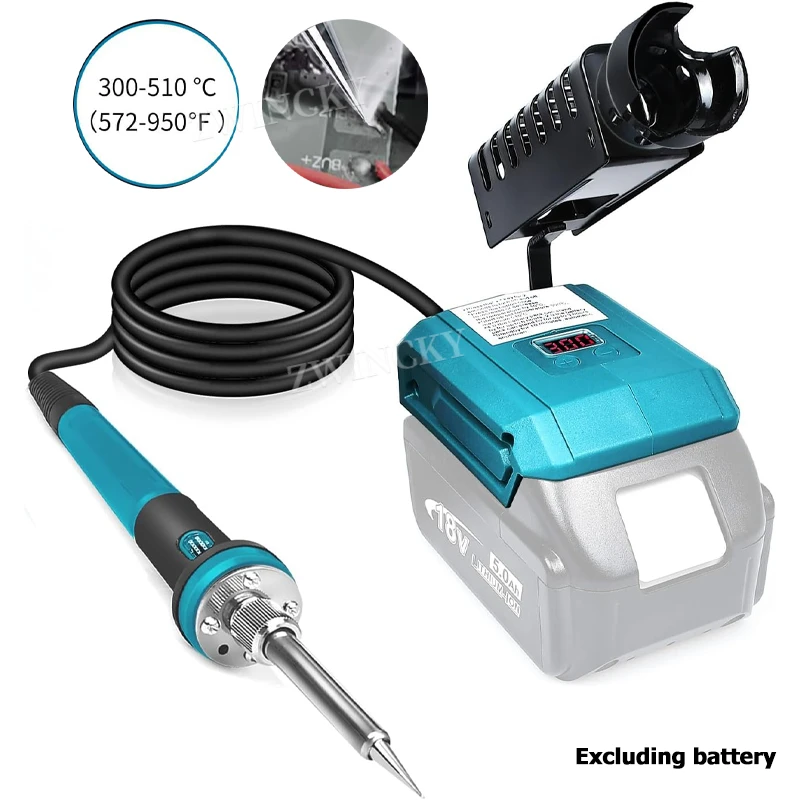
Equipped with a 60W heating element, this soldering iron delivers rapid heat-up times, minimizing the waiting period before work can commence. The quick thermal response is crucial for maintaining workflow, especially in environments where time is a critical factor. The operational temperature range spans from 300°C to 500°C (572-950°F), adjustable in precise 10°C increments. This wide range allows for versatility across different solder types and component sensitivities, from delicate SMD work to more robust wire connections. A clear digital temperature display provides real-time feedback, ensuring the user maintains optimal heat settings throughout the task. Consistent temperature is vital for clean solder joints. This precision avoids component damage from excessive heat or cold joints from insufficient heat, a common pitfall for beginners.
Compared to entry-level soldering irons that often feature fixed temperatures or imprecise analog controls, this unit's digital adjustment system offers a substantial upgrade. This allows for greater control over the soldering process, which is particularly beneficial when working with heat-sensitive components or specialized solders that require specific melting points. The ability to fine-tune the temperature in small increments means greater control. This feature significantly reduces the risk of thermal shock to sensitive components, a common issue with less sophisticated tools. For students learning soldering, this precise control helps in developing good technique by ensuring reliable heat application, making the learning process safer and more effective. The consistent tip temperature contributes to reliable solder joints, crucial for beginners building confidence.
The design of the soldering iron handle appears ergonomic, crafted to reduce user fatigue during extended periods of operation. A comfortable grip is essential for maintaining steady hands, which directly impacts the quality of solder joints. The intuitive button layout for power and temperature adjustment is clearly visible in the provided images, suggesting ease of use. A soldering iron tip holder is included, providing a safe and convenient resting place for the hot iron when not in active use. This prevents accidental burns or damage to the workspace. The overall form factor is compact. This makes it easy to store and transport. The visual cues from the images suggest a well-thought-out design that prioritizes both functionality and user safety.
Compared to basic soldering pens that lack integrated stands or ergonomic considerations, this product offers a more complete and safer user experience. The inclusion of a dedicated tip holder, for instance, is a small but significant detail that enhances safety, particularly in busy workshop environments or when working on uneven surfaces. This attention to practical details sets it apart from generic alternatives. The robust controls, visible as clear buttons, suggest durability. This is important for a tool that will see frequent use and temperature adjustments, ensuring longevity and consistent performance.
A key aspect of this tool's design is its compatibility with Makita 18V/20V batteries. This integration offers a significant advantage for users who already own Makita power tools, as it eliminates the need to purchase additional battery systems. The images clearly show compatibility with various Makita battery models, including BL1815, BL1820, BL1830, BL1840, BL1850, and BL1860. This widespread compatibility means a seamless transition into a cordless soldering workflow for many existing Makita users. The battery adapter unit itself is compact. It easily connects to the soldering pen. This modular approach enhances portability.
This strategy of leveraging existing battery platforms is a smart move, reducing the overall cost of entry for new users while maximizing the utility of existing investments for current Makita owners. It contrasts sharply with proprietary battery systems that force users into a single brand's ecosystem, often at a higher cost. The ability to swap batteries means uninterrupted work, provided charged spares are available. This is a significant benefit for prolonged projects or when working away from charging points. The cordless nature, powered by a reliable battery system, also inherently reduces trip hazards associated with power cords, contributing to a safer work environment, especially beneficial in educational settings where multiple students might be working simultaneously.
While specific material compositions are not explicitly detailed, the visible construction of the soldering iron and battery adapter suggests a focus on practical durability. The robust appearance of the housing for the battery adapter, coupled with the metal shaft of the soldering iron, indicates a design intended to withstand the rigors of regular workshop use. The components appear well-integrated. This minimizes potential points of failure. The use of standard 936-type soldering tips is another practical advantage, as these are widely available and easily replaceable, extending the lifespan of the tool. This reduces long-term operational costs. The overall build quality, based on visual assessment, suggests a tool built for consistent performance rather than fleeting utility.
Many budget soldering irons often compromise on material quality, leading to premature wear or inconsistent performance. This unit, by contrast, appears to employ materials and construction methods that align with the demands of a portable power tool. The metal components of the soldering tip assembly, in particular, are crucial for efficient heat transfer and tip longevity. A well-constructed tip assembly ensures that the heat generated by the element is effectively delivered to the solder joint, which is fundamental to successful soldering. This attention to the core functionality of heat delivery is a strong indicator of the tool's intended performance and lifespan.
The product images highlight a wide range of applications, including chip repair, cellphone repair, circuit board repair, and wire welding. This demonstrates the tool's versatility across various electronic and electrical tasks. Its portability makes it ideal for technicians performing on-site repairs, hobbyists working on projects in different locations, or DIY enthusiasts tackling household electronics. The adjustable temperature range further supports this versatility, allowing the user to adapt the tool to the specific requirements of each task, from delicate micro-soldering to more robust electrical connections. This soldering iron is not just for electronics. It handles general electrical work too. Its capability extends to any scenario requiring precise, localized heat application.
Unlike single-purpose tools, this soldering iron's adaptability makes it a valuable addition to any toolkit, reducing the need for multiple specialized devices. For instance, a technician might use it to repair a loose connection on a large appliance that cannot be brought to a workbench, or a hobbyist might use it to assemble a custom drone in a garage. The ability to perform these diverse tasks with a single, portable tool enhances efficiency and reduces clutter. This broad utility adds significant value. It makes the tool a smart investment for anyone with varied soldering needs.
For beginners, the concept of temperature-controlled soldering can initially seem complex. However, the clear digital display and straightforward 10°C adjustment increments simplify the process. The
Unleashing Cordless Precision
Traditional soldering setups often tether the user to a power outlet, limiting the scope of projects to the immediate vicinity of a workbench. This cordless soldering iron liberates users from such constraints, enabling repairs and fabrication in remote locations or tight spaces where power access is challenging. The freedom of movement is a primary benefit. Imagine performing intricate circuit board repairs on equipment that cannot be easily moved, or completing wire welding tasks in an outdoor setting. This tool makes those scenarios feasible, enhancing productivity and expanding the possibilities for where work can be done. Unlike cumbersome corded units, this device requires no extension cords or dedicated power supplies, streamlining the setup process significantly.
The Heart of the Heat: Performance Dynamics
Equipped with a 60W heating element, this soldering iron delivers rapid heat-up times, minimizing the waiting period before work can commence. The quick thermal response is crucial for maintaining workflow, especially in environments where time is a critical factor. The operational temperature range spans from 300°C to 500°C (572-950°F), adjustable in precise 10°C increments. This wide range allows for versatility across different solder types and component sensitivities, from delicate SMD work to more robust wire connections. A clear digital temperature display provides real-time feedback, ensuring the user maintains optimal heat settings throughout the task. Consistent temperature is vital for clean solder joints. This precision avoids component damage from excessive heat or cold joints from insufficient heat, a common pitfall for beginners.
Compared to entry-level soldering irons that often feature fixed temperatures or imprecise analog controls, this unit's digital adjustment system offers a substantial upgrade. This allows for greater control over the soldering process, which is particularly beneficial when working with heat-sensitive components or specialized solders that require specific melting points. The ability to fine-tune the temperature in small increments means greater control. This feature significantly reduces the risk of thermal shock to sensitive components, a common issue with less sophisticated tools. For students learning soldering, this precise control helps in developing good technique by ensuring reliable heat application, making the learning process safer and more effective. The consistent tip temperature contributes to reliable solder joints, crucial for beginners building confidence.
Ergonomics and Operational Flow
The design of the soldering iron handle appears ergonomic, crafted to reduce user fatigue during extended periods of operation. A comfortable grip is essential for maintaining steady hands, which directly impacts the quality of solder joints. The intuitive button layout for power and temperature adjustment is clearly visible in the provided images, suggesting ease of use. A soldering iron tip holder is included, providing a safe and convenient resting place for the hot iron when not in active use. This prevents accidental burns or damage to the workspace. The overall form factor is compact. This makes it easy to store and transport. The visual cues from the images suggest a well-thought-out design that prioritizes both functionality and user safety.
Compared to basic soldering pens that lack integrated stands or ergonomic considerations, this product offers a more complete and safer user experience. The inclusion of a dedicated tip holder, for instance, is a small but significant detail that enhances safety, particularly in busy workshop environments or when working on uneven surfaces. This attention to practical details sets it apart from generic alternatives. The robust controls, visible as clear buttons, suggest durability. This is important for a tool that will see frequent use and temperature adjustments, ensuring longevity and consistent performance.
Powering the Weld: Battery Integration
A key aspect of this tool's design is its compatibility with Makita 18V/20V batteries. This integration offers a significant advantage for users who already own Makita power tools, as it eliminates the need to purchase additional battery systems. The images clearly show compatibility with various Makita battery models, including BL1815, BL1820, BL1830, BL1840, BL1850, and BL1860. This widespread compatibility means a seamless transition into a cordless soldering workflow for many existing Makita users. The battery adapter unit itself is compact. It easily connects to the soldering pen. This modular approach enhances portability.
This strategy of leveraging existing battery platforms is a smart move, reducing the overall cost of entry for new users while maximizing the utility of existing investments for current Makita owners. It contrasts sharply with proprietary battery systems that force users into a single brand's ecosystem, often at a higher cost. The ability to swap batteries means uninterrupted work, provided charged spares are available. This is a significant benefit for prolonged projects or when working away from charging points. The cordless nature, powered by a reliable battery system, also inherently reduces trip hazards associated with power cords, contributing to a safer work environment, especially beneficial in educational settings where multiple students might be working simultaneously.
Durability and Longevity Considerations
While specific material compositions are not explicitly detailed, the visible construction of the soldering iron and battery adapter suggests a focus on practical durability. The robust appearance of the housing for the battery adapter, coupled with the metal shaft of the soldering iron, indicates a design intended to withstand the rigors of regular workshop use. The components appear well-integrated. This minimizes potential points of failure. The use of standard 936-type soldering tips is another practical advantage, as these are widely available and easily replaceable, extending the lifespan of the tool. This reduces long-term operational costs. The overall build quality, based on visual assessment, suggests a tool built for consistent performance rather than fleeting utility.
Many budget soldering irons often compromise on material quality, leading to premature wear or inconsistent performance. This unit, by contrast, appears to employ materials and construction methods that align with the demands of a portable power tool. The metal components of the soldering tip assembly, in particular, are crucial for efficient heat transfer and tip longevity. A well-constructed tip assembly ensures that the heat generated by the element is effectively delivered to the solder joint, which is fundamental to successful soldering. This attention to the core functionality of heat delivery is a strong indicator of the tool's intended performance and lifespan.
Applications Beyond the Bench
The product images highlight a wide range of applications, including chip repair, cellphone repair, circuit board repair, and wire welding. This demonstrates the tool's versatility across various electronic and electrical tasks. Its portability makes it ideal for technicians performing on-site repairs, hobbyists working on projects in different locations, or DIY enthusiasts tackling household electronics. The adjustable temperature range further supports this versatility, allowing the user to adapt the tool to the specific requirements of each task, from delicate micro-soldering to more robust electrical connections. This soldering iron is not just for electronics. It handles general electrical work too. Its capability extends to any scenario requiring precise, localized heat application.
Unlike single-purpose tools, this soldering iron's adaptability makes it a valuable addition to any toolkit, reducing the need for multiple specialized devices. For instance, a technician might use it to repair a loose connection on a large appliance that cannot be brought to a workbench, or a hobbyist might use it to assemble a custom drone in a garage. The ability to perform these diverse tasks with a single, portable tool enhances efficiency and reduces clutter. This broad utility adds significant value. It makes the tool a smart investment for anyone with varied soldering needs.
Navigating the Learning Curve
For beginners, the concept of temperature-controlled soldering can initially seem complex. However, the clear digital display and straightforward 10°C adjustment increments simplify the process. The