Magnetic Pogo Pin Connectors for Modular DC Systems
Official Store Deal
Expert Analysis Overview
Precision Connectivity for Solar Enthusiasts
The Magnetic Pogo Pin Connector system is a specialized electrical interface designed for reliable, repeatable connections in low-power DC applications. This system targets solar energy hobbyists and DIY enthusiasts seeking robust and efficient solutions for modular power systems.
These connectors offer a significant upgrade over traditional friction-fit or screw-terminal connections. The magnetic alignment ensures a consistent contact point every time. This reduces the risk of intermittent power delivery, a common frustration in experimental setups.
Unlike generic connectors that can degrade with repeated use, the pogo pin design maintains spring tension. This provides a durable electrical pathway. It is a critical feature for long-term project viability.
Engineered for Resilient Power Transfer
The visible components of these connectors highlight a focus on durability and performance. The pogo pins themselves are specified as Brass C3604 with a Gold 3u" Plated finish. Gold plating is not merely aesthetic.
This gold layer significantly enhances electrical conductivity and corrosion resistance. It ensures minimal resistance over time, which directly impacts power transfer efficiency. For solar applications, every millivolt counts.
Moreover, the housing material is HTN+30% UL94 V-0. This indicates a high-temperature nylon composite with a V-0 flammability rating. Such material choices suggest a design capable of withstanding environmental stressors.
Standard connectors often use less robust plastics. They can become brittle under UV exposure or temperature fluctuations. This HTN housing provides superior mechanical integrity.
Magnetic Alignment and Retention
The core innovation lies in the NdFeB High-strength Suction head above 300gf magnets. These magnets provide self-alignment and a secure connection.
Self-alignment simplifies the connection process. It reduces potential damage from misaligned insertions. This is especially useful in tight spaces or when connecting components frequently.
The magnetic force ensures the male and female parts mate correctly. It prevents accidental disconnections under vibration. Imagine a portable solar charger; secure connections are vital.
Many traditional connectors require precise manual alignment. This can be cumbersome. The magnetic assist makes integration effortless.
Versatility in Configuration
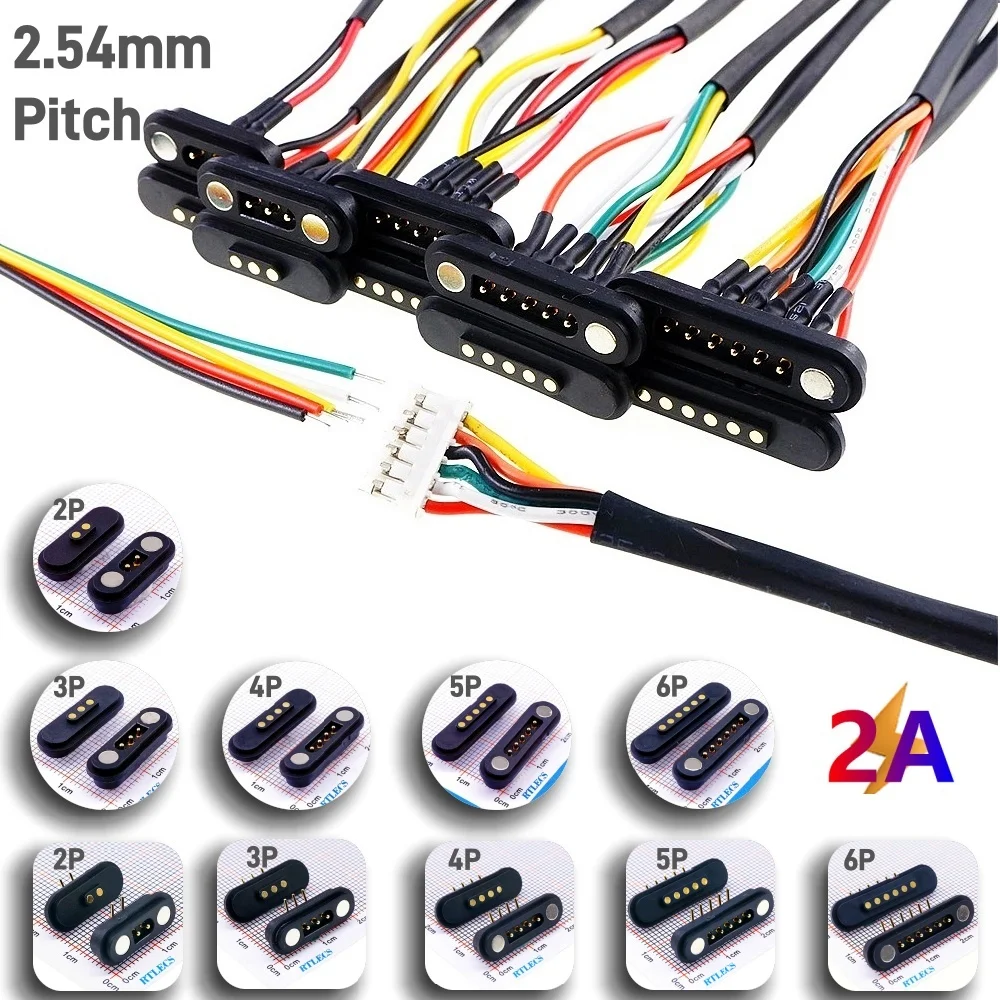
These connectors are available in 2, 3, 4, 5, and 6 positions. This range allows for diverse wiring configurations. Hobbyists can manage various power and data lines.
A 2-position connector is ideal for simple power input/output. A 6-position variant can handle power, ground, and multiple sensor signals. This flexibility supports complex solar monitoring systems.
The 2.54mm pitch is a common standard in electronics prototyping. It ensures compatibility with many existing breadboards and development boards. This makes integration into custom circuits straightforward.
Generic connectors often have fixed pin counts. They limit design options. This modularity empowers more creative system architectures.
Waterproofing for Outdoor Resilience
The product title explicitly states "Waterproof." This feature is critical for outdoor solar installations. Moisture ingress is a leading cause of electrical failures.
Waterproof connectors protect internal wiring from rain, dew, and humidity. This extends the lifespan of the entire system. It also enhances safety by preventing short circuits.
Without adequate waterproofing, exposed connections corrode quickly. This leads to increased resistance and power loss. A waterproof seal maintains optimal performance.
Standard indoor connectors offer no such protection. Their use outdoors is a significant risk. These connectors are built for the elements.
Current Handling and Wire Specifications
Rated at 2 Amps, these connectors are suitable for low-current DC applications. This includes charging small devices, powering sensors, or LED lighting.
The included wires have a length of 20cm. This provides sufficient reach for many internal connections within an enclosure. Longer runs would require thicker gauge wire.
It is crucial to match the current rating to the load. Overloading a 2A connector can lead to overheating. This compromises system safety and longevity.
For higher power solar arrays, larger gauge wires and higher-rated connectors are necessary. These 2A connectors are perfect for the control and monitoring aspects.
Installation and Form Factor Options
Both straight/vertical and right angle/horizontal versions are available. This offers flexibility in mounting and cable routing. Space optimization is often key in compact solar projects.
Straight connectors are ideal for stacking or direct board-to-board connections. Right-angle versions help manage cables in tight enclosures. They keep the profile low.
Pre-wired male and female connectors are shown. This simplifies assembly. It reduces the need for custom crimping or soldering for basic connections.
Custom wiring would be required for specific lengths. The pre-wired options save significant time. This accelerates project completion.
Optimizing Your Solar Setup
These magnetic pogo pin connectors address common pain points in solar energy projects, particularly for hobbyists. The self-aligning magnetic feature eliminates the frustration of fiddly connections, ensuring that your modular components snap together effortlessly and reliably. This translates directly into more uptime for your solar system and less time troubleshooting intermittent faults.
The value proposition extends beyond mere convenience; the gold-plated brass pogo pins and robust HTN housing offer enhanced durability and electrical efficiency compared to cheaper, less resilient alternatives. While the 2A current limit dictates their use for lower-power circuits or signal lines, this is a strategic trade-off for the superior connection reliability and environmental protection they provide within that scope. For critical sensor arrays, small DC loads, or modular battery management systems, the investment in these connectors pays dividends in system stability and longevity.
Imagine the satisfaction of rapidly reconfiguring your portable solar charging station, knowing each connection is secure and optimized for minimal energy loss. Visualize a weather-resistant off-grid lighting system where connections remain pristine despite exposure to the elements. These connectors empower you to build, experiment, and deploy with confidence, transforming your solar energy concepts into reliable, functional realities that stand the test of time and environment. Your projects will operate with greater consistency and efficiency.
Connectivity Essentials
Reliable Contact System
These connectors utilize spring-loaded pogo pins. This design ensures a consistent, positive electrical contact. It compensates for minor misalignments.
Spring loading maintains pressure on the contact surface. This reduces resistance. It prevents signal degradation over time.
Many basic connectors rely on friction alone. They can loosen. Pogo pins offer superior long-term stability.
Modular Design Advantage
The availability of various pin counts (2P to 6P) supports modular system design. Users can tailor connections precisely.
Modular systems are easier to troubleshoot. They are also simpler to expand. This is invaluable for evolving solar projects.
Fixed-pin connectors restrict design freedom. These offer adaptability. They promote flexible system architecture.
Environmental Sealing
Waterproof capabilities are critical for outdoor applications. The sealed design protects against moisture and dust ingress.
Environmental protection prevents corrosion. It maintains electrical integrity. This extends the operational life.
Non-sealed connectors quickly fail outdoors. They are unsuitable for exposed solar components. This product offers peace of mind.
Ease of Assembly
Pre-attached wires simplify installation. They reduce the need for specialized tools. This saves time for hobbyists.
Users can quickly integrate these into projects. No complex soldering is required for basic setup. This lowers the barrier to entry.
Bare pogo pins require more skill. These pre-wired versions are plug-and-play. They are highly convenient.
Material Science for Durability
The use of NdFeB magnets ensures strong magnetic attraction. This provides reliable self-alignment. It secures the connection.
NdFeB magnets are powerful. They resist demagnetization. This maintains connection integrity over many cycles.
Weaker magnets can lead to intermittent connections. These strong magnets prevent that. They offer consistent performance.
Operational Current Limits
The 2A current rating is important. It defines the safe operating range. Users must respect this limit.
Operating within specifications prevents overheating. It ensures safety. It also prolongs component life.
Exceeding 2A will cause issues. This rating guides appropriate application. It is a key design parameter.
Wiring and Integration Considerations
Wire Gauge and Length
The 20cm wire length is suitable for short runs. For longer distances, voltage drop must be considered. Thicker wires minimize loss.
Voltage drop is critical in low-voltage DC systems. It impacts efficiency. Proper wire sizing is essential.
Short wires are convenient for internal enclosures. Longer runs require careful planning. This ensures optimal power delivery.
Connector Orientation
Both straight and right-angle options provide mounting flexibility. This allows for optimized cable management. It suits diverse enclosure designs.
Right-angle connectors save vertical space. Straight connectors are good for direct alignment. Choose based on project layout.
Poor cable management leads to clutter. It can also cause strain on connections. Proper orientation prevents this.
Compatibility with Solar Components
These connectors are ideal for low-power DC components in solar setups. Think of connecting small charge controllers to battery monitors. They are not for main panel output.
They can interface with microcontrollers. They can power small sensors. They are perfect for the "brains" of a solar system.
High-current solar arrays require different connectors. These are for the auxiliary systems. They complement larger power infrastructure.
Maintaining Waterproof Integrity
Ensure mating surfaces are clean before connection. Any debris can compromise the waterproof seal. This is a simple maintenance step.
Inspect the connectors periodically for wear. Damaged seals reduce protection. Replacement ensures continued integrity.
Proper installation is key. Do not overtighten or strain wires. This preserves the waterproof rating.
Long-Term System Reliability
Durability in Harsh Conditions
Gold-plated pogo pins resist oxidation. This is crucial in humid or outdoor environments. It maintains low contact resistance.
Oxidation increases resistance. This leads to heat generation. It reduces efficiency and lifespan.
Corrosion is a major enemy of electronics. These materials stand up to it. They ensure long-term reliability.
Repeatable Connections
The magnetic self-alignment ensures consistent connections. This is beneficial for modular systems that are frequently assembled and disassembled.
Each connection is as good as the first. This minimizes wear and tear on the pins. It prolongs the connector's life.
Inconsistent connections cause frustration. They also introduce reliability issues. This design mitigates those problems.
Cost-Effectiveness Over Time
Investing in durable connectors reduces replacement frequency. This saves money in the long run. It is a smart choice for serious hobbyists.
Cheap connectors fail quickly. They require constant replacement. This adds to project costs and downtime.
These connectors offer excellent value. Their longevity justifies the initial investment. They are built to last.
Conclusion: Empowering Your Solar Innovations
The Magnetic Pogo Pin Connector system is a compelling choice for solar energy hobbyists prioritizing reliability, ease of use, and durability in their low-power DC applications. The thoughtful design, featuring self-aligning magnets, gold-plated pogo pins, and waterproof housing, directly addresses the challenges of building and maintaining modular solar projects in various environments. While the 2A current limit restricts their use to control, monitoring, and low-power accessory circuits, within this scope, they offer a significant upgrade over conventional connectors, promising stable power delivery and simplified system integration. For those who value consistent performance and a streamlined building experience, these connectors represent a strategic investment. Imagine the satisfaction of a solar project that consistently performs, where every connection is secure and efficient, and where your innovations are reliably powered, day in and day out, regardless of the weather. These connectors are designed to make that vision a reality, enabling you to focus on the next great solar endeavor rather than troubleshooting faulty connections.