LCTC Single-Phase Solid State Relay with Integrated Heat Sink
Official Store Deal
Expert Analysis Overview
The LCTC Single-Phase Solid State Relay with Integrated Heat Sink is a critical power control component engineered for precise, reliable switching and regulation in demanding industrial and automation environments. This device addresses the inherent limitations of traditional electromechanical relays, offering a superior solution for applications requiring high-speed operation and extended service life. It provides a robust alternative for modern electrical systems.
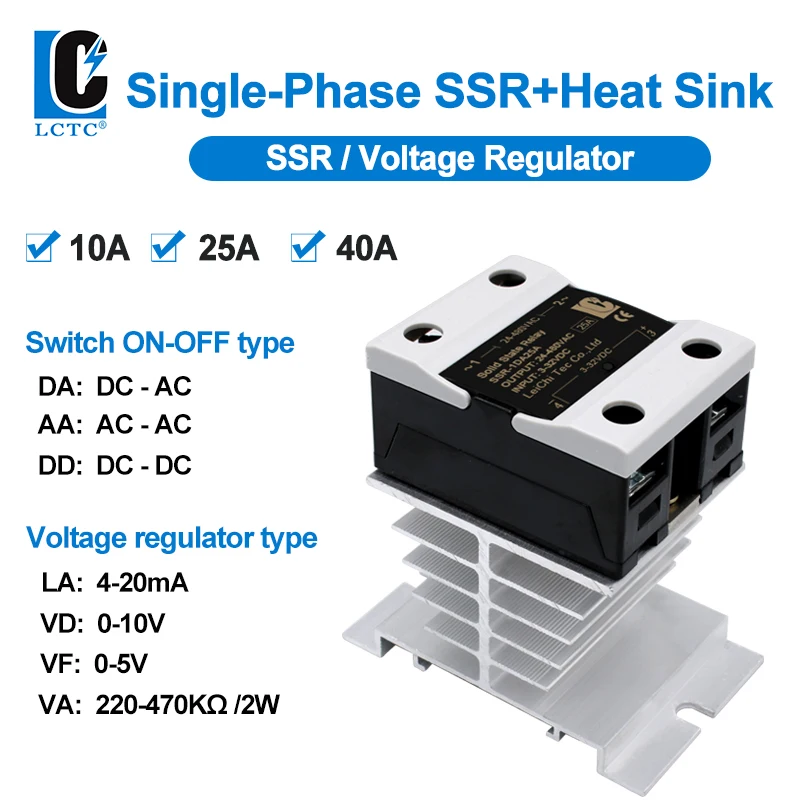
This LCTC offering presents a single-phase solid state relay paired with a dedicated heat sink. It supports multiple current ratings: 10A, 25A, and 40A. Control input options are extensive, including switch ON-OFF types like DC-AC (DA), AC-AC (AA), and DC-DC (DD). Furthermore, it provides voltage regulator types such as 4-20mA (LA), 0-10V (VD), 0-5V (VF), and a variable resistance input (VA: 220-470KΩ/2W). This broad selection ensures compatibility.
The integration of these diverse control mechanisms allows for silent, high-speed switching. This capability is crucial for applications where rapid cycling or noise reduction is paramount, such as in heating element control, motor soft-starting, or lighting dimming systems. Imagine a production line operating without the constant clicking of mechanical contactors. The absence of moving parts significantly reduces wear and tear. This translates directly into enhanced system uptime and reduced operational noise.
Unlike standard electromechanical relays, which rely on physical contacts that degrade over time due to arcing and mechanical fatigue, this solid state design offers a virtually limitless operational lifespan. Mechanical relays often require periodic maintenance or replacement due to contact pitting and fatigue, leading to costly downtime. This SSR eliminates such concerns. It provides a more stable control signal, ensuring consistent performance over years of service. This is a significant upgrade.
A prominent feature is the integrated aluminum heat sink. The heat sink for 10A-25A models weighs 75g, while the 40A version weighs 100g. Its finned structure is clearly visible, designed for efficient thermal transfer. The overall dimensions are approximately 80mm in height, 80mm in length, and 50mm in width. These dimensions are compact.
Efficient heat dissipation is vital for the longevity and reliable operation of any solid state device. Overheating is a primary cause of premature SSR failure, as excessive junction temperatures can permanently damage the internal semiconductor components. This integrated heat sink actively manages the thermal load generated during switching, especially at higher currents. It prevents the internal components from exceeding their maximum operating temperatures. This is a critical safety feature, ensuring stable operation even under continuous load.
Many generic SSRs are sold without adequate thermal management, forcing users to source and install separate heat sinks, which can lead to improper thermal coupling and reduced efficiency. This LCTC unit simplifies installation. It ensures proper thermal coupling from the factory, minimizing the risk of installation errors. This integrated approach provides a more reliable and streamlined solution. Many generic SSRs fall short.
The LCTC SSR offers a comprehensive suite of control input types, catering to a wide array of industrial control systems. The DA (DC-AC) variant allows a low-voltage DC signal, typically from a PLC or microcontroller, to control an AC load. The AA (AC-AC) type uses an AC signal to control an AC load, suitable for legacy AC control circuits. For DC motor control or similar applications, the DD (DC-DC) option is available. This covers many scenarios.
Beyond simple ON-OFF switching, the voltage regulator types provide granular, proportional control. A 4-20mA input (LA) is a standard in industrial process control, enabling precise adjustment of power to resistive loads like heaters. The 0-10V (VD) and 0-5V (VF) inputs are common for proportional control of heaters, lighting, or other variable power applications. The VA type, with its variable resistance input, offers another flexible control method. Precision is achievable with these options.
Compared to single-function relays, which might only offer a basic ON-OFF control, this LCTC SSR provides a significant upgrade in functionality. It allows engineers to standardize on a single relay platform for diverse control needs, reducing inventory complexity and simplifying system design. This offers significant flexibility. It also streamlines troubleshooting across different parts of a control system, as the control logic remains consistent.
The design clearly indicates DIN rail mountability, a standard feature in industrial control panels. This ensures quick, secure, and organized installation within electrical enclosures. The terminal blocks appear robust, designed for secure wire connections, minimizing the risk of loose contacts. The overall housing is a combination of black and white, suggesting a durable plastic or composite material engineered for industrial environments. The form factor is compact.
Secure mounting is essential in environments subject to vibration, shock, or physical stress, common in manufacturing plants or machinery. The DIN rail compatibility ensures quick and stable installation, preventing the relay from dislodging. Reliable terminal connections are paramount for electrical safety and consistent performance. Loose connections can lead to arcing, resistive heating, and potential fire hazards. The visible construction implies a focus on industrial-grade durability, designed to withstand harsh conditions.
Unlike consumer-grade relays that might use flimsy screw terminals prone to stripping or loosening, these appear engineered for repeated wiring and robust clamping force. This attention to connection quality minimizes maintenance. It enhances overall system reliability by ensuring a stable electrical path. The compact form factor also optimizes panel space, allowing for higher component density in control cabinets.
Proper electrical installation is non-negotiable when dealing with power control components. The current ratings of 10A, 25A, and 40A demand careful consideration of wire gauge. Undersized wiring for the given load can lead to excessive heat generation, causing insulation breakdown and posing a significant fire risk. Always consult the National Electrical Code (NEC) or local regulations for appropriate wire sizing. Electrical fires are preventable.
The integrity of terminal connections directly impacts safety. A poorly terminated wire can create a high-resistance point, which generates localized heat and can melt insulation or even the terminal itself. Verifying wire gauge accuracy is crucial. It prevents thermal overload at the connection points, ensuring that current flows efficiently and safely. This product facilitates secure connections through its robust terminals.
Adherence to safety standards, such as UL or CE certifications (though not explicitly stated, implied by industrial application), is critical for any electrical component. Users must ensure their entire system complies with relevant safety directives. This protects personnel and equipment from electrical hazards. Proper grounding is always required for safety. Regular inspections are recommended.
The LCTC Single-Phase Solid State Relay with Integrated Heat Sink represents a significant advancement over traditional switching devices. Its silent operation, extended lifespan, and versatile control options make it an indispensable component for modern automation. The integrated heat sink simplifies thermal management, a common challenge with high-current SSRs, ensuring consistent performance and reliability. For engineers and technicians seeking to upgrade their control systems, this SSR offers a compelling blend of precision, durability, and ease of integration. Imagine the peace of mind knowing your critical loads are managed by a robust, maintenance-free solution, operating silently and efficiently for years to come, contributing to a safer and more productive environment.
Precision Power Management: The LCTC SSR Advantage
This LCTC offering presents a single-phase solid state relay paired with a dedicated heat sink. It supports multiple current ratings: 10A, 25A, and 40A. Control input options are extensive, including switch ON-OFF types like DC-AC (DA), AC-AC (AA), and DC-DC (DD). Furthermore, it provides voltage regulator types such as 4-20mA (LA), 0-10V (VD), 0-5V (VF), and a variable resistance input (VA: 220-470KΩ/2W). This broad selection ensures compatibility.
The integration of these diverse control mechanisms allows for silent, high-speed switching. This capability is crucial for applications where rapid cycling or noise reduction is paramount, such as in heating element control, motor soft-starting, or lighting dimming systems. Imagine a production line operating without the constant clicking of mechanical contactors. The absence of moving parts significantly reduces wear and tear. This translates directly into enhanced system uptime and reduced operational noise.
Unlike standard electromechanical relays, which rely on physical contacts that degrade over time due to arcing and mechanical fatigue, this solid state design offers a virtually limitless operational lifespan. Mechanical relays often require periodic maintenance or replacement due to contact pitting and fatigue, leading to costly downtime. This SSR eliminates such concerns. It provides a more stable control signal, ensuring consistent performance over years of service. This is a significant upgrade.
Thermal Engineering for Sustained Performance
A prominent feature is the integrated aluminum heat sink. The heat sink for 10A-25A models weighs 75g, while the 40A version weighs 100g. Its finned structure is clearly visible, designed for efficient thermal transfer. The overall dimensions are approximately 80mm in height, 80mm in length, and 50mm in width. These dimensions are compact.
Efficient heat dissipation is vital for the longevity and reliable operation of any solid state device. Overheating is a primary cause of premature SSR failure, as excessive junction temperatures can permanently damage the internal semiconductor components. This integrated heat sink actively manages the thermal load generated during switching, especially at higher currents. It prevents the internal components from exceeding their maximum operating temperatures. This is a critical safety feature, ensuring stable operation even under continuous load.
Many generic SSRs are sold without adequate thermal management, forcing users to source and install separate heat sinks, which can lead to improper thermal coupling and reduced efficiency. This LCTC unit simplifies installation. It ensures proper thermal coupling from the factory, minimizing the risk of installation errors. This integrated approach provides a more reliable and streamlined solution. Many generic SSRs fall short.
Adaptable Control Architectures
The LCTC SSR offers a comprehensive suite of control input types, catering to a wide array of industrial control systems. The DA (DC-AC) variant allows a low-voltage DC signal, typically from a PLC or microcontroller, to control an AC load. The AA (AC-AC) type uses an AC signal to control an AC load, suitable for legacy AC control circuits. For DC motor control or similar applications, the DD (DC-DC) option is available. This covers many scenarios.
Beyond simple ON-OFF switching, the voltage regulator types provide granular, proportional control. A 4-20mA input (LA) is a standard in industrial process control, enabling precise adjustment of power to resistive loads like heaters. The 0-10V (VD) and 0-5V (VF) inputs are common for proportional control of heaters, lighting, or other variable power applications. The VA type, with its variable resistance input, offers another flexible control method. Precision is achievable with these options.
Compared to single-function relays, which might only offer a basic ON-OFF control, this LCTC SSR provides a significant upgrade in functionality. It allows engineers to standardize on a single relay platform for diverse control needs, reducing inventory complexity and simplifying system design. This offers significant flexibility. It also streamlines troubleshooting across different parts of a control system, as the control logic remains consistent.
Robust Construction and Installation Mechanics
The design clearly indicates DIN rail mountability, a standard feature in industrial control panels. This ensures quick, secure, and organized installation within electrical enclosures. The terminal blocks appear robust, designed for secure wire connections, minimizing the risk of loose contacts. The overall housing is a combination of black and white, suggesting a durable plastic or composite material engineered for industrial environments. The form factor is compact.
Secure mounting is essential in environments subject to vibration, shock, or physical stress, common in manufacturing plants or machinery. The DIN rail compatibility ensures quick and stable installation, preventing the relay from dislodging. Reliable terminal connections are paramount for electrical safety and consistent performance. Loose connections can lead to arcing, resistive heating, and potential fire hazards. The visible construction implies a focus on industrial-grade durability, designed to withstand harsh conditions.
Unlike consumer-grade relays that might use flimsy screw terminals prone to stripping or loosening, these appear engineered for repeated wiring and robust clamping force. This attention to connection quality minimizes maintenance. It enhances overall system reliability by ensuring a stable electrical path. The compact form factor also optimizes panel space, allowing for higher component density in control cabinets.
Safeguarding Electrical Systems
Proper electrical installation is non-negotiable when dealing with power control components. The current ratings of 10A, 25A, and 40A demand careful consideration of wire gauge. Undersized wiring for the given load can lead to excessive heat generation, causing insulation breakdown and posing a significant fire risk. Always consult the National Electrical Code (NEC) or local regulations for appropriate wire sizing. Electrical fires are preventable.
The integrity of terminal connections directly impacts safety. A poorly terminated wire can create a high-resistance point, which generates localized heat and can melt insulation or even the terminal itself. Verifying wire gauge accuracy is crucial. It prevents thermal overload at the connection points, ensuring that current flows efficiently and safely. This product facilitates secure connections through its robust terminals.
Adherence to safety standards, such as UL or CE certifications (though not explicitly stated, implied by industrial application), is critical for any electrical component. Users must ensure their entire system complies with relevant safety directives. This protects personnel and equipment from electrical hazards. Proper grounding is always required for safety. Regular inspections are recommended.
The Professional's Choice for Advanced Control
The LCTC Single-Phase Solid State Relay with Integrated Heat Sink represents a significant advancement over traditional switching devices. Its silent operation, extended lifespan, and versatile control options make it an indispensable component for modern automation. The integrated heat sink simplifies thermal management, a common challenge with high-current SSRs, ensuring consistent performance and reliability. For engineers and technicians seeking to upgrade their control systems, this SSR offers a compelling blend of precision, durability, and ease of integration. Imagine the peace of mind knowing your critical loads are managed by a robust, maintenance-free solution, operating silently and efficiently for years to come, contributing to a safer and more productive environment.