Lathe Ball Rolling Mirror Polishing Tool
Official Store Deal
Expert Analysis Overview
The Lathe Ball Rolling Mirror Polishing Tool is a specialized precision instrument engineered for achieving superior surface finishes on cylindrical workpieces. This tool represents a significant upgrade for machinists and manufacturers requiring high-gloss, low-friction surfaces, moving beyond traditional abrasive methods that often leave microscopic imperfections. Its design, centered around a hardened bearing steel roller, facilitates a cold-forming process that densifies the material surface, enhancing both aesthetic quality and functional durability.
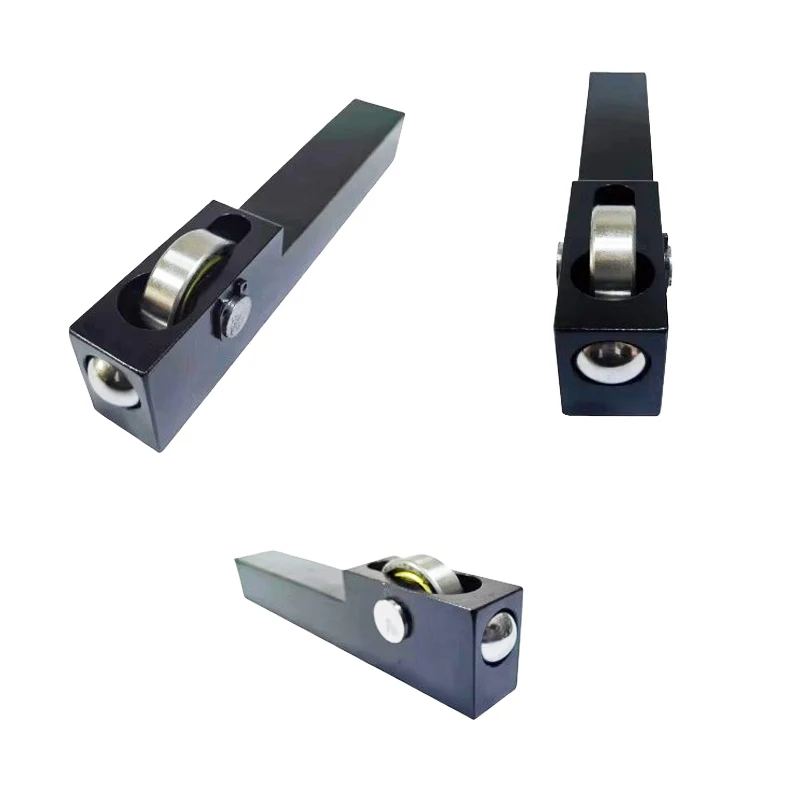
This tool's core function revolves around its ability to produce mirror-like finishes. The visible design incorporates a single, robust roller bearing, strategically positioned to apply controlled pressure to a rotating workpiece. This mechanical action smooths out surface irregularities, effectively cold-working the material to achieve a finish that is not only visually appealing but also structurally improved. The precision of this operation is paramount for components where surface integrity directly impacts performance, such as shafts, pins, and hydraulic cylinders. Consistent results are achievable.
Unlike abrasive polishing techniques, which remove material through grinding, ball rolling works by plastic deformation. The roller compresses the peaks of the material into the valleys, creating a smoother, denser surface without generating chips or dust. This method is particularly advantageous in environments where particulate contamination is a concern, or when maintaining the exact dimensions of the workpiece is critical. The process is clean and efficient.
Compared to manual polishing or even automated abrasive systems, the ball rolling knife offers a more consistent and repeatable finish. Traditional methods can introduce variations due to operator skill, abrasive wear, or inconsistent pressure. This tool, when properly set up on a lathe, provides a uniform pressure application, leading to a predictable and high-quality surface finish across multiple parts. It reduces human error significantly.
The tool's operation relies on the principles of cold plastic deformation. As the hardened ball roller traverses the workpiece, it exerts localized pressure exceeding the material's yield strength. This causes the surface material to flow and conform, effectively ironing out microscopic peaks and valleys. The result is a surface with improved hardness, wear resistance, and fatigue life, alongside its aesthetic mirror finish. This process is highly controlled.
For precision engineering applications, the ability to enhance surface properties without altering the bulk material's microstructure is invaluable. The cold working induced by the rolling process creates a compressive residual stress layer on the surface. This layer acts as a barrier against crack initiation and propagation, significantly improving the component's resistance to fatigue failure, a critical factor in high-stress mechanical parts. It adds inherent strength.
Many standard finishing operations, like grinding or turning, leave behind tensile residual stresses, which can make components more susceptible to fatigue. The ball rolling technique reverses this, introducing beneficial compressive stresses. This makes the tool particularly suitable for parts that will experience cyclic loading or require exceptional longevity in demanding operational environments. It extends component lifespan.
Constructed from bearing steel, the tool's roller is designed for extreme durability and wear resistance. Bearing steel, typically a high-carbon chromium alloy, is renowned for its hardness, strength, and ability to withstand high contact stresses without deforming or fracturing. This material choice is fundamental to the tool's longevity and consistent performance in demanding machining environments. Its composition ensures resilience.
The robust nature of bearing steel means the roller maintains its shape and surface integrity over extended periods of use, even when processing harder materials. This is crucial for maintaining the precision of the polishing operation; a worn or deformed roller would compromise the finish quality. The material selection directly contributes to the tool's operational lifespan and the quality of the work it produces. It resists degradation effectively.
In contrast to tools made from softer or less specialized steels, a bearing steel roller minimizes the need for frequent replacement or re-grinding. This translates to reduced downtime and lower operational costs for manufacturing facilities. The investment in a tool with such high-grade material pays dividends through consistent output and prolonged service life. It is a long-term asset.
The tool's housing, visible as a black, rectangular block, appears to be made from a sturdy metal, likely an anodized aluminum or hardened steel alloy. This provides a rigid and stable platform for the roller bearing, ensuring precise alignment and minimizing vibration during operation. A stable housing is critical for achieving consistent pressure and a uniform finish across the workpiece. It provides necessary support.
The compact and solid construction of the housing suggests it is designed to withstand the forces involved in cold working metal. The secure mounting of the roller within this housing prevents any play or deflection that could lead to an uneven finish. This robust build quality is essential for maintaining the high standards of precision required in mirror polishing. It ensures operational stability.
Many general-purpose lathe tools might feature less rigid designs, which could introduce chatter or inconsistencies during fine finishing operations. The dedicated design of this ball rolling tool, with its emphasis on a strong housing and secure roller, positions it as a specialized solution for achieving superior surface quality. It outperforms simpler alternatives.
This tool is specifically designed for use on a lathe, integrating seamlessly into existing machining workflows. Its straightforward mounting mechanism, likely a standard tool post setup, allows for quick installation and removal. The simplicity of its operation, once set up, contributes to increased efficiency in the finishing process, reducing the need for multiple passes or secondary operations. Setup is relatively simple.
For workshops focused on high-volume production of precision components, the ability to rapidly achieve a mirror finish without extensive manual labor offers significant time and cost savings. The tool automates a process that would otherwise be labor-intensive and prone to human variability, freeing up skilled technicians for more complex tasks. It streamlines production lines.
Compared to abrasive polishing, which often requires multiple grits and stages, this single-pass ball rolling tool can dramatically reduce cycle times. The elimination of abrasive material consumption and disposal also contributes to a cleaner and more cost-effective operation. It offers a clear advantage in efficiency.
The images indicate dimensions such as 12x12mm for the tool body and a length of 135mm, with a center height of 12mm. These specifications are crucial for ensuring compatibility with various lathe models and tool posts. Users must verify these dimensions against their specific machine's capabilities to ensure proper fitment and alignment. Proper fit is essential.
Accurate setup is vital for optimal performance. The center height of 12mm suggests the tool is designed for specific lathe configurations, and proper shimming or adjustment may be required to align the roller perfectly with the workpiece centerline. Misalignment can lead to uneven pressure, poor finish quality, or premature tool wear. Precision alignment is key.
While the tool itself is robust, its effective application depends on the rigidity of the lathe and the stability of the workpiece fixturing. Any vibration or deflection in the machine or the part can compromise the finishing process. Therefore, users should ensure their lathe is in good condition and that workpieces are securely clamped for best results. Machine condition matters.
At approximately $33.54 USD, this specialized tool offers a compelling value proposition for precision engineering and manufacturing. The cost-effectiveness comes not just from the initial purchase price, but from the long-term benefits of enhanced component quality, reduced labor, and extended tool life. It is an affordable upgrade.
Considering the improved surface integrity, wear resistance, and fatigue life imparted to components, the tool contributes to the overall reliability and performance of finished products. This can lead to fewer warranty claims, greater customer satisfaction, and a stronger reputation for quality in the market. Quality output is a direct benefit.
For operations that frequently require high-quality surface finishes, investing in a dedicated ball rolling tool like this can quickly yield a return on investment. It eliminates the need for more expensive, multi-stage polishing processes and provides a consistent, superior finish that manual methods struggle to replicate. This tool is a smart investment for any serious machinist or manufacturer aiming for excellence in surface finishing. Imagine the satisfaction of consistently producing components with flawless, mirror-smooth surfaces, knowing each piece meets the highest standards of precision and durability, enhancing both functionality and aesthetic appeal for your critical applications.
Precision Surface Engineering
This tool's core function revolves around its ability to produce mirror-like finishes. The visible design incorporates a single, robust roller bearing, strategically positioned to apply controlled pressure to a rotating workpiece. This mechanical action smooths out surface irregularities, effectively cold-working the material to achieve a finish that is not only visually appealing but also structurally improved. The precision of this operation is paramount for components where surface integrity directly impacts performance, such as shafts, pins, and hydraulic cylinders. Consistent results are achievable.
Unlike abrasive polishing techniques, which remove material through grinding, ball rolling works by plastic deformation. The roller compresses the peaks of the material into the valleys, creating a smoother, denser surface without generating chips or dust. This method is particularly advantageous in environments where particulate contamination is a concern, or when maintaining the exact dimensions of the workpiece is critical. The process is clean and efficient.
Compared to manual polishing or even automated abrasive systems, the ball rolling knife offers a more consistent and repeatable finish. Traditional methods can introduce variations due to operator skill, abrasive wear, or inconsistent pressure. This tool, when properly set up on a lathe, provides a uniform pressure application, leading to a predictable and high-quality surface finish across multiple parts. It reduces human error significantly.
The Mechanics of Surface Refinement
The tool's operation relies on the principles of cold plastic deformation. As the hardened ball roller traverses the workpiece, it exerts localized pressure exceeding the material's yield strength. This causes the surface material to flow and conform, effectively ironing out microscopic peaks and valleys. The result is a surface with improved hardness, wear resistance, and fatigue life, alongside its aesthetic mirror finish. This process is highly controlled.
For precision engineering applications, the ability to enhance surface properties without altering the bulk material's microstructure is invaluable. The cold working induced by the rolling process creates a compressive residual stress layer on the surface. This layer acts as a barrier against crack initiation and propagation, significantly improving the component's resistance to fatigue failure, a critical factor in high-stress mechanical parts. It adds inherent strength.
Many standard finishing operations, like grinding or turning, leave behind tensile residual stresses, which can make components more susceptible to fatigue. The ball rolling technique reverses this, introducing beneficial compressive stresses. This makes the tool particularly suitable for parts that will experience cyclic loading or require exceptional longevity in demanding operational environments. It extends component lifespan.
Material Science and Durability
Constructed from bearing steel, the tool's roller is designed for extreme durability and wear resistance. Bearing steel, typically a high-carbon chromium alloy, is renowned for its hardness, strength, and ability to withstand high contact stresses without deforming or fracturing. This material choice is fundamental to the tool's longevity and consistent performance in demanding machining environments. Its composition ensures resilience.
The robust nature of bearing steel means the roller maintains its shape and surface integrity over extended periods of use, even when processing harder materials. This is crucial for maintaining the precision of the polishing operation; a worn or deformed roller would compromise the finish quality. The material selection directly contributes to the tool's operational lifespan and the quality of the work it produces. It resists degradation effectively.
In contrast to tools made from softer or less specialized steels, a bearing steel roller minimizes the need for frequent replacement or re-grinding. This translates to reduced downtime and lower operational costs for manufacturing facilities. The investment in a tool with such high-grade material pays dividends through consistent output and prolonged service life. It is a long-term asset.
Structural Integrity and Housing
The tool's housing, visible as a black, rectangular block, appears to be made from a sturdy metal, likely an anodized aluminum or hardened steel alloy. This provides a rigid and stable platform for the roller bearing, ensuring precise alignment and minimizing vibration during operation. A stable housing is critical for achieving consistent pressure and a uniform finish across the workpiece. It provides necessary support.
The compact and solid construction of the housing suggests it is designed to withstand the forces involved in cold working metal. The secure mounting of the roller within this housing prevents any play or deflection that could lead to an uneven finish. This robust build quality is essential for maintaining the high standards of precision required in mirror polishing. It ensures operational stability.
Many general-purpose lathe tools might feature less rigid designs, which could introduce chatter or inconsistencies during fine finishing operations. The dedicated design of this ball rolling tool, with its emphasis on a strong housing and secure roller, positions it as a specialized solution for achieving superior surface quality. It outperforms simpler alternatives.
Operational Efficiency and Application
This tool is specifically designed for use on a lathe, integrating seamlessly into existing machining workflows. Its straightforward mounting mechanism, likely a standard tool post setup, allows for quick installation and removal. The simplicity of its operation, once set up, contributes to increased efficiency in the finishing process, reducing the need for multiple passes or secondary operations. Setup is relatively simple.
For workshops focused on high-volume production of precision components, the ability to rapidly achieve a mirror finish without extensive manual labor offers significant time and cost savings. The tool automates a process that would otherwise be labor-intensive and prone to human variability, freeing up skilled technicians for more complex tasks. It streamlines production lines.
Compared to abrasive polishing, which often requires multiple grits and stages, this single-pass ball rolling tool can dramatically reduce cycle times. The elimination of abrasive material consumption and disposal also contributes to a cleaner and more cost-effective operation. It offers a clear advantage in efficiency.
Compatibility and Setup Considerations
The images indicate dimensions such as 12x12mm for the tool body and a length of 135mm, with a center height of 12mm. These specifications are crucial for ensuring compatibility with various lathe models and tool posts. Users must verify these dimensions against their specific machine's capabilities to ensure proper fitment and alignment. Proper fit is essential.
Accurate setup is vital for optimal performance. The center height of 12mm suggests the tool is designed for specific lathe configurations, and proper shimming or adjustment may be required to align the roller perfectly with the workpiece centerline. Misalignment can lead to uneven pressure, poor finish quality, or premature tool wear. Precision alignment is key.
While the tool itself is robust, its effective application depends on the rigidity of the lathe and the stability of the workpiece fixturing. Any vibration or deflection in the machine or the part can compromise the finishing process. Therefore, users should ensure their lathe is in good condition and that workpieces are securely clamped for best results. Machine condition matters.
The Investment in Quality
At approximately $33.54 USD, this specialized tool offers a compelling value proposition for precision engineering and manufacturing. The cost-effectiveness comes not just from the initial purchase price, but from the long-term benefits of enhanced component quality, reduced labor, and extended tool life. It is an affordable upgrade.
Considering the improved surface integrity, wear resistance, and fatigue life imparted to components, the tool contributes to the overall reliability and performance of finished products. This can lead to fewer warranty claims, greater customer satisfaction, and a stronger reputation for quality in the market. Quality output is a direct benefit.
For operations that frequently require high-quality surface finishes, investing in a dedicated ball rolling tool like this can quickly yield a return on investment. It eliminates the need for more expensive, multi-stage polishing processes and provides a consistent, superior finish that manual methods struggle to replicate. This tool is a smart investment for any serious machinist or manufacturer aiming for excellence in surface finishing. Imagine the satisfaction of consistently producing components with flawless, mirror-smooth surfaces, knowing each piece meets the highest standards of precision and durability, enhancing both functionality and aesthetic appeal for your critical applications.