KSD9700 Thermal Control Temperature Switch
Official Store Deal
Expert Analysis Overview
The KSD9700 Temperature Switch is a critical thermal control component designed for hobbyists and professionals building efficient, self-sustaining energy systems. This series of switches offers precise temperature activation points, essential for safeguarding sensitive electronics and optimizing performance within solar and off-grid power installations. Its inherent simplicity belies its importance in preventing thermal runaway and ensuring system longevity.
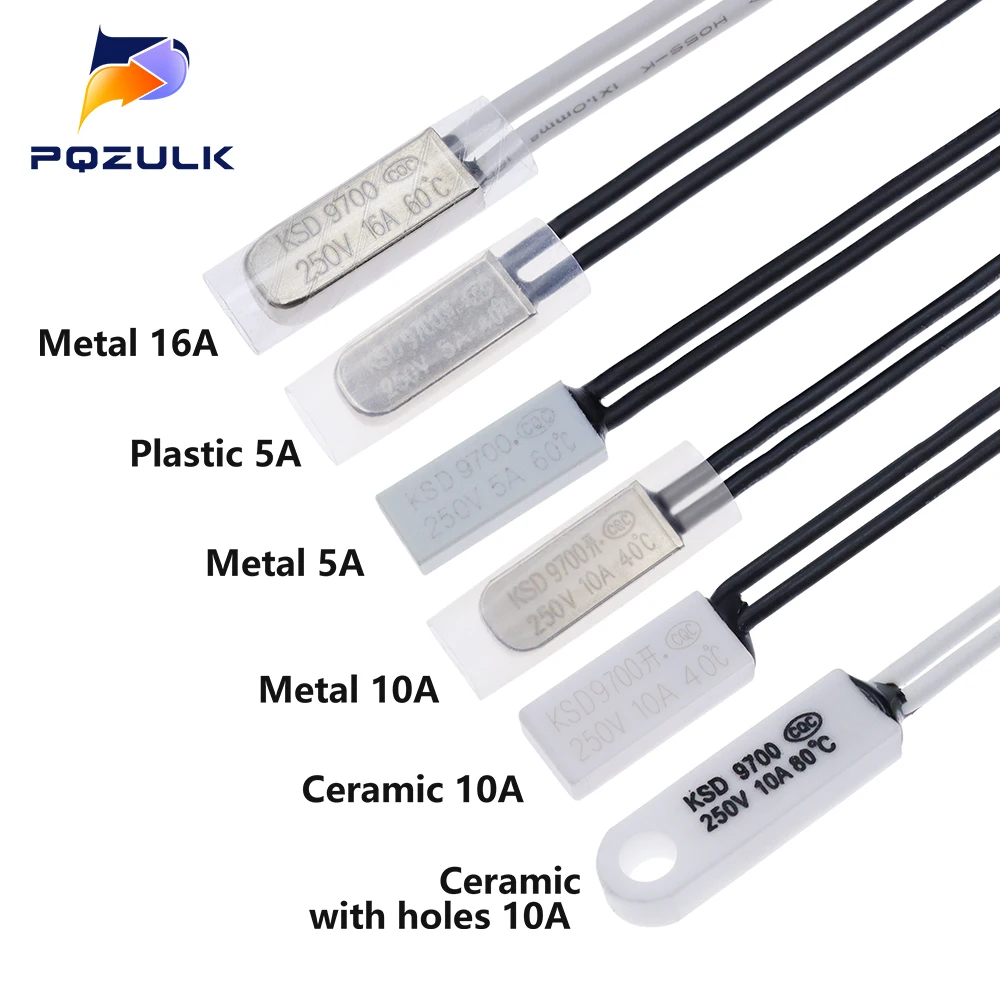
The KSD9700 series offers a wide range of activation temperatures, from 40°C to 110°C, with various current ratings including 5A, 10A, and 16A. Multiple casing options, such as metal, plastic, and ceramic, are presented. This broad spectrum allows for highly customized thermal regulation in diverse applications. Overheating is a primary concern. Precise temperature cut-off protects sensitive electronics. It ensures optimal operating conditions for critical components like battery charge controllers or inverter cooling fans.
Unlike basic bimetallic strips that offer limited fixed points, these KSD9700 units provide specific, factory-calibrated thresholds. Generic thermal fuses often provide only a single, irreversible trip. This re-settable switch offers a more sophisticated approach to system protection and longevity. The ability to select specific trip temperatures means a system can be finely tuned.
For solar energy hobbyists, managing heat is paramount. An improperly cooled charge controller can drastically reduce charging efficiency. A thermal switch can activate a cooling fan. This proactive approach minimizes efficiency losses. Maintaining optimal temperatures extends component life. It is a small investment for significant long-term gains.
The KSD9700 switches are available with metal, plastic, and ceramic casings, each offering distinct advantages depending on the application environment. The metal casing, often seen with higher amperage ratings like 10A and 16A, provides excellent thermal conductivity and robust physical protection. It dissipates heat quickly. This makes it suitable for environments where direct contact with heat sources is expected.
Plastic casings, typically found in 5A variants, offer electrical insulation and corrosion resistance. They are lighter. These are ideal for applications where the switch needs to be isolated from other conductive components or exposed to moisture. The ceramic options, particularly those with mounting holes, combine high-temperature resistance with good insulation properties. They handle extreme heat well. This makes them suitable for very demanding thermal environments.
Compared to generic, unsealed thermal sensors, these encased switches offer a higher degree of protection against dust, moisture, and physical impact. The insulated transparent shell visible on some metal-cased units further enhances electrical safety. This prevents accidental short circuits. It adds an extra layer of protection. This thoughtful design contributes to the overall reliability of the component in various installation settings.
Choosing the right casing material is critical for system durability. A metal case might be preferred for its heat transfer in an aluminum heatsink. A plastic case might be better for isolation in a damp enclosure. Ceramic offers superior high-temperature stability. Each material serves a specific engineering purpose.
These thermal switches are highly versatile for integration into various renewable energy systems. They can serve as over-temperature protection for solar panel junction boxes, preventing damage from excessive heat buildup. They can also control cooling fans for battery banks or inverters, activating them only when necessary. This conserves auxiliary power. Such precise control is vital for off-grid setups.
Compatibility with existing solar setups is straightforward due to the standard two-wire configuration. The switches operate by either opening (normally closed, NC) or closing (normally open, NO) a circuit at a specified temperature. This allows them to interface with microcontrollers, relays, or directly control low-power loads. Their small footprint eases installation in confined spaces. Wiring is simple.
Unlike complex digital sensors requiring programming and external power, these bimetallic thermal switches are entirely passive. They require no external power to operate. This reduces system complexity and potential points of failure. Their mechanical nature ensures reliable operation even in harsh electromagnetic environments, making them a robust choice for critical safety functions within a self-sustaining energy system.
Precise temperature control directly impacts the conversion efficiency and lifespan of solar components. Overheating can degrade photovoltaic cells, reduce battery capacity, and shorten the life of power electronics. By accurately monitoring and responding to temperature fluctuations, these switches help maintain components within their optimal operating ranges. This minimizes energy waste. It maximizes the return on investment for expensive solar equipment.
The ability to select switches with specific activation temperatures means systems can be tailored for peak performance. For instance, a 60°C switch might activate a fan for a battery bank, while an 85°C switch might serve as a critical shutdown for an inverter. This tiered approach to thermal management enhances safety and operational stability. It prevents costly failures. This level of customization is a significant advantage.
Compared to systems lacking dedicated thermal management, integrating KSD9700 switches can significantly reduce efficiency losses caused by thermal throttling or premature component degradation. The cost of replacing a damaged inverter far outweighs the minimal investment in these protective devices. They are an essential part of a resilient energy system. This proactive protection ensures consistent power output and extended operational life for your entire solar array.
Installing these thermal switches requires basic electrical knowledge. The two leads connect directly into the control circuit. Proper wire sizing is important. Secure mounting ensures accurate temperature sensing. The switch should be placed in direct thermal contact with the component it is monitoring. This ensures accurate readings. Use thermal paste for optimal heat transfer if applicable.
Verifying compatibility with existing solar setups involves checking the voltage and current ratings. While rated for 250V, the amperage (5A, 10A, 16A) is crucial for DC applications. For higher current loads, the switch can activate a relay. This protects the switch from excessive current. Always ensure the switch's rating exceeds the expected load.
Routine maintenance involves periodic inspection of the switch and its connections. Ensure no corrosion or loose wiring exists. The transparent insulated shell, where present, should remain intact. Never remove this insulation. It prevents electrical leakage. This simple check ensures continued reliable operation. A clean contact surface is important.
These switches are designed for durability, but environmental factors can impact their lifespan. Extreme vibrations or corrosive atmospheres may necessitate more frequent checks. Proper installation minimizes these risks. They are simple, yet effective components. Their long-term performance contributes to system stability.
Imagine a solar energy system that consistently performs at its peak, free from the silent threat of overheating. Picture your battery bank maintaining its optimal temperature, extending its lifespan and ensuring reliable power delivery even on the hottest days. Envision an inverter protected from thermal stress, quietly converting solar energy into usable electricity without interruption. The KSD9700 thermal switch provides that foundational layer of protection, allowing you to build and operate a truly resilient and efficient off-grid or grid-tied solar setup with confidence. It is a small component with a massive impact on the longevity and reliability of your entire renewable energy investment, ensuring peace of mind and consistent power for years to come.
Precision Thermal Regulation for Sustainable Systems
The KSD9700 series offers a wide range of activation temperatures, from 40°C to 110°C, with various current ratings including 5A, 10A, and 16A. Multiple casing options, such as metal, plastic, and ceramic, are presented. This broad spectrum allows for highly customized thermal regulation in diverse applications. Overheating is a primary concern. Precise temperature cut-off protects sensitive electronics. It ensures optimal operating conditions for critical components like battery charge controllers or inverter cooling fans.
Unlike basic bimetallic strips that offer limited fixed points, these KSD9700 units provide specific, factory-calibrated thresholds. Generic thermal fuses often provide only a single, irreversible trip. This re-settable switch offers a more sophisticated approach to system protection and longevity. The ability to select specific trip temperatures means a system can be finely tuned.
For solar energy hobbyists, managing heat is paramount. An improperly cooled charge controller can drastically reduce charging efficiency. A thermal switch can activate a cooling fan. This proactive approach minimizes efficiency losses. Maintaining optimal temperatures extends component life. It is a small investment for significant long-term gains.
Material Integrity and Environmental Resilience
The KSD9700 switches are available with metal, plastic, and ceramic casings, each offering distinct advantages depending on the application environment. The metal casing, often seen with higher amperage ratings like 10A and 16A, provides excellent thermal conductivity and robust physical protection. It dissipates heat quickly. This makes it suitable for environments where direct contact with heat sources is expected.
Plastic casings, typically found in 5A variants, offer electrical insulation and corrosion resistance. They are lighter. These are ideal for applications where the switch needs to be isolated from other conductive components or exposed to moisture. The ceramic options, particularly those with mounting holes, combine high-temperature resistance with good insulation properties. They handle extreme heat well. This makes them suitable for very demanding thermal environments.
Compared to generic, unsealed thermal sensors, these encased switches offer a higher degree of protection against dust, moisture, and physical impact. The insulated transparent shell visible on some metal-cased units further enhances electrical safety. This prevents accidental short circuits. It adds an extra layer of protection. This thoughtful design contributes to the overall reliability of the component in various installation settings.
Choosing the right casing material is critical for system durability. A metal case might be preferred for its heat transfer in an aluminum heatsink. A plastic case might be better for isolation in a damp enclosure. Ceramic offers superior high-temperature stability. Each material serves a specific engineering purpose.
Seamless Integration into Renewable Energy Architectures
These thermal switches are highly versatile for integration into various renewable energy systems. They can serve as over-temperature protection for solar panel junction boxes, preventing damage from excessive heat buildup. They can also control cooling fans for battery banks or inverters, activating them only when necessary. This conserves auxiliary power. Such precise control is vital for off-grid setups.
Compatibility with existing solar setups is straightforward due to the standard two-wire configuration. The switches operate by either opening (normally closed, NC) or closing (normally open, NO) a circuit at a specified temperature. This allows them to interface with microcontrollers, relays, or directly control low-power loads. Their small footprint eases installation in confined spaces. Wiring is simple.
Unlike complex digital sensors requiring programming and external power, these bimetallic thermal switches are entirely passive. They require no external power to operate. This reduces system complexity and potential points of failure. Their mechanical nature ensures reliable operation even in harsh electromagnetic environments, making them a robust choice for critical safety functions within a self-sustaining energy system.
Optimizing System Efficiency and Longevity
Precise temperature control directly impacts the conversion efficiency and lifespan of solar components. Overheating can degrade photovoltaic cells, reduce battery capacity, and shorten the life of power electronics. By accurately monitoring and responding to temperature fluctuations, these switches help maintain components within their optimal operating ranges. This minimizes energy waste. It maximizes the return on investment for expensive solar equipment.
The ability to select switches with specific activation temperatures means systems can be tailored for peak performance. For instance, a 60°C switch might activate a fan for a battery bank, while an 85°C switch might serve as a critical shutdown for an inverter. This tiered approach to thermal management enhances safety and operational stability. It prevents costly failures. This level of customization is a significant advantage.
Compared to systems lacking dedicated thermal management, integrating KSD9700 switches can significantly reduce efficiency losses caused by thermal throttling or premature component degradation. The cost of replacing a damaged inverter far outweighs the minimal investment in these protective devices. They are an essential part of a resilient energy system. This proactive protection ensures consistent power output and extended operational life for your entire solar array.
Installation and Maintenance Considerations
Installing these thermal switches requires basic electrical knowledge. The two leads connect directly into the control circuit. Proper wire sizing is important. Secure mounting ensures accurate temperature sensing. The switch should be placed in direct thermal contact with the component it is monitoring. This ensures accurate readings. Use thermal paste for optimal heat transfer if applicable.
Verifying compatibility with existing solar setups involves checking the voltage and current ratings. While rated for 250V, the amperage (5A, 10A, 16A) is crucial for DC applications. For higher current loads, the switch can activate a relay. This protects the switch from excessive current. Always ensure the switch's rating exceeds the expected load.
Routine maintenance involves periodic inspection of the switch and its connections. Ensure no corrosion or loose wiring exists. The transparent insulated shell, where present, should remain intact. Never remove this insulation. It prevents electrical leakage. This simple check ensures continued reliable operation. A clean contact surface is important.
These switches are designed for durability, but environmental factors can impact their lifespan. Extreme vibrations or corrosive atmospheres may necessitate more frequent checks. Proper installation minimizes these risks. They are simple, yet effective components. Their long-term performance contributes to system stability.
Imagine a solar energy system that consistently performs at its peak, free from the silent threat of overheating. Picture your battery bank maintaining its optimal temperature, extending its lifespan and ensuring reliable power delivery even on the hottest days. Envision an inverter protected from thermal stress, quietly converting solar energy into usable electricity without interruption. The KSD9700 thermal switch provides that foundational layer of protection, allowing you to build and operate a truly resilient and efficient off-grid or grid-tied solar setup with confidence. It is a small component with a massive impact on the longevity and reliability of your entire renewable energy investment, ensuring peace of mind and consistent power for years to come.