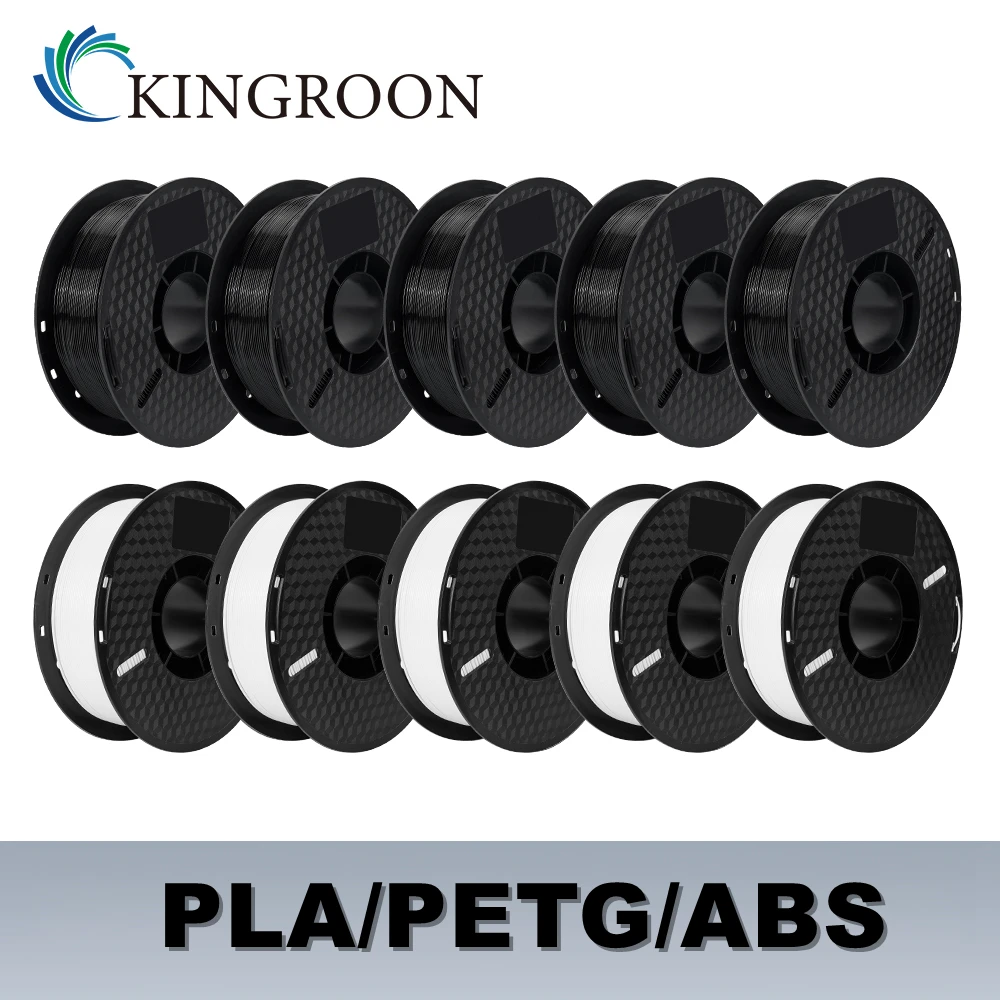
KINGROON 1.75mm PLA/ABS/PETG 3D Printer Filament Bulk Pack
Official Store Deal
Expert Analysis Overview
The KINGROON 1.75mm PLA/ABS/PETG 3D Printer Filament Bulk Pack is a comprehensive offering designed for educational institutions, makerspaces, and high-volume prototyping environments. This multi-material, multi-color bundle addresses the critical need for reliable and consistent filament, which is paramount for successful 3D printing, especially in learning contexts. The emphasis on consistent diameter and accurate weight per spool directly supports a streamlined printing experience, minimizing common frustrations associated with material quality.
This bulk pack includes three of the most widely used 3D printing filament types: PLA, PETG, and ABS. Each material possesses distinct properties that make it suitable for different applications. Understanding these differences is crucial for effective project planning and execution.
PLA, or Polylactic Acid, is a biodegradable thermoplastic derived from renewable resources like corn starch. It is known for its ease of printing, low warping, and minimal odor during extrusion. This makes it an ideal choice for beginners and classroom settings where ventilation might be a concern. PLA offers good rigidity and is often used for prototypes, display models, and educational projects.
Compared to more advanced materials, PLA requires lower printing temperatures, simplifying the setup process. Its user-friendly nature reduces the barrier to entry for new students. This material is very forgiving.
PETG, or Polyethylene Terephthalate Glycol-modified, combines the ease of printing of PLA with the strength and durability of ABS. It offers excellent layer adhesion, good impact resistance, and a higher temperature resistance than PLA. PETG is also less prone to warping than ABS and emits less odor.
For projects requiring more robust parts or those exposed to moderate heat, PETG presents a significant upgrade. Its versatility makes it a valuable addition to any filament inventory. PETG prints with a slight sheen.
ABS, or Acrylonitrile Butadiene Styrene, is a tough, durable, and impact-resistant thermoplastic. It is widely used in engineering applications due to its mechanical properties and ability to withstand higher temperatures. ABS parts can also be smoothed with acetone vapor, allowing for a professional finish.
However, ABS is more challenging to print than PLA or PETG, requiring higher temperatures and often an enclosed printer to prevent warping. It also produces a noticeable odor during printing, necessitating good ventilation. Its strength is undeniable.
One of the most critical factors for successful 3D printing is filament diameter consistency. The KINGROON filament is specified at 1.75mm with a tolerance of ±0.03mm. This tight tolerance is a key indicator of manufacturing quality.
Inconsistent filament diameter can lead to a host of printing problems, including under-extrusion, over-extrusion, and nozzle clogging. These issues result in failed prints, wasted material, and significant frustration, especially for students learning the intricacies of 3D printing. A consistent diameter ensures a steady flow of material through the nozzle.
Unlike lower-quality filaments that often exhibit significant diameter variations, this product's precise manufacturing helps maintain a smooth and predictable extrusion. This consistency translates directly into more reliable prints and a reduced need for constant printer calibration. Fewer clogs mean more learning time.
The product images highlight a commitment to accurate spool weight, with a reported tolerance of ±0.2g for the total weight. This level of precision ensures that buyers receive the advertised amount of filament, maximizing the value of a bulk purchase.
Accurate weight measurement is important for inventory management and cost analysis in educational or professional settings. Knowing that each 1KG spool truly contains 1KG of filament (plus the tray weight) allows for better project planning and material budgeting. No one wants to run short.
Some manufacturers might cut corners by including less filament than advertised, which can lead to unexpected material shortages mid-project. The transparent display of weight measurement in the product visuals reinforces confidence in the product's integrity. This transparency builds trust.
The filament is presented in a color box with antioxidant and vacuum packaging. This packaging strategy is crucial for maintaining the quality and printability of thermoplastic filaments over time. Moisture absorption is a common enemy of 3D printing filaments.
Filaments, especially hygroscopic materials like PETG and ABS, can absorb moisture from the air, leading to printing issues such as bubbling, stringing, and reduced part strength. Vacuum sealing with a desiccant (often included, though not explicitly shown in detail for this product) removes this moisture threat. Proper storage extends shelf life.
This protective packaging ensures that the filament arrives in optimal condition and remains so until opened for use. For bulk purchases, where spools might be stored for extended periods, this is an essential feature that prevents material degradation. It preserves print quality.
For STEM educators, the reliability offered by this filament pack is invaluable. Teaching 3D printing involves guiding students through design, slicing, and printing processes. Material inconsistencies can derail learning objectives by introducing unpredictable variables.
With consistent filament, educators can focus on teaching core concepts rather than troubleshooting material-related print failures. This allows for a more efficient and effective learning environment, where students can see their designs come to life without undue frustration. Learning should be engaging, not frustrating.
Furthermore, the availability of multiple material types in a bulk pack allows for diverse project assignments. Students can experiment with different material properties, understanding how each influences the final product's strength, flexibility, and finish. This hands-on experience is critical for developing a comprehensive understanding of additive manufacturing. It fosters practical knowledge.
Operating 3D printers in a classroom requires adherence to safety protocols. While PLA is generally considered safe with minimal emissions, printing ABS and PETG necessitates proper ventilation. Educators must ensure adequate airflow or utilize enclosed printers with filtration systems when using these materials.
Teaching students about material safety, including the importance of ventilation and handling hot components, is an integral part of 3D printing education. This filament pack provides an opportunity to discuss these critical safety considerations in a practical context. Safety is always first.
Proper storage of filament also contributes to a safer environment. Keeping spools in their sealed packaging until ready for use prevents dust accumulation and reduces the risk of tripping hazards from loose filament. A tidy workspace enhances safety.
Investing in a bulk pack of reliable filament like the KINGROON offering represents a sound financial decision for educational programs. The wholesale pricing reduces the per-kilogram cost, making 3D printing more accessible and sustainable for ongoing projects and classes.
Reducing print failures due to inconsistent filament saves both material costs and valuable instructional time. When prints succeed more often, students gain confidence and educators can cover more curriculum content. This efficiency is a tangible benefit.
This bulk purchase strategy minimizes the frequency of reordering, simplifying procurement processes and ensuring a continuous supply of materials. For busy educators, this logistical advantage allows more focus on teaching and less on administrative tasks. It's a smart economic choice.
Imagine a classroom where students confidently load filament, knowing their prints will likely succeed on the first attempt. Picture them experimenting with different materials, understanding the nuances of each, and seeing their innovative designs materialize with precision. This bulk filament pack empowers educators to create such an environment, fostering creativity and technical skills without the common frustrations of unreliable materials. It supports a vibrant, hands-on learning experience that prepares students for future STEM challenges, ensuring every project is a step forward in their educational journey. This is an investment in future innovators.
The Palette of Possibilities: Exploring Filament Materials
This bulk pack includes three of the most widely used 3D printing filament types: PLA, PETG, and ABS. Each material possesses distinct properties that make it suitable for different applications. Understanding these differences is crucial for effective project planning and execution.
PLA, or Polylactic Acid, is a biodegradable thermoplastic derived from renewable resources like corn starch. It is known for its ease of printing, low warping, and minimal odor during extrusion. This makes it an ideal choice for beginners and classroom settings where ventilation might be a concern. PLA offers good rigidity and is often used for prototypes, display models, and educational projects.
Compared to more advanced materials, PLA requires lower printing temperatures, simplifying the setup process. Its user-friendly nature reduces the barrier to entry for new students. This material is very forgiving.
PETG, or Polyethylene Terephthalate Glycol-modified, combines the ease of printing of PLA with the strength and durability of ABS. It offers excellent layer adhesion, good impact resistance, and a higher temperature resistance than PLA. PETG is also less prone to warping than ABS and emits less odor.
For projects requiring more robust parts or those exposed to moderate heat, PETG presents a significant upgrade. Its versatility makes it a valuable addition to any filament inventory. PETG prints with a slight sheen.
ABS, or Acrylonitrile Butadiene Styrene, is a tough, durable, and impact-resistant thermoplastic. It is widely used in engineering applications due to its mechanical properties and ability to withstand higher temperatures. ABS parts can also be smoothed with acetone vapor, allowing for a professional finish.
However, ABS is more challenging to print than PLA or PETG, requiring higher temperatures and often an enclosed printer to prevent warping. It also produces a noticeable odor during printing, necessitating good ventilation. Its strength is undeniable.
Precision in Every Strand: Ensuring Print Reliability
One of the most critical factors for successful 3D printing is filament diameter consistency. The KINGROON filament is specified at 1.75mm with a tolerance of ±0.03mm. This tight tolerance is a key indicator of manufacturing quality.
Inconsistent filament diameter can lead to a host of printing problems, including under-extrusion, over-extrusion, and nozzle clogging. These issues result in failed prints, wasted material, and significant frustration, especially for students learning the intricacies of 3D printing. A consistent diameter ensures a steady flow of material through the nozzle.
Unlike lower-quality filaments that often exhibit significant diameter variations, this product's precise manufacturing helps maintain a smooth and predictable extrusion. This consistency translates directly into more reliable prints and a reduced need for constant printer calibration. Fewer clogs mean more learning time.
The Weight of Value: Accurate Spool Measurements
The product images highlight a commitment to accurate spool weight, with a reported tolerance of ±0.2g for the total weight. This level of precision ensures that buyers receive the advertised amount of filament, maximizing the value of a bulk purchase.
Accurate weight measurement is important for inventory management and cost analysis in educational or professional settings. Knowing that each 1KG spool truly contains 1KG of filament (plus the tray weight) allows for better project planning and material budgeting. No one wants to run short.
Some manufacturers might cut corners by including less filament than advertised, which can lead to unexpected material shortages mid-project. The transparent display of weight measurement in the product visuals reinforces confidence in the product's integrity. This transparency builds trust.
Packaging for Longevity: Protecting Material Integrity
The filament is presented in a color box with antioxidant and vacuum packaging. This packaging strategy is crucial for maintaining the quality and printability of thermoplastic filaments over time. Moisture absorption is a common enemy of 3D printing filaments.
Filaments, especially hygroscopic materials like PETG and ABS, can absorb moisture from the air, leading to printing issues such as bubbling, stringing, and reduced part strength. Vacuum sealing with a desiccant (often included, though not explicitly shown in detail for this product) removes this moisture threat. Proper storage extends shelf life.
This protective packaging ensures that the filament arrives in optimal condition and remains so until opened for use. For bulk purchases, where spools might be stored for extended periods, this is an essential feature that prevents material degradation. It preserves print quality.
Streamlining the Workflow: Implications for Educators
For STEM educators, the reliability offered by this filament pack is invaluable. Teaching 3D printing involves guiding students through design, slicing, and printing processes. Material inconsistencies can derail learning objectives by introducing unpredictable variables.
With consistent filament, educators can focus on teaching core concepts rather than troubleshooting material-related print failures. This allows for a more efficient and effective learning environment, where students can see their designs come to life without undue frustration. Learning should be engaging, not frustrating.
Furthermore, the availability of multiple material types in a bulk pack allows for diverse project assignments. Students can experiment with different material properties, understanding how each influences the final product's strength, flexibility, and finish. This hands-on experience is critical for developing a comprehensive understanding of additive manufacturing. It fosters practical knowledge.
Safety Protocols: A Classroom Imperative
Operating 3D printers in a classroom requires adherence to safety protocols. While PLA is generally considered safe with minimal emissions, printing ABS and PETG necessitates proper ventilation. Educators must ensure adequate airflow or utilize enclosed printers with filtration systems when using these materials.
Teaching students about material safety, including the importance of ventilation and handling hot components, is an integral part of 3D printing education. This filament pack provides an opportunity to discuss these critical safety considerations in a practical context. Safety is always first.
Proper storage of filament also contributes to a safer environment. Keeping spools in their sealed packaging until ready for use prevents dust accumulation and reduces the risk of tripping hazards from loose filament. A tidy workspace enhances safety.
The Long-Term Investment: Value for Educational Programs
Investing in a bulk pack of reliable filament like the KINGROON offering represents a sound financial decision for educational programs. The wholesale pricing reduces the per-kilogram cost, making 3D printing more accessible and sustainable for ongoing projects and classes.
Reducing print failures due to inconsistent filament saves both material costs and valuable instructional time. When prints succeed more often, students gain confidence and educators can cover more curriculum content. This efficiency is a tangible benefit.
This bulk purchase strategy minimizes the frequency of reordering, simplifying procurement processes and ensuring a continuous supply of materials. For busy educators, this logistical advantage allows more focus on teaching and less on administrative tasks. It's a smart economic choice.
Imagine a classroom where students confidently load filament, knowing their prints will likely succeed on the first attempt. Picture them experimenting with different materials, understanding the nuances of each, and seeing their innovative designs materialize with precision. This bulk filament pack empowers educators to create such an environment, fostering creativity and technical skills without the common frustrations of unreliable materials. It supports a vibrant, hands-on learning experience that prepares students for future STEM challenges, ensuring every project is a step forward in their educational journey. This is an investment in future innovators.