JUANJUAN HTC-2 Digital Thermohygrometer
Official Store Deal
Expert Analysis Overview
The Foundational Environmental Monitor for Home Assessments
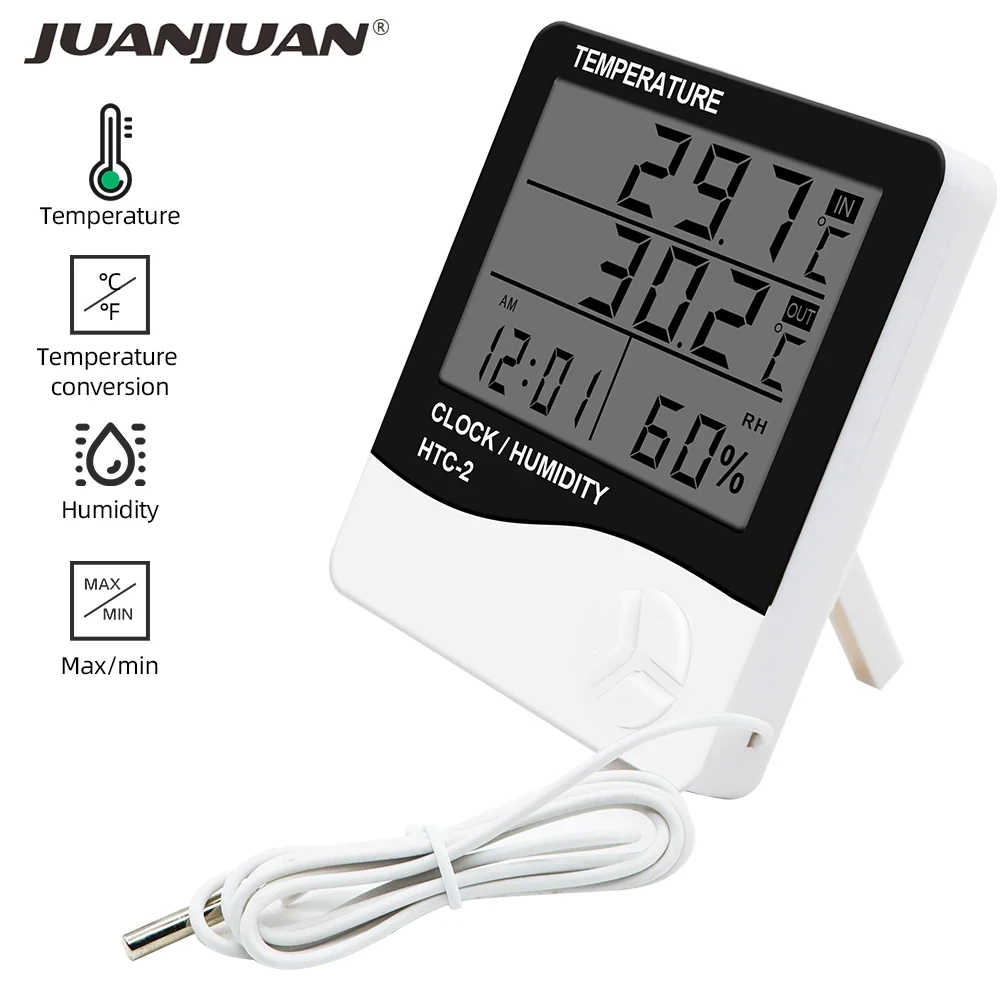
The JUANJUAN HTC-2 Digital Thermohygrometer is a foundational environmental monitoring tool designed for homeowners and budding inspectors seeking to understand the ambient conditions within and around a property. This device offers a straightforward approach to tracking critical environmental metrics, providing immediate insights into temperature and humidity levels. Its dual-sensor capability, with an internal sensor for indoor readings and an external wired probe for remote measurements, makes it a versatile instrument for identifying potential issues like thermal bridging or localized moisture accumulation. The large, clear LCD ensures that readings are easily discernible, even from a distance, which is a practical advantage during property walk-throughs.
Unpacking the Core Capabilities
At its essence, the HTC-2 provides simultaneous temperature and humidity readings. The primary unit measures indoor conditions, while a slender external probe extends its reach to monitor a second location. This configuration is crucial for comparative analysis, allowing for the detection of significant differentials that might indicate insulation deficiencies or air leakage points. The device also incorporates a MAX/MIN record function, which tracks the highest and lowest values observed over a period. This feature is invaluable for understanding environmental fluctuations, particularly in areas like attics, crawl spaces, or basements where conditions can vary widely throughout the day or night. It helps to establish a baseline and identify extreme conditions that could contribute to material degradation or mold growth. A simple glance reveals the extremes.
The Importance of Temperature Monitoring
Temperature detection is more than just knowing if a room is warm or cold. For a home inspector, it is a diagnostic tool. The HTC-2's ability to display both indoor and outdoor (or two distinct zone) temperatures allows for a quick assessment of a building's thermal envelope performance. Significant temperature differences between adjacent areas, beyond expected variations, can point to compromised insulation, drafts from unsealed openings, or even HVAC system inefficiencies. Imagine assessing an older home; cold spots near windows or exterior walls become immediately apparent, suggesting areas for further investigation with more specialized Tools like thermal cameras. The device offers readings in both Celsius and Fahrenheit, catering to regional preferences. This flexibility is a small but welcome detail.
Humidity: The Silent Threat
Humidity detection is arguably even more critical for long-term structural integrity and occupant health. High relative humidity levels are a primary precursor to mold growth, wood rot, and pest infestations. The HTC-2 provides a clear percentage reading of relative humidity, enabling users to quickly identify environments prone to these issues. For example, a consistently high humidity reading in a basement or bathroom, even after ventilation, suggests a deeper problem, perhaps a plumbing leak, inadequate exhaust, or poor air circulation. Conversely, excessively low humidity can lead to dry skin, static electricity, and damage to wooden furniture or musical instruments. Monitoring this metric helps maintain a healthy and comfortable indoor environment. It's a simple, yet powerful indicator.
Ergonomics and Display Clarity
The physical design of the HTC-2 prioritizes readability and ease of placement. The unit features a large LCD screen with bold, segmented digits that are easily visible. The designers have incorporated a 45-degree viewing angle, which aligns with typical human eye perspective when placed on a desk or shelf. This thoughtful consideration minimizes glare and ensures that critical data can be absorbed quickly without needing to constantly adjust one's position. The white plastic casing appears clean and unobtrusive, blending into most home environments. The integrated kickstand allows for convenient tabletop placement, while a suspension tie at the back offers wall-mounting flexibility. Its lightweight construction makes it easy to move between locations. The buttons offer a tactile response.
Beyond Basic Environmental Data: Time and Records
While its primary function is environmental monitoring, the HTC-2 integrates several additional features that enhance its utility. A digital clock display with both 12-hour and 24-hour system options is a practical addition, making the device a multi-functional desk or wall accessory. The inclusion of a daily alarm and hour report function further extends its use beyond simple measurements, providing basic timekeeping and scheduling capabilities. For a homeowner, this means one less gadget cluttering the countertop. The MAX/MIN record function, as mentioned, stores the highest and lowest temperature and humidity readings since the last reset. This historical data is invaluable for identifying trends or intermittent issues that might not be present during a single spot check. For example, if a room consistently hits high humidity overnight, it points to a ventilation problem.
The Upgrade Frame: A Step Above Basic Thermometers
Unlike basic analog thermometers or single-zone digital units, the HTC-2 offers dual-zone monitoring with an external probe. This feature is a significant upgrade, allowing for comparative analysis between two distinct areas. Imagine trying to diagnose a drafty room; a standard thermometer only tells you the temperature at one point. This device allows you to measure the room's ambient temperature and simultaneously check the temperature near a window or an exterior wall with the probe. This immediate comparison provides actionable data, pinpointing the source of thermal inefficiency more effectively. The external probe, typically a thin wire with a metallic sensor tip, is robust enough for temporary placement in various environments, from refrigerator compartments to outdoor eaves. It expands diagnostic reach significantly. This is not just a thermometer.
Real-World Applications for the Home Inspector
For a home inspector, the HTC-2 serves as an excellent entry-level tool for preliminary environmental assessments. It can help identify potential hidden leaks behind walls by detecting localized humidity spikes when the external probe is strategically placed. While it won't pinpoint the exact location like a moisture meter, it can flag an area for further, more invasive investigation. Similarly, by monitoring temperature differentials, it can assist in detecting electrical hotspots in areas like fuse boxes or near appliances, though this requires careful and safe placement of the external probe and should only be done by qualified individuals. The data collected (MAX/MIN temps/humidity) can also be used to generate client reports, providing tangible evidence of environmental conditions within a property. This adds credibility to findings and helps clients understand the rationale behind recommendations for improvements. It offers concrete numbers.
Power and Portability
The device is typically powered by standard AAA batteries, which contributes to its portability and ease of placement without being tethered to an outlet. Battery operation means it can be deployed in remote areas of a home, such as attics, crawl spaces, or sheds, for extended monitoring periods. The low power consumption of LCD displays ensures a reasonable battery life, minimizing the need for frequent replacements. The overall construction feels solid enough for indoor use, though it is not designed for rugged outdoor exposure without protection. The plastic casing is smooth to the touch, indicating reasonable mold precision. Buttons are responsive, not mushy.
A Practical Tool for Proactive Home Management
This thermohygrometer is more than just a gadget; it's a practical tool for proactive home management. Understanding the environmental conditions of a home empowers occupants to make informed decisions about ventilation, heating, cooling, and moisture control. It can help prevent costly repairs down the line by catching issues early. For instance, consistent high humidity in a closet can be addressed with better air circulation before mold takes hold. Regular monitoring provides peace of mind and contributes to a healthier living space. It's an investment in your home's well-being.
Imagine the peace of mind knowing the precise temperature and humidity levels in your nursery, wine cellar, or even your attic. Picture effortlessly tracking the effectiveness of your new dehumidifier or identifying subtle drafts that impact your energy bills. This device provides the data needed to optimize your home's environment, ensuring comfort, preserving property, and preventing costly issues before they escalate. It puts control at your fingertips.
Environmental Oversight
Dual-Zone Monitoring
The HTC-2 features two distinct temperature sensors. One is integrated into the main unit for ambient indoor readings, while the other is an external wired probe. This configuration enables simultaneous measurement of two different locations, such as indoor vs. outdoor, or two separate rooms. The ability to compare these readings directly on the same display streamlines the diagnostic process. This is a significant advantage over single-sensor units.
When evaluating a property, the external probe can be positioned to monitor specific areas of concern, such as a crawl space, an attic, or even inside a refrigerator or freezer to check appliance performance. This flexibility allows for targeted data collection that informs decisions about insulation, ventilation, or appliance efficiency. For example, placing the probe outside a window while the main unit is inside provides an immediate delta for assessing window insulation.
Compared to basic indoor-only thermometers, the HTC-2's external probe capability offers a broader scope for environmental assessment. This dual functionality moves it beyond a simple comfort gauge to a more analytical tool, providing the contextual data necessary for identifying thermal bridges or areas of excessive heat loss/gain.
Max/Min Data Logging
This device records the maximum and minimum temperature and humidity values over a period. This historical data is accessible with a press of a button, allowing users to review the extremes experienced since the last reset. This function is crucial for understanding the full range of environmental fluctuations within a monitored space. It captures the peaks and valleys.
During an inspection, spot readings only provide a snapshot. The MAX/MIN function, however, reveals conditions that might occur when the inspector is not present. For instance, if a basement shows acceptable humidity during the day but the MAX reading indicates high humidity overnight, it suggests a condensation issue or an intermittent moisture source that requires further investigation. This helps diagnose cyclical problems.
Many entry-level environmental monitors omit this historical tracking feature, forcing users to manually log readings. The HTC-2's integrated MAX/MIN record simplifies long-term monitoring, offering a more comprehensive understanding of environmental stability compared to devices that only display current conditions.
Display and Readability
The HTC-2 incorporates a large, segment-based LCD screen. The digits are generously sized, ensuring clear and visible readings from a reasonable distance. The contrast appears good in typical indoor lighting conditions, which is essential for quick data acquisition during an inspection or casual home use. Clarity is paramount.
When performing a walk-through, an inspector needs to gather information efficiently. A display that requires squinting or specific viewing angles slows down the process. The HTC-2's clear display, coupled with its 45-degree angled stand, minimizes these issues, allowing for rapid interpretation of environmental data without unnecessary effort. This enhances workflow.
Compared to smaller, often backlit displays found on some compact units, the HTC-2's larger screen prioritizes legibility over portability. While it may not fit in a pocket, its stationary readability is superior, making it more suitable for continuous monitoring in a fixed location within a home or office environment.
Operational Versatility
Timekeeping and Alarm Functions
Beyond environmental monitoring, the HTC-2 integrates a digital clock with both 12-hour and 24-hour display options. It also includes a daily alarm function and an hourly chime. These features add a layer of convenience, transforming the device into a multi-purpose unit for a desk or bedside table. It keeps time accurately.
For a homeowner, these timekeeping features mean the device can serve a dual role, reducing clutter. The alarm can be set for daily reminders, while the hourly chime offers a subtle auditory cue for time management. While not directly related to home inspection, these functions enhance the overall value proposition for general household use.
Many dedicated thermohygrometers focus solely on environmental data, omitting timekeeping. The HTC-2's inclusion of these features makes it a more comprehensive and practical device for everyday living, offering more utility than single-function alternatives.
Measurement Units and Conversion
The device supports temperature readings in both Celsius (°C) and Fahrenheit (°F). A dedicated switch button, typically located on the side or back, allows for easy conversion between these units. This flexibility ensures the device is usable in various regions and caters to individual preferences. It adapts to user needs.
This unit conversion capability is important for users who may be accustomed to different measurement systems or for reporting data in a specific format. An inspector might need to provide readings in Fahrenheit for a client in one region and Celsius for another, making this feature highly practical. It removes conversion guesswork.
Unlike some basic models that are fixed to one unit, the HTC-2's switchable display offers enhanced usability. This small detail ensures broader appeal and reduces potential friction for users who operate across different measurement standards, making it more adaptable than less flexible options.
Power Source and Longevity
The HTC-2 is powered by standard AAA batteries, typically one or two, which are widely available and easy to replace. This battery-powered design ensures complete portability and allows the device to be placed anywhere without needing access to a power outlet. Battery life is generally good due to the low power consumption of the LCD. It runs on common batteries.
For continuous monitoring in areas without readily available power, such as attics, crawl spaces, or outdoor sheds (when protected from elements), battery operation is essential. The device can be left in place for weeks or months, collecting MAX/MIN data without interruption. This autonomy is a key benefit for long-term environmental tracking.
Compared to devices requiring constant AC power, the battery-operated HTC-2 offers superior placement flexibility. This independence from power outlets makes it a more practical choice for temporary monitoring setups or in locations where power access is inconvenient or nonexistent, providing greater freedom of deployment.
Build Quality and Design Considerations
Material and Construction
The device is constructed from a lightweight, white plastic casing. The finish appears matte, which helps to resist fingerprints and provides a clean aesthetic. The overall form factor is compact and rectangular, with a stable base provided by the integrated kickstand. It feels light in hand.
While the plastic construction is not designed for extreme ruggedness, it is entirely adequate for indoor use and occasional relocation. The mold precision appears good, with no obvious gaps or misalignments in the casing. This indicates a decent level of manufacturing quality for its price point. It holds together well.
Compared to industrial-grade monitoring equipment, the HTC-2's construction is simpler, reflecting its consumer-oriented price and intended use. However, for a home environment, its build quality is sufficient, offering a balance between cost-effectiveness and functional durability for stationary placement.
External Probe Design
The external probe consists of a thin wire, several feet long, terminating in a small metallic sensor tip. This design allows the probe to be threaded through small openings or placed discreetly in remote locations. The wire itself appears to be insulated, offering some protection against minor abrasions. It is a flexible wire.
The slender nature of the probe makes it versatile for various applications, such as monitoring the temperature inside a refrigerator, a terrarium, or even a compost pile. Its length provides ample reach, allowing the main unit to remain in a convenient viewing location while the probe gathers data from a less accessible spot. This extends its utility.
Unlike some integrated sensors that limit measurement to the immediate vicinity of the main unit, the external probe significantly enhances the HTC-2's diagnostic capabilities. This design choice provides a practical solution for monitoring conditions in confined or distant spaces, offering a level of flexibility not found in single-unit designs.
User Interface and Buttons
The operation panel consists of a few clearly labeled buttons, typically for MAX/MIN, C/F conversion, and mode/set functions. The buttons are integrated into the front face below the display, offering a clean and accessible interface. They provide a distinct click when pressed, confirming actuation. Operation is straightforward.
An intuitive user interface is crucial for any measurement device, especially for those used by a broad audience. The HTC-2's minimalist button layout and clear labeling ensure that users can quickly access desired functions without needing to consult a complex manual. This ease of use encourages regular monitoring.
Compared to devices with complex menu systems or multiple unlabeled buttons, the HTC-2's straightforward interface is a significant advantage. It reduces the learning curve, making the device immediately usable out of the box for anyone needing basic environmental data. Simplicity is key here.