JST PH2.0 Pre-Wired Connector Kit
Official Store Deal
Expert Analysis Overview
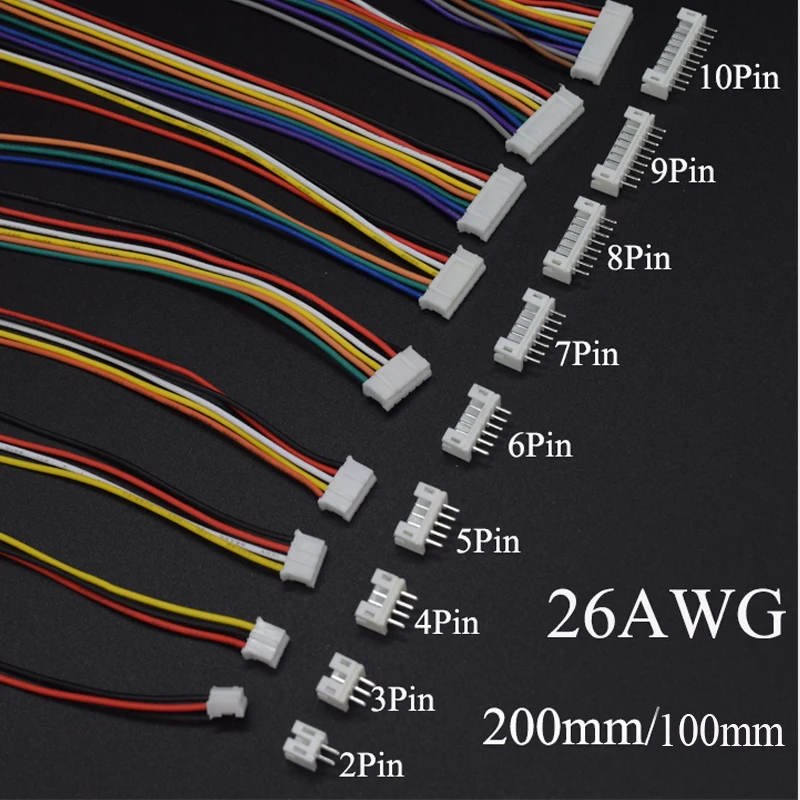
The JST PH2.0 Pre-Wired Connector Kit is a precise, small-form-factor electrical solution designed for intricate circuit board connections and compact electronic projects. This kit offers a convenient, pre-assembled approach to wiring, eliminating the need for manual crimping and ensuring consistent connections. Unlike generic loose terminals and wires, this product provides ready-to-use male and female connectors with attached 26AWG wires, streamlining assembly processes significantly. The 2.0mm pitch is a critical dimension for miniaturized applications, allowing for dense component placement on printed circuit boards.
These connectors adhere to the JST PH2.0 standard, signifying a 2.0mm pin pitch. This specific spacing is a fundamental aspect of its design, dictating its compatibility with various circuit boards and modules. The compact nature of the PH2.0 series makes it an ideal choice for applications where space is at a premium, such as drones, small robotics, LED lighting arrays, and portable consumer electronics. A smaller pitch allows for more connections in a confined area. Compared to larger pitch connectors like JST XH (2.54mm) or VH (3.96mm), the PH2.0 offers a distinct advantage in miniaturization, enabling designers to create more compact and feature-rich devices without sacrificing connectivity.
Imagine designing a custom drone where every millimeter counts. The PH2.0 connectors facilitate a clean, organized wiring harness within such tight enclosures. This precision is not merely aesthetic; it contributes to the overall reliability and electromagnetic compatibility (EMC) of the system by minimizing wire lengths and potential interference. The consistent 2.0mm spacing ensures a snug fit on compatible headers, reducing the risk of accidental disconnections due to vibration or minor physical stresses.
Each connector comes pre-wired with 26AWG (American Wire Gauge) stranded copper wire. This gauge is a crucial specification, directly influencing the wire's current carrying capacity and mechanical flexibility. 26AWG wire is relatively thin, making it highly flexible and easy to route within tight spaces. Its primary application lies in signal transmission and low-current power distribution, where minimal voltage drop over short distances is acceptable. For reference, 26AWG wire typically has a maximum recommended current rating of approximately 1.0 to 1.5 Amperes, depending on ambient temperature and bundle size. Exceeding this limit can lead to wire overheating and insulation damage.
The insulation material, visually appearing as standard PVC, provides adequate electrical isolation for typical low-voltage applications. While specific UL or CE ratings are not explicitly stated, the visual consistency across the various pin counts suggests a uniform manufacturing process. The wire's flexibility is a distinct advantage during installation. It bends easily. This prevents undue stress on solder joints or connector pins, which can be a common failure point with stiffer wires. Understanding the current limitations of 26AWG is paramount for safe operation, preventing thermal runaway in circuits.
Consider a scenario where a small motor or a bank of LEDs draws more than 1.5A. Using 26AWG wire in such an application would quickly lead to excessive heat generation, potentially melting the insulation or even causing a short circuit. Proper wire gauge selection is a fundamental principle of electrical safety. Unlike heavier gauge wires that might be overkill and cumbersome for signal lines, 26AWG strikes a balance between current capacity and physical manageability for its intended purpose.
The connectors feature both male and female housings, typically molded from a durable nylon or PA66 plastic. This material choice provides good mechanical strength and electrical insulation properties, resisting common environmental factors like moderate temperature fluctuations and humidity. The white color of the housings offers good visibility for pin identification and inspection. The terminals themselves, likely tinned copper, are designed for reliable electrical contact and corrosion resistance. A good crimp is essential.
Upon visual inspection, the crimps appear consistent, securing the wire strands firmly within the terminal. The male pins are straight and well-aligned, indicating good mold precision. The female receptacles are designed to mate securely with the male pins, providing a positive locking action that resists accidental disengagement. This secure fit is critical for maintaining signal integrity in dynamic environments. A loose connection can introduce noise or intermittent operation, which is unacceptable in sensitive electronic systems. The tactile feedback during connection is reassuringly firm.
Compared to low-quality connectors where pins might bend easily or housings feel brittle, these components exhibit a satisfactory level of construction. The plastic feels dense, not hollow. The consistent molding across the range of pin counts (2-pin to 10-pin) suggests a controlled manufacturing process. This attention to detail in the physical construction directly translates to enhanced reliability in the field, reducing troubleshooting time and component replacement.
The most significant advantage of this kit is the inclusion of pre-crimped wires. Manual crimping, especially for small gauge wires and miniature terminals, requires specialized Tools, skill, and considerable time. The consistency of hand crimps can also vary, leading to unreliable connections. This kit bypasses all those challenges by providing factory-crimped terminals already inserted into their respective housings. This saves valuable assembly time.
For hobbyists, students, or small-scale manufacturers, the time saved by not having to purchase a crimping tool, learn the technique, and then perform hundreds of individual crimps is substantial. Imagine a prototyping phase where multiple iterations of a circuit are required. The ability to quickly connect and disconnect components without worrying about crimp quality accelerates the development cycle. This convenience translates directly into project efficiency. It simplifies complex wiring tasks.
This pre-wired solution represents a significant upgrade from purchasing bulk wire, terminals, and connector housings separately. The cost of a good crimping tool alone can exceed the price of several of these kits. Furthermore, the factory crimps are generally more consistent and reliable than those performed manually, especially by inexperienced users. This ensures a higher quality connection from the outset, reducing potential points of failure in the circuit.
The kit offers a comprehensive range of pin configurations, from 2-pin to 10-pin. This versatility makes it suitable for a wide array of electronic projects, accommodating different signal and power requirements. A 2-pin connector is ideal for simple power connections or basic sensor inputs. A 4-pin connector might be used for I2C communication (SDA, SCL, VCC, GND) or a small stepper motor. Higher pin counts, such as 8-pin or 10-pin, are perfect for connecting multiple sensors, control signals, or more complex peripherals to a microcontroller.
This broad selection eliminates the need to source different connector types for various parts of a project. All necessary connections can be made using a consistent, standardized form factor. This simplifies inventory management and ensures a uniform aesthetic in the final assembly. The availability of multiple pin counts within a single offering is highly practical. It supports diverse project needs.
Consider a project involving multiple modules, each requiring a different number of connections. Instead of mixing and matching various connector types, a designer can maintain a consistent JST PH2.0 interface throughout the entire system. This not only improves the professional appearance of the wiring but also reduces potential errors during assembly and maintenance. The modularity offered by these varied pin counts enhances overall design flexibility, allowing for easy expansion or modification of circuits.
The expected operational lifespan of these connectors is primarily determined by the quality of the materials and the environment in which they are used. The nylon/PA66 housing is generally resistant to common solvents and oils, and it maintains its structural integrity across a typical operating temperature range of -25°C to +85°C. The tinned copper terminals offer good resistance to oxidation, which is crucial for maintaining low contact resistance over time. Proper installation and avoiding excessive mechanical stress will significantly extend their service life.
While these connectors are not designed for harsh industrial environments or outdoor exposure without additional protection, they perform admirably in controlled indoor settings. They are not waterproof. Exposure to high humidity or corrosive atmospheres without proper sealing can degrade the terminals and insulation over time. For applications requiring higher environmental resistance, specialized sealed connectors would be necessary. However, for the vast majority of hobbyist and consumer electronics applications, these connectors provide sufficient durability.
Compared to unsealed, open-barrel crimps that are highly susceptible to environmental degradation, these housed connectors offer a degree of protection to the terminals. The plastic housing shields the delicate crimp connections from dust, accidental touches, and minor physical impacts. This inherent protection contributes to the overall longevity and reliability of the electrical connection, ensuring consistent performance throughout the product's lifecycle.
Electrical safety is paramount, even in low-voltage applications. The 26AWG wire, while suitable for signals, has a limited current capacity. It is critical to ensure that the total current flowing through any single wire does not exceed its safe operating limit. Overcurrent conditions can lead to wire heating, insulation damage, and potentially fire. Always calculate the expected current draw of your components and select the appropriate wire gauge. For higher current requirements, a larger gauge wire (e.g., 22AWG, 20AWG) or multiple parallel wires would be necessary.
Proper wire routing is also essential. Avoid sharp bends, pinching, or abrasion of the insulation, as this can expose the conductor and create a short circuit risk. Ensure that connections are secure and free from strain. Loose connections can generate heat due to increased resistance. Always double-check polarity before applying power to prevent damage to sensitive electronic components. Incorrect polarity can instantly destroy integrated circuits or other semiconductors.
Unlike robust power connectors designed for mains voltage, these miniature connectors are intended for low-voltage DC applications. Treating them with the same caution as any electrical component is vital. The small size does not diminish the importance of adhering to fundamental electrical safety practices. Always disconnect power before making or breaking connections. This prevents accidental shorts.
This pre-wired kit fundamentally upgrades the assembly process for small electronics. The traditional method involves purchasing separate reels of wire, bags of terminals, and connector housings. Then, a specialized crimping tool is needed to attach each terminal to its wire, followed by inserting the crimped terminals into the plastic housing. This multi-step process is time-consuming, requires specific tools, and introduces multiple points where errors can occur, such as poor crimps or incorrect terminal insertion.
By providing pre-crimped and pre-assembled connectors, this kit eliminates the most labor-intensive and skill-dependent steps. Users can immediately integrate these connectors into their projects, saving hours of tedious work. The factory-controlled crimping process also ensures a higher degree of consistency and reliability compared to manual crimps, especially for those without extensive experience or high-quality tools. This consistency is a major benefit.
This product allows engineers, hobbyists, and educators to focus on the core design and functionality of their electronic projects rather than getting bogged down in repetitive wiring tasks. It democratizes access to reliable small-form-factor connections, making advanced prototyping more accessible. The value proposition extends beyond mere cost savings on tools; it encompasses significant time savings and enhanced project reliability, accelerating innovation and reducing frustration.
Imagine the satisfaction of completing a complex PCB layout, then effortlessly connecting all your peripherals with perfectly matched, color-coded wires. Picture a streamlined assembly line, free from the bottlenecks of manual crimping, where every connection is reliable and consistent. This kit empowers creators to bring their electronic visions to life faster and with greater confidence, ensuring that their projects function flawlessly from the first power-up. The ease of use translates directly into more time for innovation and less time troubleshooting wiring issues. This is efficiency personified.
Precision Interconnection for Compact Electronics
These connectors adhere to the JST PH2.0 standard, signifying a 2.0mm pin pitch. This specific spacing is a fundamental aspect of its design, dictating its compatibility with various circuit boards and modules. The compact nature of the PH2.0 series makes it an ideal choice for applications where space is at a premium, such as drones, small robotics, LED lighting arrays, and portable consumer electronics. A smaller pitch allows for more connections in a confined area. Compared to larger pitch connectors like JST XH (2.54mm) or VH (3.96mm), the PH2.0 offers a distinct advantage in miniaturization, enabling designers to create more compact and feature-rich devices without sacrificing connectivity.
Imagine designing a custom drone where every millimeter counts. The PH2.0 connectors facilitate a clean, organized wiring harness within such tight enclosures. This precision is not merely aesthetic; it contributes to the overall reliability and electromagnetic compatibility (EMC) of the system by minimizing wire lengths and potential interference. The consistent 2.0mm spacing ensures a snug fit on compatible headers, reducing the risk of accidental disconnections due to vibration or minor physical stresses.
The Backbone: 26AWG Wiring Integrity
Each connector comes pre-wired with 26AWG (American Wire Gauge) stranded copper wire. This gauge is a crucial specification, directly influencing the wire's current carrying capacity and mechanical flexibility. 26AWG wire is relatively thin, making it highly flexible and easy to route within tight spaces. Its primary application lies in signal transmission and low-current power distribution, where minimal voltage drop over short distances is acceptable. For reference, 26AWG wire typically has a maximum recommended current rating of approximately 1.0 to 1.5 Amperes, depending on ambient temperature and bundle size. Exceeding this limit can lead to wire overheating and insulation damage.
The insulation material, visually appearing as standard PVC, provides adequate electrical isolation for typical low-voltage applications. While specific UL or CE ratings are not explicitly stated, the visual consistency across the various pin counts suggests a uniform manufacturing process. The wire's flexibility is a distinct advantage during installation. It bends easily. This prevents undue stress on solder joints or connector pins, which can be a common failure point with stiffer wires. Understanding the current limitations of 26AWG is paramount for safe operation, preventing thermal runaway in circuits.
Consider a scenario where a small motor or a bank of LEDs draws more than 1.5A. Using 26AWG wire in such an application would quickly lead to excessive heat generation, potentially melting the insulation or even causing a short circuit. Proper wire gauge selection is a fundamental principle of electrical safety. Unlike heavier gauge wires that might be overkill and cumbersome for signal lines, 26AWG strikes a balance between current capacity and physical manageability for its intended purpose.
Reliable Contact: Terminal and Housing Quality
The connectors feature both male and female housings, typically molded from a durable nylon or PA66 plastic. This material choice provides good mechanical strength and electrical insulation properties, resisting common environmental factors like moderate temperature fluctuations and humidity. The white color of the housings offers good visibility for pin identification and inspection. The terminals themselves, likely tinned copper, are designed for reliable electrical contact and corrosion resistance. A good crimp is essential.
Upon visual inspection, the crimps appear consistent, securing the wire strands firmly within the terminal. The male pins are straight and well-aligned, indicating good mold precision. The female receptacles are designed to mate securely with the male pins, providing a positive locking action that resists accidental disengagement. This secure fit is critical for maintaining signal integrity in dynamic environments. A loose connection can introduce noise or intermittent operation, which is unacceptable in sensitive electronic systems. The tactile feedback during connection is reassuringly firm.
Compared to low-quality connectors where pins might bend easily or housings feel brittle, these components exhibit a satisfactory level of construction. The plastic feels dense, not hollow. The consistent molding across the range of pin counts (2-pin to 10-pin) suggests a controlled manufacturing process. This attention to detail in the physical construction directly translates to enhanced reliability in the field, reducing troubleshooting time and component replacement.
Streamlined Assembly: Pre-Crimped Convenience
The most significant advantage of this kit is the inclusion of pre-crimped wires. Manual crimping, especially for small gauge wires and miniature terminals, requires specialized Tools, skill, and considerable time. The consistency of hand crimps can also vary, leading to unreliable connections. This kit bypasses all those challenges by providing factory-crimped terminals already inserted into their respective housings. This saves valuable assembly time.
For hobbyists, students, or small-scale manufacturers, the time saved by not having to purchase a crimping tool, learn the technique, and then perform hundreds of individual crimps is substantial. Imagine a prototyping phase where multiple iterations of a circuit are required. The ability to quickly connect and disconnect components without worrying about crimp quality accelerates the development cycle. This convenience translates directly into project efficiency. It simplifies complex wiring tasks.
This pre-wired solution represents a significant upgrade from purchasing bulk wire, terminals, and connector housings separately. The cost of a good crimping tool alone can exceed the price of several of these kits. Furthermore, the factory crimps are generally more consistent and reliable than those performed manually, especially by inexperienced users. This ensures a higher quality connection from the outset, reducing potential points of failure in the circuit.
Versatility in Pin Configurations
The kit offers a comprehensive range of pin configurations, from 2-pin to 10-pin. This versatility makes it suitable for a wide array of electronic projects, accommodating different signal and power requirements. A 2-pin connector is ideal for simple power connections or basic sensor inputs. A 4-pin connector might be used for I2C communication (SDA, SCL, VCC, GND) or a small stepper motor. Higher pin counts, such as 8-pin or 10-pin, are perfect for connecting multiple sensors, control signals, or more complex peripherals to a microcontroller.
This broad selection eliminates the need to source different connector types for various parts of a project. All necessary connections can be made using a consistent, standardized form factor. This simplifies inventory management and ensures a uniform aesthetic in the final assembly. The availability of multiple pin counts within a single offering is highly practical. It supports diverse project needs.
Consider a project involving multiple modules, each requiring a different number of connections. Instead of mixing and matching various connector types, a designer can maintain a consistent JST PH2.0 interface throughout the entire system. This not only improves the professional appearance of the wiring but also reduces potential errors during assembly and maintenance. The modularity offered by these varied pin counts enhances overall design flexibility, allowing for easy expansion or modification of circuits.
Operational Longevity and Environmental Considerations
The expected operational lifespan of these connectors is primarily determined by the quality of the materials and the environment in which they are used. The nylon/PA66 housing is generally resistant to common solvents and oils, and it maintains its structural integrity across a typical operating temperature range of -25°C to +85°C. The tinned copper terminals offer good resistance to oxidation, which is crucial for maintaining low contact resistance over time. Proper installation and avoiding excessive mechanical stress will significantly extend their service life.
While these connectors are not designed for harsh industrial environments or outdoor exposure without additional protection, they perform admirably in controlled indoor settings. They are not waterproof. Exposure to high humidity or corrosive atmospheres without proper sealing can degrade the terminals and insulation over time. For applications requiring higher environmental resistance, specialized sealed connectors would be necessary. However, for the vast majority of hobbyist and consumer electronics applications, these connectors provide sufficient durability.
Compared to unsealed, open-barrel crimps that are highly susceptible to environmental degradation, these housed connectors offer a degree of protection to the terminals. The plastic housing shields the delicate crimp connections from dust, accidental touches, and minor physical impacts. This inherent protection contributes to the overall longevity and reliability of the electrical connection, ensuring consistent performance throughout the product's lifecycle.
Safety Protocols and Current Handling
Electrical safety is paramount, even in low-voltage applications. The 26AWG wire, while suitable for signals, has a limited current capacity. It is critical to ensure that the total current flowing through any single wire does not exceed its safe operating limit. Overcurrent conditions can lead to wire heating, insulation damage, and potentially fire. Always calculate the expected current draw of your components and select the appropriate wire gauge. For higher current requirements, a larger gauge wire (e.g., 22AWG, 20AWG) or multiple parallel wires would be necessary.
Proper wire routing is also essential. Avoid sharp bends, pinching, or abrasion of the insulation, as this can expose the conductor and create a short circuit risk. Ensure that connections are secure and free from strain. Loose connections can generate heat due to increased resistance. Always double-check polarity before applying power to prevent damage to sensitive electronic components. Incorrect polarity can instantly destroy integrated circuits or other semiconductors.
Unlike robust power connectors designed for mains voltage, these miniature connectors are intended for low-voltage DC applications. Treating them with the same caution as any electrical component is vital. The small size does not diminish the importance of adhering to fundamental electrical safety practices. Always disconnect power before making or breaking connections. This prevents accidental shorts.
The Upgrade from Manual Assembly
This pre-wired kit fundamentally upgrades the assembly process for small electronics. The traditional method involves purchasing separate reels of wire, bags of terminals, and connector housings. Then, a specialized crimping tool is needed to attach each terminal to its wire, followed by inserting the crimped terminals into the plastic housing. This multi-step process is time-consuming, requires specific tools, and introduces multiple points where errors can occur, such as poor crimps or incorrect terminal insertion.
By providing pre-crimped and pre-assembled connectors, this kit eliminates the most labor-intensive and skill-dependent steps. Users can immediately integrate these connectors into their projects, saving hours of tedious work. The factory-controlled crimping process also ensures a higher degree of consistency and reliability compared to manual crimps, especially for those without extensive experience or high-quality tools. This consistency is a major benefit.
This product allows engineers, hobbyists, and educators to focus on the core design and functionality of their electronic projects rather than getting bogged down in repetitive wiring tasks. It democratizes access to reliable small-form-factor connections, making advanced prototyping more accessible. The value proposition extends beyond mere cost savings on tools; it encompasses significant time savings and enhanced project reliability, accelerating innovation and reducing frustration.
Imagine the satisfaction of completing a complex PCB layout, then effortlessly connecting all your peripherals with perfectly matched, color-coded wires. Picture a streamlined assembly line, free from the bottlenecks of manual crimping, where every connection is reliable and consistent. This kit empowers creators to bring their electronic visions to life faster and with greater confidence, ensuring that their projects function flawlessly from the first power-up. The ease of use translates directly into more time for innovation and less time troubleshooting wiring issues. This is efficiency personified.