JST PH 2.0/XH 2.54 2-Pin Connector Set
Official Store Deal
Expert Analysis Overview
Precision Interconnects for Solar Hobbyists
The JST PH 2.0/XH 2.54 2-Pin Connector Set is an essential wiring solution for hobbyists and professionals building compact, low-power DC circuits, particularly within the solar energy domain. This collection of pre-wired male and female connectors simplifies the creation of modular, reliable connections, a critical aspect for efficient off-grid systems.
These connectors address the common frustration of unreliable, temporary wiring solutions that plague many DIY electronics projects. Unlike generic bare wire connections prone to shorts or cumbersome soldering that requires specialized tools and skill, these pre-assembled units offer a plug-and-play experience. The standardized JST PH and XH footprints ensure compatibility across a wide array of microcontrollers, sensors, and small power modules, making them an indispensable component for rapid prototyping and deployment in solar-powered devices.
The Advantage of Standardized Connections
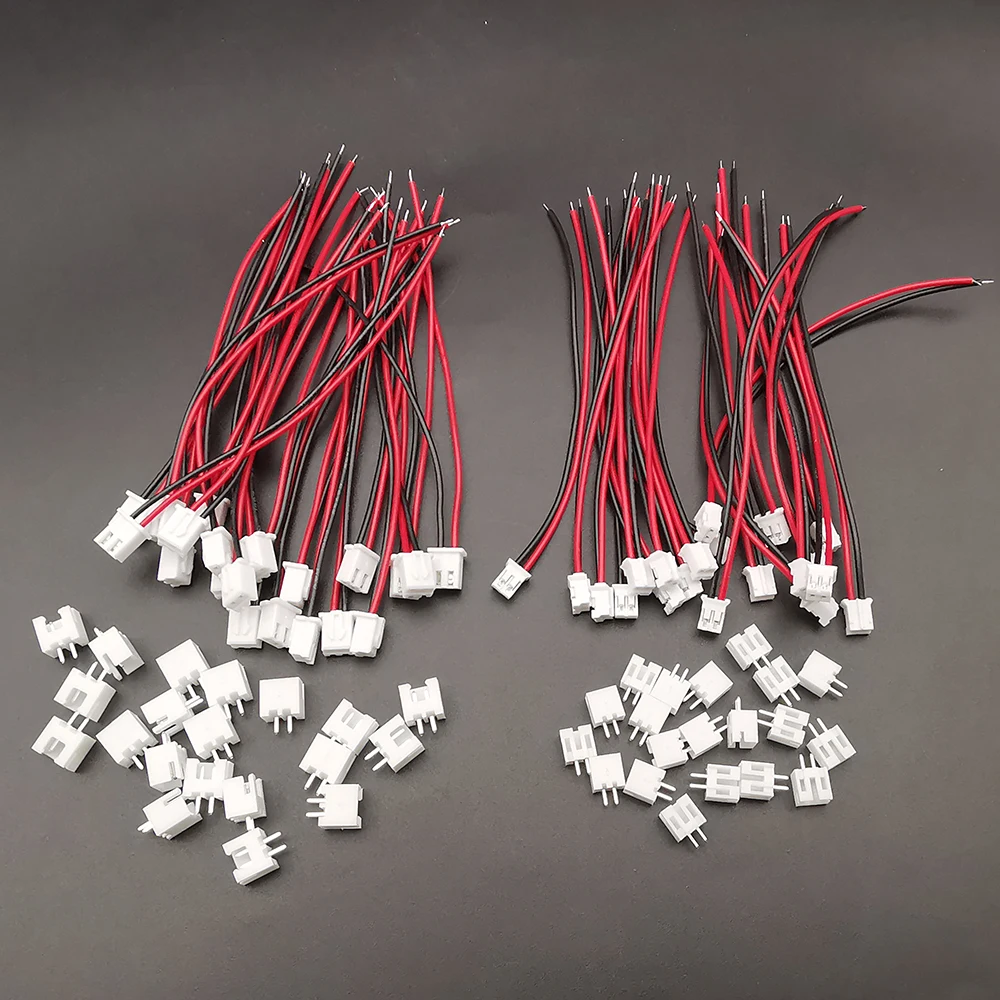
The product provides 20 sets of JST PH 2.0 and XH 2.54 2-pin male and female connectors, each pre-attached to 100mm lengths of 26AWG wire. This standardization is a significant boon for anyone working with various electronic components that often feature these common headers. It eliminates the need for individual crimping or soldering of pins, which can be time-consuming and introduce points of failure.
Each connector type, JST PH and XH, represents a widely adopted standard in the electronics industry. The JST PH series, with its 2.0mm pitch, is known for its compact size, making it suitable for tight enclosures and miniature circuit boards often found in portable solar charging units or small monitoring systems. The XH series, featuring a 2.54mm pitch, offers a slightly larger, more robust connection, often preferred for slightly higher current applications or where a more substantial physical connection is desired. Both types are polarized, meaning they can only be inserted in one orientation, effectively preventing accidental reverse polarity that could damage sensitive DC components like charge controllers or battery management systems.
This dual-standard offering provides flexibility. Users can select the appropriate connector based on the space constraints and mechanical stress requirements of their specific solar project. It's a pragmatic approach to component selection.
Wire Gauge and Current Handling
The connectors come with 100mm (approximately 4 inches) of 26AWG wire. The American Wire Gauge (AWG) system indicates wire diameter; a higher AWG number signifies a thinner wire. 26AWG wire is quite fine, making it ideal for low-current signal transmission and power delivery in applications where space and weight are at a premium.
For solar energy hobbyists, understanding the current handling capabilities of 26AWG wire is paramount. This gauge is typically rated for currents in the range of 0.25 to 0.5 Amperes for continuous use, depending on insulation and ambient temperature. This makes it perfect for connecting small sensors, LED indicators, or low-power microcontrollers to a solar charge controller or a small battery pack. It is not designed for high-power transfer, such as connecting a large solar panel directly to an inverter or a significant battery bank. Overloading the wire can lead to resistive heating, potential insulation degradation, and even fire hazards, compromising the safety and longevity of a solar setup.
Therefore, while the 26AWG wire is excellent for signal integrity and minimal voltage drop over short distances at low currents, users must carefully calculate the maximum current draw of their connected components. This ensures the wiring remains within its safe operating limits, preventing efficiency losses due to excessive heat generation and maintaining the overall reliability of the self-sustaining energy system.
Streamlining Solar System Assembly
One of the primary benefits of these pre-wired connectors is the significant reduction in assembly time. Building custom solar solutions often involves numerous interconnections between panels, charge controllers, batteries, and loads. Manually cutting, stripping, and terminating wires for each connection can be tedious and prone to errors. These connectors offer a standardized, repeatable solution.
Imagine a scenario where a hobbyist is building a portable solar charger for small electronics. The project might involve a miniature solar panel, a buck converter for voltage regulation, a small lithium-ion battery, and a USB output. Each of these components typically has small headers. Using these JST/XH connectors, the hobbyist can quickly establish secure connections without the need for soldering iron setup or the precision required for crimping tiny pins. This modularity also simplifies troubleshooting; if a component fails, it can be easily disconnected and replaced without affecting the entire wiring harness.
This capability extends to creating modular solar arrays for experiments or educational purposes. Small solar cells can be wired in series or parallel using these connectors, allowing for easy reconfiguration to test different voltage and current outputs. The consistent wire length of 100mm also helps in maintaining a neat and organized wiring layout, crucial for identifying connections and ensuring proper airflow around components.
Durability and Longevity in Outdoor Applications
While these connectors are primarily designed for internal electronic connections, their application in solar often implies exposure to varying environmental conditions, even if within an enclosure. The visible materials imply a standard plastic housing for the connector bodies and PVC insulation for the wires. These materials offer adequate protection for indoor or enclosed outdoor use, safeguarding against minor abrasions and electrical shorts.
For long-term outdoor deployment of solar projects, additional protective measures would be necessary. The connectors themselves are not inherently waterproof or UV resistant. If used in an exposed environment, they would require placement within a weather-sealed junction box or application of heat-shrink tubing and silicone sealant to protect against moisture, dust, and direct sunlight. This consideration is vital for maintaining connection integrity and preventing corrosion over time, which can lead to increased resistance and power loss in a solar circuit.
Compared to robust, industrial-grade waterproof connectors designed for harsh outdoor conditions, these JST/XH connectors represent a lightweight, cost-effective solution for less demanding environments or for internal wiring within protected enclosures. Their value lies in their ease of use and standardization for prototyping and development, where environmental sealing is often addressed at the enclosure level rather than at each individual wire connection.
Verifying Compatibility and Preventing Losses
Before integrating these connectors into an existing solar setup, verifying compatibility with the pin pitch of the target components is essential. The product clearly states JST PH 2.0mm and XH 2.54mm pitches. Most PCBs and modules will specify the connector type required. A quick visual check or measurement with calipers can confirm the correct fit, preventing damage to pins or connector housings during insertion.
Efficiency losses in solar systems can stem from various factors, including resistive losses in wiring. While 26AWG wire is suitable for low currents, even small voltage drops across connections can accumulate in complex systems. For example, if a sensor draws 100mA and operates at 3.3V, a 0.1V drop across the wiring represents a significant percentage loss. The quality of the connection itself, ensured by the snug fit of these connectors, minimizes contact resistance, which is a common source of localized heat and power loss.
By using pre-terminated wires, the consistency of the connection is improved compared to hand-crimped terminals, where variations in crimp quality can lead to higher resistance. This consistency helps in maintaining predictable performance and calculating efficiency losses more accurately across the entire solar power chain. It ensures that the power generated by a solar panel reaches the load or battery with minimal degradation, maximizing the energy harvest from a self-sustaining system.
The Eco-Friendly Aspect of Modularity
The modular nature facilitated by these connectors also contributes to a more sustainable approach to electronics. Instead of discarding entire assemblies when a single component fails or needs upgrading, individual parts can be easily swapped out. This reduces electronic waste and encourages repairability, aligning with eco-friendly principles often associated with solar energy.
For instance, if a solar-powered weather station's humidity sensor malfunctions, the sensor module, connected via one of these JST/XH plugs, can be quickly replaced without desoldering or re-wiring complex circuits. This ease of maintenance extends the lifespan of the overall project, making it a more environmentally conscious choice. The ability to reuse components and reconfigure systems effortlessly supports iterative design and experimentation, fostering innovation in renewable energy applications.
This focus on modularity and repairability is a direct contrast to many consumer electronics that are designed for obsolescence. By embracing standardized, easily replaceable connections, solar hobbyists can build systems that are not only efficient but also inherently more sustainable.
Final Thoughts on Integration
Ultimately, this JST PH 2.0/XH 2.54 2-Pin Connector Set offers a practical and efficient solution for managing low-power DC connections in solar energy projects. The convenience of pre-wired, polarized connectors significantly reduces assembly time and enhances the reliability of interconnections. Their standardized nature ensures broad compatibility with a multitude of electronic components, making them a cornerstone for modular design and rapid prototyping.
Imagine the satisfaction of quickly assembling a complex solar monitoring system, knowing each connection is secure and correctly oriented. Visualize the ease of modifying or expanding your off-grid power setup, with components effortlessly plugging into place. This set empowers creators to focus on the innovative aspects of their solar projects, rather than grappling with finicky wiring, ultimately accelerating the development of efficient and reliable self-sustaining energy solutions.