JAYO PLA Matte 3D Printer Filament
Official Store Deal
Expert Analysis Overview
The JAYO PLA Matte Filament is a highly consistent and user-friendly 3D printing material, specifically engineered for educational environments and hobbyists prioritizing reliable performance and a distinctive aesthetic finish. This filament addresses common frustrations encountered in 3D printing, making it an ideal choice for learning and creative projects.
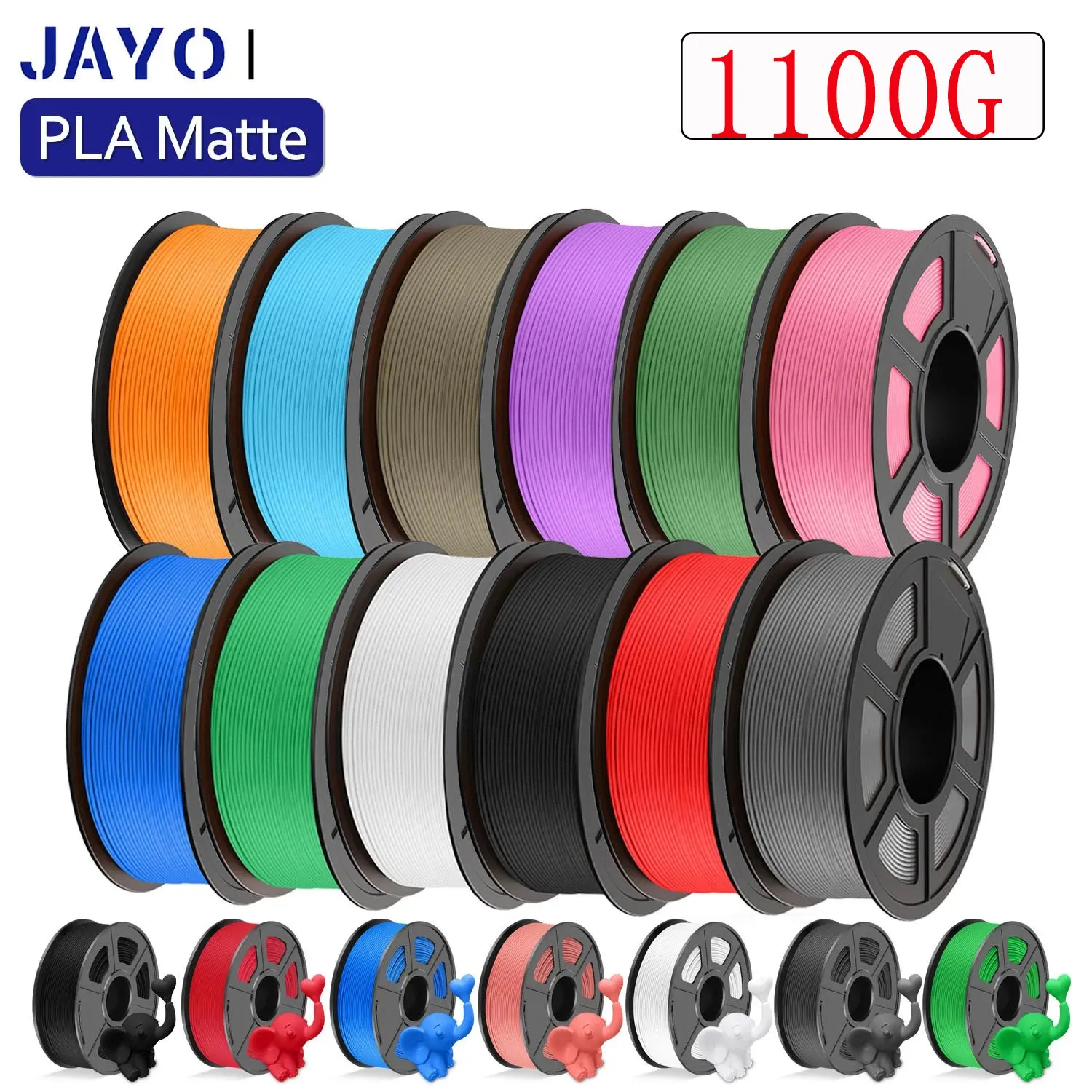
Visual inspection reveals JAYO PLA Matte filament spools are available in a broad spectrum of colors, each weighing 1100 grams. This generous quantity ensures extended printing sessions without frequent material changes. Each spool is neatly wound.
This careful winding is a critical factor in preventing common printing failures. Tangled filament on a spool can lead to print interruptions, nozzle clogs, and wasted material, especially during long print jobs. A well-organized spool minimizes these risks, contributing to a smoother printing experience.
Compared to many budget filaments that often exhibit haphazard winding, the JAYO offering demonstrates a commitment to quality control. This attention to detail reduces the learning curve for new users, as they spend less time troubleshooting mechanical feed issues.
High dimensional accuracy is a cornerstone of reliable 3D printing. The JAYO PLA Matte filament boasts a diameter of 1.75mm with a tight tolerance of ±0.03mm. This precision is monitored through advanced CCD diameter measuring technology.
Consistent filament diameter directly translates to consistent extrusion. When the filament diameter varies, the printer's extruder struggles to push a uniform amount of plastic through the nozzle, leading to inconsistent layer lines, gaps, or over-extrusion. Precise filament ensures each layer is deposited uniformly, resulting in stronger, more accurate parts.
Many standard filaments offer looser tolerances, sometimes up to ±0.05mm or even ±0.1mm. While seemingly small differences, these variations compound over hundreds of layers, significantly impacting the final print quality and structural integrity. The tighter tolerance of JAYO filament means less calibration effort for the user.
This PLA filament is distinguished by its matte surface finish, a deliberate departure from the glossy appearance of traditional PLA. The visual comparison provided highlights the difference, showcasing how the matte finish can enhance the perception of a printed object.
Matte finishes inherently diffuse light rather than reflecting it directly. This characteristic helps to obscure layer lines and other minor surface imperfections that are often more noticeable on glossy prints. For intricate models or those where a professional, non-reflective look is desired, the matte finish is a significant advantage.
For students, achieving professional-looking prints can be highly motivating. Unlike standard glossy PLA, which can highlight every tiny flaw, the matte finish is more forgiving. This allows learners to focus on design principles and printer settings without being overly discouraged by minor cosmetic issues, fostering a more positive learning experience.
JAYO PLA Matte is designed for a high print success rate and good mobility. The material exhibits extremely high fluidity during extrusion, which helps prevent common issues like clogging and print-drop failures. Printed models are consistently smooth.
High fluidity ensures the molten plastic flows easily through the printer's nozzle, even at faster print speeds. This reduces the stress on the extruder motor and minimizes the risk of blockages, which are a frequent cause of print failures. A clear path for the filament is essential for uninterrupted printing.
Many filaments, especially those with additives, can be prone to clogging or inconsistent flow, requiring users to constantly adjust temperatures or print speeds. This filament's optimized fluidity means users can often rely on standard PLA settings, simplifying the slicing process and reducing the need for extensive trial and error. This is particularly beneficial in educational settings where time is often limited.
This filament is made mainly of corn starch, highlighting its environmental and safety considerations. The production process emphasizes creating a non-toxic and harmless material.
PLA, or Polylactic Acid, derived from renewable resources like corn starch, is biodegradable and generally considered safe for indoor use. Unlike some other plastics that can emit harmful fumes when heated, PLA produces minimal volatile organic compounds (VOCs), making it a better choice for classroom or home environments.
For educators, the use of corn-starch-based PLA offers peace of mind regarding student exposure to potentially harmful chemicals. This contrasts sharply with materials like ABS, which require significant ventilation due to their emissions. The non-toxic nature simplifies classroom setup and reduces safety concerns, allowing students to focus on the creative process.
Each spool of JAYO PLA Matte filament is vacuum-packed, then shrink-wrapped, and finally placed in a sturdy box. This multi-layered packaging strategy is crucial for maintaining the filament's quality.
Filament is hygroscopic, meaning it absorbs moisture from the air. Moisture absorption can lead to various printing problems, including bubbling, stringing, poor layer adhesion, and weakened prints. Vacuum packing removes air and moisture, preserving the filament's dry state until it is ready for use.
Many filaments are simply shrink-wrapped, offering less protection against humidity over time. The combination of vacuum sealing and a sturdy outer box provides superior protection, ensuring the filament performs optimally from the first print. This reduces material waste and improves print reliability, especially in humid climates or when storing filament for extended periods.
The JAYO PLA Matte filament offers a compelling package for anyone seeking a dependable and aesthetically pleasing 3D printing experience. Its focus on high print success rates, consistent material properties, and a unique matte finish makes it particularly suitable for educational settings and hobbyists who value both reliability and visual appeal. The material's corn starch base also aligns with environmentally conscious practices, providing a safer option for learning environments. Imagine students confidently bringing their digital designs to life, creating tactile models that showcase their creativity without the frustration of constant print failures. This filament helps foster a positive and productive learning atmosphere, allowing young innovators to fully explore the potential of additive manufacturing. The consistent quality means more focus on design iteration and less on troubleshooting, accelerating the learning process and making 3D printing an accessible and rewarding experience for everyone involved.
Unpacking Filament Integrity
Visual inspection reveals JAYO PLA Matte filament spools are available in a broad spectrum of colors, each weighing 1100 grams. This generous quantity ensures extended printing sessions without frequent material changes. Each spool is neatly wound.
This careful winding is a critical factor in preventing common printing failures. Tangled filament on a spool can lead to print interruptions, nozzle clogs, and wasted material, especially during long print jobs. A well-organized spool minimizes these risks, contributing to a smoother printing experience.
Compared to many budget filaments that often exhibit haphazard winding, the JAYO offering demonstrates a commitment to quality control. This attention to detail reduces the learning curve for new users, as they spend less time troubleshooting mechanical feed issues.
Precision in Every Strand
High dimensional accuracy is a cornerstone of reliable 3D printing. The JAYO PLA Matte filament boasts a diameter of 1.75mm with a tight tolerance of ±0.03mm. This precision is monitored through advanced CCD diameter measuring technology.
Consistent filament diameter directly translates to consistent extrusion. When the filament diameter varies, the printer's extruder struggles to push a uniform amount of plastic through the nozzle, leading to inconsistent layer lines, gaps, or over-extrusion. Precise filament ensures each layer is deposited uniformly, resulting in stronger, more accurate parts.
Many standard filaments offer looser tolerances, sometimes up to ±0.05mm or even ±0.1mm. While seemingly small differences, these variations compound over hundreds of layers, significantly impacting the final print quality and structural integrity. The tighter tolerance of JAYO filament means less calibration effort for the user.
The Matte Aesthetic Advantage
This PLA filament is distinguished by its matte surface finish, a deliberate departure from the glossy appearance of traditional PLA. The visual comparison provided highlights the difference, showcasing how the matte finish can enhance the perception of a printed object.
Matte finishes inherently diffuse light rather than reflecting it directly. This characteristic helps to obscure layer lines and other minor surface imperfections that are often more noticeable on glossy prints. For intricate models or those where a professional, non-reflective look is desired, the matte finish is a significant advantage.
For students, achieving professional-looking prints can be highly motivating. Unlike standard glossy PLA, which can highlight every tiny flaw, the matte finish is more forgiving. This allows learners to focus on design principles and printer settings without being overly discouraged by minor cosmetic issues, fostering a more positive learning experience.
Optimized Printing Dynamics
JAYO PLA Matte is designed for a high print success rate and good mobility. The material exhibits extremely high fluidity during extrusion, which helps prevent common issues like clogging and print-drop failures. Printed models are consistently smooth.
High fluidity ensures the molten plastic flows easily through the printer's nozzle, even at faster print speeds. This reduces the stress on the extruder motor and minimizes the risk of blockages, which are a frequent cause of print failures. A clear path for the filament is essential for uninterrupted printing.
Many filaments, especially those with additives, can be prone to clogging or inconsistent flow, requiring users to constantly adjust temperatures or print speeds. This filament's optimized fluidity means users can often rely on standard PLA settings, simplifying the slicing process and reducing the need for extensive trial and error. This is particularly beneficial in educational settings where time is often limited.
Material Composition and Safety
This filament is made mainly of corn starch, highlighting its environmental and safety considerations. The production process emphasizes creating a non-toxic and harmless material.
PLA, or Polylactic Acid, derived from renewable resources like corn starch, is biodegradable and generally considered safe for indoor use. Unlike some other plastics that can emit harmful fumes when heated, PLA produces minimal volatile organic compounds (VOCs), making it a better choice for classroom or home environments.
For educators, the use of corn-starch-based PLA offers peace of mind regarding student exposure to potentially harmful chemicals. This contrasts sharply with materials like ABS, which require significant ventilation due to their emissions. The non-toxic nature simplifies classroom setup and reduces safety concerns, allowing students to focus on the creative process.
Packaging for Performance
Each spool of JAYO PLA Matte filament is vacuum-packed, then shrink-wrapped, and finally placed in a sturdy box. This multi-layered packaging strategy is crucial for maintaining the filament's quality.
Filament is hygroscopic, meaning it absorbs moisture from the air. Moisture absorption can lead to various printing problems, including bubbling, stringing, poor layer adhesion, and weakened prints. Vacuum packing removes air and moisture, preserving the filament's dry state until it is ready for use.
Many filaments are simply shrink-wrapped, offering less protection against humidity over time. The combination of vacuum sealing and a sturdy outer box provides superior protection, ensuring the filament performs optimally from the first print. This reduces material waste and improves print reliability, especially in humid climates or when storing filament for extended periods.
Educational Empowerment Through Reliable Printing
The JAYO PLA Matte filament offers a compelling package for anyone seeking a dependable and aesthetically pleasing 3D printing experience. Its focus on high print success rates, consistent material properties, and a unique matte finish makes it particularly suitable for educational settings and hobbyists who value both reliability and visual appeal. The material's corn starch base also aligns with environmentally conscious practices, providing a safer option for learning environments. Imagine students confidently bringing their digital designs to life, creating tactile models that showcase their creativity without the frustration of constant print failures. This filament helps foster a positive and productive learning atmosphere, allowing young innovators to fully explore the potential of additive manufacturing. The consistent quality means more focus on design iteration and less on troubleshooting, accelerating the learning process and making 3D printing an accessible and rewarding experience for everyone involved.