Javino Optocoupled Relay Modules for Arduino (1-8 Channel)
Official Store Deal
Expert Analysis Overview
Precision Switching Architecture for Renewable Systems
The Javino Channel Relay Module is a foundational component for micro-controlled power management, essential for solar energy enthusiasts building automated systems. These modules provide a critical interface between low-voltage control logic, such as that found in Arduino or Raspberry Pi platforms, and higher-voltage or higher-current loads commonly encountered in renewable energy installations. Its design prioritizes both operational reliability and the crucial protection of sensitive control circuitry.
The core functionality of these modules revolves around the electromechanical relay, a device that uses an electromagnet to operate a switch. This allows a small current from a microcontroller to control a much larger current or voltage, effectively isolating the control circuit from the power circuit. This isolation is paramount in solar applications where loads can be diverse and potentially introduce electrical noise or spikes back into the control system.
Unlike simpler relay boards that lack robust isolation, these modules incorporate optocouplers to safeguard delicate control circuitry. An optocoupler uses light to transmit a signal between two electrically isolated circuits. This means there is no direct electrical connection between the microcontroller's signal pins and the relay's coil, providing a robust barrier against voltage spikes, ground loops, and electromagnetic interference. This feature is not merely a convenience; it is a fundamental design choice that significantly enhances the longevity and stability of an entire solar energy management system.
Versatile Channel Configurations
These relay modules are available in a wide array of channel counts, specifically 1, 2, 4, 6, and 8 channel configurations. This versatility allows hobbyists and professional integrators to select the exact number of independent switching circuits required for a specific project. A single-channel module might suffice for a simple automated light, while an 8-channel board can manage multiple loads or control sequences within a more complex off-grid power setup.
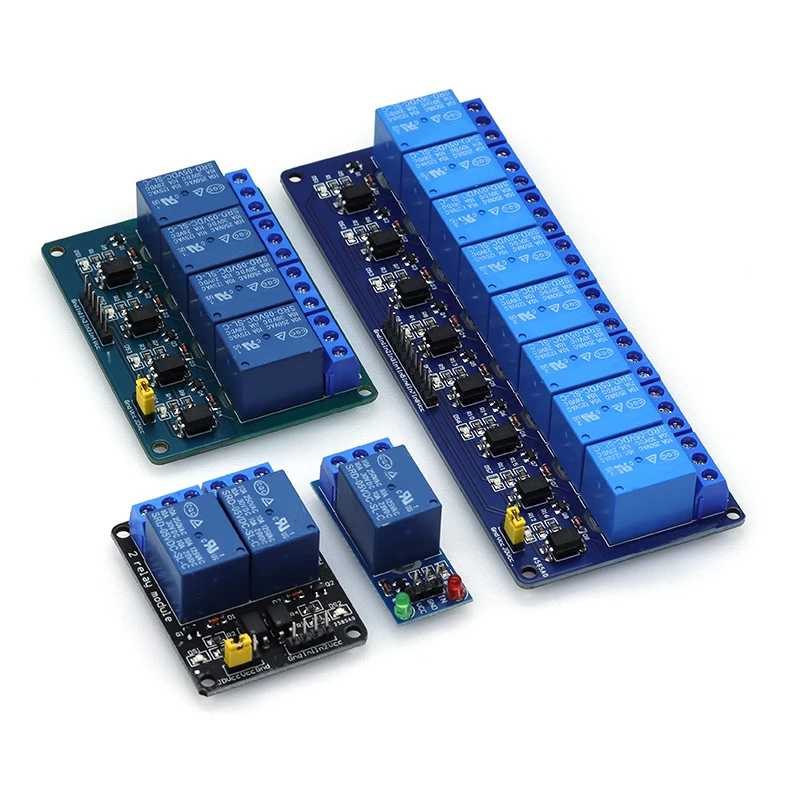
The visible variations in board size directly correspond to the number of relays included. Larger boards accommodate more relays and associated components. This modularity simplifies system design and reduces component clutter, allowing for a cleaner and more manageable wiring layout. Each channel operates independently. This is a significant advantage for complex automation.
For instance, in a small off-grid cabin, a 4-channel module could control DC lighting circuits, a ventilation fan, and perhaps a low-power water pump, all from a central microcontroller. This capability streamlines the automation process. It also reduces the need for multiple single-channel modules, saving space and simplifying wiring harnesses.
Operational Voltage Compatibility
The modules are offered in both 5V and 12V versions, catering to the most common power rails found in hobbyist electronics and solar energy systems. The 5V modules are directly compatible with popular microcontrollers like Arduino Uno, ESP32, or Raspberry Pi, which typically operate on a 5V logic level. This direct compatibility simplifies integration, often requiring only a few jumper wires for control signals.
The 12V versions, conversely, are ideal for direct integration into 12V solar battery banks or systems. This allows the relay module itself to be powered directly from the solar system's main voltage, eliminating the need for a separate 5V power supply for the relay coils. Such direct integration can reduce power conversion losses. It also simplifies the overall power architecture of an off-grid system, making it more robust and efficient.
Choosing the correct voltage version is crucial for optimal performance and system longevity. Mismatched voltages can lead to unreliable switching or, in worst-case scenarios, damage to either the relay module or the controlling microcontroller. Always verify the power requirements of the control board. Ensure it aligns with the selected relay module's operating voltage.
Robust Componentry and Build Quality
Examination of the product images reveals a well-laid-out PCB (Printed Circuit Board) with clearly labeled components and connection points. The blue relays themselves, often marked 'SRD-05VDC-SL-C' or similar, typically indicate a switching capacity of 10A at 250VAC or 30VDC. This rating signifies the module's ability to handle substantial electrical loads, making it suitable for a wide range of solar-powered devices, from LED lighting arrays to small inverter control signals.
The inclusion of screw terminals for load connections provides a secure and reliable method for wiring higher current devices. These terminals ensure a firm grip on the wire, minimizing the risk of loose connections that could lead to arcing or overheating, which are common failure points in less robust designs. The terminals are clearly visible. They facilitate easy connection and disconnection of loads, which is beneficial during prototyping or system maintenance.
Furthermore, LED indicators are present on each channel, typically a red LED for power and a green or blue LED to indicate when a specific relay is energized. These visual cues are invaluable for troubleshooting and verifying the operational status of each switched circuit without the need for external test equipment. This immediate feedback loop is critical during system setup. It helps confirm correct wiring and programming, preventing potential damage from misconfigurations.
Integrating into Renewable Systems
For solar energy hobbyists, these relay modules open up a world of automation possibilities. They can be used to implement intelligent load shedding, where non-essential loads are automatically disconnected when battery voltage drops below a certain threshold, preserving critical power for essential systems. This capability is vital for maximizing the uptime of off-grid installations. It protects battery banks from deep discharge, extending their lifespan.
Another compelling application is the automation of solar panel cleaning or tracking systems. While the relays themselves don't perform the tracking, they can switch the motors that adjust panel orientation based on microcontroller inputs from light sensors or time-based algorithms. This enables greater energy harvest. It optimizes the solar array's output throughout the day.
These modules can also facilitate smart energy management within a home or RV. Imagine controlling a 12V water pump for irrigation, activating a ventilation fan when ambient temperature exceeds a set point, or even remotely switching on exterior lighting, all orchestrated by a low-power microcontroller. The ability to manage both DC and AC (within specified limits) loads makes these modules incredibly versatile. This allows for a unified control system for diverse electrical components.
Compared to manual switching solutions, these relay modules offer unparalleled precision and responsiveness. They allow for programmed sequences and conditional logic, far beyond what simple manual switches can achieve. This level of control is fundamental for building truly efficient and self-sufficient renewable energy systems. The modules become the digital hands of your solar brain.
Safeguarding Your Solar Investments
The optocoupler isolation is a standout feature, directly addressing a significant pain point for anyone working with microcontrollers and power electronics: the risk of damaging sensitive digital components. Without isolation, voltage spikes from inductive loads (like motors or solenoids) or unexpected surges on the power side can easily propagate back to the microcontroller, leading to irreversible damage. This protection is not merely an added luxury; it is a fundamental requirement for reliable long-term operation.
By physically separating the control circuit from the high-power switching circuit, the optocoupler acts as an electronic firewall. This ensures that even if a fault occurs on the load side, the microcontroller remains safe and operational. This peace of mind is invaluable, especially when dealing with expensive microcontrollers or critical system components. It minimizes downtime and repair costs.
Furthermore, the clear separation of grounds between the control and load sides helps prevent ground loop issues, which can introduce noise into analog readings or cause erratic behavior in digital systems. This clean signal path is particularly important in systems where sensors are used to monitor environmental conditions or battery states. Reliable data input is crucial for accurate automation decisions.
Considerations for High-Current Applications
While the relays are rated for 10A, it is always prudent to operate them below their maximum continuous current rating, especially in enclosed environments or for inductive loads. For applications requiring switching significantly higher currents, these modules can still be utilized, but as control signals for larger external contactors or solid-state relays. This hierarchical approach ensures safety and scalability.
For instance, if a solar system needs to switch a 50A inverter, the Javino relay module can provide the low-current trigger signal to a robust 50A contactor. This leverages the module's intelligence for control while offloading the heavy current switching to a purpose-built device. This method maintains the integrity of the control system. It also allows for flexible system expansion.
Proper wire sizing for the load connections is also critical. Using wires that are too thin for the current being switched can lead to overheating and potential fire hazards. The screw terminals on these modules are designed for specific wire gauges. Always consult relevant electrical codes and best practices for wire sizing based on the anticipated current draw. Safety must always be the priority.
Long-Term Value and System Expansion
The affordability of these relay modules, especially when purchased in multi-packs, presents significant long-term value. Instead of investing in more expensive, integrated solutions that might offer limited flexibility, these modules allow for a highly customizable and expandable system. As a solar energy project evolves, additional channels can be easily added by incorporating more modules, without overhauling the entire control architecture.
This modular approach is particularly beneficial for hobbyists who often start with smaller projects and gradually expand their capabilities. The low cost per channel means experimentation is encouraged. It allows for iterative design and refinement without substantial financial commitment. This makes advanced automation accessible to a broader audience of DIY enthusiasts.
Imagine the satisfaction of building a completely automated greenhouse powered by solar, with temperature-controlled ventilation, automated irrigation, and intelligent lighting, all controlled by a central microcontroller and a handful of these reliable relay modules. The initial investment is minimal. The capabilities are extensive. This approach fosters innovation and self-sufficiency in renewable energy applications.
When considering these modules, envision the seamless automation of your solar-powered initiatives, from smart home integration to sophisticated off-grid power management. The ability to reliably switch various loads with precision, all while protecting your valuable control electronics, translates directly into a more efficient, safer, and ultimately more rewarding renewable energy experience. These modules are not just components; they are enablers of advanced, self-sustaining systems, allowing you to focus on innovation rather than worrying about circuit integrity. They empower you to build the future of your energy independence.