Isolated AC-DC Buck Converter Module (5V/12V)
Official Store Deal
Expert Analysis Overview
The Isolated AC-DC Buck Converter Module is a compact, efficiency-focused power solution designed for solar energy hobbyists and electronics enthusiasts seeking a reliable and safe low-power supply. This module efficiently steps down higher AC or DC voltages to stable 5V or 12V outputs, crucial for integrating small electronic components into self-sustaining energy systems. Its design prioritizes safety through galvanic isolation, a key consideration for sensitive applications.
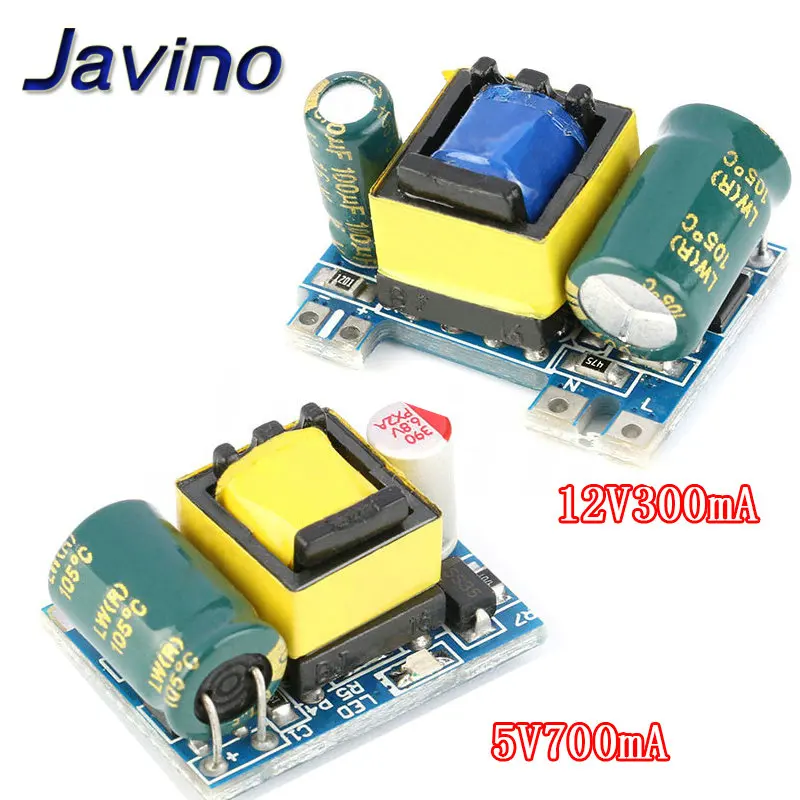
This module functions as a buck converter, a specific type of DC-DC power converter engineered to step down voltage from its input to its output. It is a fundamental component in many modern power management systems, distinguished by its high efficiency. The visible components on the printed circuit board (PCB) include a prominent yellow switching transformer, multiple electrolytic capacitors, and what appears to be rectifier diodes, all meticulously arranged to manage the flow of electrical energy. These elements are critical for the intricate conversion process, ensuring stable output.
The real-world implication of this sophisticated design is its remarkable ability to accept a wide range of input voltages, from standard AC mains (50-270V) to rectified DC (70-390V), and precisely convert it into a usable, lower DC voltage. This inherent flexibility makes it particularly valuable for projects where the primary input power source might fluctuate significantly or originate from diverse systems, such as the output of solar charge controllers, rectified grid power, or even larger battery banks. It handles varied inputs with grace.
Compared to traditional linear regulators, which are simpler but inherently less efficient, a buck converter offers significantly higher energy conversion efficiency, especially when the input voltage vastly exceeds the required output voltage. Linear regulators dissipate excess voltage as heat, a wasteful process that translates directly into lost energy and increased thermal management challenges. This switching design, by contrast, minimizes such losses, making it a more eco-friendly, cost-effective, and practical choice for continuous operation in energy-conscious applications.
The module is specifically offered in two distinct output configurations to cater to common electronic requirements: a 5V 700mA version and a 12V 300mA version. Both options are engineered to provide a total power output of 3.5W. This specific power level positions the module squarely in the realm of low-power applications, where efficiency and compact size are often prioritized over raw wattage.
For a dedicated solar energy hobbyist, this means the module is perfectly suited for powering a diverse array of small electronic loads, such as a low-power microcontroller acting as the brain of a system, a modest array of low-power light-emitting diodes (LEDs) for indication or illumination, or a distributed network of environmental sensors. Imagine the precise power required for a remote weather station or an automated irrigation system. Such devices typically require minimal current, making these modules perfectly suited for their operational needs.
Unlike larger, more general-purpose power supplies that often come with significant bulk, these compact units are purpose-built for seamless integration into tight spaces. Their exceptionally small footprint is a significant advantage in modern electronics design. This allows for discreet placement within custom project enclosures, maintaining a clean, professional, and aesthetically pleasing build without compromising on functionality.
A critical and highly beneficial feature explicitly highlighted in the product title is its isolated switch power supply design. This fundamental characteristic signifies that the electrical path between the high-voltage input (whether AC or DC) and the low-voltage output (the 5V or 12V) is galvanically separated. There is no direct conductive path connecting the two sides. Instead, electrical energy is transferred safely and efficiently via magnetic fields through the module's integrated transformer.
This inherent isolation provides a crucial safety barrier, acting as a protective shield for both the user interacting with the low-voltage circuitry and the sensitive electronic components connected to the output. By preventing direct electrical connection, it effectively mitigates the risk of electric shock and safeguards against potential high-voltage faults from propagating to the low-voltage side. Furthermore, it plays a vital role in preventing undesirable ground loops, which are common sources of electrical noise that can introduce erratic behavior and instability into sensitive electronic systems. Noise reduction is key for reliable operation.
Many non-isolated buck converters, while often simpler and more cost-effective to produce, carry the inherent risk of exposing the low-voltage side to the full potential of mains voltage faults, posing significant safety hazards. This isolated design, while adding a slight degree of complexity and potentially a marginal cost, offers a demonstrably superior level of protection and reliability. It represents a prudent and responsible engineering choice, particularly for applications where human interaction or the protection of valuable components is a primary concern.
For any application within the realm of solar energy, efficiency is not merely a desirable trait; it is paramount. Every single watt-hour of energy harvested from a solar panel array represents a valuable resource. A highly efficient power converter, such as this buck module, ensures that a greater proportion of that hard-won harvested energy is actually delivered to the intended load, rather than being squandered as waste heat. This module's switching design inherently contributes to superior energy conversion efficiency compared to the wasteful heat generation of linear regulation.
The module's compact size and highly integrated nature translate into fewer external components being required for its operation, which in turn simplifies the overall circuit design and significantly reduces potential points of failure within a system. This streamlined and minimalist approach aids considerably in the construction of robust, reliable, and truly self-sustaining energy systems. Less complexity often means greater inherent reliability over the long term.
When meticulously calculating the overall energy budget and efficiency of a comprehensive solar setup, the performance of every individual component must be taken into account. Employing an efficient buck converter like this one helps to minimize conversion losses between the primary energy source (e.g., a battery bank, a rectified solar output, or a DC micro-grid) and the end-user device. This direct optimization translates into tangible benefits, such as extended operational times for battery-powered systems or the ability to achieve desired performance with smaller, more cost-effective battery requirements.
The module's impressive wide input voltage range, spanning from 50-270V AC to 70-390V DC, renders it exceptionally adaptable for diverse power architectures. In a typical solar energy context, this versatility means the module could be strategically employed to step down the higher voltage output of a series-connected solar array (after appropriate rectification to DC) or from a high-voltage battery bank, thereby providing a stable and regulated 5V or 12V for specific, lower-power loads. This broad input compatibility significantly simplifies overall system design, offering flexibility to engineers and hobbyists alike.
Verifying compatibility with existing solar setups primarily involves ensuring that the input voltage supplied by the solar charge controller, battery inverter, or other DC source falls reliably within the module's acceptable operational range. Given its relatively small power output, it is highly unlikely to draw significant surge currents from the main solar bus, making it an ideal candidate for auxiliary power needs, such as powering monitoring equipment or communication modules. It fits well into existing systems without imposing undue strain.
For those dedicated to building a truly self-sustaining energy system, these modules are particularly well-suited for powering the "brains" of the operation – specifically, microcontrollers that are tasked with managing energy flow, monitoring environmental sensors, or controlling small actuators. They provide the necessary stable, isolated power to these critical components without consuming excessive energy themselves, thus preserving the overall energy budget of the system. This makes them a foundational element for intelligent, energy-independent designs.
From a visual inspection, the module presents as a well-assembled unit mounted on a standard blue printed circuit board (PCB). The primary components, including the distinctive yellow switching transformer and the green electrolytic capacitors, are clearly visible and appear to be securely mounted with robust solder joints. The deliberate choice of through-hole components for the larger, more substantial parts suggests a design emphasis on mechanical robustness, a characteristic that is highly beneficial for hobbyist projects that may experience frequent handling or integration into custom enclosures.
The clear and concise labeling on the PCB, such as "IN L N" for the AC input and "OUT+ VCC GND" for the DC output, provides unambiguous guidance for proper wiring. This meticulous attention to detail significantly simplifies the integration process, particularly for those who may be less experienced with power electronics, thereby reducing the likelihood of incorrect connections and potential damage. Clear labeling is helpful for all skill levels.
While specific component brands are not explicitly stated or visible in the imagery, the general appearance and construction suggest the use of standard industrial-grade parts that are entirely suitable for their intended low-power application. The 105°C temperature rating prominently displayed on the electrolytic capacitors indicates a decent thermal tolerance, which contributes positively to the module's expected longevity and reliability under typical operating conditions, even within moderately warm enclosures.
Consider a practical scenario where a sophisticated solar-powered garden light system requires a constant 5V supply for its intricate control logic and a separate 12V supply for a small, efficient LED array. While this specific module is designed to provide either one voltage or the other (not simultaneously from a single unit), its compact nature allows for multiple units to be seamlessly integrated if both voltages are needed from a single higher voltage source. This inherent modularity offers significant design flexibility and is a distinct advantage for complex projects.
Another compelling application could be found in advanced home automation systems, where a central smart hub is powered by the main electrical grid, but individual low-power sensors, actuators, or remote displays are part of a distributed, solar-backed network. This module effectively bridges the power gap, providing the necessary isolated and regulated power to these network components, ensuring their reliable operation regardless of grid status. It enables seamless integration between disparate power domains.
The inherent ability of this module to convert a standard 220V AC input directly to a stable 5V or 12V DC output significantly simplifies power distribution in a multitude of projects, effectively eliminating the need for bulky and often inefficient external power adapters. This leads to a much cleaner, more integrated, and aesthetically pleasing final product, which is particularly desirable for custom enclosures and professional-looking installations.
At its highly competitive price point, this module offers significant value for its robust functionality, especially considering its crucial isolated output feature. Compared to the considerable effort and component cost involved in attempting to construct a similar isolated power supply from discrete components, this pre-assembled and tested module represents a substantial saving in both time and intellectual effort. Time is a precious commodity for hobbyists and developers alike.
The inherent efficiency gains derived from employing a buck converter over a less efficient linear regulator translate directly into lower operational costs over the long term, particularly for devices that are designed to run continuously or for extended periods. This economic benefit aligns perfectly with the eco-friendly ethos of solar energy enthusiasts and makers who are consistently striving to minimize overall energy consumption and environmental impact.
For those involved in building prototypes, developing proof-of-concept models, or even undertaking small production runs, the consistency, predictability, and inherent reliability of a pre-tested and validated module are invaluable assets. It significantly reduces development time, minimizes troubleshooting efforts, and ensures a predictable and stable power source for critical electronic components. This consistency is a major benefit, accelerating project completion.
To ensure the module delivers optimal performance throughout its operational lifespan and maximizes its longevity, meticulous attention to proper thermal management is crucial, even for devices operating at relatively low power. While the module is specifically designed for a 3.5W output, enclosing it within a tightly sealed or poorly ventilated enclosure could lead to elevated operating temperatures that exceed its design parameters. Adequate airflow is important for heat dissipation.
Users must also adhere strictly and diligently to the specified input and output voltage and current limits. Pushing the module beyond its rated specifications will inevitably lead to premature component degradation, reduced efficiency, and ultimately, catastrophic failure. Understanding and respecting these operational limits is fundamental to ensuring reliable and long-term operation of the device.
Given the module's compact physical dimensions, it can be susceptible to mechanical stress if it is not properly secured within its intended environment. Mounting it firmly and securely within an appropriate enclosure provides essential protection from vibrations, accidental impacts, and other physical disturbances, thereby ensuring its long-term stability and consistent performance. Secure mounting is advised for durability.
Imagine the profound satisfaction of witnessing your custom solar-powered device reliably function, day in and day out, fueled by a stable, safe, and efficiently converted energy source. This module is not merely a collection of electronic components; it is a foundational building block, an enabler for your most innovative and sustainable projects. It provides the robust and reliable power backbone for your next smart garden system, a sophisticated remote sensor array, or an advanced off-grid lighting solution. The compact design allows for seamless integration into even the most constrained spaces, freeing up valuable room for additional features or a sleeker, more minimalist aesthetic. Your creations will operate with enhanced safety, thanks to its critical isolated output, and with superior energy efficiency, courtesy of its buck conversion topology. This module empowers you to confidently bring your sustainable energy visions to life, ensuring your electronics run smoothly, securely, and with unwavering reliability.
The Engineering Behind Efficient Power Conversion
This module functions as a buck converter, a specific type of DC-DC power converter engineered to step down voltage from its input to its output. It is a fundamental component in many modern power management systems, distinguished by its high efficiency. The visible components on the printed circuit board (PCB) include a prominent yellow switching transformer, multiple electrolytic capacitors, and what appears to be rectifier diodes, all meticulously arranged to manage the flow of electrical energy. These elements are critical for the intricate conversion process, ensuring stable output.
The real-world implication of this sophisticated design is its remarkable ability to accept a wide range of input voltages, from standard AC mains (50-270V) to rectified DC (70-390V), and precisely convert it into a usable, lower DC voltage. This inherent flexibility makes it particularly valuable for projects where the primary input power source might fluctuate significantly or originate from diverse systems, such as the output of solar charge controllers, rectified grid power, or even larger battery banks. It handles varied inputs with grace.
Compared to traditional linear regulators, which are simpler but inherently less efficient, a buck converter offers significantly higher energy conversion efficiency, especially when the input voltage vastly exceeds the required output voltage. Linear regulators dissipate excess voltage as heat, a wasteful process that translates directly into lost energy and increased thermal management challenges. This switching design, by contrast, minimizes such losses, making it a more eco-friendly, cost-effective, and practical choice for continuous operation in energy-conscious applications.
Precision Power for Micro-Scale Innovation
The module is specifically offered in two distinct output configurations to cater to common electronic requirements: a 5V 700mA version and a 12V 300mA version. Both options are engineered to provide a total power output of 3.5W. This specific power level positions the module squarely in the realm of low-power applications, where efficiency and compact size are often prioritized over raw wattage.
For a dedicated solar energy hobbyist, this means the module is perfectly suited for powering a diverse array of small electronic loads, such as a low-power microcontroller acting as the brain of a system, a modest array of low-power light-emitting diodes (LEDs) for indication or illumination, or a distributed network of environmental sensors. Imagine the precise power required for a remote weather station or an automated irrigation system. Such devices typically require minimal current, making these modules perfectly suited for their operational needs.
Unlike larger, more general-purpose power supplies that often come with significant bulk, these compact units are purpose-built for seamless integration into tight spaces. Their exceptionally small footprint is a significant advantage in modern electronics design. This allows for discreet placement within custom project enclosures, maintaining a clean, professional, and aesthetically pleasing build without compromising on functionality.
Galvanic Isolation: A Cornerstone of Electrical Safety
A critical and highly beneficial feature explicitly highlighted in the product title is its isolated switch power supply design. This fundamental characteristic signifies that the electrical path between the high-voltage input (whether AC or DC) and the low-voltage output (the 5V or 12V) is galvanically separated. There is no direct conductive path connecting the two sides. Instead, electrical energy is transferred safely and efficiently via magnetic fields through the module's integrated transformer.
This inherent isolation provides a crucial safety barrier, acting as a protective shield for both the user interacting with the low-voltage circuitry and the sensitive electronic components connected to the output. By preventing direct electrical connection, it effectively mitigates the risk of electric shock and safeguards against potential high-voltage faults from propagating to the low-voltage side. Furthermore, it plays a vital role in preventing undesirable ground loops, which are common sources of electrical noise that can introduce erratic behavior and instability into sensitive electronic systems. Noise reduction is key for reliable operation.
Many non-isolated buck converters, while often simpler and more cost-effective to produce, carry the inherent risk of exposing the low-voltage side to the full potential of mains voltage faults, posing significant safety hazards. This isolated design, while adding a slight degree of complexity and potentially a marginal cost, offers a demonstrably superior level of protection and reliability. It represents a prudent and responsible engineering choice, particularly for applications where human interaction or the protection of valuable components is a primary concern.
Maximizing Harvested Energy: The Efficiency Imperative
For any application within the realm of solar energy, efficiency is not merely a desirable trait; it is paramount. Every single watt-hour of energy harvested from a solar panel array represents a valuable resource. A highly efficient power converter, such as this buck module, ensures that a greater proportion of that hard-won harvested energy is actually delivered to the intended load, rather than being squandered as waste heat. This module's switching design inherently contributes to superior energy conversion efficiency compared to the wasteful heat generation of linear regulation.
The module's compact size and highly integrated nature translate into fewer external components being required for its operation, which in turn simplifies the overall circuit design and significantly reduces potential points of failure within a system. This streamlined and minimalist approach aids considerably in the construction of robust, reliable, and truly self-sustaining energy systems. Less complexity often means greater inherent reliability over the long term.
When meticulously calculating the overall energy budget and efficiency of a comprehensive solar setup, the performance of every individual component must be taken into account. Employing an efficient buck converter like this one helps to minimize conversion losses between the primary energy source (e.g., a battery bank, a rectified solar output, or a DC micro-grid) and the end-user device. This direct optimization translates into tangible benefits, such as extended operational times for battery-powered systems or the ability to achieve desired performance with smaller, more cost-effective battery requirements.
Seamless Integration and Compatibility in Solar Architectures
The module's impressive wide input voltage range, spanning from 50-270V AC to 70-390V DC, renders it exceptionally adaptable for diverse power architectures. In a typical solar energy context, this versatility means the module could be strategically employed to step down the higher voltage output of a series-connected solar array (after appropriate rectification to DC) or from a high-voltage battery bank, thereby providing a stable and regulated 5V or 12V for specific, lower-power loads. This broad input compatibility significantly simplifies overall system design, offering flexibility to engineers and hobbyists alike.
Verifying compatibility with existing solar setups primarily involves ensuring that the input voltage supplied by the solar charge controller, battery inverter, or other DC source falls reliably within the module's acceptable operational range. Given its relatively small power output, it is highly unlikely to draw significant surge currents from the main solar bus, making it an ideal candidate for auxiliary power needs, such as powering monitoring equipment or communication modules. It fits well into existing systems without imposing undue strain.
For those dedicated to building a truly self-sustaining energy system, these modules are particularly well-suited for powering the "brains" of the operation – specifically, microcontrollers that are tasked with managing energy flow, monitoring environmental sensors, or controlling small actuators. They provide the necessary stable, isolated power to these critical components without consuming excessive energy themselves, thus preserving the overall energy budget of the system. This makes them a foundational element for intelligent, energy-independent designs.
Scrutinizing Build Quality and Component Selection
From a visual inspection, the module presents as a well-assembled unit mounted on a standard blue printed circuit board (PCB). The primary components, including the distinctive yellow switching transformer and the green electrolytic capacitors, are clearly visible and appear to be securely mounted with robust solder joints. The deliberate choice of through-hole components for the larger, more substantial parts suggests a design emphasis on mechanical robustness, a characteristic that is highly beneficial for hobbyist projects that may experience frequent handling or integration into custom enclosures.
The clear and concise labeling on the PCB, such as "IN L N" for the AC input and "OUT+ VCC GND" for the DC output, provides unambiguous guidance for proper wiring. This meticulous attention to detail significantly simplifies the integration process, particularly for those who may be less experienced with power electronics, thereby reducing the likelihood of incorrect connections and potential damage. Clear labeling is helpful for all skill levels.
While specific component brands are not explicitly stated or visible in the imagery, the general appearance and construction suggest the use of standard industrial-grade parts that are entirely suitable for their intended low-power application. The 105°C temperature rating prominently displayed on the electrolytic capacitors indicates a decent thermal tolerance, which contributes positively to the module's expected longevity and reliability under typical operating conditions, even within moderately warm enclosures.
Practical Project Scenarios and Enhanced Potential
Consider a practical scenario where a sophisticated solar-powered garden light system requires a constant 5V supply for its intricate control logic and a separate 12V supply for a small, efficient LED array. While this specific module is designed to provide either one voltage or the other (not simultaneously from a single unit), its compact nature allows for multiple units to be seamlessly integrated if both voltages are needed from a single higher voltage source. This inherent modularity offers significant design flexibility and is a distinct advantage for complex projects.
Another compelling application could be found in advanced home automation systems, where a central smart hub is powered by the main electrical grid, but individual low-power sensors, actuators, or remote displays are part of a distributed, solar-backed network. This module effectively bridges the power gap, providing the necessary isolated and regulated power to these network components, ensuring their reliable operation regardless of grid status. It enables seamless integration between disparate power domains.
The inherent ability of this module to convert a standard 220V AC input directly to a stable 5V or 12V DC output significantly simplifies power distribution in a multitude of projects, effectively eliminating the need for bulky and often inefficient external power adapters. This leads to a much cleaner, more integrated, and aesthetically pleasing final product, which is particularly desirable for custom enclosures and professional-looking installations.
The Compelling Value Proposition for the Eco-Conscious Maker
At its highly competitive price point, this module offers significant value for its robust functionality, especially considering its crucial isolated output feature. Compared to the considerable effort and component cost involved in attempting to construct a similar isolated power supply from discrete components, this pre-assembled and tested module represents a substantial saving in both time and intellectual effort. Time is a precious commodity for hobbyists and developers alike.
The inherent efficiency gains derived from employing a buck converter over a less efficient linear regulator translate directly into lower operational costs over the long term, particularly for devices that are designed to run continuously or for extended periods. This economic benefit aligns perfectly with the eco-friendly ethos of solar energy enthusiasts and makers who are consistently striving to minimize overall energy consumption and environmental impact.
For those involved in building prototypes, developing proof-of-concept models, or even undertaking small production runs, the consistency, predictability, and inherent reliability of a pre-tested and validated module are invaluable assets. It significantly reduces development time, minimizes troubleshooting efforts, and ensures a predictable and stable power source for critical electronic components. This consistency is a major benefit, accelerating project completion.
Optimizing Performance and Ensuring Longevity
To ensure the module delivers optimal performance throughout its operational lifespan and maximizes its longevity, meticulous attention to proper thermal management is crucial, even for devices operating at relatively low power. While the module is specifically designed for a 3.5W output, enclosing it within a tightly sealed or poorly ventilated enclosure could lead to elevated operating temperatures that exceed its design parameters. Adequate airflow is important for heat dissipation.
Users must also adhere strictly and diligently to the specified input and output voltage and current limits. Pushing the module beyond its rated specifications will inevitably lead to premature component degradation, reduced efficiency, and ultimately, catastrophic failure. Understanding and respecting these operational limits is fundamental to ensuring reliable and long-term operation of the device.
Given the module's compact physical dimensions, it can be susceptible to mechanical stress if it is not properly secured within its intended environment. Mounting it firmly and securely within an appropriate enclosure provides essential protection from vibrations, accidental impacts, and other physical disturbances, thereby ensuring its long-term stability and consistent performance. Secure mounting is advised for durability.
The Future of Your Projects
Imagine the profound satisfaction of witnessing your custom solar-powered device reliably function, day in and day out, fueled by a stable, safe, and efficiently converted energy source. This module is not merely a collection of electronic components; it is a foundational building block, an enabler for your most innovative and sustainable projects. It provides the robust and reliable power backbone for your next smart garden system, a sophisticated remote sensor array, or an advanced off-grid lighting solution. The compact design allows for seamless integration into even the most constrained spaces, freeing up valuable room for additional features or a sleeker, more minimalist aesthetic. Your creations will operate with enhanced safety, thanks to its critical isolated output, and with superior energy efficiency, courtesy of its buck conversion topology. This module empowers you to confidently bring your sustainable energy visions to life, ensuring your electronics run smoothly, securely, and with unwavering reliability.