Insulated Ring Crimp Terminals Assortment
Official Store Deal
Expert Analysis Overview
Ensuring Connection Integrity: Terminal Construction
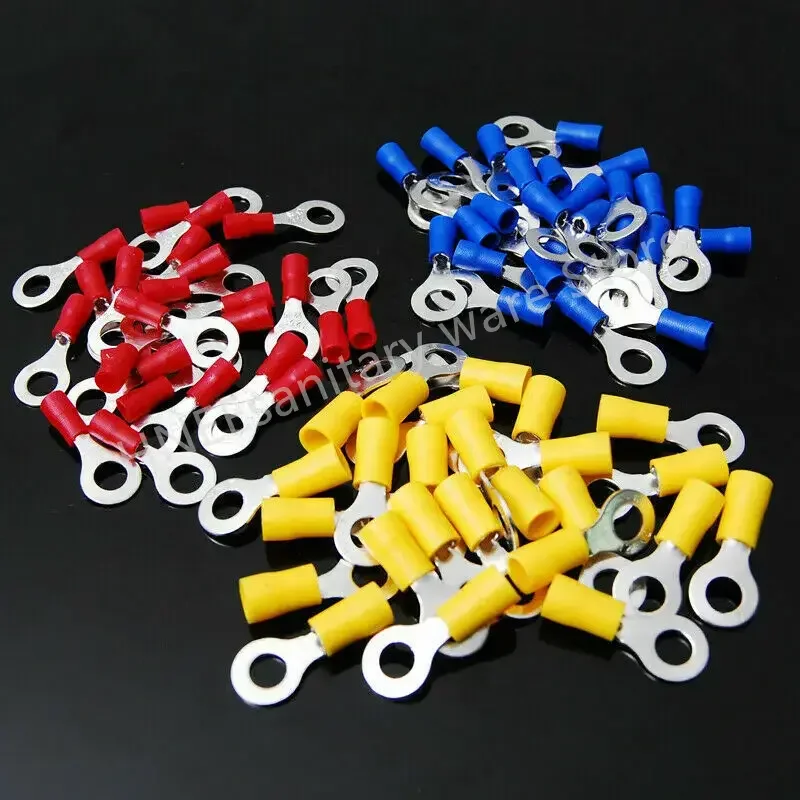
The Insulated Ring Crimp Terminals Assortment represents a fundamental component in reliable electrical wiring, crucial for establishing secure, low-resistance connections in various applications. These terminals are designed to terminate stranded electrical wires, providing a robust connection point to a screw or stud. The visible construction indicates a metallic ring lug, likely tinned copper or brass, encased within a polymer insulation sleeve. This dual-material approach is standard.The metallic core ensures excellent electrical conductivity. It is essential for minimizing voltage drop and heat generation. The ring design provides a full 360-degree contact area around the stud, which is superior to spade terminals in vibration-prone environments. This mechanical stability is paramount for long-term reliability in automotive or marine settings.
Compared to uninsulated terminals, the integrated insulation sleeve offers a critical layer of protection. It prevents accidental short circuits and provides strain relief at the wire-to-terminal junction. This design enhances safety and reduces the risk of wire fatigue, a common failure point in poorly terminated connections.
Matching Conductors: Gauge and Application Range
The assortment includes terminals color-coded for specific wire gauges: red for smaller gauges (typically 22-16 AWG or 0.5-1.5mm²), blue for medium gauges (16-14 AWG or 1.5-2.5mm²), and yellow for larger gauges (12-10 AWG or 4-6mm²). This visual identification system is a significant advantage for electricians and DIY enthusiasts alike. It simplifies wire matching.Each color corresponds to a range of wire cross-sectional areas, as depicted in the instructional images. For instance, the red terminals are suitable for light-duty circuits, while the yellow terminals handle higher current loads. The availability of various stud hole diameters (M3, M4, M5, M6, M8, M10, M12) ensures compatibility with a wide array of fastening points. This versatility is key.
Unlike generic, single-gauge terminal packs, this multi-gauge assortment allows for a broader application spectrum. Users can tackle diverse wiring tasks, from small signal wires to heavier power feeds, without needing multiple specialized kits. This comprehensive offering streamlines inventory and project execution, proving more cost-effective in the long run.
Protective Encasement: Insulation Standards and Safety
The polymer insulation sleeves are crucial for electrical safety. They prevent accidental contact with live conductors, reducing the risk of electric shock or short circuits. The color-coding, while primarily for gauge identification, also serves as a quick visual safety check during installation and troubleshooting. Proper insulation is non-negotiable.While specific UL or CE certifications are not explicitly stated, the industry standard for these color-coded terminals implies a certain level of dielectric strength and temperature resistance. Users should always verify the terminal's suitability for the intended voltage and temperature environment. Overheating can compromise insulation integrity.
Compared to bare crimp terminals, these insulated versions significantly enhance safety. They reduce the need for additional heat shrink tubing or electrical tape, simplifying the installation process and creating a cleaner, more professional finish. This integrated insulation is a time-saver and a safety upgrade, especially in confined spaces where insulation application can be challenging.
The Art of Secure Attachment: Crimping for Reliability
Proper crimping is paramount for the performance of these terminals. The instructional diagram clearly illustrates the four-step process: stripping the wire, inserting it into the terminal, crimping with a dedicated tool, and verifying the connection. A correctly crimped terminal ensures maximum current flow and mechanical strength. It prevents loose connections.An improperly crimped terminal can lead to high resistance, generating heat and potentially causing a fire hazard. It can also result in intermittent connections, leading to system malfunctions. The use of a proper crimping tool, as recommended, is not optional; it is a requirement for a safe and reliable connection. Hand pliers are insufficient.
Unlike soldering, which can create brittle joints and is susceptible to vibration, crimping creates a cold-weld connection that is both electrically sound and mechanically robust. This method is preferred in many industrial and automotive applications due to its reliability and speed. The crimping process, when executed correctly, forms a gas-tight seal, preventing corrosion and ensuring long-term performance.
Longevity in Service: Material Resilience
The visible materials, likely tinned copper for the terminal and PVC for the insulation, suggest a reasonable level of durability for general-purpose applications. Tin plating on copper enhances corrosion resistance, which is particularly beneficial in damp or humid environments. This extends the lifespan of the connection.PVC insulation offers good electrical properties and resistance to abrasion. However, its temperature range might be limited compared to more advanced materials like nylon or heat-shrink polyolefin. Users should consider the operating temperature of their application. Extreme heat can degrade PVC.
Compared to terminals made from plain steel or unplated brass, tinned copper terminals offer superior corrosion resistance and conductivity. This material choice contributes to a more reliable and longer-lasting electrical system, reducing the frequency of maintenance and repairs. The investment in quality materials pays dividends in reduced downtime and enhanced safety.
Economic Efficiency for Electrical Workflows
Acquiring these terminals in a bulk assortment offers significant economic advantages for professionals and hobbyists who frequently perform electrical work. The cost per terminal is substantially lower than purchasing individual packs, making it a highly efficient solution. Stocking up prevents project delays.This bulk purchase strategy minimizes procurement time and effort. Electricians can maintain a ready supply of commonly used terminals, ensuring they have the right component for any task at hand. This efficiency translates directly into increased productivity and reduced project overhead. Time is money.
Unlike purchasing terminals piecemeal, which often incurs higher unit costs and shipping fees, this bulk offering provides a comprehensive and cost-effective solution. It is an intelligent investment for anyone regularly engaged in electrical installations, repairs, or modifications. The value proposition is clear for consistent users.
Imagine completing electrical projects with confidence, knowing every connection is secure and properly insulated. Visualize a workspace where the correct terminal is always at hand, streamlining your workflow and enhancing safety. These terminals provide the foundational reliability for any electrical endeavor, ensuring peace of mind and professional results for years to come.