Insulated Quick Disconnect Spade Connectors (6.3mm, Multi-Gauge)
Official Store Deal
Expert Analysis Overview
The Insulated Quick Disconnect Spade Connectors are a fundamental, high-utility electrical component engineered for reliable, temporary, or semi-permanent wire terminations across a spectrum of low-voltage applications. These connectors address the critical need for both secure electrical contact and the flexibility of rapid assembly or disassembly, a common requirement in maintenance and modular system design. Their construction and design aim to provide a significant enhancement over basic, uninsulated terminals, focusing on safety and ease of use for the electronics repair technician.
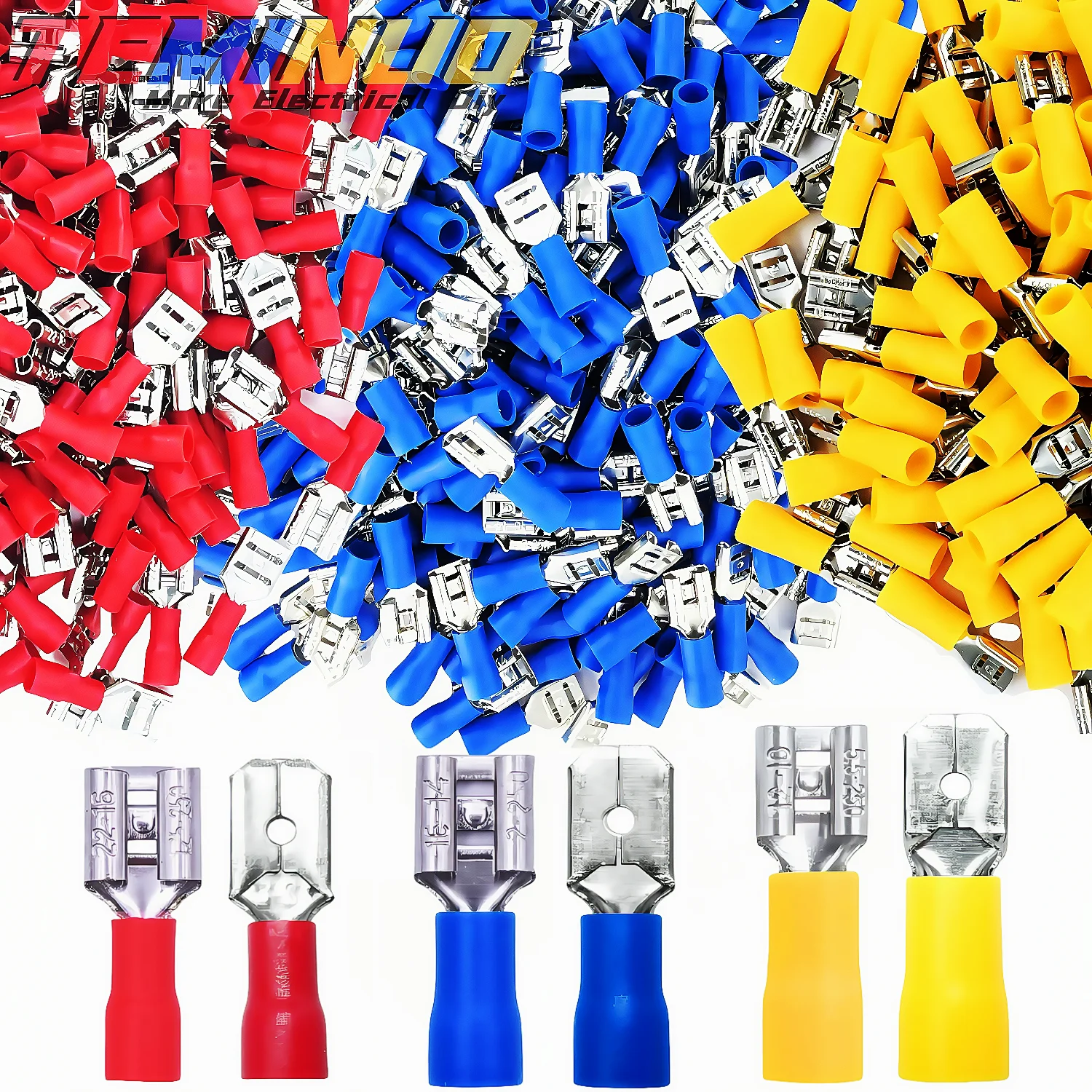
These connectors feature a dual-material construction, prominently displaying high-purity PVC for insulation and pure copper for the conductive spade terminal. The visual evidence clearly shows distinct color-coding—red, blue, and yellow—each corresponding to a specific wire gauge range. This visual differentiation is a practical aid. The spade itself is a standardized 6.3mm (1/4 inch) width, a common dimension in many electrical systems.
The choice of pure copper as the conductive element is critical. Copper offers superior electrical conductivity compared to brass or steel alternatives often found in lower-grade connectors. This material selection directly translates to minimal resistance across the connection, which is vital for maintaining signal integrity and preventing voltage drop, particularly in circuits sensitive to power fluctuations. The PVC insulation, while a standard material, provides a necessary barrier against accidental short circuits and environmental contaminants.
Unlike many basic, uninsulated terminals that rely on external heat shrink or electrical tape for isolation, these connectors integrate insulation directly into their design. This integrated approach simplifies installation and reduces the potential for human error in applying secondary insulation. The color-coding further streamlines the selection process, preventing misapplication of connectors to incompatible wire sizes, a common source of electrical faults.
The product offers compatibility across three primary wire gauge ranges: 22-16 AWG (red), 16-14 AWG (blue), and 12-10 AWG (yellow). Each range is explicitly linked to a maximum current rating: 10A for 22-16 AWG, 15A for 16-14 AWG, and 24A for 12-10 AWG. These specifications are clearly presented in the accompanying technical diagrams. Proper gauge matching is paramount.
Matching the wire gauge to the connector's specified range is not merely a recommendation; it is a fundamental safety and performance requirement. Using a connector too large for the wire can result in a loose crimp, leading to increased resistance, heat generation, and potential arcing. Conversely, forcing an oversized wire into a smaller connector can damage the wire strands or the connector itself, compromising the insulation and the connection's integrity. The stated current ratings provide clear operational limits.
Many generic connectors often provide only vague or broad compatibility claims. This product, however, provides precise AWG ranges and corresponding current capacities. This level of detail allows for accurate component selection, which is crucial for compliance with electrical codes and for ensuring the long-term reliability of any circuit. It prevents the guesswork often associated with lesser-specified terminals.
The defining characteristic of these components is their quick disconnect functionality. This design allows for the male and female spade terminals to be rapidly engaged and disengaged without the need for tools, once the wire is crimped. The 6.3mm spade width is a widely adopted standard, ensuring broad compatibility with existing electrical components and receptacles. This is a practical advantage.
This quick disconnect capability significantly streamlines maintenance and troubleshooting procedures. In complex wiring harnesses or control panels, individual components can be isolated or replaced swiftly, minimizing downtime. For prototyping or testing setups, the ability to reconfigure connections without cutting and re-crimping wires is invaluable. It enhances operational efficiency.
Traditional soldered connections, while offering excellent long-term stability, are permanent and time-consuming to modify. Screw terminals, while reusable, can loosen over time due to vibration and require tools for every adjustment. These quick disconnects offer a compelling middle ground, providing a secure connection that remains easily serviceable. They offer flexibility.
The insulation is described as "High Purity PVC" and possesses "Insulation and Flame Retardant" properties. This dual emphasis on material quality and safety attributes is a key selling point. The PVC jacket encases the metal spade, extending over the crimp barrel to provide comprehensive protection. This adds a layer of security.
The flame retardant characteristic of the PVC insulation is a critical safety feature, especially in applications where electrical faults could lead to overheating or fire. Should an electrical short occur, this property helps to contain any potential flame, preventing it from spreading to adjacent wiring or components. It mitigates risk. The insulation also protects against incidental contact with live conductors.
Compared to uninsulated spade terminals, which require separate insulation sleeves or heat shrink tubing, these integrated insulated connectors offer a more robust and reliable solution. The pre-applied insulation ensures consistent coverage and eliminates the possibility of forgotten or improperly applied secondary insulation. This integrated safety feature is a clear upgrade.
The "How to Use" diagram clearly illustrates the installation process: strip wire, insert wire into connector, crimp the connector, and the process is complete. This sequence emphasizes the importance of a proper crimp. A professional crimper is explicitly recommended for this task. Correct technique is vital.
A well-executed crimp creates a cold weld between the wire strands and the connector barrel, establishing a low-resistance, mechanically strong, and gas-tight connection. This gas-tight seal prevents oxygen and moisture from reaching the wire, thereby inhibiting corrosion and ensuring long-term electrical integrity. An improper crimp, conversely, can lead to intermittent connections, increased resistance, and premature failure. It demands precision.
Unlike soldering, which requires heat and can introduce brittle points if not done correctly, crimping, when performed with the right tool and technique, offers a consistent and repeatable connection. The reliance on a professional crimper, rather than pliers or makeshift tools, distinguishes a reliable installation from a potentially hazardous one. This ensures consistent quality.
The product images and descriptions highlight a "Wide Application" range, including the electrical industry, electric wire & cable, power distribution cabinets, and factory machinery. These examples showcase the broad utility of these connectors across various sectors. Their adaptability is a strong attribute.
In the electrical industry, these connectors are indispensable for creating modular wiring systems in control panels, HVAC units, and appliance hookups. For automotive applications, they facilitate easy replacement of components like lights, sensors, or audio equipment. The ability to quickly disconnect and reconnect makes troubleshooting and upgrades far less cumbersome. They simplify complex systems.
Many specialized connectors exist for niche applications. However, these insulated spade connectors serve as a foundational component for general electrical work. Their widespread adoption in both professional and DIY settings speaks to their practical design and ease of integration into diverse projects. They are a common standard.
Offered in quantities of 60 or 80 pieces at a competitive price point, these connectors represent a significant value for anyone regularly undertaking electrical work. The bulk packaging ensures a ready supply for multiple projects or ongoing maintenance needs. This is a cost-effective solution.
Investing in quality connectors like these prevents the need for frequent re-work due to failed connections, which can be far more costly in terms of time and replacement parts. A reliable connection minimizes diagnostic time for intermittent faults and extends the lifespan of the connected equipment. The initial outlay is offset by long-term savings.
Compared to purchasing individual connectors from local hardware stores, which often come at a premium, this bulk offering provides a much lower cost per unit. This makes it an attractive option for workshops, professional electricians, or even enthusiastic hobbyists who consume these components regularly. It offers economic efficiency.
Imagine completing wiring projects with confidence, knowing each connection is secure and easily serviceable. Picture a workshop where troubleshooting is streamlined, and component swaps are a matter of moments, not hours. These connectors facilitate a more efficient and safer electrical environment, allowing for rapid modifications and reliable operation across all your systems. This enhances productivity.
The Core of Connectivity: Material Science and Design
These connectors feature a dual-material construction, prominently displaying high-purity PVC for insulation and pure copper for the conductive spade terminal. The visual evidence clearly shows distinct color-coding—red, blue, and yellow—each corresponding to a specific wire gauge range. This visual differentiation is a practical aid. The spade itself is a standardized 6.3mm (1/4 inch) width, a common dimension in many electrical systems.
The choice of pure copper as the conductive element is critical. Copper offers superior electrical conductivity compared to brass or steel alternatives often found in lower-grade connectors. This material selection directly translates to minimal resistance across the connection, which is vital for maintaining signal integrity and preventing voltage drop, particularly in circuits sensitive to power fluctuations. The PVC insulation, while a standard material, provides a necessary barrier against accidental short circuits and environmental contaminants.
Unlike many basic, uninsulated terminals that rely on external heat shrink or electrical tape for isolation, these connectors integrate insulation directly into their design. This integrated approach simplifies installation and reduces the potential for human error in applying secondary insulation. The color-coding further streamlines the selection process, preventing misapplication of connectors to incompatible wire sizes, a common source of electrical faults.
Precision in Termination: Gauge and Current Handling
The product offers compatibility across three primary wire gauge ranges: 22-16 AWG (red), 16-14 AWG (blue), and 12-10 AWG (yellow). Each range is explicitly linked to a maximum current rating: 10A for 22-16 AWG, 15A for 16-14 AWG, and 24A for 12-10 AWG. These specifications are clearly presented in the accompanying technical diagrams. Proper gauge matching is paramount.
Matching the wire gauge to the connector's specified range is not merely a recommendation; it is a fundamental safety and performance requirement. Using a connector too large for the wire can result in a loose crimp, leading to increased resistance, heat generation, and potential arcing. Conversely, forcing an oversized wire into a smaller connector can damage the wire strands or the connector itself, compromising the insulation and the connection's integrity. The stated current ratings provide clear operational limits.
Many generic connectors often provide only vague or broad compatibility claims. This product, however, provides precise AWG ranges and corresponding current capacities. This level of detail allows for accurate component selection, which is crucial for compliance with electrical codes and for ensuring the long-term reliability of any circuit. It prevents the guesswork often associated with lesser-specified terminals.
The Art of Disconnection: Functionality and Application
The defining characteristic of these components is their quick disconnect functionality. This design allows for the male and female spade terminals to be rapidly engaged and disengaged without the need for tools, once the wire is crimped. The 6.3mm spade width is a widely adopted standard, ensuring broad compatibility with existing electrical components and receptacles. This is a practical advantage.
This quick disconnect capability significantly streamlines maintenance and troubleshooting procedures. In complex wiring harnesses or control panels, individual components can be isolated or replaced swiftly, minimizing downtime. For prototyping or testing setups, the ability to reconfigure connections without cutting and re-crimping wires is invaluable. It enhances operational efficiency.
Traditional soldered connections, while offering excellent long-term stability, are permanent and time-consuming to modify. Screw terminals, while reusable, can loosen over time due to vibration and require tools for every adjustment. These quick disconnects offer a compelling middle ground, providing a secure connection that remains easily serviceable. They offer flexibility.
Safeguarding the Circuit: Insulation and Flame Retardancy
The insulation is described as "High Purity PVC" and possesses "Insulation and Flame Retardant" properties. This dual emphasis on material quality and safety attributes is a key selling point. The PVC jacket encases the metal spade, extending over the crimp barrel to provide comprehensive protection. This adds a layer of security.
The flame retardant characteristic of the PVC insulation is a critical safety feature, especially in applications where electrical faults could lead to overheating or fire. Should an electrical short occur, this property helps to contain any potential flame, preventing it from spreading to adjacent wiring or components. It mitigates risk. The insulation also protects against incidental contact with live conductors.
Compared to uninsulated spade terminals, which require separate insulation sleeves or heat shrink tubing, these integrated insulated connectors offer a more robust and reliable solution. The pre-applied insulation ensures consistent coverage and eliminates the possibility of forgotten or improperly applied secondary insulation. This integrated safety feature is a clear upgrade.
Installation Mastery: Crimping and Reliability
The "How to Use" diagram clearly illustrates the installation process: strip wire, insert wire into connector, crimp the connector, and the process is complete. This sequence emphasizes the importance of a proper crimp. A professional crimper is explicitly recommended for this task. Correct technique is vital.
A well-executed crimp creates a cold weld between the wire strands and the connector barrel, establishing a low-resistance, mechanically strong, and gas-tight connection. This gas-tight seal prevents oxygen and moisture from reaching the wire, thereby inhibiting corrosion and ensuring long-term electrical integrity. An improper crimp, conversely, can lead to intermittent connections, increased resistance, and premature failure. It demands precision.
Unlike soldering, which requires heat and can introduce brittle points if not done correctly, crimping, when performed with the right tool and technique, offers a consistent and repeatable connection. The reliance on a professional crimper, rather than pliers or makeshift tools, distinguishes a reliable installation from a potentially hazardous one. This ensures consistent quality.
Versatility in Wiring: Application Scenarios
The product images and descriptions highlight a "Wide Application" range, including the electrical industry, electric wire & cable, power distribution cabinets, and factory machinery. These examples showcase the broad utility of these connectors across various sectors. Their adaptability is a strong attribute.
In the electrical industry, these connectors are indispensable for creating modular wiring systems in control panels, HVAC units, and appliance hookups. For automotive applications, they facilitate easy replacement of components like lights, sensors, or audio equipment. The ability to quickly disconnect and reconnect makes troubleshooting and upgrades far less cumbersome. They simplify complex systems.
Many specialized connectors exist for niche applications. However, these insulated spade connectors serve as a foundational component for general electrical work. Their widespread adoption in both professional and DIY settings speaks to their practical design and ease of integration into diverse projects. They are a common standard.
Value Proposition and Longevity: Cost-Effectiveness
Offered in quantities of 60 or 80 pieces at a competitive price point, these connectors represent a significant value for anyone regularly undertaking electrical work. The bulk packaging ensures a ready supply for multiple projects or ongoing maintenance needs. This is a cost-effective solution.
Investing in quality connectors like these prevents the need for frequent re-work due to failed connections, which can be far more costly in terms of time and replacement parts. A reliable connection minimizes diagnostic time for intermittent faults and extends the lifespan of the connected equipment. The initial outlay is offset by long-term savings.
Compared to purchasing individual connectors from local hardware stores, which often come at a premium, this bulk offering provides a much lower cost per unit. This makes it an attractive option for workshops, professional electricians, or even enthusiastic hobbyists who consume these components regularly. It offers economic efficiency.
Imagine completing wiring projects with confidence, knowing each connection is secure and easily serviceable. Picture a workshop where troubleshooting is streamlined, and component swaps are a matter of moments, not hours. These connectors facilitate a more efficient and safer electrical environment, allowing for rapid modifications and reliable operation across all your systems. This enhances productivity.