Insulated Copper Ferrule Crimp Connectors (22-8 AWG)
Official Store Deal
Expert Analysis Overview
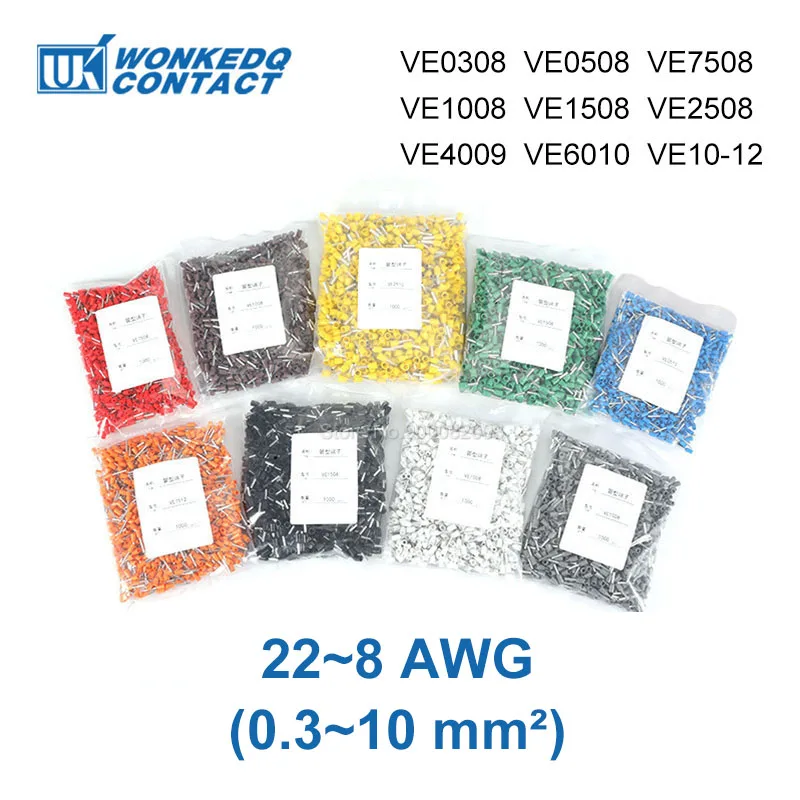
The Insulated Copper Ferrule Crimp Connectors are a critical termination solution, engineered for electricians and technicians who demand uncompromising reliability and safety in their wiring installations. These components address the inherent challenges of connecting stranded wires to screw-type terminal blocks. Without proper termination, stranded wires can splay, leading to intermittent connections, increased resistance, and potential short circuits. This product range, spanning from 22 to 8 AWG (0.3 to 10 mm²), offers a standardized and robust method to consolidate wire strands into a single, secure pin. The visible array of sizes and colors immediately communicates a comprehensive approach to wire management. This is a fundamental wiring component.
These ferrules feature a tin-plated copper barrel. This material choice is not arbitrary. Copper offers excellent electrical conductivity, ensuring minimal resistance across the connection. The tin plating serves a crucial role in preventing oxidation, which can degrade conductivity over time and lead to connection failures. This plating also enhances the crimping process, allowing for a more consistent and gas-tight seal between the wire and the ferrule. A solid connection is vital.
The real-world implication of this material science is profound. In industrial control panels or automotive systems, where vibrations and environmental factors are common, a stable electrical connection is paramount. A properly crimped ferrule maintains its integrity, preventing signal degradation or power loss. This ensures the longevity and consistent operation of connected equipment. Intermittent faults become a distant memory.
Compared to simply twisting stranded wires or tinning them with solder, ferrules provide a superior mechanical and electrical connection. Twisted wires are prone to loosening, while tinned wires can suffer from "cold flow" under screw pressure, leading to eventual loosening and potential arcing. Ferrules eliminate these failure modes, offering a professional-grade termination. They are a significant upgrade.
Each ferrule incorporates a polypropylene (PP) insulation sleeve. This sleeve extends beyond the metal barrel, providing crucial electrical isolation. The insulation prevents accidental contact between adjacent terminals or components, a common cause of short circuits in densely wired enclosures. Its presence is a clear indicator of a product designed with safety as a primary consideration. Safety is paramount.
The practical benefit of this insulation is immediate. When working in tight spaces or with high-density terminal blocks, the risk of stray wire strands or accidental tool contact causing a fault is significantly reduced. The color-coding of these sleeves, visible across the product range, further aids in rapid wire identification and error prevention during installation and troubleshooting. This is a simple, effective safety measure. Errors are minimized.
Unlike non-insulated ferrules, which require additional heat shrink or electrical tape for isolation, these integrated insulated ferrules streamline the wiring process. They reduce installation time and ensure a consistent level of insulation quality across all terminations. This integrated approach minimizes the potential for human error in applying secondary insulation. Efficiency is improved.
A key design feature is the funnel-shaped entry on the insulation sleeve. This design guides the stripped wire strands smoothly into the copper barrel. This seemingly minor detail significantly improves the ease and speed of wire insertion, especially with finer stranded wires that tend to splay. It's a small detail that makes a big difference. Insertion becomes easier.
In a production environment or during complex field installations, every second counts. The funnel entry minimizes frustration and reduces the likelihood of stray strands being left outside the ferrule, which could compromise the connection or create a short circuit. This design promotes clean and efficient wiring practices. Time is saved.
Compared to ferrules with a straight-cut insulation entry, the funnel design drastically reduces the effort required to insert the wire. This not only speeds up the process but also lessens installer fatigue, particularly when terminating hundreds of wires in a single project. The ergonomic benefit is clear. Work becomes less strenuous.
The choice of tin-plated copper for the conductive barrel is a deliberate engineering decision. Copper is renowned for its electrical conductivity, second only to silver among common metals. This ensures minimal power loss and efficient signal transmission. The tin plating acts as a protective layer, preventing oxidation and corrosion, which are common culprits in connection degradation. Corrosion is a major threat.
Oxidation on copper surfaces can lead to increased contact resistance, generating heat and potentially causing connection failure. The tin layer provides a stable, low-resistance surface that maintains its integrity over time, even in challenging environments like those with high humidity or corrosive fumes. This ensures consistent performance. Long-term stability is key.
Many generic connectors use lower-grade alloys or insufficient plating, leading to premature failure. The visible quality of these ferrules implies a commitment to material standards that support long-term reliability, crucial for systems where maintenance access is difficult or downtime is costly. This is an upgrade from basic, unplated copper. Quality pays off.
The polypropylene (PP) insulation offers a balance of electrical isolation, mechanical protection, and thermal stability. PP is a thermoplastic polymer known for its good dielectric properties and resistance to many chemicals, including solvents and acids. This makes it suitable for a wide range of industrial and commercial applications where exposure to various substances is possible. Its robust nature is apparent. Chemical resistance is important.
The insulation sleeve protects the crimped connection from environmental factors such as dust and moisture, which can accelerate corrosion and degrade electrical performance. It also provides strain relief at the wire entry point, reducing the risk of conductor fatigue from bending or vibration. This adds a layer of physical protection, enhancing the overall resilience of the termination. Physical protection is crucial.
Unlike PVC insulation, which can become brittle at low temperatures or soften at high temperatures, PP maintains its structural integrity over a broader operational range, typically up to 105°C as indicated by UL ratings. This contributes to the overall durability and safety profile of the terminated connection, ensuring performance in diverse climates. The material choice is practical.
This ferrule set supports a wide range of wire gauges, from 22 AWG to 8 AWG (0.3 to 10 mm²). This broad compatibility makes it an incredibly versatile solution for various electrical projects. From delicate control wiring in PLCs to heavier power distribution circuits in motor control centers, a suitable ferrule size is available within this assortment. This covers many applications.
The availability of multiple sizes within a single product offering simplifies inventory management for technicians and workshops. Instead of sourcing individual sizes from different suppliers, a bulk pack like this provides a ready supply for almost any common wiring task, minimizing procurement complexities. This streamlines workflow. Inventory is simplified.
Many basic ferrule kits offer a limited range, forcing users to purchase additional specialized sets for larger or smaller gauges. This comprehensive range, as indicated by the various VE/E series part numbers (E0508, E7508, E1008, E1508, E2508, E4009, etc.), positions this product as a more complete solution compared to standard entry-level assortments. This is a significant advantage for professionals.
The color-coding of the insulation sleeves adheres to common industry standards, facilitating quick identification of the appropriate ferrule for a given wire gauge. While specific color-to-AWG assignments can vary regionally (e.g., DIN vs. French standards), the consistent use of distinct colors across the range is invaluable for maintaining organization and reducing errors. This simplifies selection.
During installation, especially in complex panels with numerous wires and tight deadlines, the ability to rapidly identify the correct ferrule size by color significantly reduces errors and speeds up the assembly process. This visual aid is a practical benefit for efficiency, preventing mis-termination that could lead to system faults. Visual cues are effective.
Without color-coding, installers would need to constantly refer to a chart or physically measure each ferrule, adding considerable time and potential for mistakes in a high-volume environment. The standardized color scheme, clearly visible in the product images, is a clear upgrade in usability over uncolored or inconsistently colored alternatives. This enhances user experience.
Achieving a reliable connection with these ferrules hinges on proper crimping technique. A dedicated ferrule crimping tool, often with a square or hexagonal crimp profile, is indispensable. These tools are designed to apply uniform pressure around the ferrule barrel, creating a cold weld between the copper and the wire strands. This forms a gas-tight, low-resistance connection that resists pull-out forces. The right tool is essential.
An improperly crimped ferrule can lead to several issues: an under-crimp might result in a loose connection prone to pull-out, increased resistance, and potential arcing. Conversely, an over-crimp could damage the wire strands or the ferrule itself, compromising conductivity and mechanical strength. The crimp must be just right. Consistency is key.
Unlike simple pliers, which deform the ferrule unevenly and provide inconsistent contact, a proper crimping tool ensures a consistent and repeatable crimp profile across all terminations. This consistency is crucial for maintaining the electrical and mechanical integrity of every connection, adhering to industry standards for safety and performance. This is a professional requirement.
Ferrules are specifically designed to interface with screw-type terminal blocks, which are ubiquitous in industrial and commercial electrical systems. The solid, consolidated end of the ferrule provides a much larger and more consistent contact area for the screw to bear down upon, compared to bare stranded wire. This optimizes the connection. Contact area is improved.
When a screw presses directly on bare stranded wire, it can cut or damage individual strands, reducing the effective cross-sectional area and increasing resistance. This damage can also lead to wire fatigue and eventual failure. The ferrule protects the wire from this direct mechanical stress, distributing the clamping force evenly. This protects the conductor.
The use of ferrules in terminal blocks is a standard practice in industrial and commercial wiring for good reason. It ensures a robust, long-lasting connection that is easy to inspect and troubleshoot, meeting stringent safety and performance requirements. This is a best practice, widely adopted for its benefits.
The initial investment in quality ferrules and a proper crimping tool is quickly recouped through the prevention of costly rework and equipment downtime. Loose or faulty connections are a major cause of intermittent failures in electrical systems, leading to extensive troubleshooting time, expensive component replacements, and significant production losses. Reliable connections save money.
By providing a consistently secure and durable connection, these ferrules minimize the need for maintenance and repair specifically due to connection issues. This translates directly into reduced operational costs and improved system uptime, enhancing overall productivity and profitability for businesses. This is a long-term saving.
Compared to the hidden costs associated with unreliable wiring – diagnostic time, replacement parts, lost productivity, and potential safety hazards – the upfront cost of these ferrules is a negligible expense. They are an investment in system reliability and operational continuity, offering a clear return on investment. They are an investment.
The product is offered in bulk quantities, typically 1000 pieces per pack. This packaging strategy is ideal for professionals and hobbyists engaged in continuous wiring projects, such as panel building, machine wiring, or large-scale automotive electrical work. Having a large supply on hand prevents interruptions due to running out of a specific size. This ensures project continuity.
For workshops, manufacturing facilities, or electrical contractors, bulk purchasing offers significant cost efficiencies per unit compared to smaller retail packs. It reduces the frequency of reordering, simplifies procurement logistics, and ensures that the necessary components are always available when needed, minimizing project delays. This is a practical advantage.
Unlike small retail packs that cater to single, minor repairs, these bulk packs are designed for sustained use, reflecting a focus on professional and high-volume applications. This value proposition is clear for active users who prioritize efficiency and cost-effectiveness in their daily operations. This is a smart choice.
The Insulated Copper Ferrule Crimp Connectors represent a fundamental component in modern electrical wiring, elevating the standard of termination. Their design, material selection, and broad compatibility underscore a commitment to reliability, safety, and ease of use. The tin-plated copper ensures optimal conductivity and corrosion resistance, while the polypropylene insulation provides critical electrical isolation and visual identification. The funnel-shaped entry simplifies wire insertion, a small but impactful detail for efficiency. These ferrules are not merely connectors; they are a proactive measure against common wiring failures, safeguarding equipment and personnel. They enhance system longevity.
Imagine completing a complex control panel, every wire neatly terminated with a color-coded ferrule, each connection secure and visually verifiable. The satisfaction of knowing that every circuit is robust, resistant to vibration, and protected against accidental shorts is invaluable. This level of precision and reliability translates directly into fewer troubleshooting calls, extended equipment lifespan, and ultimately, a more professional and safer electrical installation. These ferrules empower technicians to achieve that standard, ensuring peace of mind and operational excellence in every project. This is a smart investment.
Precision Termination Engineering
The Foundation of a Reliable Connection
These ferrules feature a tin-plated copper barrel. This material choice is not arbitrary. Copper offers excellent electrical conductivity, ensuring minimal resistance across the connection. The tin plating serves a crucial role in preventing oxidation, which can degrade conductivity over time and lead to connection failures. This plating also enhances the crimping process, allowing for a more consistent and gas-tight seal between the wire and the ferrule. A solid connection is vital.
The real-world implication of this material science is profound. In industrial control panels or automotive systems, where vibrations and environmental factors are common, a stable electrical connection is paramount. A properly crimped ferrule maintains its integrity, preventing signal degradation or power loss. This ensures the longevity and consistent operation of connected equipment. Intermittent faults become a distant memory.
Compared to simply twisting stranded wires or tinning them with solder, ferrules provide a superior mechanical and electrical connection. Twisted wires are prone to loosening, while tinned wires can suffer from "cold flow" under screw pressure, leading to eventual loosening and potential arcing. Ferrules eliminate these failure modes, offering a professional-grade termination. They are a significant upgrade.
Insulated Design for Enhanced Safety
Each ferrule incorporates a polypropylene (PP) insulation sleeve. This sleeve extends beyond the metal barrel, providing crucial electrical isolation. The insulation prevents accidental contact between adjacent terminals or components, a common cause of short circuits in densely wired enclosures. Its presence is a clear indicator of a product designed with safety as a primary consideration. Safety is paramount.
The practical benefit of this insulation is immediate. When working in tight spaces or with high-density terminal blocks, the risk of stray wire strands or accidental tool contact causing a fault is significantly reduced. The color-coding of these sleeves, visible across the product range, further aids in rapid wire identification and error prevention during installation and troubleshooting. This is a simple, effective safety measure. Errors are minimized.
Unlike non-insulated ferrules, which require additional heat shrink or electrical tape for isolation, these integrated insulated ferrules streamline the wiring process. They reduce installation time and ensure a consistent level of insulation quality across all terminations. This integrated approach minimizes the potential for human error in applying secondary insulation. Efficiency is improved.
Funnel-Shaped Entry for Effortless Installation
A key design feature is the funnel-shaped entry on the insulation sleeve. This design guides the stripped wire strands smoothly into the copper barrel. This seemingly minor detail significantly improves the ease and speed of wire insertion, especially with finer stranded wires that tend to splay. It's a small detail that makes a big difference. Insertion becomes easier.
In a production environment or during complex field installations, every second counts. The funnel entry minimizes frustration and reduces the likelihood of stray strands being left outside the ferrule, which could compromise the connection or create a short circuit. This design promotes clean and efficient wiring practices. Time is saved.
Compared to ferrules with a straight-cut insulation entry, the funnel design drastically reduces the effort required to insert the wire. This not only speeds up the process but also lessens installer fatigue, particularly when terminating hundreds of wires in a single project. The ergonomic benefit is clear. Work becomes less strenuous.
Material Science and Durability
The Core: Tin-Plated Copper
The choice of tin-plated copper for the conductive barrel is a deliberate engineering decision. Copper is renowned for its electrical conductivity, second only to silver among common metals. This ensures minimal power loss and efficient signal transmission. The tin plating acts as a protective layer, preventing oxidation and corrosion, which are common culprits in connection degradation. Corrosion is a major threat.
Oxidation on copper surfaces can lead to increased contact resistance, generating heat and potentially causing connection failure. The tin layer provides a stable, low-resistance surface that maintains its integrity over time, even in challenging environments like those with high humidity or corrosive fumes. This ensures consistent performance. Long-term stability is key.
Many generic connectors use lower-grade alloys or insufficient plating, leading to premature failure. The visible quality of these ferrules implies a commitment to material standards that support long-term reliability, crucial for systems where maintenance access is difficult or downtime is costly. This is an upgrade from basic, unplated copper. Quality pays off.
Insulation Integrity and Environmental Resilience
The polypropylene (PP) insulation offers a balance of electrical isolation, mechanical protection, and thermal stability. PP is a thermoplastic polymer known for its good dielectric properties and resistance to many chemicals, including solvents and acids. This makes it suitable for a wide range of industrial and commercial applications where exposure to various substances is possible. Its robust nature is apparent. Chemical resistance is important.
The insulation sleeve protects the crimped connection from environmental factors such as dust and moisture, which can accelerate corrosion and degrade electrical performance. It also provides strain relief at the wire entry point, reducing the risk of conductor fatigue from bending or vibration. This adds a layer of physical protection, enhancing the overall resilience of the termination. Physical protection is crucial.
Unlike PVC insulation, which can become brittle at low temperatures or soften at high temperatures, PP maintains its structural integrity over a broader operational range, typically up to 105°C as indicated by UL ratings. This contributes to the overall durability and safety profile of the terminated connection, ensuring performance in diverse climates. The material choice is practical.
Operational Versatility for Diverse Applications
Comprehensive Wire Gauge Support
This ferrule set supports a wide range of wire gauges, from 22 AWG to 8 AWG (0.3 to 10 mm²). This broad compatibility makes it an incredibly versatile solution for various electrical projects. From delicate control wiring in PLCs to heavier power distribution circuits in motor control centers, a suitable ferrule size is available within this assortment. This covers many applications.
The availability of multiple sizes within a single product offering simplifies inventory management for technicians and workshops. Instead of sourcing individual sizes from different suppliers, a bulk pack like this provides a ready supply for almost any common wiring task, minimizing procurement complexities. This streamlines workflow. Inventory is simplified.
Many basic ferrule kits offer a limited range, forcing users to purchase additional specialized sets for larger or smaller gauges. This comprehensive range, as indicated by the various VE/E series part numbers (E0508, E7508, E1008, E1508, E2508, E4009, etc.), positions this product as a more complete solution compared to standard entry-level assortments. This is a significant advantage for professionals.
Standardized Color-Coding for Clarity
The color-coding of the insulation sleeves adheres to common industry standards, facilitating quick identification of the appropriate ferrule for a given wire gauge. While specific color-to-AWG assignments can vary regionally (e.g., DIN vs. French standards), the consistent use of distinct colors across the range is invaluable for maintaining organization and reducing errors. This simplifies selection.
During installation, especially in complex panels with numerous wires and tight deadlines, the ability to rapidly identify the correct ferrule size by color significantly reduces errors and speeds up the assembly process. This visual aid is a practical benefit for efficiency, preventing mis-termination that could lead to system faults. Visual cues are effective.
Without color-coding, installers would need to constantly refer to a chart or physically measure each ferrule, adding considerable time and potential for mistakes in a high-volume environment. The standardized color scheme, clearly visible in the product images, is a clear upgrade in usability over uncolored or inconsistently colored alternatives. This enhances user experience.
Installation Dynamics and Best Practices
The Importance of Proper Crimping
Achieving a reliable connection with these ferrules hinges on proper crimping technique. A dedicated ferrule crimping tool, often with a square or hexagonal crimp profile, is indispensable. These tools are designed to apply uniform pressure around the ferrule barrel, creating a cold weld between the copper and the wire strands. This forms a gas-tight, low-resistance connection that resists pull-out forces. The right tool is essential.
An improperly crimped ferrule can lead to several issues: an under-crimp might result in a loose connection prone to pull-out, increased resistance, and potential arcing. Conversely, an over-crimp could damage the wire strands or the ferrule itself, compromising conductivity and mechanical strength. The crimp must be just right. Consistency is key.
Unlike simple pliers, which deform the ferrule unevenly and provide inconsistent contact, a proper crimping tool ensures a consistent and repeatable crimp profile across all terminations. This consistency is crucial for maintaining the electrical and mechanical integrity of every connection, adhering to industry standards for safety and performance. This is a professional requirement.
Seamless Integration with Terminal Blocks
Ferrules are specifically designed to interface with screw-type terminal blocks, which are ubiquitous in industrial and commercial electrical systems. The solid, consolidated end of the ferrule provides a much larger and more consistent contact area for the screw to bear down upon, compared to bare stranded wire. This optimizes the connection. Contact area is improved.
When a screw presses directly on bare stranded wire, it can cut or damage individual strands, reducing the effective cross-sectional area and increasing resistance. This damage can also lead to wire fatigue and eventual failure. The ferrule protects the wire from this direct mechanical stress, distributing the clamping force evenly. This protects the conductor.
The use of ferrules in terminal blocks is a standard practice in industrial and commercial wiring for good reason. It ensures a robust, long-lasting connection that is easy to inspect and troubleshoot, meeting stringent safety and performance requirements. This is a best practice, widely adopted for its benefits.
Economic Efficiency and Value Proposition
Preventing Costly Rework and Downtime
The initial investment in quality ferrules and a proper crimping tool is quickly recouped through the prevention of costly rework and equipment downtime. Loose or faulty connections are a major cause of intermittent failures in electrical systems, leading to extensive troubleshooting time, expensive component replacements, and significant production losses. Reliable connections save money.
By providing a consistently secure and durable connection, these ferrules minimize the need for maintenance and repair specifically due to connection issues. This translates directly into reduced operational costs and improved system uptime, enhancing overall productivity and profitability for businesses. This is a long-term saving.
Compared to the hidden costs associated with unreliable wiring – diagnostic time, replacement parts, lost productivity, and potential safety hazards – the upfront cost of these ferrules is a negligible expense. They are an investment in system reliability and operational continuity, offering a clear return on investment. They are an investment.
Bulk Quantity for Continuous Projects
The product is offered in bulk quantities, typically 1000 pieces per pack. This packaging strategy is ideal for professionals and hobbyists engaged in continuous wiring projects, such as panel building, machine wiring, or large-scale automotive electrical work. Having a large supply on hand prevents interruptions due to running out of a specific size. This ensures project continuity.
For workshops, manufacturing facilities, or electrical contractors, bulk purchasing offers significant cost efficiencies per unit compared to smaller retail packs. It reduces the frequency of reordering, simplifies procurement logistics, and ensures that the necessary components are always available when needed, minimizing project delays. This is a practical advantage.
Unlike small retail packs that cater to single, minor repairs, these bulk packs are designed for sustained use, reflecting a focus on professional and high-volume applications. This value proposition is clear for active users who prioritize efficiency and cost-effectiveness in their daily operations. This is a smart choice.
Final Assessment: The Professional's Choice for Electrical Integrity
The Insulated Copper Ferrule Crimp Connectors represent a fundamental component in modern electrical wiring, elevating the standard of termination. Their design, material selection, and broad compatibility underscore a commitment to reliability, safety, and ease of use. The tin-plated copper ensures optimal conductivity and corrosion resistance, while the polypropylene insulation provides critical electrical isolation and visual identification. The funnel-shaped entry simplifies wire insertion, a small but impactful detail for efficiency. These ferrules are not merely connectors; they are a proactive measure against common wiring failures, safeguarding equipment and personnel. They enhance system longevity.
Imagine completing a complex control panel, every wire neatly terminated with a color-coded ferrule, each connection secure and visually verifiable. The satisfaction of knowing that every circuit is robust, resistant to vibration, and protected against accidental shorts is invaluable. This level of precision and reliability translates directly into fewer troubleshooting calls, extended equipment lifespan, and ultimately, a more professional and safer electrical installation. These ferrules empower technicians to achieve that standard, ensuring peace of mind and operational excellence in every project. This is a smart investment.