INMP441 MEMS Omnidirectional Microphone Module
Official Store Deal
Expert Analysis Overview
The INMP441 MEMS Omnidirectional Microphone Module is a precise digital audio input solution engineered for embedded systems requiring high-fidelity acoustic capture. This compact module, featuring the INMP441 MEMS microphone, provides a clean I2S digital output, making it an ideal choice for direct integration with microcontrollers like the ESP32 without the need for complex analog-to-digital conversion circuitry. Its design prioritizes signal integrity and ease of use in space-constrained applications.
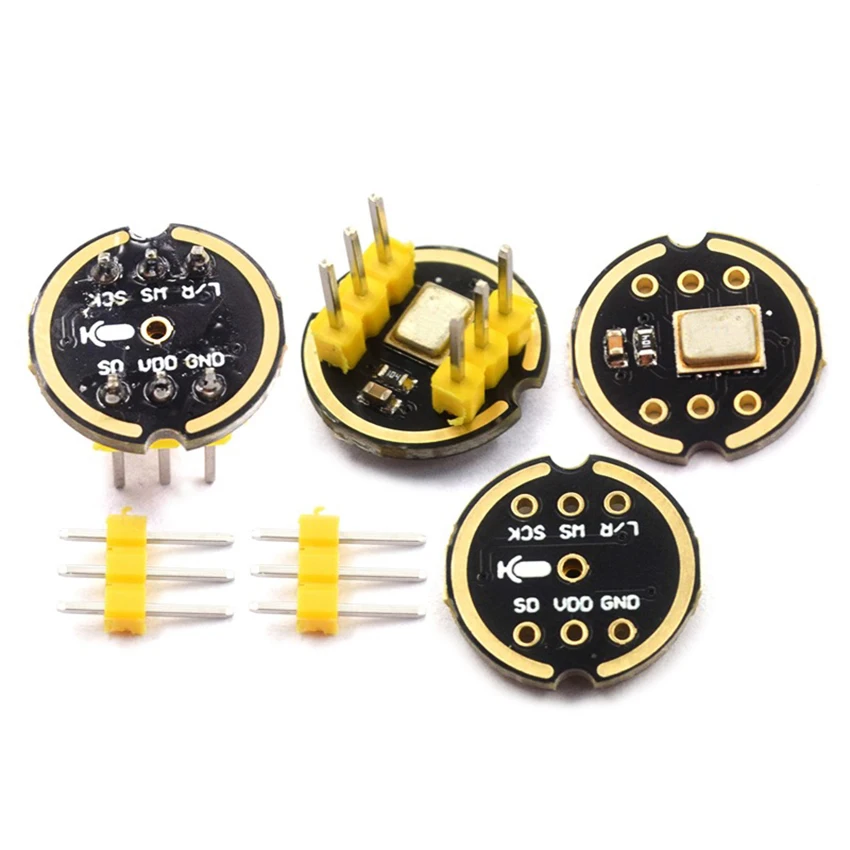
The core of this module is the INMP441 MEMS microphone, a silicon-based acoustic sensor. This component is visible as a small, rectangular silver package on the module's surface. MEMS technology offers inherent advantages in terms of size, reliability, and resistance to environmental factors compared to traditional electret condenser microphones.
Such a miniature form factor directly translates to greater flexibility in product design. Devices requiring unobtrusive audio input, such as smart home appliances, wearable tech prototypes, or compact IoT sensors, benefit immensely. The small footprint allows for integration into tight enclosures where larger analog microphones would be impractical.
Compared to bulkier electret condenser microphones, MEMS units offer superior shock and vibration resistance. This makes the INMP441 module a more robust option for applications in dynamic environments or portable devices where physical impacts are a concern. It is a durable choice.
The INMP441 module outputs audio data using the I2S (Inter-IC Sound) protocol. This digital interface is specifically designed for transmitting audio between integrated circuits, providing separate lines for clock, word select, and data. The module's pinout clearly labels SD (Serial Data), WS (Word Select), and SCK (Serial Clock) pins.
Employing I2S significantly simplifies the signal chain for digital audio acquisition. It eliminates the need for an external analog-to-digital converter (ADC) and its associated analog filtering and amplification stages. This direct digital path minimizes noise pickup and signal degradation, which are common challenges in analog audio circuits.
Traditional analog microphone modules often require careful shielding and impedance matching. The I2S interface, conversely, transmits digital data, which is far less susceptible to electromagnetic interference (EMI) over short distances. This results in a cleaner audio signal, crucial for applications like voice recognition or precise environmental sound monitoring.
This module features an omnidirectional pickup pattern. This means the microphone is designed to capture sound equally from all directions around the sensor. The physical placement of the MEMS element within its package contributes to this characteristic.
An omnidirectional pattern is particularly advantageous for applications where the sound source's location is unknown or variable. Consider a voice assistant device; it needs to hear commands regardless of where the user is speaking from. This module excels in such scenarios.
Unlike unidirectional or cardioid microphones that focus on sound from a specific direction, the omnidirectional INMP441 provides a broader acoustic field. This simplifies sensor placement requirements in many projects, as precise aiming is not necessary to capture ambient sounds or general voice input.
Connectivity is facilitated by a 6-pin header arrangement. The pins are clearly marked: SD, WS, SCK, L/R, VDD, and GND. These standard pin headers allow for straightforward connection to breadboards or custom PCBs via jumper wires or direct soldering.
Proper pin connection is paramount for module functionality. Incorrect wiring of VDD (power supply) or GND (ground) can lead to non-operation or damage. The L/R pin, typically used for channel selection in stereo applications, might be tied to a specific logic level for mono output in many common use cases.
Many entry-level microphone modules feature only analog outputs, requiring additional circuitry. The INMP441's digital I2S output streamlines integration, especially with microcontrollers like the ESP32 that natively support I2S. This direct digital connection reduces component count and simplifies software development.
The module operates on a VDD supply voltage, typically within the 1.8V to 3.3V range, which is standard for many low-power microcontrollers. The specific voltage requirements are critical for stable operation and preventing damage to the MEMS sensor.
Supplying the correct voltage ensures the internal circuitry of the INMP441 operates within its specified parameters. Overvoltage can permanently damage the sensitive MEMS element, while undervoltage can lead to unstable performance or complete failure to operate. A stable power source is essential.
Unlike some analog modules that might tolerate a wider voltage range with performance degradation, digital MEMS microphones often have stricter power supply requirements. Adhering to the specified VDD range ensures optimal signal-to-noise ratio and consistent audio capture quality.
Visual inspection of the module reveals a compact, circular PCB with neatly arranged components. The soldering points for the header pins and the surface-mount components appear clean and well-defined. This indicates a manufacturing process focused on reliability.
Clean soldering is fundamental for long-term electrical integrity. Poorly soldered joints can lead to intermittent connections, signal loss, or even complete module failure over time, especially in applications subjected to vibration. The visible quality suggests a robust assembly.
Many hobbyist-grade modules can exhibit inconsistent solder quality, leading to frustrating debugging sessions. The apparent precision in the assembly of this INMP441 module suggests a higher standard, reducing the likelihood of connection issues right out of the box.
The module is supplied with yellow header pins, which are a common and versatile connector type. These pins are designed for easy insertion into breadboards or female header sockets, facilitating rapid prototyping.
While convenient for development, repeated insertion and removal of these pins can cause wear on both the pins and the mating sockets. For permanent installations, soldering the module directly to a PCB or using more robust locking connectors would provide greater long-term stability. Consider the application's demands.
Unlike permanently affixed connectors, the removable header pins offer flexibility. This allows users to choose their preferred connection method, whether it's direct soldering for maximum reliability or temporary breadboard connections for iterative design and testing.
The INMP441 is known for its high precision and good signal-to-noise ratio (SNR). This characteristic is vital for applications where clear audio capture is paramount, even in environments with some background noise. The digital output further aids in maintaining this fidelity.
High precision translates directly to better audio clarity. In voice command systems, this means fewer misinterpretations. For environmental monitoring, it allows for more accurate detection and analysis of subtle sound events. The module captures nuance.
Compared to lower-cost analog microphones, the INMP441's digital output and inherent MEMS precision often result in superior audio quality, particularly in noise-sensitive applications. This makes it a compelling upgrade for projects where audio input quality is a critical performance metric.
The module is explicitly stated to be compatible with ESP32 microcontrollers. The ESP32 features built-in I2S peripherals, making the integration of this microphone module straightforward from both hardware and software perspectives.
Direct compatibility with ESP32 simplifies the development process significantly. Developers can leverage existing ESP-IDF libraries or Arduino core functions for I2S audio input, reducing the learning curve and accelerating project timelines. This is a major advantage for rapid prototyping.
Many generic microphone modules might require custom drivers or complex bit-banging implementations to interface with specific microcontrollers. The INMP441's direct I2S compatibility with popular platforms like ESP32 offers a plug-and-play experience, saving valuable development time and effort.
This INMP441 MEMS Omnidirectional Microphone Module represents a significant step up for projects requiring reliable, high-quality digital audio input. Its compact size, digital I2S interface, and omnidirectional pickup pattern make it highly adaptable across a range of embedded applications. The visible build quality suggests a component designed for consistent performance.
Consider the scenarios where robust audio capture is non-negotiable. Imagine integrating this module into a smart home hub, where clear voice commands are essential for seamless interaction. Picture it in an environmental sensor network, accurately detecting specific acoustic signatures without interference. This module provides the foundational capability for such advanced functionalities, allowing developers to focus on application logic rather than wrestling with analog audio complexities. The clean digital output ensures that the acoustic data received is as pure as possible, paving the way for more intelligent and responsive systems. This module empowers creators to build sophisticated audio-aware devices with confidence and precision.
Architectural Considerations for Acoustic Fidelity
The core of this module is the INMP441 MEMS microphone, a silicon-based acoustic sensor. This component is visible as a small, rectangular silver package on the module's surface. MEMS technology offers inherent advantages in terms of size, reliability, and resistance to environmental factors compared to traditional electret condenser microphones.
Such a miniature form factor directly translates to greater flexibility in product design. Devices requiring unobtrusive audio input, such as smart home appliances, wearable tech prototypes, or compact IoT sensors, benefit immensely. The small footprint allows for integration into tight enclosures where larger analog microphones would be impractical.
Compared to bulkier electret condenser microphones, MEMS units offer superior shock and vibration resistance. This makes the INMP441 module a more robust option for applications in dynamic environments or portable devices where physical impacts are a concern. It is a durable choice.
Digital Audio Interface: I2S Protocol
The INMP441 module outputs audio data using the I2S (Inter-IC Sound) protocol. This digital interface is specifically designed for transmitting audio between integrated circuits, providing separate lines for clock, word select, and data. The module's pinout clearly labels SD (Serial Data), WS (Word Select), and SCK (Serial Clock) pins.
Employing I2S significantly simplifies the signal chain for digital audio acquisition. It eliminates the need for an external analog-to-digital converter (ADC) and its associated analog filtering and amplification stages. This direct digital path minimizes noise pickup and signal degradation, which are common challenges in analog audio circuits.
Traditional analog microphone modules often require careful shielding and impedance matching. The I2S interface, conversely, transmits digital data, which is far less susceptible to electromagnetic interference (EMI) over short distances. This results in a cleaner audio signal, crucial for applications like voice recognition or precise environmental sound monitoring.
Omnidirectional Acoustic Capture
This module features an omnidirectional pickup pattern. This means the microphone is designed to capture sound equally from all directions around the sensor. The physical placement of the MEMS element within its package contributes to this characteristic.
An omnidirectional pattern is particularly advantageous for applications where the sound source's location is unknown or variable. Consider a voice assistant device; it needs to hear commands regardless of where the user is speaking from. This module excels in such scenarios.
Unlike unidirectional or cardioid microphones that focus on sound from a specific direction, the omnidirectional INMP441 provides a broader acoustic field. This simplifies sensor placement requirements in many projects, as precise aiming is not necessary to capture ambient sounds or general voice input.
Interfacing and Power Management
Connectivity is facilitated by a 6-pin header arrangement. The pins are clearly marked: SD, WS, SCK, L/R, VDD, and GND. These standard pin headers allow for straightforward connection to breadboards or custom PCBs via jumper wires or direct soldering.
Proper pin connection is paramount for module functionality. Incorrect wiring of VDD (power supply) or GND (ground) can lead to non-operation or damage. The L/R pin, typically used for channel selection in stereo applications, might be tied to a specific logic level for mono output in many common use cases.
Many entry-level microphone modules feature only analog outputs, requiring additional circuitry. The INMP441's digital I2S output streamlines integration, especially with microcontrollers like the ESP32 that natively support I2S. This direct digital connection reduces component count and simplifies software development.
Power Supply Requirements
The module operates on a VDD supply voltage, typically within the 1.8V to 3.3V range, which is standard for many low-power microcontrollers. The specific voltage requirements are critical for stable operation and preventing damage to the MEMS sensor.
Supplying the correct voltage ensures the internal circuitry of the INMP441 operates within its specified parameters. Overvoltage can permanently damage the sensitive MEMS element, while undervoltage can lead to unstable performance or complete failure to operate. A stable power source is essential.
Unlike some analog modules that might tolerate a wider voltage range with performance degradation, digital MEMS microphones often have stricter power supply requirements. Adhering to the specified VDD range ensures optimal signal-to-noise ratio and consistent audio capture quality.
Build Quality and Integration Potential
Visual inspection of the module reveals a compact, circular PCB with neatly arranged components. The soldering points for the header pins and the surface-mount components appear clean and well-defined. This indicates a manufacturing process focused on reliability.
Clean soldering is fundamental for long-term electrical integrity. Poorly soldered joints can lead to intermittent connections, signal loss, or even complete module failure over time, especially in applications subjected to vibration. The visible quality suggests a robust assembly.
Many hobbyist-grade modules can exhibit inconsistent solder quality, leading to frustrating debugging sessions. The apparent precision in the assembly of this INMP441 module suggests a higher standard, reducing the likelihood of connection issues right out of the box.
Connector Durability
The module is supplied with yellow header pins, which are a common and versatile connector type. These pins are designed for easy insertion into breadboards or female header sockets, facilitating rapid prototyping.
While convenient for development, repeated insertion and removal of these pins can cause wear on both the pins and the mating sockets. For permanent installations, soldering the module directly to a PCB or using more robust locking connectors would provide greater long-term stability. Consider the application's demands.
Unlike permanently affixed connectors, the removable header pins offer flexibility. This allows users to choose their preferred connection method, whether it's direct soldering for maximum reliability or temporary breadboard connections for iterative design and testing.
Performance and Application Suitability
The INMP441 is known for its high precision and good signal-to-noise ratio (SNR). This characteristic is vital for applications where clear audio capture is paramount, even in environments with some background noise. The digital output further aids in maintaining this fidelity.
High precision translates directly to better audio clarity. In voice command systems, this means fewer misinterpretations. For environmental monitoring, it allows for more accurate detection and analysis of subtle sound events. The module captures nuance.
Compared to lower-cost analog microphones, the INMP441's digital output and inherent MEMS precision often result in superior audio quality, particularly in noise-sensitive applications. This makes it a compelling upgrade for projects where audio input quality is a critical performance metric.
Compatibility with ESP32
The module is explicitly stated to be compatible with ESP32 microcontrollers. The ESP32 features built-in I2S peripherals, making the integration of this microphone module straightforward from both hardware and software perspectives.
Direct compatibility with ESP32 simplifies the development process significantly. Developers can leverage existing ESP-IDF libraries or Arduino core functions for I2S audio input, reducing the learning curve and accelerating project timelines. This is a major advantage for rapid prototyping.
Many generic microphone modules might require custom drivers or complex bit-banging implementations to interface with specific microcontrollers. The INMP441's direct I2S compatibility with popular platforms like ESP32 offers a plug-and-play experience, saving valuable development time and effort.
Final Assessment and Value Proposition
This INMP441 MEMS Omnidirectional Microphone Module represents a significant step up for projects requiring reliable, high-quality digital audio input. Its compact size, digital I2S interface, and omnidirectional pickup pattern make it highly adaptable across a range of embedded applications. The visible build quality suggests a component designed for consistent performance.
Consider the scenarios where robust audio capture is non-negotiable. Imagine integrating this module into a smart home hub, where clear voice commands are essential for seamless interaction. Picture it in an environmental sensor network, accurately detecting specific acoustic signatures without interference. This module provides the foundational capability for such advanced functionalities, allowing developers to focus on application logic rather than wrestling with analog audio complexities. The clean digital output ensures that the acoustic data received is as pure as possible, paving the way for more intelligent and responsive systems. This module empowers creators to build sophisticated audio-aware devices with confidence and precision.