Industrial Non-Contact Infrared Thermometer
Official Store Deal
Expert Analysis Overview
The Industrial Non-Contact Infrared Thermometer is a vital diagnostic instrument designed for professionals and serious DIY enthusiasts requiring rapid, precise temperature assessments across diverse materials and environments. This tool provides a critical advantage in identifying thermal anomalies without direct contact. Its capabilities extend far beyond simple temperature checks, offering insights into potential structural or electrical issues within a property.
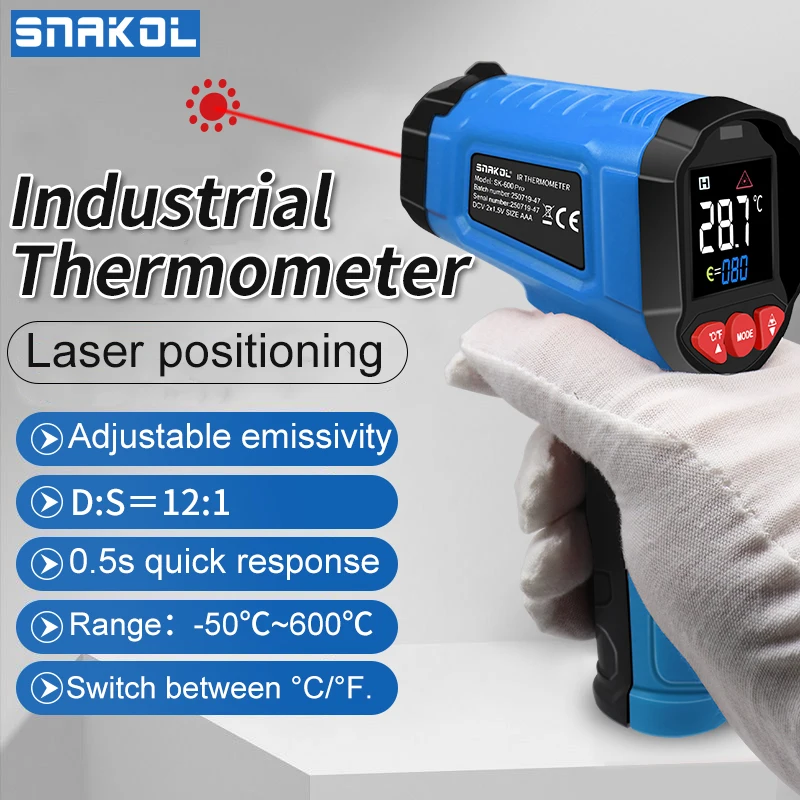
The device features a rapid 0.5-second response time, allowing for almost instantaneous temperature readings. This speed is crucial for scanning large areas efficiently. It boasts a Distance-to-Spot ratio (D:S) of 12:1, which dictates the size of the measurement area relative to the distance from the target. A 12:1 ratio means that at 12 inches away, the measurement spot is 1 inch in diameter. This allows for focused measurements even from a moderate distance. The operational temperature range spans from -50°C to an impressive 600°C (-58°F to 1112°F), accommodating a vast array of industrial and residential applications. Temperature units are switchable between Celsius and Fahrenheit.
The implications of such specifications are significant for a home inspector. Rapid scanning identifies cold spots or hot zones quickly. This saves valuable time during property assessments. The 12:1 D:S ratio enables accurate targeting of specific components, such as individual circuit breakers or small sections of ductwork, without needing to get dangerously close to potentially hazardous areas. A wide temperature range means the thermometer is versatile enough for everything from checking HVAC system performance to identifying overheating electrical connections or even assessing the efficiency of refrigeration units. This tool offers broad utility.
Unlike basic contact thermometers that require physical interaction, this infrared thermometer provides a non-invasive method. Traditional probe thermometers are slow and limited to surface contact. This non-contact approach is an upgrade, especially when dealing with hot machinery, live electrical panels, or hard-to-reach areas. Compared to entry-level infrared guns with lower D:S ratios, this model offers superior precision, allowing for more granular thermal mapping. Its speed and range surpass many standard alternatives.
A standout feature is its adjustable emissivity, ranging from 0.1 to 1.0, with a default setting of 0.95. Emissivity refers to a material's ability to emit thermal energy. Different materials radiate heat differently. The device includes a comprehensive reference table, providing common emissivity values for materials such as aluminum (0.30), concrete (0.95), copper (0.95), and wood (0.90). This level of control is essential for obtaining reliable temperature data.
The ability to adjust emissivity is not merely a technical detail; it is fundamental to diagnostic accuracy. Without proper emissivity adjustment, readings on highly reflective surfaces like polished metal or glass can be significantly skewed. Imagine trying to assess the thermal performance of a shiny metal duct. An incorrect emissivity setting would yield misleading data. This feature ensures that the temperature displayed truly reflects the surface temperature, regardless of the material's reflective properties. Accurate data is paramount.
Many standard infrared thermometers feature a fixed emissivity setting, typically around 0.95. While this works adequately for common organic materials like wood or painted surfaces, it becomes a severe limitation when inspecting a variety of building materials. This adjustable feature positions the instrument as a professional-grade tool, offering a significant upgrade over less sophisticated models. It ensures consistent reliability across diverse inspection scenarios. This adaptability is critical for comprehensive assessments.
This infrared thermometer incorporates intelligent operational features designed to enhance both efficiency and safety. It includes a high and low-temperature alarm system. Users can set specific thresholds, and the device will emit a beeping sound and flash a red light if the measured temperature exceeds these limits. Laser positioning guides the user, providing a clear visual indicator of the exact measurement spot. This ensures precise targeting. The device also illustrates the correct measurement method, advising against contact with steam or water vapor when measuring liquids, and recommending a 45° to 60° angle for optimal accuracy.
These operational features translate directly into safer and more effective inspections. The high/low temperature alarm acts as a proactive warning system, alerting the inspector to critical thermal deviations without constant screen monitoring. This is invaluable when scanning large areas for anomalies. For instance, an alarm could signal an overheating electrical component or a dangerously cold pipe. The laser pointer eliminates guesswork, ensuring the measurement is taken precisely where intended. This enhances data integrity. Understanding the correct measurement method, particularly for liquids, prevents common user errors that can lead to inaccurate readings. Safety is always a priority.
Compared to basic point-and-shoot thermometers, the integrated alarm system provides an immediate advantage for preventative maintenance and safety checks. It moves beyond passive data collection to active warning. The clear guidance on measurement techniques also sets it apart from simpler devices that leave users to discover best practices through trial and error. This integrated intelligence makes the instrument more user-friendly and reliable for critical tasks. It's a smarter tool.
The physical design of this infrared thermometer emphasizes user comfort and portability, crucial for professionals who spend extended periods conducting inspections. Its dimensions are compact, measuring approximately 150mm x 85mm x 85mm. The device is remarkably lightweight, weighing only about 130g. This makes it easy to handle. It features an ergonomic pistol grip, designed for a secure and comfortable hold, even during prolonged use. The digital display is clear and backlit, ensuring readability in various lighting conditions.
The compact size and minimal weight ensure that the thermometer can be easily carried in a tool belt or pocket, making it readily accessible for quick checks. Its lightweight nature reduces user fatigue during extensive property walk-throughs. A comfortable grip is essential for maintaining steady aim and precision, especially when targeting small or distant objects. This design consideration enhances overall usability in the field. It feels good in hand.
Unlike bulkier industrial thermal cameras or older, heavier pyrometers, this device prioritizes portability without sacrificing essential functionality. Its design is a clear upgrade for professionals who need a reliable, easy-to-carry diagnostic tool. The straightforward button layout for mode selection and temperature unit switching further streamlines operation, minimizing the learning curve. This instrument is built for practical, everyday use.
For a home inspector, this infrared thermometer is more than a simple temperature gauge; it is a powerful diagnostic aid for uncovering issues that are not visible to the naked eye. It excels at identifying thermal differences that can indicate hidden leaks behind walls. Water ingress, even if not directly visible, often creates cooler spots due to evaporation or the thermal mass of moisture. Scanning walls, ceilings, and floors can reveal these subtle temperature variations. A cold spot could indicate a leak.
Furthermore, the thermometer is invaluable for detecting electrical hotspots. Overheating electrical components, such as circuit breakers, wiring connections, or outlets, radiate excess heat. These hotspots are often precursors to electrical failures or even fires. A quick scan of an electrical panel can pinpoint areas of concern, allowing for proactive maintenance before a serious problem develops. This provides critical safety information. Identifying these thermal signatures is a key preventative measure.
Finally, the quantifiable data provided by this instrument is excellent for generating client reports. Presenting specific temperature readings for problematic areas, such as a 10°C drop on a wall indicating potential moisture, or a circuit breaker running 30°C hotter than its neighbors, adds credibility and clarity to inspection findings. This data supports recommendations for further investigation or repairs. Clear data aids client understanding. It makes reports more professional and actionable.
Imagine walking into a property, confident in your ability to quickly and accurately assess its thermal integrity. You effortlessly scan walls for hidden moisture, pinpointing areas where insulation might be failing, or where a pipe leak could be silently causing damage. You move to the electrical panel, swiftly identifying any overheating breakers that could pose a fire risk, all without ever needing to touch a live component. This tool empowers you to deliver comprehensive, data-driven reports to your clients, providing them with peace of mind and actionable insights. The clear display and intuitive controls make every inspection efficient, allowing you to focus on diagnosis rather than device operation. This is the future of home inspection.
Precision in Thermal Diagnostics: Unveiling Hidden Heat Signatures
The device features a rapid 0.5-second response time, allowing for almost instantaneous temperature readings. This speed is crucial for scanning large areas efficiently. It boasts a Distance-to-Spot ratio (D:S) of 12:1, which dictates the size of the measurement area relative to the distance from the target. A 12:1 ratio means that at 12 inches away, the measurement spot is 1 inch in diameter. This allows for focused measurements even from a moderate distance. The operational temperature range spans from -50°C to an impressive 600°C (-58°F to 1112°F), accommodating a vast array of industrial and residential applications. Temperature units are switchable between Celsius and Fahrenheit.
The implications of such specifications are significant for a home inspector. Rapid scanning identifies cold spots or hot zones quickly. This saves valuable time during property assessments. The 12:1 D:S ratio enables accurate targeting of specific components, such as individual circuit breakers or small sections of ductwork, without needing to get dangerously close to potentially hazardous areas. A wide temperature range means the thermometer is versatile enough for everything from checking HVAC system performance to identifying overheating electrical connections or even assessing the efficiency of refrigeration units. This tool offers broad utility.
Unlike basic contact thermometers that require physical interaction, this infrared thermometer provides a non-invasive method. Traditional probe thermometers are slow and limited to surface contact. This non-contact approach is an upgrade, especially when dealing with hot machinery, live electrical panels, or hard-to-reach areas. Compared to entry-level infrared guns with lower D:S ratios, this model offers superior precision, allowing for more granular thermal mapping. Its speed and range surpass many standard alternatives.
Emissivity: The Key to Accurate Readings Across Surfaces
A standout feature is its adjustable emissivity, ranging from 0.1 to 1.0, with a default setting of 0.95. Emissivity refers to a material's ability to emit thermal energy. Different materials radiate heat differently. The device includes a comprehensive reference table, providing common emissivity values for materials such as aluminum (0.30), concrete (0.95), copper (0.95), and wood (0.90). This level of control is essential for obtaining reliable temperature data.
The ability to adjust emissivity is not merely a technical detail; it is fundamental to diagnostic accuracy. Without proper emissivity adjustment, readings on highly reflective surfaces like polished metal or glass can be significantly skewed. Imagine trying to assess the thermal performance of a shiny metal duct. An incorrect emissivity setting would yield misleading data. This feature ensures that the temperature displayed truly reflects the surface temperature, regardless of the material's reflective properties. Accurate data is paramount.
Many standard infrared thermometers feature a fixed emissivity setting, typically around 0.95. While this works adequately for common organic materials like wood or painted surfaces, it becomes a severe limitation when inspecting a variety of building materials. This adjustable feature positions the instrument as a professional-grade tool, offering a significant upgrade over less sophisticated models. It ensures consistent reliability across diverse inspection scenarios. This adaptability is critical for comprehensive assessments.
Operational Intelligence and Safety: Smart Diagnostics in Action
This infrared thermometer incorporates intelligent operational features designed to enhance both efficiency and safety. It includes a high and low-temperature alarm system. Users can set specific thresholds, and the device will emit a beeping sound and flash a red light if the measured temperature exceeds these limits. Laser positioning guides the user, providing a clear visual indicator of the exact measurement spot. This ensures precise targeting. The device also illustrates the correct measurement method, advising against contact with steam or water vapor when measuring liquids, and recommending a 45° to 60° angle for optimal accuracy.
These operational features translate directly into safer and more effective inspections. The high/low temperature alarm acts as a proactive warning system, alerting the inspector to critical thermal deviations without constant screen monitoring. This is invaluable when scanning large areas for anomalies. For instance, an alarm could signal an overheating electrical component or a dangerously cold pipe. The laser pointer eliminates guesswork, ensuring the measurement is taken precisely where intended. This enhances data integrity. Understanding the correct measurement method, particularly for liquids, prevents common user errors that can lead to inaccurate readings. Safety is always a priority.
Compared to basic point-and-shoot thermometers, the integrated alarm system provides an immediate advantage for preventative maintenance and safety checks. It moves beyond passive data collection to active warning. The clear guidance on measurement techniques also sets it apart from simpler devices that leave users to discover best practices through trial and error. This integrated intelligence makes the instrument more user-friendly and reliable for critical tasks. It's a smarter tool.
Ergonomics and Field Readiness: Designed for the Professional
The physical design of this infrared thermometer emphasizes user comfort and portability, crucial for professionals who spend extended periods conducting inspections. Its dimensions are compact, measuring approximately 150mm x 85mm x 85mm. The device is remarkably lightweight, weighing only about 130g. This makes it easy to handle. It features an ergonomic pistol grip, designed for a secure and comfortable hold, even during prolonged use. The digital display is clear and backlit, ensuring readability in various lighting conditions.
The compact size and minimal weight ensure that the thermometer can be easily carried in a tool belt or pocket, making it readily accessible for quick checks. Its lightweight nature reduces user fatigue during extensive property walk-throughs. A comfortable grip is essential for maintaining steady aim and precision, especially when targeting small or distant objects. This design consideration enhances overall usability in the field. It feels good in hand.
Unlike bulkier industrial thermal cameras or older, heavier pyrometers, this device prioritizes portability without sacrificing essential functionality. Its design is a clear upgrade for professionals who need a reliable, easy-to-carry diagnostic tool. The straightforward button layout for mode selection and temperature unit switching further streamlines operation, minimizing the learning curve. This instrument is built for practical, everyday use.
Beyond Surface Scans: Uncovering Hidden Issues for Home Inspectors
For a home inspector, this infrared thermometer is more than a simple temperature gauge; it is a powerful diagnostic aid for uncovering issues that are not visible to the naked eye. It excels at identifying thermal differences that can indicate hidden leaks behind walls. Water ingress, even if not directly visible, often creates cooler spots due to evaporation or the thermal mass of moisture. Scanning walls, ceilings, and floors can reveal these subtle temperature variations. A cold spot could indicate a leak.
Furthermore, the thermometer is invaluable for detecting electrical hotspots. Overheating electrical components, such as circuit breakers, wiring connections, or outlets, radiate excess heat. These hotspots are often precursors to electrical failures or even fires. A quick scan of an electrical panel can pinpoint areas of concern, allowing for proactive maintenance before a serious problem develops. This provides critical safety information. Identifying these thermal signatures is a key preventative measure.
Finally, the quantifiable data provided by this instrument is excellent for generating client reports. Presenting specific temperature readings for problematic areas, such as a 10°C drop on a wall indicating potential moisture, or a circuit breaker running 30°C hotter than its neighbors, adds credibility and clarity to inspection findings. This data supports recommendations for further investigation or repairs. Clear data aids client understanding. It makes reports more professional and actionable.
Imagine walking into a property, confident in your ability to quickly and accurately assess its thermal integrity. You effortlessly scan walls for hidden moisture, pinpointing areas where insulation might be failing, or where a pipe leak could be silently causing damage. You move to the electrical panel, swiftly identifying any overheating breakers that could pose a fire risk, all without ever needing to touch a live component. This tool empowers you to deliver comprehensive, data-driven reports to your clients, providing them with peace of mind and actionable insights. The clear display and intuitive controls make every inspection efficient, allowing you to focus on diagnosis rather than device operation. This is the future of home inspection.