IdeaFormer Brushless DC Cooling Fans for 3D Printers
Official Store Deal
Expert Analysis Overview
The IdeaFormer Brushless DC Cooling Fans are a versatile and essential thermal management solution for 3D printing enthusiasts and educators seeking reliable, quiet, and efficient component cooling. These fans, available in a spectrum of sizes and operating voltages, provide the critical airflow necessary to maintain optimal temperatures across various 3D printer components. Proper thermal regulation is paramount for consistent print quality and the longevity of sensitive electronics. This product addresses a fundamental need in the additive manufacturing workflow, offering a straightforward yet effective upgrade over inadequate or failing stock cooling systems.
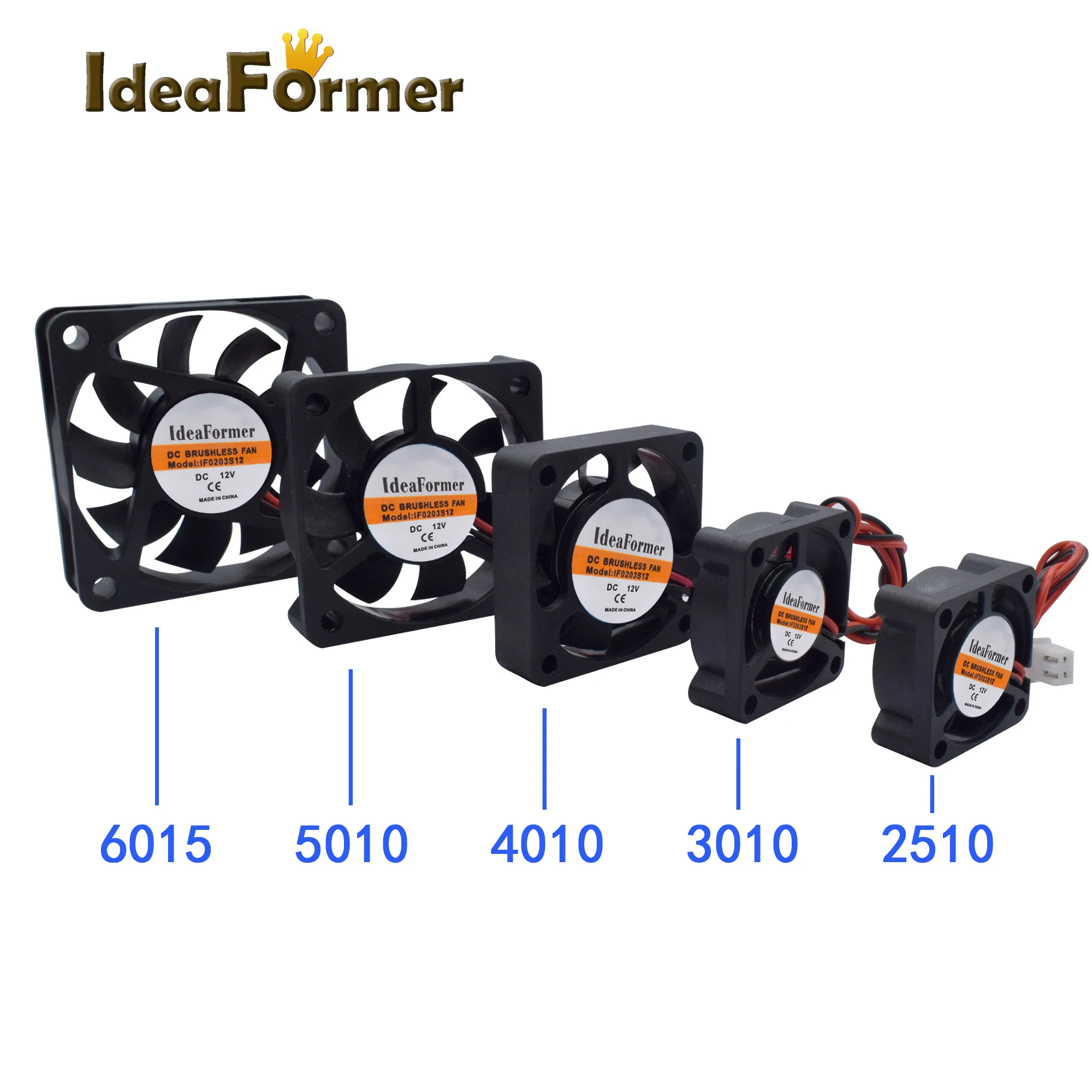
Thermal management is a cornerstone of successful 3D printing. Without adequate cooling, components like the hotend, stepper motors, and mainboard can overheat, leading to a cascade of printing failures and premature hardware degradation. These IdeaFormer fans are engineered to counteract such thermal challenges. The range of sizes, from the compact 25x25x10mm to the larger 60x60x15mm, ensures a fit for almost any application within a 3D printer's often confined spaces. Each fan features a robust black plastic frame, providing adequate structural integrity for its intended purpose. The visible fan blades are precisely molded. These fans move air efficiently.
Consider a scenario where a 3D printer's hotend experiences 'heat creep' – a phenomenon where heat travels up the hotend into the cold zone, causing filament to soften prematurely and jam. A well-placed hotend cooling fan, such as a 3010 or 4010 model, actively dissipates this heat, preventing clogs and ensuring smooth filament extrusion. Similarly, part cooling fans are indispensable for improving overhangs and bridging capabilities by rapidly solidifying extruded plastic layers. Without this targeted cooling, prints often suffer from warping, poor layer adhesion, and a generally degraded surface finish. This direct impact on print quality highlights the fans' critical role.
Compared to generic, unbranded cooling solutions that often prioritize low cost over performance and longevity, these IdeaFormer fans offer a more reliable alternative. Many entry-level 3D printers come with fans that are barely adequate, leading to early failures or insufficient cooling capacity. Upgrading to a dedicated brushless DC fan, even at this accessible price point, represents a significant improvement in both cooling efficiency and operational lifespan. The investment pays dividends in fewer failed prints and reduced maintenance. It's a smart choice.
At the core of these cooling fans lies brushless DC (BLDC) motor technology. Unlike traditional brushed motors that rely on physical carbon brushes to reverse current direction, BLDC motors use electronic commutation. This design eliminates the friction and wear associated with brushes, leading to several key advantages: significantly longer operational lifespans, reduced noise levels, and higher energy efficiency. The absence of brushes also means less electromagnetic interference (EMI), which can be a concern for sensitive 3D printer electronics. This technology ensures consistent performance.
Imagine a classroom setting where multiple 3D printers are operating simultaneously. The cumulative noise from many brushed fans could be distracting, hindering the learning environment. Brushless fans contribute to a quieter workspace, allowing students to focus on their projects without auditory distractions. Furthermore, the extended lifespan of BLDC fans minimizes the need for frequent replacements, reducing downtime in an educational or production environment. This translates to more consistent uptime for projects. Less maintenance is always welcome.
Traditional cooling fans often utilize simpler sleeve bearings, which are cost-effective but have a shorter lifespan and can become noisier over time as the lubricant dries out. While these IdeaFormer fans likely employ sleeve bearings given their price point, the brushless motor design itself inherently outlasts brushed alternatives. For applications demanding even greater longevity and ultra-quiet operation, ball bearing fans are available, but they come at a higher cost. These fans strike a balance between performance and affordability. They are a practical option.
Installation of these cooling fans is designed for simplicity, making them accessible even for novice 3D printer users or students learning about electronics. Each fan comes equipped with a 2-pin Dupont wire connector. This standard connector type is widely compatible with most 3D printer mainboards, which often feature dedicated fan headers. The black and red wires clearly indicate polarity (red for positive, black for negative), minimizing the risk of incorrect wiring, a common pitfall in DIY electronics. Proper connection is crucial.
Consider a student assembling their first 3D printer kit. The clear wiring and standard connector simplify the electrical connections, reducing frustration and potential errors. The various fan sizes mean that whether cooling a hotend, a part cooling duct, or a mainboard, a suitable option is available. For instance, a 4010 fan is a common choice for hotend cooling, while a 5010 or 6015 might be used for mainboard enclosure ventilation. The physical dimensions are clearly labeled in the product description and image. This makes selection straightforward.
Compared to more complex fan systems requiring soldering or specialized connectors, the 2-pin Dupont wire offers a plug-and-play experience. While advanced users might desire PWM (Pulse Width Modulation) control for variable fan speeds, the direct 2-pin connection provides constant airflow, which is often sufficient for most 3D printing applications. For a basic, reliable cooling solution, this simplicity is a distinct advantage. It gets the job done.
The durability of these fans, primarily constructed from black plastic, is suitable for the internal environment of a 3D printer. The material provides a good balance of strength, lightweight properties, and electrical insulation. While not designed for extreme industrial abuse, the plastic frame withstands the vibrations and moderate temperatures typically encountered within a printer enclosure. The precise molding of the fan blades contributes to balanced rotation, which in turn reduces vibration and noise. This attention to detail matters.
Imagine a long print job, perhaps a 24-hour print of a large model. The cooling fans will be running continuously for the entire duration. The robust construction and brushless motor technology ensure that these fans can handle such extended operational periods without premature failure. This reliability is critical for complex projects where a fan failure could lead to a ruined print and wasted material. For educational settings, this means less interruption to student projects. Consistent operation is key.
Unlike some cheaper alternatives that use brittle or poorly molded plastics, the visible quality of these IdeaFormer fans suggests a reasonable level of manufacturing precision. This contributes to their overall durability and consistent performance. While a metal frame would offer superior resistance to impact, it would also introduce weight and potential electrical conductivity issues, making plastic a practical and safe choice for this application. The design is fit for purpose.
The overall value proposition of these IdeaFormer cooling fans is compelling, especially for educational institutions, hobbyists, and small workshops. At an accessible price point, they offer a reliable and effective solution for a critical aspect of 3D printing: thermal management. The wide range of sizes and voltages ensures compatibility with a vast array of 3D printers and DIY electronics projects, making them a versatile component to have on hand. This product offers significant utility.
Consider the cost of failed prints due to overheating components – wasted filament, lost time, and frustration. Investing in reliable cooling fans is a preventative measure that quickly recoups its cost by ensuring successful print outcomes. For STEM educators, these fans represent an opportunity to teach students about thermal dynamics and the importance of proper component cooling in electronics, using a tangible and easy-to-understand example. It's a practical learning tool.
Compared to sourcing individual fans from specialized electronics suppliers, which can be more expensive or require larger bulk orders, these fans offer an economical and convenient option for single-unit or small-batch purchases. The consistent quality across the different sizes and voltages from a single vendor simplifies procurement and ensures a predictable performance standard. This streamlines the purchasing process. It's a smart economic choice.
Picture your students confidently operating 3D printers, free from thermal failures, producing intricate designs with consistent quality. Envision a workshop where print after print completes flawlessly, driven by the quiet, efficient performance of a well-cooled system. These fans are not just components; they are enablers of uninterrupted learning and creative production, ensuring that the focus remains on innovation, not troubleshooting thermal issues.
Maintaining Thermal Equilibrium in 3D Printing
Thermal management is a cornerstone of successful 3D printing. Without adequate cooling, components like the hotend, stepper motors, and mainboard can overheat, leading to a cascade of printing failures and premature hardware degradation. These IdeaFormer fans are engineered to counteract such thermal challenges. The range of sizes, from the compact 25x25x10mm to the larger 60x60x15mm, ensures a fit for almost any application within a 3D printer's often confined spaces. Each fan features a robust black plastic frame, providing adequate structural integrity for its intended purpose. The visible fan blades are precisely molded. These fans move air efficiently.
Consider a scenario where a 3D printer's hotend experiences 'heat creep' – a phenomenon where heat travels up the hotend into the cold zone, causing filament to soften prematurely and jam. A well-placed hotend cooling fan, such as a 3010 or 4010 model, actively dissipates this heat, preventing clogs and ensuring smooth filament extrusion. Similarly, part cooling fans are indispensable for improving overhangs and bridging capabilities by rapidly solidifying extruded plastic layers. Without this targeted cooling, prints often suffer from warping, poor layer adhesion, and a generally degraded surface finish. This direct impact on print quality highlights the fans' critical role.
Compared to generic, unbranded cooling solutions that often prioritize low cost over performance and longevity, these IdeaFormer fans offer a more reliable alternative. Many entry-level 3D printers come with fans that are barely adequate, leading to early failures or insufficient cooling capacity. Upgrading to a dedicated brushless DC fan, even at this accessible price point, represents a significant improvement in both cooling efficiency and operational lifespan. The investment pays dividends in fewer failed prints and reduced maintenance. It's a smart choice.
The Heart of Airflow: Brushless DC Technology
At the core of these cooling fans lies brushless DC (BLDC) motor technology. Unlike traditional brushed motors that rely on physical carbon brushes to reverse current direction, BLDC motors use electronic commutation. This design eliminates the friction and wear associated with brushes, leading to several key advantages: significantly longer operational lifespans, reduced noise levels, and higher energy efficiency. The absence of brushes also means less electromagnetic interference (EMI), which can be a concern for sensitive 3D printer electronics. This technology ensures consistent performance.
Imagine a classroom setting where multiple 3D printers are operating simultaneously. The cumulative noise from many brushed fans could be distracting, hindering the learning environment. Brushless fans contribute to a quieter workspace, allowing students to focus on their projects without auditory distractions. Furthermore, the extended lifespan of BLDC fans minimizes the need for frequent replacements, reducing downtime in an educational or production environment. This translates to more consistent uptime for projects. Less maintenance is always welcome.
Traditional cooling fans often utilize simpler sleeve bearings, which are cost-effective but have a shorter lifespan and can become noisier over time as the lubricant dries out. While these IdeaFormer fans likely employ sleeve bearings given their price point, the brushless motor design itself inherently outlasts brushed alternatives. For applications demanding even greater longevity and ultra-quiet operation, ball bearing fans are available, but they come at a higher cost. These fans strike a balance between performance and affordability. They are a practical option.
Seamless Integration into Your Build
Installation of these cooling fans is designed for simplicity, making them accessible even for novice 3D printer users or students learning about electronics. Each fan comes equipped with a 2-pin Dupont wire connector. This standard connector type is widely compatible with most 3D printer mainboards, which often feature dedicated fan headers. The black and red wires clearly indicate polarity (red for positive, black for negative), minimizing the risk of incorrect wiring, a common pitfall in DIY electronics. Proper connection is crucial.
Consider a student assembling their first 3D printer kit. The clear wiring and standard connector simplify the electrical connections, reducing frustration and potential errors. The various fan sizes mean that whether cooling a hotend, a part cooling duct, or a mainboard, a suitable option is available. For instance, a 4010 fan is a common choice for hotend cooling, while a 5010 or 6015 might be used for mainboard enclosure ventilation. The physical dimensions are clearly labeled in the product description and image. This makes selection straightforward.
Compared to more complex fan systems requiring soldering or specialized connectors, the 2-pin Dupont wire offers a plug-and-play experience. While advanced users might desire PWM (Pulse Width Modulation) control for variable fan speeds, the direct 2-pin connection provides constant airflow, which is often sufficient for most 3D printing applications. For a basic, reliable cooling solution, this simplicity is a distinct advantage. It gets the job done.
Ensuring Longevity and Precision in Production
The durability of these fans, primarily constructed from black plastic, is suitable for the internal environment of a 3D printer. The material provides a good balance of strength, lightweight properties, and electrical insulation. While not designed for extreme industrial abuse, the plastic frame withstands the vibrations and moderate temperatures typically encountered within a printer enclosure. The precise molding of the fan blades contributes to balanced rotation, which in turn reduces vibration and noise. This attention to detail matters.
Imagine a long print job, perhaps a 24-hour print of a large model. The cooling fans will be running continuously for the entire duration. The robust construction and brushless motor technology ensure that these fans can handle such extended operational periods without premature failure. This reliability is critical for complex projects where a fan failure could lead to a ruined print and wasted material. For educational settings, this means less interruption to student projects. Consistent operation is key.
Unlike some cheaper alternatives that use brittle or poorly molded plastics, the visible quality of these IdeaFormer fans suggests a reasonable level of manufacturing precision. This contributes to their overall durability and consistent performance. While a metal frame would offer superior resistance to impact, it would also introduce weight and potential electrical conductivity issues, making plastic a practical and safe choice for this application. The design is fit for purpose.
An Investment in Educational Reliability
The overall value proposition of these IdeaFormer cooling fans is compelling, especially for educational institutions, hobbyists, and small workshops. At an accessible price point, they offer a reliable and effective solution for a critical aspect of 3D printing: thermal management. The wide range of sizes and voltages ensures compatibility with a vast array of 3D printers and DIY electronics projects, making them a versatile component to have on hand. This product offers significant utility.
Consider the cost of failed prints due to overheating components – wasted filament, lost time, and frustration. Investing in reliable cooling fans is a preventative measure that quickly recoups its cost by ensuring successful print outcomes. For STEM educators, these fans represent an opportunity to teach students about thermal dynamics and the importance of proper component cooling in electronics, using a tangible and easy-to-understand example. It's a practical learning tool.
Compared to sourcing individual fans from specialized electronics suppliers, which can be more expensive or require larger bulk orders, these fans offer an economical and convenient option for single-unit or small-batch purchases. The consistent quality across the different sizes and voltages from a single vendor simplifies procurement and ensures a predictable performance standard. This streamlines the purchasing process. It's a smart economic choice.
Picture your students confidently operating 3D printers, free from thermal failures, producing intricate designs with consistent quality. Envision a workshop where print after print completes flawlessly, driven by the quiet, efficient performance of a well-cooled system. These fans are not just components; they are enablers of uninterrupted learning and creative production, ensuring that the focus remains on innovation, not troubleshooting thermal issues.