High-Power SCR Voltage Regulator & Motor Speed Controller
Official Store Deal
Expert Analysis Overview
The 2000W SCR Voltage Regulator is a robust power control module engineered for precise AC voltage adjustment in demanding home improvement and industrial applications. This device offers a practical solution for managing power delivery to various resistive and inductive loads, a critical function for optimizing performance and extending equipment lifespan. Its design prioritizes stable output, a non-negotiable aspect for sensitive electrical systems. This unit provides the capability to refine processes, enhance safety, and extend the life of valuable electrical assets, making every project more efficient and enjoyable.
This module is rated for a maximum current of 25A and operates within an AC voltage range of 50V to 220V, handling up to 2000 watts. It integrates a high-power SCR (Silicon Controlled Rectifier) for efficient power regulation. The unit measures approximately 48mm x 37mm x 27mm, a compact footprint.
Controlling the speed of a universal motor or dimming high-wattage incandescent lighting becomes a straightforward task. The integrated potentiometer allows for smooth, continuous adjustment, eliminating abrupt power changes that can stress connected devices. Imagine fine-tuning a drill press's RPM for delicate work, or precisely setting the heat output of a soldering iron. This level of control enhances operational safety and precision.
Unlike basic rheostats that dissipate significant power as heat, this SCR-based regulator offers a far more efficient method of voltage control. Older, less sophisticated dimmers often struggle with inductive loads, leading to humming or erratic behavior. This unit, with its voltage absorption circuit, provides a more stable and reliable output, a significant upgrade over conventional resistive dimmers.
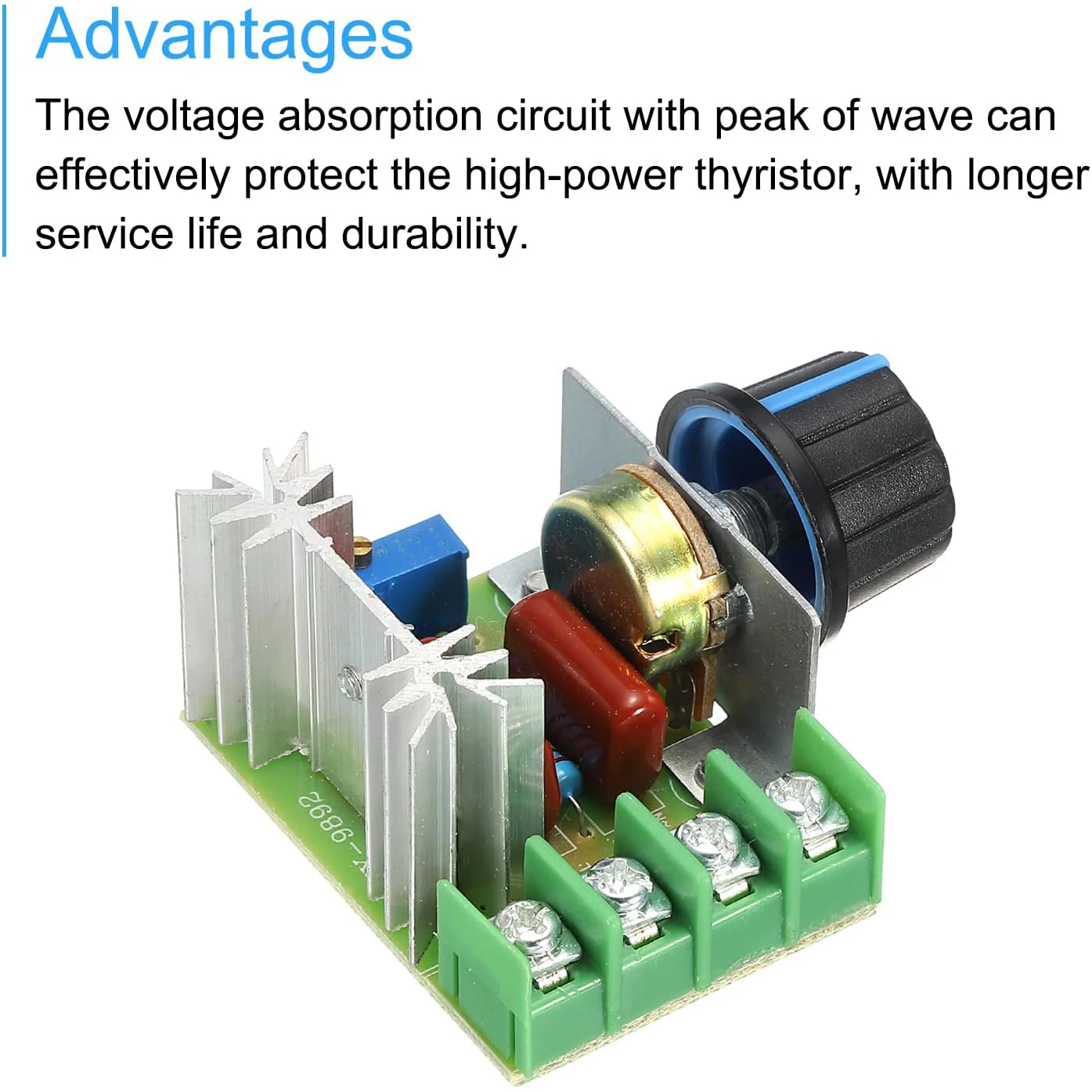
The module incorporates a voltage absorption circuit designed to mitigate voltage spikes, protecting the high-power thyristor. A substantial aluminum heatsink is visible, directly attached to the SCR component. The terminal blocks are screw-type, accommodating wire connections.
This protective circuit is crucial. It extends the service life of the thyristor, preventing premature failure due to transient voltage events. The heatsink ensures thermal management, preventing the SCR from overheating during prolonged high-power operation. Overheating is a common failure point for power electronics. The screw terminals provide secure connections, minimizing the risk of loose wires and potential arcing.
Many entry-level dimmers neglect robust surge protection, leaving the core switching component vulnerable. This regulator's integrated absorption circuit and generous heatsink represent a proactive approach to longevity, a stark contrast to units that prioritize cost over sustained performance. This design choice directly translates to fewer replacements and greater operational reliability.
The module features a 500kΩ potentiometer for voltage adjustment. A clear wiring diagram illustrates the AC input and AC output connections, indicating a simple series installation with the load. The PCB is a standard green FR-4 material.
Installation is intuitive. The wiring diagram clearly delineates the input and output, simplifying integration into existing circuits. Users connect the AC input to the power source and the AC output to the device requiring voltage regulation. The potentiometer's tactile feel is firm, providing precise control. This ease of setup reduces installation errors, a common issue with more complex electrical components.
Simpler wiring diagrams are often overlooked in product design. Compared to modules requiring complex external component integration or ambiguous labeling, this unit's straightforward diagram is a significant advantage. It streamlines the installation process, making it accessible even for those with moderate electrical experience.
This regulator is suitable for resistive loads such as electric ovens, water heaters, and incandescent lamps. It can also manage the speed of AC motors, provided they are universal motors (brush motors). It is not designed for inductive loads like asynchronous motors or electronic circuits with capacitors.
Imagine controlling the heating element in a small kiln or precisely adjusting the brightness of workshop lighting. The module excels in these scenarios, delivering consistent power. For motor speed control, it allows for variable operation, which is invaluable for tasks requiring different speeds. However, attempting to control a standard induction motor will likely result in inefficient operation and potential motor damage.
Many general-purpose dimmers claim broad compatibility but fail with specific load types. This unit's clear delineation of suitable loads (resistive and universal motors) sets it apart from ambiguous offerings. Understanding these limitations prevents misapplication, a critical factor in electrical safety and equipment preservation.
The module utilizes four screw-type terminal blocks, each designed to secure individual wires. The terminals appear to be tin-plated brass, offering good conductivity. The PCB traces are visible and appear adequately sized for the rated current.
Secure wire termination is paramount for electrical safety. The screw terminals ensure a tight, reliable connection, preventing accidental disconnections or intermittent power delivery. Loose connections generate heat, a significant fire hazard. The visible PCB traces, while not explicitly rated, suggest a design capable of handling the specified amperage without excessive resistance.
Inferior terminal blocks often use flimsy materials or shallow screw threads, leading to unreliable connections. This unit's terminals, with their robust appearance, offer a more secure alternative, reducing the risk of electrical faults common with cheaper, spring-clip or push-in terminals that may not maintain consistent pressure over time.
The product description explicitly highlights a "voltage absorption circuit with peak of wave" designed to protect the high-power thyristor. This circuit is a critical component for enhancing durability. It's a silent guardian.
In practical terms, this circuit acts as a buffer against sudden voltage fluctuations or inductive kickback from motors. Without it, the thyristor would be directly exposed to these stresses, leading to rapid degradation. This protection ensures the regulator maintains its performance over a longer operational period.
Many basic SCR dimmers omit such protective circuitry, relying solely on the thyristor's inherent robustness. This integrated absorption circuit is a clear design advantage, offering a level of protection typically found in more industrial-grade power control modules. It significantly reduces the likelihood of catastrophic failure, a common concern with high-power switching devices.
Imagine the satisfaction of precisely controlling your workshop Tools, achieving optimal speeds for every task, or setting the perfect ambiance with dimmable lighting, all while knowing your electrical components are protected by a thoughtfully engineered system. This regulator empowers users to take command of their power delivery, transforming ordinary equipment into versatile, adaptable tools. It provides the capability to refine processes, enhance safety, and extend the life of valuable electrical assets, making every project more efficient and enjoyable.
Precision Power Management
This module is rated for a maximum current of 25A and operates within an AC voltage range of 50V to 220V, handling up to 2000 watts. It integrates a high-power SCR (Silicon Controlled Rectifier) for efficient power regulation. The unit measures approximately 48mm x 37mm x 27mm, a compact footprint.
Controlling the speed of a universal motor or dimming high-wattage incandescent lighting becomes a straightforward task. The integrated potentiometer allows for smooth, continuous adjustment, eliminating abrupt power changes that can stress connected devices. Imagine fine-tuning a drill press's RPM for delicate work, or precisely setting the heat output of a soldering iron. This level of control enhances operational safety and precision.
Unlike basic rheostats that dissipate significant power as heat, this SCR-based regulator offers a far more efficient method of voltage control. Older, less sophisticated dimmers often struggle with inductive loads, leading to humming or erratic behavior. This unit, with its voltage absorption circuit, provides a more stable and reliable output, a significant upgrade over conventional resistive dimmers.
Engineering for Durability and Safety
The module incorporates a voltage absorption circuit designed to mitigate voltage spikes, protecting the high-power thyristor. A substantial aluminum heatsink is visible, directly attached to the SCR component. The terminal blocks are screw-type, accommodating wire connections.
This protective circuit is crucial. It extends the service life of the thyristor, preventing premature failure due to transient voltage events. The heatsink ensures thermal management, preventing the SCR from overheating during prolonged high-power operation. Overheating is a common failure point for power electronics. The screw terminals provide secure connections, minimizing the risk of loose wires and potential arcing.
Many entry-level dimmers neglect robust surge protection, leaving the core switching component vulnerable. This regulator's integrated absorption circuit and generous heatsink represent a proactive approach to longevity, a stark contrast to units that prioritize cost over sustained performance. This design choice directly translates to fewer replacements and greater operational reliability.
Installation and Operational Clarity
The module features a 500kΩ potentiometer for voltage adjustment. A clear wiring diagram illustrates the AC input and AC output connections, indicating a simple series installation with the load. The PCB is a standard green FR-4 material.
Installation is intuitive. The wiring diagram clearly delineates the input and output, simplifying integration into existing circuits. Users connect the AC input to the power source and the AC output to the device requiring voltage regulation. The potentiometer's tactile feel is firm, providing precise control. This ease of setup reduces installation errors, a common issue with more complex electrical components.
Simpler wiring diagrams are often overlooked in product design. Compared to modules requiring complex external component integration or ambiguous labeling, this unit's straightforward diagram is a significant advantage. It streamlines the installation process, making it accessible even for those with moderate electrical experience.
Real-World Applications and Limitations
This regulator is suitable for resistive loads such as electric ovens, water heaters, and incandescent lamps. It can also manage the speed of AC motors, provided they are universal motors (brush motors). It is not designed for inductive loads like asynchronous motors or electronic circuits with capacitors.
Imagine controlling the heating element in a small kiln or precisely adjusting the brightness of workshop lighting. The module excels in these scenarios, delivering consistent power. For motor speed control, it allows for variable operation, which is invaluable for tasks requiring different speeds. However, attempting to control a standard induction motor will likely result in inefficient operation and potential motor damage.
Many general-purpose dimmers claim broad compatibility but fail with specific load types. This unit's clear delineation of suitable loads (resistive and universal motors) sets it apart from ambiguous offerings. Understanding these limitations prevents misapplication, a critical factor in electrical safety and equipment preservation.
Terminal Quality and Wire Management
The module utilizes four screw-type terminal blocks, each designed to secure individual wires. The terminals appear to be tin-plated brass, offering good conductivity. The PCB traces are visible and appear adequately sized for the rated current.
Secure wire termination is paramount for electrical safety. The screw terminals ensure a tight, reliable connection, preventing accidental disconnections or intermittent power delivery. Loose connections generate heat, a significant fire hazard. The visible PCB traces, while not explicitly rated, suggest a design capable of handling the specified amperage without excessive resistance.
Inferior terminal blocks often use flimsy materials or shallow screw threads, leading to unreliable connections. This unit's terminals, with their robust appearance, offer a more secure alternative, reducing the risk of electrical faults common with cheaper, spring-clip or push-in terminals that may not maintain consistent pressure over time.
The Voltage Absorption Circuit
The product description explicitly highlights a "voltage absorption circuit with peak of wave" designed to protect the high-power thyristor. This circuit is a critical component for enhancing durability. It's a silent guardian.
In practical terms, this circuit acts as a buffer against sudden voltage fluctuations or inductive kickback from motors. Without it, the thyristor would be directly exposed to these stresses, leading to rapid degradation. This protection ensures the regulator maintains its performance over a longer operational period.
Many basic SCR dimmers omit such protective circuitry, relying solely on the thyristor's inherent robustness. This integrated absorption circuit is a clear design advantage, offering a level of protection typically found in more industrial-grade power control modules. It significantly reduces the likelihood of catastrophic failure, a common concern with high-power switching devices.
Imagine the satisfaction of precisely controlling your workshop Tools, achieving optimal speeds for every task, or setting the perfect ambiance with dimmable lighting, all while knowing your electrical components are protected by a thoughtfully engineered system. This regulator empowers users to take command of their power delivery, transforming ordinary equipment into versatile, adaptable tools. It provides the capability to refine processes, enhance safety, and extend the life of valuable electrical assets, making every project more efficient and enjoyable.