HF Shortwave Radio Common Mode Choke (EM-25/EM-43)
Official Store Deal
Expert Analysis Overview
The Imperative of Signal Purity: An Examination of HF Common Mode Chokes
The HF Shortwave Radio Common Mode Choke is a critical impedance-matching and interference-suppression component engineered for amateur radio and shortwave listening enthusiasts. This device is not merely an accessory; it is a fundamental tool for maintaining signal integrity in complex radio frequency environments. Its design directly addresses the pervasive issue of common-mode currents, which can severely degrade system performance and introduce unwanted noise into sensitive measurement setups.
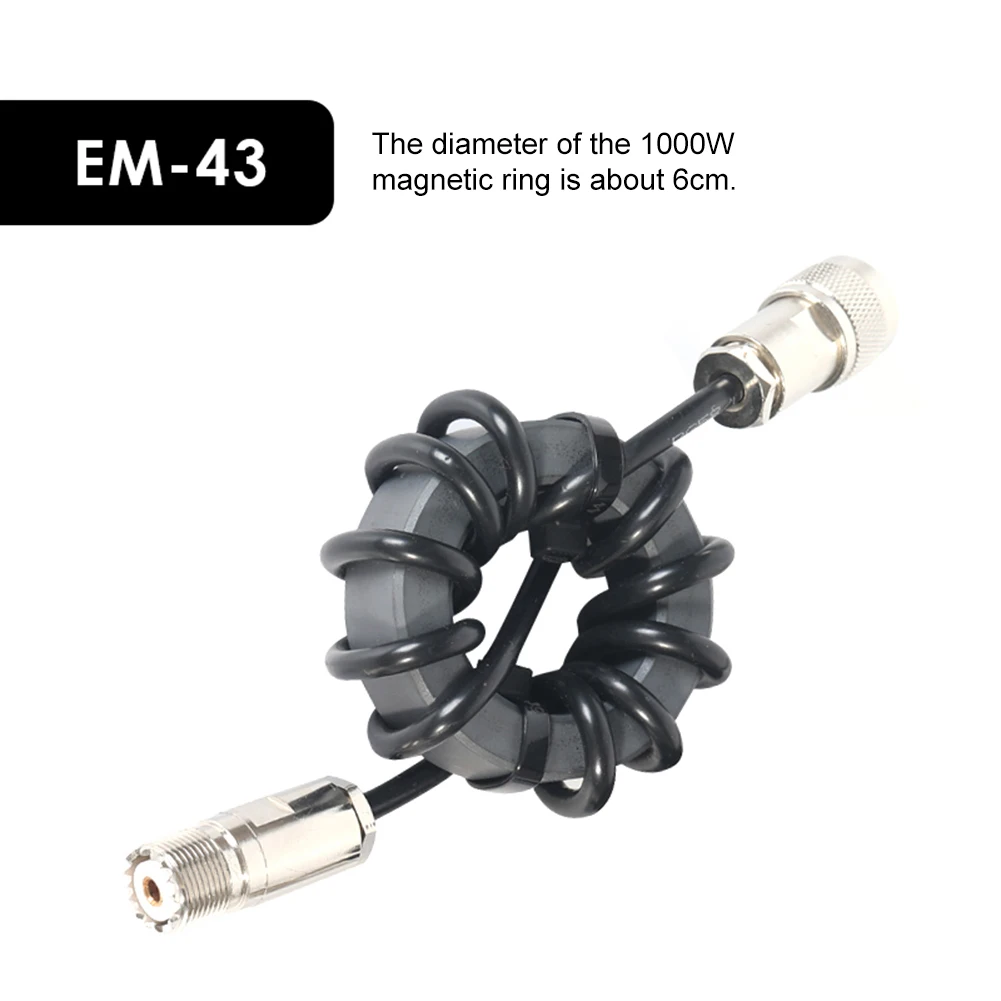
The visible construction reveals a robust design. The core component is a ferrite magnetic ring, around which a coaxial cable is meticulously wound. This winding configuration is paramount for establishing the inductive reactance necessary to impede common-mode currents effectively. The choice of ferrite material and the number of turns directly influence the choke's operational bandwidth and impedance characteristics. It is a simple, yet effective, solution.
Unlike generic inline filters that may offer broad-spectrum attenuation without specific targeting, these common mode chokes are purpose-built. They focus on currents flowing equally on both conductors of a transmission line, which are often responsible for RFI. This targeted approach ensures minimal impact on differential mode signals, preserving the desired radio transmission or reception. The distinction is crucial for precision.
Precision in Interference Mitigation
The primary function of these chokes is to introduce a high impedance to common-mode currents across the specified frequency range of 1.8-30 MHz. This impedance acts as a barrier, preventing these unwanted currents from propagating along the coaxial cable. Such currents often originate from antenna imbalances, ground loops, or nearby electrical noise sources. Effective mitigation is key.
The EM-43 model, with its larger magnetic ring diameter of approximately 6 cm, is rated for a substantial power handling of 1000 Watts. This capacity makes it suitable for higher-power amateur radio stations. The EM-25, featuring a magnetic ring diameter of approximately 4.5 cm and a power resistance of 200 Watts, caters to lower-power applications or portable setups. Both models utilize standard UHF Female (SO-239) connectors, ensuring broad compatibility with existing radio equipment. Connector quality appears high.
Compared to simple ferrite snap-ons, which offer limited impedance over narrow bands, these wound chokes provide a more substantial and consistent common-mode impedance. The multiple turns of coaxial cable around the ferrite core significantly increase the inductive reactance. This design choice translates directly into superior RFI suppression, particularly across the entire HF spectrum. It's a significant upgrade.
Engineering for High-Frequency Integrity
The engineering behind these chokes focuses on maximizing common-mode impedance while minimizing insertion loss for the desired differential signal. The ferrite material selected for the magnetic rings is critical; its permeability characteristics dictate the choke's effectiveness across the 1.8-30 MHz band. A well-chosen ferrite ensures optimal performance without excessive heat generation, even under high power. Material science is paramount.
The winding technique employed is also a key factor. The coaxial cable is tightly wound around the ferrite core, creating a compact and efficient inductor. This careful winding ensures consistent performance and mechanical stability. The black protective sheathing visible on the wound cable suggests a degree of insulation and strain relief, contributing to the overall durability of the unit. Build quality is evident.
Unlike hastily assembled DIY solutions, these pre-fabricated chokes offer a professionally engineered and tested solution. The consistency in winding, the quality of the ferrite core, and the robust connectors contribute to repeatable performance. This reliability is essential for radio operators who depend on stable and interference-free communication. Consistency matters greatly.
Operational Efficacy and System Integration
In practical application, the EM-25 and EM-43 chokes are designed for straightforward integration into existing coaxial cable runs. Their UHF SO-239 connectors allow for direct connection to PL-259 terminated cables, commonly found in HF radio setups. This plug-and-play functionality minimizes installation complexity. Setup is simple.
For instance, if a radio operator experiences RFI affecting household electronics when transmitting, inserting one of these chokes in the antenna feedline can significantly reduce the common-mode currents radiating from the coax itself. This prevents the coax from acting as an unintended antenna, thereby cleaning up the RF environment. The impact is immediate.
Many standard radio installations often overlook the importance of common-mode suppression, relying solely on antenna tuning. However, even a perfectly tuned antenna can still induce common-mode currents on the feedline due to environmental factors or antenna design imperfections. These chokes provide a dedicated solution to this specific problem, complementing antenna system optimization. They fill a critical gap.
The Metrological Perspective on Performance
From a metrological standpoint, the performance of these chokes is characterized by their common-mode impedance and insertion loss across the specified frequency range. While direct measurement equipment for these parameters is specialized, the design specifications provide a clear indication of their intended performance envelope. The 1.8-30 MHz range is precisely defined.
The power handling capabilities of 1000W for the EM-43 and 200W for the EM-25 are critical metrics. These figures indicate the maximum RF power the choke can safely handle without saturation of the ferrite core or excessive heating. Exceeding these limits can lead to degraded performance, increased insertion loss, and potential damage to the choke or connected equipment. Power ratings are absolute.
Repeatable results in RFI suppression are a hallmark of well-designed chokes. The consistent winding and quality ferrite material aim to provide a stable impedance curve across the HF band. This predictability allows radio operators to integrate these chokes with confidence, knowing they will perform as expected under various operating conditions. Reliability is a core benefit.
Durability and Environmental Resilience
Visual inspection suggests a durable construction. The ferrite core is encased or tightly wound with insulated cable, protecting it from minor physical impacts. The metal UHF connectors are robust, designed for repeated connections and disconnections without degradation. These components are built to last.
While not explicitly rated for extreme environmental conditions, the materials used—ferrite, insulated copper wire, and metal connectors—are generally resilient to typical indoor and outdoor amateur radio environments. Protection from direct moisture and extreme temperatures would naturally extend their operational lifespan. Prudent placement is advised.
Compared to bare ferrite cores or less robust connector assemblies, these chokes present a more finished and protected product. The integrated design reduces the risk of accidental damage to the windings or core, which could compromise performance. This attention to detail enhances the product's longevity and reliability in the field. Longevity is a key value.
Value Proposition in Radio Communications
Investing in a high-quality common mode choke like the EM-25 or EM-43 offers significant long-term value for any HF radio operator. The immediate benefit is improved signal clarity and reduced RFI, leading to more enjoyable and effective communication. This directly enhances the user experience. Clear signals are paramount.
Beyond immediate performance, these chokes protect sensitive radio equipment from stray RF currents that can cause damage or erratic behavior. By mitigating common-mode currents, they contribute to the overall health and longevity of the entire radio system. This preventative measure can save significant costs in repairs or replacements. Protection is invaluable.
Considering the relatively modest cost, the EM-25 and EM-43 provide an excellent return on investment by enhancing operational reliability and preventing potential equipment issues. They are an essential component for anyone serious about optimizing their HF radio setup and minimizing interference. It's a smart investment.
Strategic Deployment for Optimal Results
Effective deployment of these chokes involves strategic placement within the antenna system. Often, placing the choke directly at the antenna feed point or near the radio's antenna input can yield the best results. Experimentation with placement can further optimize RFI reduction for specific setups. Placement is critical.
For operators dealing with persistent RFI, the ability to choose between the 200W EM-25 and the 1000W EM-43 allows for tailored solutions based on their transmitter power. This scalability ensures that both QRP (low power) and higher-power stations can benefit from appropriate common-mode suppression. Options cater to needs.
These chokes are not a panacea for all radio problems, but they are a highly effective tool for a specific and common issue. Integrating them into a comprehensive RFI mitigation strategy, alongside proper grounding and shielding, will yield the most significant improvements in signal quality and system stability. They are part of a larger solution.
The Future of Uninterrupted Communication
Imagine a radio environment where the chatter of distant stations comes through with pristine clarity, unmarred by the hum of household appliances or the buzz of digital interference. Picture your transmissions reaching their intended recipients without causing static on a neighbor's television. Envision the confidence of operating your HF rig at full power, knowing that stray RF currents are being effectively contained, protecting your valuable equipment and ensuring a clean signal. This is the promise of a well-implemented common mode choke, delivering a superior and more reliable radio experience for every enthusiast. Your radio experience improves dramatically.