Heavy Object Moving Straps for Furniture and Appliances
Official Store Deal
Expert Analysis Overview
Heavy Object Moving Straps are a fundamentally practical lifting aid, engineered for the safe and efficient relocation of substantial household items by two individuals. This simple design directly addresses the chronic issues of back strain and property damage prevalent in DIY moving scenarios. Unlike traditional methods involving brute force or makeshift dollies, these straps introduce a leverage-based system, transforming awkward, heavy lifting into a more manageable task. The core principle lies in shifting the load's center of gravity and distributing its weight across the users' stronger muscle groups, specifically the forearms and shoulders, rather than concentrating it on the lower back.
These moving straps comprise two primary components: the main lifting straps and the adjustable forearm/shoulder harnesses. The lifting straps, measuring approximately 94.5 inches (240 cm) in total length, are constructed from high-strength polypropylene webbing. This material choice is critical. Polypropylene, known for its excellent tensile strength and resistance to abrasion, ensures the straps maintain their integrity under significant load, preventing stretching or snapping that could lead to catastrophic failures during a move.
The design focuses on load distribution. When engaged, the straps form a triangular support system beneath the object, allowing the weight to be borne by the users' forearms or shoulders. This mechanical advantage is often underestimated. It fundamentally alters the biomechanics of lifting, moving the stress away from the lumbar spine and into the larger, more resilient muscles of the upper body and legs.
Compared to simply grasping an object, which often results in an uneven grip and localized pressure points, this system provides a broad, stable contact area. This stability is paramount for controlling heavy, unwieldy items like washing machines or large dressers. The wide webbing also minimizes the risk of the straps cutting into the item itself, a common issue with thinner ropes or improvised lifting aids.
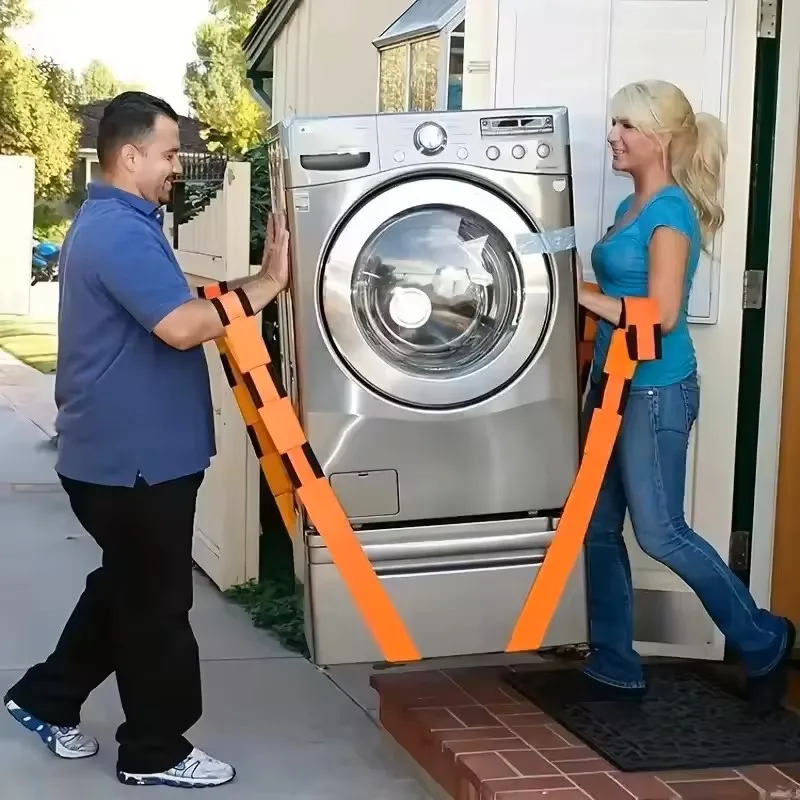
Picture a scenario: a fully loaded washing machine, weighing upwards of 200 pounds, needs to be moved from a laundry room to a new utility space. Without proper equipment, this task is a recipe for strained backs, scraped walls, and potentially damaged appliances. These straps simplify the process. Each user slides their forearms or shoulders through the padded loops, then positions the main strap underneath the appliance. A quick adjustment of the multiple loops on the main strap customizes the length, ensuring a snug fit and optimal leverage.
The ergonomic benefit is immediate. The weight, instead of pulling directly down on the hands and lower back, is transferred across the forearms or shoulders, allowing the legs to do the primary lifting. This is how professional movers operate. It's a fundamental principle of safe lifting. The orange and black color scheme also provides high visibility, which is a minor but appreciated detail in dimly lit moving environments.
In contrast to single-person lifting aids, which often rely on casters or levers, these two-person straps offer superior control and maneuverability. The human element allows for dynamic adjustments to balance and direction, crucial when navigating tight corners, doorways, or uneven floor surfaces. This direct control minimizes the risk of tipping or accidental drops, protecting both the item and the movers.
Consider the common alternatives: using a hand truck, sliding pads, or simply "hugging" the item. A hand truck can be cumbersome on stairs and often requires tilting the item, risking damage. Sliding pads are effective on smooth floors but useless for lifting or navigating thresholds. "Hugging" heavy items is a direct path to injury. These straps offer a significant upgrade. They don't just move objects; they move them safely.
Unlike makeshift solutions like old blankets or ropes, which can stretch, tear, or provide an unstable grip, these purpose-built straps ensure consistent performance. The high-strength polypropylene webbing provides a reliable, non-stretch platform for lifting. This consistency is vital for maintaining control and preventing sudden shifts in weight during transit. It's a small investment with a substantial return in safety and efficiency.
The adjustable nature of the straps also sets them apart. Many generic lifting straps offer limited adjustment, making them less adaptable to different item sizes or user heights. The multiple loop system on these straps allows for precise length tuning, ensuring the load remains close to the body for maximum leverage and stability. This adaptability is key to their broad utility across various moving tasks.
The choice of high-strength polypropylene webbing is not accidental. This synthetic polymer is renowned for its durability, chemical resistance, and low moisture absorption, making it an ideal material for heavy-duty applications. Each strap is approximately 3 inches (7.6 cm) wide, a dimension chosen to distribute pressure effectively and prevent the strap from digging into the item or the user. The stitching, visible in the product imagery, appears robust, indicating reinforced stress points.
The material's resistance to stretching is a critical specification. A strap that stretches under load creates instability, making the item harder to control and increasing the risk of dropping it. Polypropylene maintains its form, providing a firm, predictable support structure. This predictable behavior is what allows users to confidently lift items up to 800 lbs (360 kg).
The visual inspection of the webbing suggests a tightly woven construction. This dense weave contributes to the material's abrasion resistance, meaning it can withstand rubbing against rough surfaces or sharp edges without quickly fraying or weakening. This longevity is a hallmark of quality in Tools designed for repeated strenuous use.
Imagine moving a cast-iron bathtub or a heavy wooden armoire. These items often have rough undersides or sharp corners that can quickly degrade lesser materials. The polypropylene construction of these straps is designed to resist such wear and tear. Its inherent strength means it won't easily fray or snap, even when subjected to the friction of sliding across concrete or the pressure of a heavy load.
The non-marring characteristic of the fabric is also essential. Unlike chains or wire ropes, which can scratch or dent delicate surfaces, these straps provide a soft, protective contact point. This is particularly important when moving finished furniture, antique pieces, or appliances with painted exteriors. The integrity of the item remains preserved.
These straps are not single-use items. Their durable construction ensures they can be reused for countless moving projects, offering consistent performance over time. This reusability translates into significant long-term value, negating the need for disposable moving aids or repeated rentals of specialized equipment. They are built for the long haul.
Many entry-level lifting straps utilize thinner nylon or polyester webbing, which, while strong, may not offer the same level of rigidity or abrasion resistance as high-grade polypropylene. The thicker, wider design of these straps provides a noticeable improvement in comfort and load stability. A wider strap distributes pressure more broadly across the forearms, reducing pinch points and discomfort during prolonged lifts.
Furthermore, the quality of the stitching is often a differentiator. Inferior straps might feature single-pass stitching or use weaker threads, leading to premature failure at critical junctures. The visual evidence suggests a multi-pass, reinforced stitching pattern, particularly at the loops where the greatest stress occurs. This attention to detail directly impacts the product's overall safety rating and lifespan.
Compared to generic household ropes, which are often made from natural fibers or lower-grade synthetics, these straps offer superior strength-to-weight ratio and weather resistance. Ropes can absorb moisture, weaken over time, and are difficult to adjust precisely. These purpose-built straps provide a controlled, predictable, and durable solution for heavy lifting, far surpassing the capabilities of improvised tools.
The operational efficiency of these straps is a key selling point. Setup is straightforward: two users position themselves on opposite sides of the item, each securing a forearm or shoulder harness. The main strap is then threaded underneath the object. Multiple loops along the strap allow for quick length adjustments, ensuring the item is lifted to an appropriate height and remains balanced. This intuitive design minimizes setup time, allowing movers to focus on the task at hand.
Communication between partners is crucial. A simple count-off ("One, two, three, lift!") ensures synchronized movement, preventing sudden jerks or imbalances. The visual clarity of the orange straps also assists in quick identification of the correct threading paths and adjustment points, even in less-than-ideal lighting conditions.
The ability to quickly adjust the strap length is a significant advantage. It means the same set of straps can be used for a wide variety of items, from slender refrigerators to bulky entertainment centers. This adaptability reduces the need for multiple specialized tools, streamlining the moving process and saving valuable time.
Consider the challenge of navigating a heavy dresser through a narrow hallway with a sharp turn. With these straps, the coordinated effort of two individuals allows for precise control. One person can guide the front, while the other manages the rear, adjusting their pace and direction in tandem. The weight distribution across the body frees the hands to some extent, allowing for minor adjustments to the item's position or to brace against doorframes.
The straps encourage proper lifting posture. By distributing the weight to the legs and shoulders, users are naturally inclined to bend at the knees and maintain a straight back. This not only protects the spine but also maximizes the strength available for the lift. It's a fundamental lesson in body mechanics applied directly to a practical problem.
The experience is less about raw strength and more about leverage and technique. Even individuals with moderate strength can move surprisingly heavy objects when the weight is properly distributed and lifted with the legs. This makes the product accessible to a broader range of users, not just professional movers. It's about working smarter, not harder.
Compared to renting specialized moving equipment, which incurs costs and logistical challenges, these straps offer a permanent, on-demand solution. They are always ready, require no fuel or batteries, and store compactly. This immediate availability makes them invaluable for unexpected moves or reconfigurations within a home or workshop.
The reusable nature of the straps also contributes to their superior value. A single purchase provides a tool that can be deployed repeatedly, year after year, for various tasks. This contrasts sharply with disposable moving supplies or the recurring expense of hiring assistance for smaller jobs. The return on investment is clear.
Furthermore, the ability to move items without the need for wheels means less risk to delicate flooring. Hardwood, tile, and even some carpets can be scratched or dented by dollies or hand trucks. These straps lift the item completely off the ground, eliminating direct contact and preserving the integrity of the floor surfaces. It's a nuanced benefit that often goes overlooked until damage occurs.
As a restoration tech, the concern for preserving the integrity of items during transport is paramount. These straps excel in this regard. When moving vintage furniture, antique appliances, or delicate electrical components, the non-marring polypropylene webbing ensures that surfaces are not scratched, chipped, or dented. The broad contact area of the straps distributes pressure evenly, preventing localized stress that could crack brittle wood or warp metal panels.
Imagine moving a vintage console radio, a piece with delicate veneers and internal vacuum tubes. The last thing any restorer wants is damage during relocation. These straps allow for a controlled, gentle lift, keeping the item stable and upright. This minimizes internal jostling and external abrasion, crucial for preserving the often-fragile components of older electronics or furniture.
Unlike using ropes or bare hands, which can create pressure points or slip, these straps provide a secure, full-contact cradle for the item. This security is vital for maintaining the structural integrity of older pieces that may have weakened joints or aged materials. It's about moving with precision and care.
The proper handling of heavy appliances, such as refrigerators or washing machines, directly impacts their operational lifespan. Tilting or dropping these units can damage internal components like compressors, motors, or delicate plumbing. These straps facilitate a level, controlled lift, reducing the risk of internal component displacement or structural stress.
For furniture, especially those with intricate joinery or delicate finishes, preventing scrapes and impacts is key to their longevity. The ability to lift an item completely off the ground and maneuver it smoothly through doorways and hallways significantly reduces the chance of accidental collisions with walls or doorframes. This proactive damage prevention is invaluable.
The straps also help prevent floor damage. Dragging heavy items across hardwood, tile, or even concrete can leave permanent marks or gouges. By lifting the item, these straps protect both the object being moved and the environment it's moving through. This dual protection is a significant benefit for any homeowner or professional.
Heavy Object Moving Straps are a genuinely indispensable tool for anyone who anticipates moving heavy items, whether it's a major household relocation or simply rearranging furniture. Their design prioritizes safety, efficiency, and the preservation of valuable possessions. The high-strength polypropylene construction, combined with an ergonomic two-person lifting system, effectively mitigates the risks associated with manual heavy lifting. This tool allows for the safe relocation of items up to 800 lbs, a capability that would otherwise require professional assistance or significant personal strain.
The investment in these straps is minimal, especially when considering the potential costs of back injuries, damaged floors, or broken appliances. They represent a smart, long-term solution for managing heavy loads, transforming a daunting task into a manageable one. The ease of adjustment and robust material ensure they remain a reliable asset for years. Imagine the satisfaction of effortlessly repositioning a bulky cabinet or moving a new appliance into place, all without a single scratch or strain. This capability empowers individuals to tackle moving challenges confidently and safely, preserving both their physical well-being and the condition of their cherished possessions.
Redefining Heavy Lifting Mechanics
The Anatomy of Assistance
These moving straps comprise two primary components: the main lifting straps and the adjustable forearm/shoulder harnesses. The lifting straps, measuring approximately 94.5 inches (240 cm) in total length, are constructed from high-strength polypropylene webbing. This material choice is critical. Polypropylene, known for its excellent tensile strength and resistance to abrasion, ensures the straps maintain their integrity under significant load, preventing stretching or snapping that could lead to catastrophic failures during a move.
The design focuses on load distribution. When engaged, the straps form a triangular support system beneath the object, allowing the weight to be borne by the users' forearms or shoulders. This mechanical advantage is often underestimated. It fundamentally alters the biomechanics of lifting, moving the stress away from the lumbar spine and into the larger, more resilient muscles of the upper body and legs.
Compared to simply grasping an object, which often results in an uneven grip and localized pressure points, this system provides a broad, stable contact area. This stability is paramount for controlling heavy, unwieldy items like washing machines or large dressers. The wide webbing also minimizes the risk of the straps cutting into the item itself, a common issue with thinner ropes or improvised lifting aids.
Real-World Application and Ergonomics
Picture a scenario: a fully loaded washing machine, weighing upwards of 200 pounds, needs to be moved from a laundry room to a new utility space. Without proper equipment, this task is a recipe for strained backs, scraped walls, and potentially damaged appliances. These straps simplify the process. Each user slides their forearms or shoulders through the padded loops, then positions the main strap underneath the appliance. A quick adjustment of the multiple loops on the main strap customizes the length, ensuring a snug fit and optimal leverage.
The ergonomic benefit is immediate. The weight, instead of pulling directly down on the hands and lower back, is transferred across the forearms or shoulders, allowing the legs to do the primary lifting. This is how professional movers operate. It's a fundamental principle of safe lifting. The orange and black color scheme also provides high visibility, which is a minor but appreciated detail in dimly lit moving environments.
In contrast to single-person lifting aids, which often rely on casters or levers, these two-person straps offer superior control and maneuverability. The human element allows for dynamic adjustments to balance and direction, crucial when navigating tight corners, doorways, or uneven floor surfaces. This direct control minimizes the risk of tipping or accidental drops, protecting both the item and the movers.
An Upgrade from Traditional Methods
Consider the common alternatives: using a hand truck, sliding pads, or simply "hugging" the item. A hand truck can be cumbersome on stairs and often requires tilting the item, risking damage. Sliding pads are effective on smooth floors but useless for lifting or navigating thresholds. "Hugging" heavy items is a direct path to injury. These straps offer a significant upgrade. They don't just move objects; they move them safely.
Unlike makeshift solutions like old blankets or ropes, which can stretch, tear, or provide an unstable grip, these purpose-built straps ensure consistent performance. The high-strength polypropylene webbing provides a reliable, non-stretch platform for lifting. This consistency is vital for maintaining control and preventing sudden shifts in weight during transit. It's a small investment with a substantial return in safety and efficiency.
The adjustable nature of the straps also sets them apart. Many generic lifting straps offer limited adjustment, making them less adaptable to different item sizes or user heights. The multiple loop system on these straps allows for precise length tuning, ensuring the load remains close to the body for maximum leverage and stability. This adaptability is key to their broad utility across various moving tasks.
Durability and Material Science
Engineered for Endurance
The choice of high-strength polypropylene webbing is not accidental. This synthetic polymer is renowned for its durability, chemical resistance, and low moisture absorption, making it an ideal material for heavy-duty applications. Each strap is approximately 3 inches (7.6 cm) wide, a dimension chosen to distribute pressure effectively and prevent the strap from digging into the item or the user. The stitching, visible in the product imagery, appears robust, indicating reinforced stress points.
The material's resistance to stretching is a critical specification. A strap that stretches under load creates instability, making the item harder to control and increasing the risk of dropping it. Polypropylene maintains its form, providing a firm, predictable support structure. This predictable behavior is what allows users to confidently lift items up to 800 lbs (360 kg).
The visual inspection of the webbing suggests a tightly woven construction. This dense weave contributes to the material's abrasion resistance, meaning it can withstand rubbing against rough surfaces or sharp edges without quickly fraying or weakening. This longevity is a hallmark of quality in Tools designed for repeated strenuous use.
Withstanding the Rigors of Relocation
Imagine moving a cast-iron bathtub or a heavy wooden armoire. These items often have rough undersides or sharp corners that can quickly degrade lesser materials. The polypropylene construction of these straps is designed to resist such wear and tear. Its inherent strength means it won't easily fray or snap, even when subjected to the friction of sliding across concrete or the pressure of a heavy load.
The non-marring characteristic of the fabric is also essential. Unlike chains or wire ropes, which can scratch or dent delicate surfaces, these straps provide a soft, protective contact point. This is particularly important when moving finished furniture, antique pieces, or appliances with painted exteriors. The integrity of the item remains preserved.
These straps are not single-use items. Their durable construction ensures they can be reused for countless moving projects, offering consistent performance over time. This reusability translates into significant long-term value, negating the need for disposable moving aids or repeated rentals of specialized equipment. They are built for the long haul.
Outperforming Standard Lifting Aids
Many entry-level lifting straps utilize thinner nylon or polyester webbing, which, while strong, may not offer the same level of rigidity or abrasion resistance as high-grade polypropylene. The thicker, wider design of these straps provides a noticeable improvement in comfort and load stability. A wider strap distributes pressure more broadly across the forearms, reducing pinch points and discomfort during prolonged lifts.
Furthermore, the quality of the stitching is often a differentiator. Inferior straps might feature single-pass stitching or use weaker threads, leading to premature failure at critical junctures. The visual evidence suggests a multi-pass, reinforced stitching pattern, particularly at the loops where the greatest stress occurs. This attention to detail directly impacts the product's overall safety rating and lifespan.
Compared to generic household ropes, which are often made from natural fibers or lower-grade synthetics, these straps offer superior strength-to-weight ratio and weather resistance. Ropes can absorb moisture, weaken over time, and are difficult to adjust precisely. These purpose-built straps provide a controlled, predictable, and durable solution for heavy lifting, far surpassing the capabilities of improvised tools.
Operational Efficiency and User Experience
Streamlined Setup and Adjustment
The operational efficiency of these straps is a key selling point. Setup is straightforward: two users position themselves on opposite sides of the item, each securing a forearm or shoulder harness. The main strap is then threaded underneath the object. Multiple loops along the strap allow for quick length adjustments, ensuring the item is lifted to an appropriate height and remains balanced. This intuitive design minimizes setup time, allowing movers to focus on the task at hand.
Communication between partners is crucial. A simple count-off ("One, two, three, lift!") ensures synchronized movement, preventing sudden jerks or imbalances. The visual clarity of the orange straps also assists in quick identification of the correct threading paths and adjustment points, even in less-than-ideal lighting conditions.
The ability to quickly adjust the strap length is a significant advantage. It means the same set of straps can be used for a wide variety of items, from slender refrigerators to bulky entertainment centers. This adaptability reduces the need for multiple specialized tools, streamlining the moving process and saving valuable time.
The Dynamics of a Coordinated Lift
Consider the challenge of navigating a heavy dresser through a narrow hallway with a sharp turn. With these straps, the coordinated effort of two individuals allows for precise control. One person can guide the front, while the other manages the rear, adjusting their pace and direction in tandem. The weight distribution across the body frees the hands to some extent, allowing for minor adjustments to the item's position or to brace against doorframes.
The straps encourage proper lifting posture. By distributing the weight to the legs and shoulders, users are naturally inclined to bend at the knees and maintain a straight back. This not only protects the spine but also maximizes the strength available for the lift. It's a fundamental lesson in body mechanics applied directly to a practical problem.
The experience is less about raw strength and more about leverage and technique. Even individuals with moderate strength can move surprisingly heavy objects when the weight is properly distributed and lifted with the legs. This makes the product accessible to a broader range of users, not just professional movers. It's about working smarter, not harder.
Beyond Generic Moving Solutions
Compared to renting specialized moving equipment, which incurs costs and logistical challenges, these straps offer a permanent, on-demand solution. They are always ready, require no fuel or batteries, and store compactly. This immediate availability makes them invaluable for unexpected moves or reconfigurations within a home or workshop.
The reusable nature of the straps also contributes to their superior value. A single purchase provides a tool that can be deployed repeatedly, year after year, for various tasks. This contrasts sharply with disposable moving supplies or the recurring expense of hiring assistance for smaller jobs. The return on investment is clear.
Furthermore, the ability to move items without the need for wheels means less risk to delicate flooring. Hardwood, tile, and even some carpets can be scratched or dented by dollies or hand trucks. These straps lift the item completely off the ground, eliminating direct contact and preserving the integrity of the floor surfaces. It's a nuanced benefit that often goes overlooked until damage occurs.
Restoration Tech Insights: Preventing Damage and Extending Lifespan
Protecting Vintage and Fragile Items
As a restoration tech, the concern for preserving the integrity of items during transport is paramount. These straps excel in this regard. When moving vintage furniture, antique appliances, or delicate electrical components, the non-marring polypropylene webbing ensures that surfaces are not scratched, chipped, or dented. The broad contact area of the straps distributes pressure evenly, preventing localized stress that could crack brittle wood or warp metal panels.
Imagine moving a vintage console radio, a piece with delicate veneers and internal vacuum tubes. The last thing any restorer wants is damage during relocation. These straps allow for a controlled, gentle lift, keeping the item stable and upright. This minimizes internal jostling and external abrasion, crucial for preserving the often-fragile components of older electronics or furniture.
Unlike using ropes or bare hands, which can create pressure points or slip, these straps provide a secure, full-contact cradle for the item. This security is vital for maintaining the structural integrity of older pieces that may have weakened joints or aged materials. It's about moving with precision and care.
Longevity of Appliances and Furniture
The proper handling of heavy appliances, such as refrigerators or washing machines, directly impacts their operational lifespan. Tilting or dropping these units can damage internal components like compressors, motors, or delicate plumbing. These straps facilitate a level, controlled lift, reducing the risk of internal component displacement or structural stress.
For furniture, especially those with intricate joinery or delicate finishes, preventing scrapes and impacts is key to their longevity. The ability to lift an item completely off the ground and maneuver it smoothly through doorways and hallways significantly reduces the chance of accidental collisions with walls or doorframes. This proactive damage prevention is invaluable.
The straps also help prevent floor damage. Dragging heavy items across hardwood, tile, or even concrete can leave permanent marks or gouges. By lifting the item, these straps protect both the object being moved and the environment it's moving through. This dual protection is a significant benefit for any homeowner or professional.
Final Assessment: A Smart Investment for Any Homeowner
Heavy Object Moving Straps are a genuinely indispensable tool for anyone who anticipates moving heavy items, whether it's a major household relocation or simply rearranging furniture. Their design prioritizes safety, efficiency, and the preservation of valuable possessions. The high-strength polypropylene construction, combined with an ergonomic two-person lifting system, effectively mitigates the risks associated with manual heavy lifting. This tool allows for the safe relocation of items up to 800 lbs, a capability that would otherwise require professional assistance or significant personal strain.
The investment in these straps is minimal, especially when considering the potential costs of back injuries, damaged floors, or broken appliances. They represent a smart, long-term solution for managing heavy loads, transforming a daunting task into a manageable one. The ease of adjustment and robust material ensure they remain a reliable asset for years. Imagine the satisfaction of effortlessly repositioning a bulky cabinet or moving a new appliance into place, all without a single scratch or strain. This capability empowers individuals to tackle moving challenges confidently and safely, preserving both their physical well-being and the condition of their cherished possessions.