Habotest HT107 Pro Socket Tester
Official Store Deal
Expert Analysis Overview
The Habotest HT107 Pro Socket Tester is a critical diagnostic tool designed for electricians, DIY enthusiasts, and homeowners prioritizing electrical safety. This device offers rapid, clear insights into wiring conditions, moving beyond simple continuity checks to provide comprehensive circuit analysis.
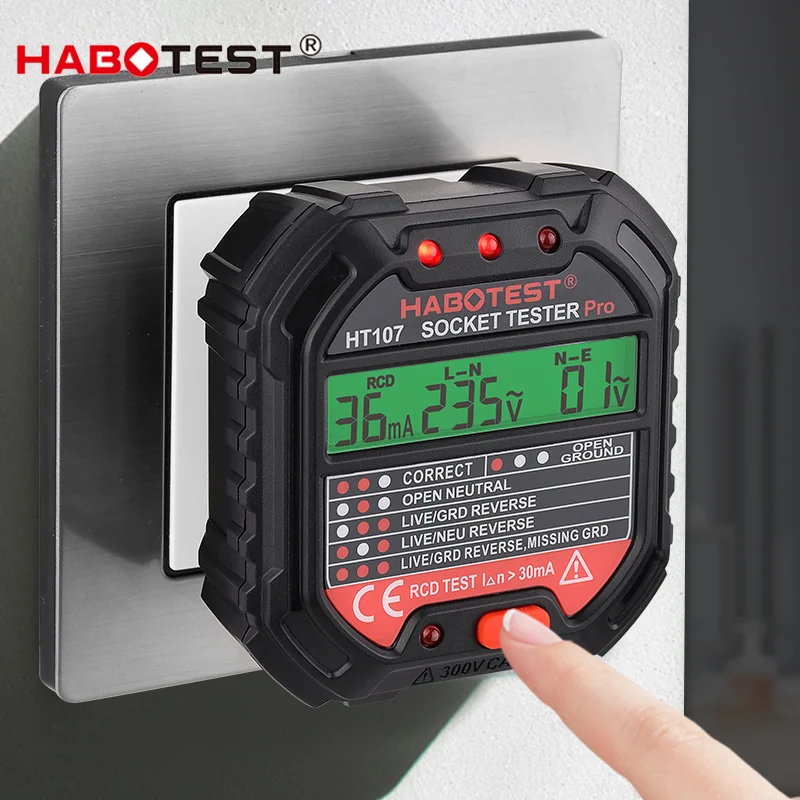
The HT107 Pro features a prominent digital LCD display, which provides immediate readouts of critical electrical parameters. Visible on the screen are measurements for Live-Neutral (L-N) voltage, Neutral-Earth (N-E) voltage, and Live-Earth (L-E) voltage, alongside an RCD current indication. These numerical displays offer precise data.
The implication of these readings is direct and significant for safety. Users can quickly ascertain if a socket is receiving the correct voltage, if there are dangerous voltage differences between neutral and earth, or if a residual current device (RCD) is functioning within acceptable limits. This immediate feedback prevents guesswork.
Compared to basic, neon-light-based socket testers that only indicate basic presence of power, the HT107 Pro offers a granular view of the electrical supply. It provides actual voltage values, allowing for a more informed assessment of power quality and potential issues beyond simple open circuits.
Below the main LCD, a series of clearly labeled LED indicators provides a quick visual summary of the socket's wiring status. These indicators illuminate to show conditions such as "Correct," "Open Neutral," "Live/GND Reverse," "Live/NEU Reverse," "Missing GND," and "Live/GND Reverse Missing GND." Each status is distinct.
This intuitive visual system simplifies fault identification for users of all experience levels. A green "Correct" light offers immediate reassurance, while any other illuminated indicator instantly flags a specific wiring fault that requires attention. It is a rapid diagnostic.
Unlike traditional multimeters that require manual probing and interpretation of multiple readings, this tester provides a consolidated, easy-to-understand fault report at a glance. The immediate visual cue saves time and reduces the potential for misinterpretation in a busy work environment.
A prominent red button on the tester is dedicated to RCD (Residual Current Device) and GFCI (Ground Fault Circuit Interrupter) testing. The device is specified to perform RCD tests at >30mA and GFCI tests at >5mA, depending on the model variant.
This integrated test functionality is paramount for verifying the operation of crucial safety mechanisms in modern electrical installations. A functional RCD or GFCI can prevent severe electric shocks by rapidly cutting power when a fault current is detected. Regular testing is vital.
Many standard socket testers omit this critical safety check, leaving a significant gap in a user's diagnostic capabilities. The HT107 Pro's ability to trip these devices confirms their responsiveness, offering a level of safety assurance that basic tools cannot provide.
The RCD test current of >30mA is a common standard for general-purpose RCDs found in consumer units, designed to protect against indirect contact and fire hazards. For the HT107B model, the GFCI test current of >5mA is specifically engineered to test the highly sensitive GFCIs prevalent in North American wet areas like bathrooms and kitchens, which protect against direct contact shock. These thresholds are critical.
When the RCD/GFCI test button is pressed, the tester injects a small, controlled fault current into the circuit. If the RCD or GFCI is functioning correctly, it will detect this simulated fault and trip the circuit breaker, cutting power to the socket. This confirms the safety device is active.
Without an integrated RCD/GFCI test function, users would typically need a separate, often more expensive, dedicated RCD tester or rely on the manual test button on the RCD itself, which only verifies the mechanical operation, not the full electrical trip characteristics. This tester streamlines the process.
The Habotest HT107 Pro features a robust, angular black casing with red accents, suggesting a design focused on durability. The visible texture and reinforced corners imply a construction intended to withstand the rigors of a professional environment. Its compact form factor is evident.
This ruggedized construction provides significant protection against accidental drops and impacts, a common occurrence on construction sites or during routine maintenance. The device is built to survive daily knocks. Its resilience ensures consistent performance even after rough handling, a practical consideration for any tradesperson.
Compared to many consumer-grade electrical testers that often feature lighter, less protective plastic housings, the HT107 Pro's design prioritizes longevity and reliability. This robust build minimizes the risk of internal component damage, extending the life of the tool and reducing replacement costs.
The dimensions of the tester are compact, as shown in the product images, allowing it to fit comfortably in a toolbox, pouch, or even a pocket. The interface is straightforward, with the digital display, LED indicators, and a single RCD test button. Simplicity is key.
Its small size makes it exceptionally portable, enabling electricians or homeowners to carry it effortlessly from one job to another, or to different rooms within a property. The clear layout ensures that readings and fault indications are easily accessible and interpretable without complex menus or multiple button presses. This design promotes efficiency.
Many advanced electrical diagnostic tools can be bulky and complex, requiring a learning curve. The HT107 Pro strikes a balance, offering advanced diagnostic capabilities within a user-friendly, highly portable package that minimizes setup time and maximizes operational speed.
One critical feature highlighted is the neutral ground wire voltage detection. The tester indicates when the voltage between the neutral wire and the ground wire deviates significantly from zero, which normally indicates a safe circuit. A clear distinction is made between normal and risky values.
Excessive voltage between neutral and ground can signal several underlying electrical problems, including poor connections, undersized neutral conductors, or severe oxidation in the wiring. These issues can lead to voltage drops under load, affecting appliance performance and potentially creating fire hazards. Identifying this early is crucial.
Basic socket testers typically do not provide this level of diagnostic detail. They might indicate an open neutral, but they won't quantify the voltage difference that signals a deteriorating or overloaded neutral path. The HT107 Pro offers a proactive measure against hidden electrical dangers.
The device uses a two-color backlight for its LCD, switching from green for normal values to orange when security risks, such as high neutral-ground voltage, are detected. This visual cue is immediate.
This color-coded feedback system makes it incredibly easy for users to recognize potential hazards without needing to memorize specific voltage thresholds. An orange backlight instantly communicates that a deeper investigation into the wiring is warranted, even if other parameters appear superficially correct. This enhances user awareness.
Without such a clear warning system, a user might overlook subtle but dangerous wiring conditions. The visual alarm provided by the orange backlight serves as an unmistakable signal, prompting immediate action to prevent potential equipment damage or safety incidents.
The Habotest HT107 Pro is available in multiple plug configurations, including EU, US, and UK types, as depicted in the product images. This ensures broad compatibility.
This regional adaptability means that professionals and homeowners in different parts of the world can utilize the same core diagnostic technology, tailored to their local electrical infrastructure. A carpenter working internationally can rely on the same trusted tool, simply selecting the appropriate plug variant. This global reach is practical.
Many specialized electrical tools are designed for a single regional standard, limiting their utility. The HT107 Pro's availability in various plug types makes it a versatile choice for anyone who might encounter different electrical systems or who works across borders.
Considering its comprehensive diagnostic capabilities, robust build, and critical safety testing features, the HT107 Pro presents a compelling value proposition. It offers professional-grade insights at an accessible price point.
Investing in a tool like this can prevent costly electrical repairs, appliance damage, or, most importantly, serious injuries or fires caused by faulty wiring. The ability to quickly identify and address wiring issues translates into significant long-term savings and peace of mind. Safety pays dividends.
Compared to the potential costs of hiring an electrician for every minor wiring check or the devastating consequences of undetected electrical faults, the Habotest HT107 Pro is a small, yet powerful, investment in electrical safety and operational efficiency. It empowers users to take control of their electrical environment.
Imagine the confidence of quickly diagnosing a faulty outlet in a newly acquired property, or the efficiency of verifying proper wiring after an installation, all with a single, reliable device. This tester streamlines your workflow. It provides the peace of mind that comes from knowing your electrical systems are safe and correctly configured, protecting both your property and your loved ones from unseen hazards. This is an indispensable tool for anyone who values electrical integrity.
Unveiling Electrical Integrity: The Core Diagnostic Suite
The HT107 Pro features a prominent digital LCD display, which provides immediate readouts of critical electrical parameters. Visible on the screen are measurements for Live-Neutral (L-N) voltage, Neutral-Earth (N-E) voltage, and Live-Earth (L-E) voltage, alongside an RCD current indication. These numerical displays offer precise data.
The implication of these readings is direct and significant for safety. Users can quickly ascertain if a socket is receiving the correct voltage, if there are dangerous voltage differences between neutral and earth, or if a residual current device (RCD) is functioning within acceptable limits. This immediate feedback prevents guesswork.
Compared to basic, neon-light-based socket testers that only indicate basic presence of power, the HT107 Pro offers a granular view of the electrical supply. It provides actual voltage values, allowing for a more informed assessment of power quality and potential issues beyond simple open circuits.
Instant Wiring Status: The LED Indicator System
Below the main LCD, a series of clearly labeled LED indicators provides a quick visual summary of the socket's wiring status. These indicators illuminate to show conditions such as "Correct," "Open Neutral," "Live/GND Reverse," "Live/NEU Reverse," "Missing GND," and "Live/GND Reverse Missing GND." Each status is distinct.
This intuitive visual system simplifies fault identification for users of all experience levels. A green "Correct" light offers immediate reassurance, while any other illuminated indicator instantly flags a specific wiring fault that requires attention. It is a rapid diagnostic.
Unlike traditional multimeters that require manual probing and interpretation of multiple readings, this tester provides a consolidated, easy-to-understand fault report at a glance. The immediate visual cue saves time and reduces the potential for misinterpretation in a busy work environment.
The Safety Net: RCD and GFCI Testing
A prominent red button on the tester is dedicated to RCD (Residual Current Device) and GFCI (Ground Fault Circuit Interrupter) testing. The device is specified to perform RCD tests at >30mA and GFCI tests at >5mA, depending on the model variant.
This integrated test functionality is paramount for verifying the operation of crucial safety mechanisms in modern electrical installations. A functional RCD or GFCI can prevent severe electric shocks by rapidly cutting power when a fault current is detected. Regular testing is vital.
Many standard socket testers omit this critical safety check, leaving a significant gap in a user's diagnostic capabilities. The HT107 Pro's ability to trip these devices confirms their responsiveness, offering a level of safety assurance that basic tools cannot provide.
Understanding RCD and GFCI Trip Thresholds
The RCD test current of >30mA is a common standard for general-purpose RCDs found in consumer units, designed to protect against indirect contact and fire hazards. For the HT107B model, the GFCI test current of >5mA is specifically engineered to test the highly sensitive GFCIs prevalent in North American wet areas like bathrooms and kitchens, which protect against direct contact shock. These thresholds are critical.
When the RCD/GFCI test button is pressed, the tester injects a small, controlled fault current into the circuit. If the RCD or GFCI is functioning correctly, it will detect this simulated fault and trip the circuit breaker, cutting power to the socket. This confirms the safety device is active.
Without an integrated RCD/GFCI test function, users would typically need a separate, often more expensive, dedicated RCD tester or rely on the manual test button on the RCD itself, which only verifies the mechanical operation, not the full electrical trip characteristics. This tester streamlines the process.
Built for the Demands of the Jobsite: Construction & Ergonomics
The Habotest HT107 Pro features a robust, angular black casing with red accents, suggesting a design focused on durability. The visible texture and reinforced corners imply a construction intended to withstand the rigors of a professional environment. Its compact form factor is evident.
This ruggedized construction provides significant protection against accidental drops and impacts, a common occurrence on construction sites or during routine maintenance. The device is built to survive daily knocks. Its resilience ensures consistent performance even after rough handling, a practical consideration for any tradesperson.
Compared to many consumer-grade electrical testers that often feature lighter, less protective plastic housings, the HT107 Pro's design prioritizes longevity and reliability. This robust build minimizes the risk of internal component damage, extending the life of the tool and reducing replacement costs.
Portability and User Interface
The dimensions of the tester are compact, as shown in the product images, allowing it to fit comfortably in a toolbox, pouch, or even a pocket. The interface is straightforward, with the digital display, LED indicators, and a single RCD test button. Simplicity is key.
Its small size makes it exceptionally portable, enabling electricians or homeowners to carry it effortlessly from one job to another, or to different rooms within a property. The clear layout ensures that readings and fault indications are easily accessible and interpretable without complex menus or multiple button presses. This design promotes efficiency.
Many advanced electrical diagnostic tools can be bulky and complex, requiring a learning curve. The HT107 Pro strikes a balance, offering advanced diagnostic capabilities within a user-friendly, highly portable package that minimizes setup time and maximizes operational speed.
Neutral Ground Wire Voltage Detection: A Deeper Dive into Safety
One critical feature highlighted is the neutral ground wire voltage detection. The tester indicates when the voltage between the neutral wire and the ground wire deviates significantly from zero, which normally indicates a safe circuit. A clear distinction is made between normal and risky values.
Excessive voltage between neutral and ground can signal several underlying electrical problems, including poor connections, undersized neutral conductors, or severe oxidation in the wiring. These issues can lead to voltage drops under load, affecting appliance performance and potentially creating fire hazards. Identifying this early is crucial.
Basic socket testers typically do not provide this level of diagnostic detail. They might indicate an open neutral, but they won't quantify the voltage difference that signals a deteriorating or overloaded neutral path. The HT107 Pro offers a proactive measure against hidden electrical dangers.
Interpreting Voltage Discrepancies
The device uses a two-color backlight for its LCD, switching from green for normal values to orange when security risks, such as high neutral-ground voltage, are detected. This visual cue is immediate.
This color-coded feedback system makes it incredibly easy for users to recognize potential hazards without needing to memorize specific voltage thresholds. An orange backlight instantly communicates that a deeper investigation into the wiring is warranted, even if other parameters appear superficially correct. This enhances user awareness.
Without such a clear warning system, a user might overlook subtle but dangerous wiring conditions. The visual alarm provided by the orange backlight serves as an unmistakable signal, prompting immediate action to prevent potential equipment damage or safety incidents.
Versatility Across Regions: Plug Type Adaptability
The Habotest HT107 Pro is available in multiple plug configurations, including EU, US, and UK types, as depicted in the product images. This ensures broad compatibility.
This regional adaptability means that professionals and homeowners in different parts of the world can utilize the same core diagnostic technology, tailored to their local electrical infrastructure. A carpenter working internationally can rely on the same trusted tool, simply selecting the appropriate plug variant. This global reach is practical.
Many specialized electrical tools are designed for a single regional standard, limiting their utility. The HT107 Pro's availability in various plug types makes it a versatile choice for anyone who might encounter different electrical systems or who works across borders.
The Investment in Safety: Value Proposition
Considering its comprehensive diagnostic capabilities, robust build, and critical safety testing features, the HT107 Pro presents a compelling value proposition. It offers professional-grade insights at an accessible price point.
Investing in a tool like this can prevent costly electrical repairs, appliance damage, or, most importantly, serious injuries or fires caused by faulty wiring. The ability to quickly identify and address wiring issues translates into significant long-term savings and peace of mind. Safety pays dividends.
Compared to the potential costs of hiring an electrician for every minor wiring check or the devastating consequences of undetected electrical faults, the Habotest HT107 Pro is a small, yet powerful, investment in electrical safety and operational efficiency. It empowers users to take control of their electrical environment.
Imagine the confidence of quickly diagnosing a faulty outlet in a newly acquired property, or the efficiency of verifying proper wiring after an installation, all with a single, reliable device. This tester streamlines your workflow. It provides the peace of mind that comes from knowing your electrical systems are safe and correctly configured, protecting both your property and your loved ones from unseen hazards. This is an indispensable tool for anyone who values electrical integrity.