GVMRZ FPC/FFC Flexible Flat Cable Assortment
Official Store Deal
Expert Analysis Overview
Precision Interconnection Engineering for Electronics Repair
The GVMRZ FPC/FFC Ribbon Flexible Flat Cable assortment is a critical component collection for electronics repair technicians and hobbyists, offering precise connectivity solutions for intricate circuit board interconnections. This bulk offering addresses a fundamental need in modern electronics repair: reliable, standardized flexible cabling. The variety ensures broad compatibility.
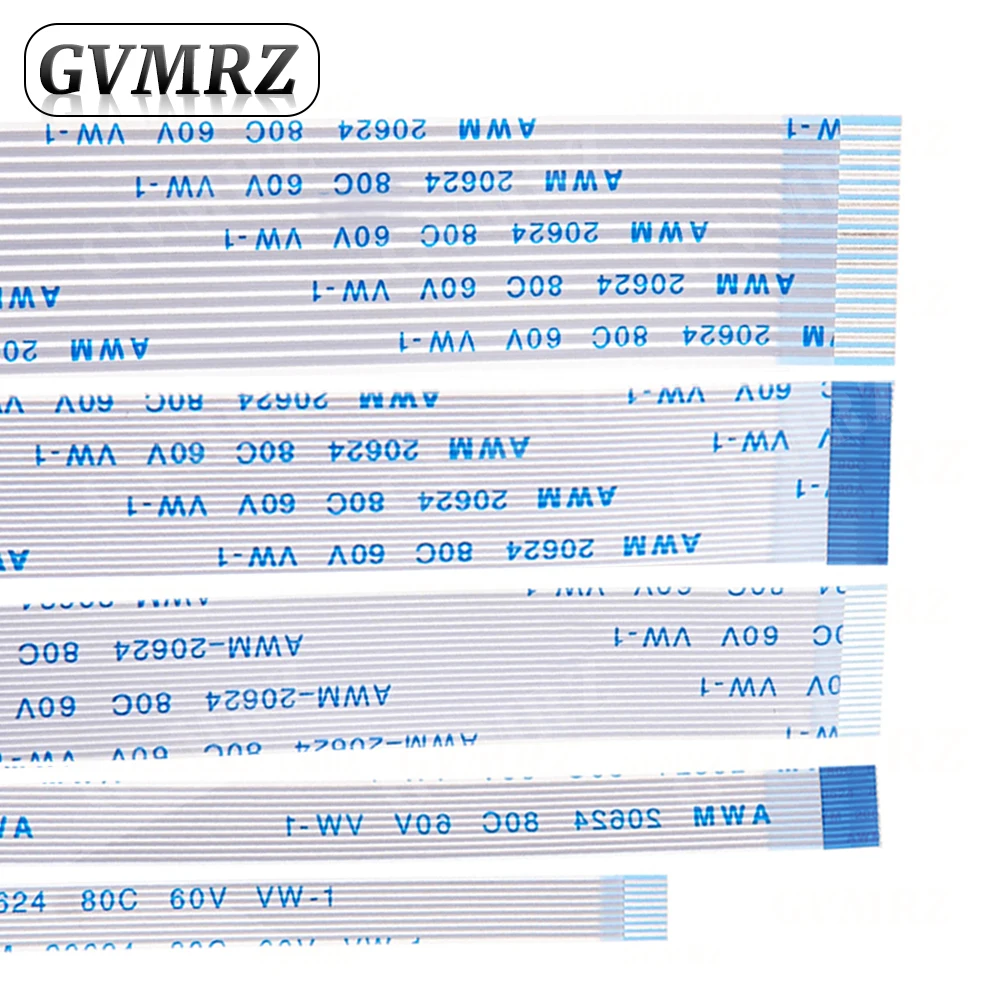
Visible markings on these cables, such as "AWM 20624 80C 60V VW-1," provide immediate insight into their baseline specifications. AWM 20624 signifies a UL (Underwriters Laboratories) recognized Appliance Wiring Material style, indicating adherence to specific safety and performance criteria. The "80C" denotes a maximum operating temperature of 80 degrees Celsius, suitable for the internal environments of most consumer electronics. A "60V" rating confirms its application in low-voltage circuits, typical for data and control signals. Finally, "VW-1" is a vertical wire flame test rating, signifying a degree of flame retardancy, which is a crucial safety feature in any electronic component. The cables are available in a wide array of pin counts, from 4 to 20, and two common pitches: 0.5mm and 1.0mm.
These specifications collectively ensure the cables meet essential safety and performance standards for the low-voltage, low-current applications prevalent in devices like laptops, digital cameras, and LCD screens. The broad spectrum of pin counts and pitches allows for extensive compatibility with various FPC/FFC connectors found across different electronic devices. This versatility significantly reduces the necessity for technicians to stock an exhaustive range of highly specialized, single-purpose cables, streamlining inventory management and repair workflows. It saves time and money.
Unlike generic, unrated flexible cables that can introduce unknown risks due to unverified material properties or electrical characteristics, these FFCs provide a foundational level of reliability. Standard repair scenarios frequently demand exact replacements to ensure the device functions as intended and to prevent future failures. Relying on uncertified components can lead to costly rework or even permanent damage to the host device. This is a critical distinction.
The Art of Flexible Connectivity
The assortment's inclusion of both "A-Type" (contacts on the same side) and "B-Type" (contacts on opposite sides) configurations is a fundamental aspect of its utility, clearly illustrated in the product's instructional images. This distinction is paramount for successful repair, as an incorrect type selection will inevitably lead to a non-functional connection or potential damage to the connector or cable itself. The cables are also offered in practical lengths: 5cm, 10cm, 20cm, and 30cm, accommodating diverse internal device layouts. Blue reinforcement tabs are consistently visible at the cable ends.
The availability of both A-Type and B-Type is absolutely crucial for matching the existing connections within a vast array of electronic devices, including the internal wiring of laptop displays, camera modules, and various control panels. Selecting the wrong type results in a circuit that cannot be completed. The range of lengths is equally important, supporting diverse internal layouts and ensuring that the cable can be routed without excessive tension or slack, both of which can compromise long-term reliability. Length matters.
Many repair situations involve extremely tight internal spaces where precise cable length and type are non-negotiable. A poorly matched cable, whether too long or too short, can strain delicate connectors, obstruct cooling pathways, or interfere with other sensitive components. Generic repair kits often fall short by not providing this essential differentiation between A-Type and B-Type FFCs, forcing technicians to source specific parts individually, which can delay repairs. This product offers a comprehensive solution.
Durability and Installation Nuances
The cables present as thin and inherently flexible, which is characteristic of FFC designs. This flexibility is not merely a convenience but a core functional requirement. The blue reinforcement tabs, visible at each end, serve a dual purpose: they clearly indicate the contact points and provide a more robust area for gripping during insertion and removal, thereby protecting the delicate conductive traces. Proper handling is key.
This inherent flexibility is essential for effective routing within the compact and often densely packed enclosures of modern electronics without subjecting solder joints or connectors to undue mechanical stress. The reinforcement tabs are critical for preventing damage to the delicate contact points during the often-frequent process of installation and removal in a repair environment. However, it is important to note that repeated or sharp bending can degrade the internal conductive traces, potentially leading to intermittent connections or complete signal loss over time. Care is required.
Unlike more rigid wire harnesses, FFCs are specifically engineered for either dynamic applications where movement is expected (though less common for these standard types) or, more frequently, for space-constrained static connections. Their flat, thin profile offers a significant advantage in devices where every millimeter of space is at a premium, allowing for sleek designs and efficient component placement. This form factor is a design necessity.
Value Proposition for the Repair Professional
The product is explicitly offered as a "10PCS/LOT," indicating a bulk purchase. This packaging strategy, combined with the accessible price point, positions it as a highly attractive option for professionals and serious hobbyists. Cost-effectiveness is a major factor.
This bulk packaging translates into substantial cost savings for technicians who regularly encounter FFC replacements across a variety of devices. Maintaining a diverse inventory of common FFC types and sizes on hand significantly reduces repair turnaround times by eliminating the need to order specific parts for each job. This proactive stocking strategy minimizes downtime, enhancing overall workshop efficiency and profitability. It's a smart investment.
Sourcing individual FFC cables on an as-needed basis can quickly become expensive, with shipping costs often exceeding the component cost itself. This bulk option dramatically reduces the cost per unit, making it a far more economical choice for ongoing repair operations. It simplifies procurement. This approach ensures technicians are always prepared for a wide range of common FFC failures without incurring prohibitive per-unit costs or logistical delays.
Signal Integrity and Performance Assurance
The visible, consistent spacing and parallel arrangement of the conductive traces are fundamental design elements for FFCs. The instructional images also reference "copper core dots" as contact points, implying a standard conductive material. Trace geometry is critical.
Consistent trace geometry is foundational for maintaining signal integrity, particularly in applications involving moderate-speed data transmission, such as display signals or communication between integrated circuits. Any deviation in trace width or spacing can introduce impedance mismatches, leading to signal reflections, or increase crosstalk between adjacent lines, which can manifest as visual artifacts or data corruption. Ensuring clean signals is paramount for the reliable operation of displays, touchscreens, and various data-intensive modules within electronic devices. This impacts user experience.
Inferior or poorly manufactured cables with inconsistent trace widths, inadequate insulation, or compromised contact points can lead to frustrating intermittent failures or a noticeable degradation in device performance. Such issues are a common pitfall with unbranded or low-quality alternatives, often resulting in diagnostic headaches and repeated repairs. The visible quality of these FFCs suggests a commitment to preventing such common signal integrity problems. Reliability is built in.
Imagine the satisfaction of restoring a valuable electronic device to full functionality, knowing that every component, down to the flexible flat cables, contributes to its reliable operation. The precise fit and dependable connection offered by these FFCs ensure a seamless repair, preventing the frustration of intermittent issues or future component failures. This strategic investment in quality, standardized components translates directly into successful projects, enhanced professional reputation, and ultimately, satisfied clients. It is an investment in capability.