GOYOJO GW192A Mobile Thermal Imager for Android
Official Store Deal
Expert Analysis Overview
The GOYOJO GW192A Mobile Thermal Imager is a highly accessible and practical thermographic camera designed for Android smartphone integration, targeting professionals and advanced DIYers requiring immediate, detailed thermal diagnostics. This device transforms a standard smartphone into a powerful inspection tool, offering a blend of portability and performance that stands apart from bulkier, dedicated units. Its compact design and direct connectivity streamline the process of identifying thermal anomalies, making it an invaluable asset for a range of diagnostic tasks.
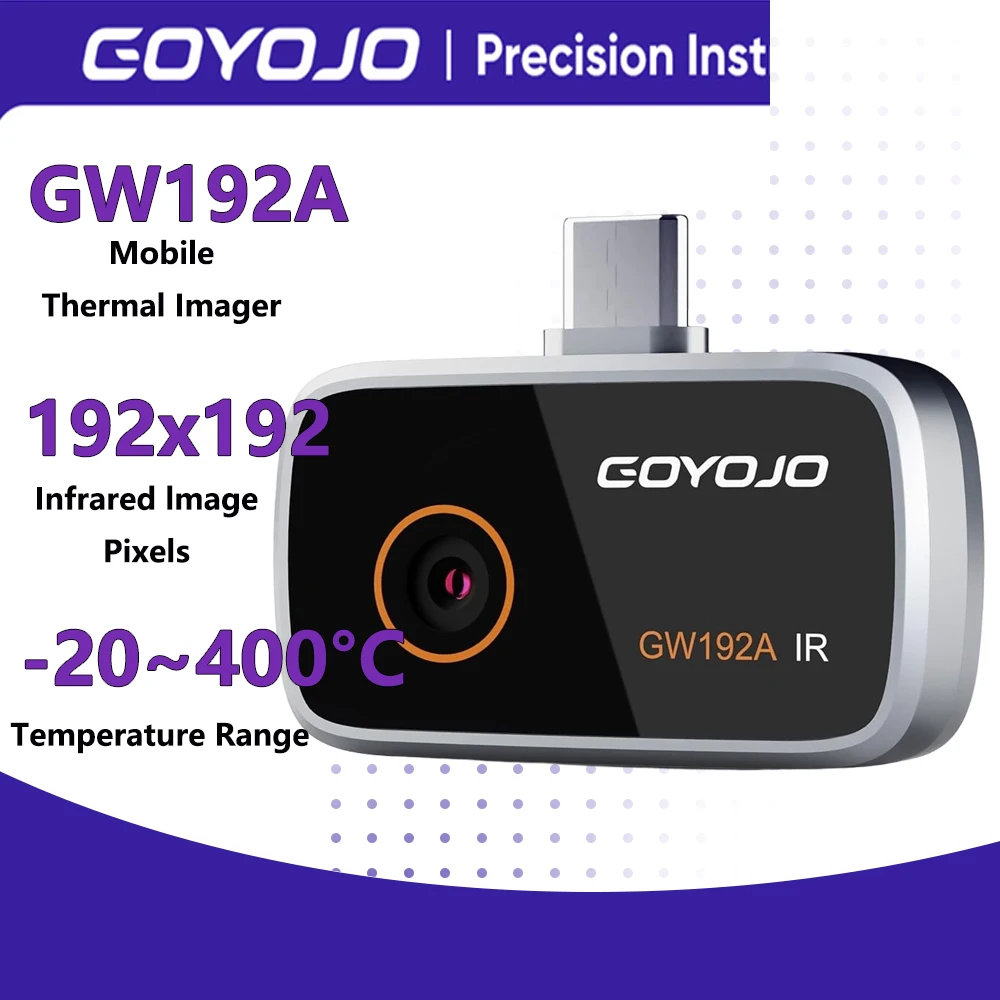
The GW192A boasts a 192x192 infrared image pixel resolution. This resolution is a significant step up from many entry-level thermal cameras, which often offer resolutions closer to 80x60 or 120x90 pixels. Higher pixel density means more data points are collected across the thermal scene, resulting in clearer, more detailed thermal images. This clarity is paramount for accurate diagnosis.
For a home inspector, this enhanced resolution directly translates to the ability to discern subtle temperature variations over larger areas. Pinpointing the exact location of a cold spot indicating moisture intrusion, or identifying a specific overheating component within an electrical panel, becomes far more precise. The visual fidelity reduces guesswork.
Compared to thermal imagers with lower resolutions, the GW192A provides a sharper thermal picture. This allows for better differentiation between objects and more accurate temperature readings of smaller targets, a common challenge in detailed inspections. It’s a clear advantage.
The device offers a substantial temperature measurement range of -20°C to 400°C (-4°F to 752°F). This expansive range covers the vast majority of temperatures encountered in residential, commercial, and automotive inspection scenarios. From detecting drafts and insulation deficiencies to identifying dangerously hot electrical connections or exhaust leaks, the GW192A handles diverse thermal environments.
Such a wide range ensures that the imager is not limited to a narrow set of applications. An inspector can move from checking the efficiency of a refrigeration unit to assessing the thermal performance of a boiler without needing a different tool. Versatility is key.
Many entry-level thermal imagers often have a more restricted temperature range, sometimes topping out at 150°C or 250°C. The GW192A’s broader capability eliminates the need for multiple devices or the risk of exceeding the sensor's limits, providing a more comprehensive diagnostic solution. It covers all bases.
Operating at a 25Hz frame rate, the GW192A delivers smooth, real-time thermal video. A higher frame rate is essential for scanning large areas quickly or monitoring dynamic thermal events, such as heat dissipation from a running motor or the flow of hot water through pipes. Choppy thermal feeds can obscure critical transient data.
The smooth video feed enhances the user's ability to track moving heat sources or to perform rapid sweeps across walls and ceilings. This reduces eye strain and improves the efficiency of the inspection process, allowing for faster identification of anomalies. Quick scans are possible.
In contrast to thermal cameras with lower frame rates (e.g., 9Hz, which is common for export-restricted models), the 25Hz refresh rate provides a much more natural and responsive viewing experience. This is particularly beneficial when conducting thorough, time-sensitive inspections. Motion is clear.
The 50° field of view (FOV) is another critical specification. A wider FOV allows the camera to capture a larger area in a single thermal image, reducing the need to step back or take multiple shots. This is especially useful in confined spaces or when examining large components like HVAC units or entire wall sections.
For a home inspector, a broad FOV means less repositioning and more efficient data collection. Identifying thermal patterns across a wide expanse, such as a full wall showing moisture ingress, becomes easier and faster. Less movement is required.
Compared to thermal imagers with narrower fields of view, the 50° FOV of the GW192A offers a distinct advantage in coverage. It minimizes the chances of missing critical thermal signatures at the periphery of the inspection area, ensuring a more thorough assessment. Wider views are better.
The inclusion of autofocus simplifies operation, ensuring that thermal images are consistently sharp and clear without manual adjustment. This feature is particularly valuable when working in challenging environments or when rapid inspections are necessary, preventing blurry readings that could lead to misinterpretations. Focus is automatic.
Autofocus allows the user to concentrate on interpreting the thermal data rather than fiddling with lens adjustments. This significantly speeds up the inspection process and reduces the learning curve for new users, making the technology more approachable. Ease of use is paramount.
Many compact thermal imagers, especially those in the entry-level segment, rely on fixed focus lenses, which can limit their effective range or require specific distances for optimal clarity. The GW192A's autofocus system provides a level of convenience and image quality typically found in higher-end, standalone devices. Sharp images are guaranteed.
The term “HD High Definition” in the context of thermal imaging typically refers to the overall clarity and detail presented by the device, often a combination of its resolution, thermal sensitivity, and processing capabilities. While 192x192 pixels might not be
Unveiling the Invisible: Core Imaging Capabilities
The GW192A boasts a 192x192 infrared image pixel resolution. This resolution is a significant step up from many entry-level thermal cameras, which often offer resolutions closer to 80x60 or 120x90 pixels. Higher pixel density means more data points are collected across the thermal scene, resulting in clearer, more detailed thermal images. This clarity is paramount for accurate diagnosis.
For a home inspector, this enhanced resolution directly translates to the ability to discern subtle temperature variations over larger areas. Pinpointing the exact location of a cold spot indicating moisture intrusion, or identifying a specific overheating component within an electrical panel, becomes far more precise. The visual fidelity reduces guesswork.
Compared to thermal imagers with lower resolutions, the GW192A provides a sharper thermal picture. This allows for better differentiation between objects and more accurate temperature readings of smaller targets, a common challenge in detailed inspections. It’s a clear advantage.
Broad Spectrum Thermal Detection
The device offers a substantial temperature measurement range of -20°C to 400°C (-4°F to 752°F). This expansive range covers the vast majority of temperatures encountered in residential, commercial, and automotive inspection scenarios. From detecting drafts and insulation deficiencies to identifying dangerously hot electrical connections or exhaust leaks, the GW192A handles diverse thermal environments.
Such a wide range ensures that the imager is not limited to a narrow set of applications. An inspector can move from checking the efficiency of a refrigeration unit to assessing the thermal performance of a boiler without needing a different tool. Versatility is key.
Many entry-level thermal imagers often have a more restricted temperature range, sometimes topping out at 150°C or 250°C. The GW192A’s broader capability eliminates the need for multiple devices or the risk of exceeding the sensor's limits, providing a more comprehensive diagnostic solution. It covers all bases.
Fluid Visuals: Frame Rate and Field of View
Operating at a 25Hz frame rate, the GW192A delivers smooth, real-time thermal video. A higher frame rate is essential for scanning large areas quickly or monitoring dynamic thermal events, such as heat dissipation from a running motor or the flow of hot water through pipes. Choppy thermal feeds can obscure critical transient data.
The smooth video feed enhances the user's ability to track moving heat sources or to perform rapid sweeps across walls and ceilings. This reduces eye strain and improves the efficiency of the inspection process, allowing for faster identification of anomalies. Quick scans are possible.
In contrast to thermal cameras with lower frame rates (e.g., 9Hz, which is common for export-restricted models), the 25Hz refresh rate provides a much more natural and responsive viewing experience. This is particularly beneficial when conducting thorough, time-sensitive inspections. Motion is clear.
The 50° field of view (FOV) is another critical specification. A wider FOV allows the camera to capture a larger area in a single thermal image, reducing the need to step back or take multiple shots. This is especially useful in confined spaces or when examining large components like HVAC units or entire wall sections.
For a home inspector, a broad FOV means less repositioning and more efficient data collection. Identifying thermal patterns across a wide expanse, such as a full wall showing moisture ingress, becomes easier and faster. Less movement is required.
Compared to thermal imagers with narrower fields of view, the 50° FOV of the GW192A offers a distinct advantage in coverage. It minimizes the chances of missing critical thermal signatures at the periphery of the inspection area, ensuring a more thorough assessment. Wider views are better.
Precision and Clarity: Autofocus and High Definition
The inclusion of autofocus simplifies operation, ensuring that thermal images are consistently sharp and clear without manual adjustment. This feature is particularly valuable when working in challenging environments or when rapid inspections are necessary, preventing blurry readings that could lead to misinterpretations. Focus is automatic.
Autofocus allows the user to concentrate on interpreting the thermal data rather than fiddling with lens adjustments. This significantly speeds up the inspection process and reduces the learning curve for new users, making the technology more approachable. Ease of use is paramount.
Many compact thermal imagers, especially those in the entry-level segment, rely on fixed focus lenses, which can limit their effective range or require specific distances for optimal clarity. The GW192A's autofocus system provides a level of convenience and image quality typically found in higher-end, standalone devices. Sharp images are guaranteed.
The term “HD High Definition” in the context of thermal imaging typically refers to the overall clarity and detail presented by the device, often a combination of its resolution, thermal sensitivity, and processing capabilities. While 192x192 pixels might not be