GEYA GYM9N 1P+N MCB Circuit Breaker
Official Store Deal
Expert Analysis Overview
The GEYA GYM9N 1P+N MCB is a foundational circuit protection device engineered for reliable overcurrent and short-circuit safeguarding in residential and light commercial AC electrical systems. This miniature circuit breaker (MCB) offers essential safety features, making it a critical component for preventing electrical hazards and equipment damage. Its design prioritizes straightforward installation and dependable operation within standard electrical panels.
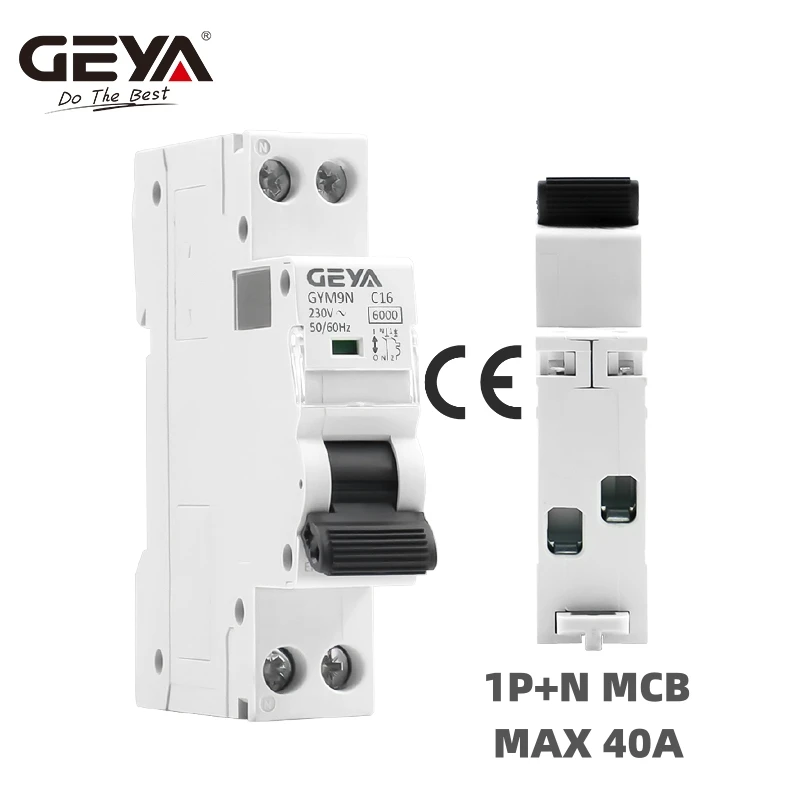
This GEYA GYM9N unit is specified for 1P+N configuration, operating at 220V AC, with breaking capacities up to 6KA. Current ratings range from 6A to 40A, covering a broad spectrum of common electrical loads. The availability of both B and C trip curves provides application flexibility.
Such specifications indicate the breaker's suitability for single-phase circuits requiring both live and neutral line disconnection upon fault detection. The 6KA breaking capacity is standard for many domestic and light commercial installations, ensuring it can safely interrupt significant fault currents. Different current ratings allow precise matching to specific circuit requirements, preventing both nuisance tripping and inadequate protection.
Unlike older fuse-based systems that require replacement after each fault, this MCB offers a resettable solution. This significantly reduces maintenance time and costs. The unit provides an immediate visual indication of a tripped state, simplifying fault identification. It's a clear operational advantage.
The GEYA GYM9N MCB offers both B and C trip curves. A B-curve breaker trips rapidly when the current exceeds 3 to 5 times its rated current, ideal for resistive loads like heaters and lighting. A C-curve breaker trips when the current reaches 5 to 10 times its rated current, suitable for inductive loads such as motors and transformers that experience temporary inrush currents.
This selection of trip curves allows technicians to choose the appropriate protection level for various types of loads, minimizing unnecessary interruptions while still providing robust fault protection. For instance, a C-curve breaker would prevent nuisance tripping from motor startup currents, whereas a B-curve would offer quicker protection for sensitive electronic equipment or purely resistive circuits. Proper curve selection is paramount.
Compared to generic, single-curve breakers, the option for both B and C curves expands the application range without compromising safety. This versatility means fewer different breaker types need to be stocked for diverse installations. It simplifies inventory management for electrical contractors. This is a practical benefit.
The visible form factor suggests a standard DIN rail mountable design. This ensures compatibility with most modern electrical distribution boards and consumer units. The terminal screws are clearly accessible for wiring connections.
DIN rail mounting simplifies installation, allowing for quick and secure attachment within an enclosure. The robust screw terminals are designed to accept appropriate wire gauges, facilitating secure electrical connections that are critical for safety and performance. Proper torque on these terminals prevents loose connections and potential overheating.
Many older installations might rely on less standardized mounting methods or require more complex wiring. This MCB's adherence to DIN rail standards offers a significant upgrade in terms of ease of installation and system modularity. It integrates seamlessly into existing or new panel designs. This streamlines electrical work.
The housing appears to be constructed from a durable, flame-retardant plastic, typical for electrical safety devices. A clear ON/OFF toggle switch is present, along with a visible indicator for the breaker's status. The GEYA branding and specifications are clearly printed on the front.
Such material choices are essential for safety, ensuring the device can withstand operational stresses and resist fire propagation in fault conditions. The prominent toggle and status indicator provide immediate visual feedback on the circuit's state, which is crucial for quick troubleshooting and safe operation. Clear labeling ensures correct identification and application.
Unlike some less robust alternatives, the visible construction implies a focus on longevity and operational integrity. The crisp markings and robust switch mechanism suggest a product designed for repeated use and reliable performance over its lifespan. This contributes to system reliability. It's a long-term investment.
This MCB offers a cost-effective solution for essential circuit protection without compromising on core safety standards. Its broad range of current ratings and trip curves makes it a versatile choice for various applications. The GEYA brand, as seen on the product, is a known entity in electrical components.
For an electronics repair technician, having access to reliable and affordable circuit breakers is crucial for both new installations and repairs. This product allows for the protection of expensive downstream equipment with a component that is readily available and easy to integrate. It minimizes downtime effectively.
Compared to higher-priced industrial-grade breakers, this GEYA unit provides an excellent balance of performance and cost for its intended residential and light commercial use. It represents a smart investment in electrical safety and system longevity. This ensures peace of mind for users. The component is a solid choice.
Imagine an electrical system where every circuit is precisely protected, where faults are immediately isolated, and where safety is paramount. This MCB contributes directly to that vision, ensuring that your electrical infrastructure operates reliably and securely for years to come, safeguarding both property and personnel from unforeseen electrical events. It's a foundational element of modern electrical safety. This device delivers essential protection.
Core Circuit Protection Essentials
This GEYA GYM9N unit is specified for 1P+N configuration, operating at 220V AC, with breaking capacities up to 6KA. Current ratings range from 6A to 40A, covering a broad spectrum of common electrical loads. The availability of both B and C trip curves provides application flexibility.
Such specifications indicate the breaker's suitability for single-phase circuits requiring both live and neutral line disconnection upon fault detection. The 6KA breaking capacity is standard for many domestic and light commercial installations, ensuring it can safely interrupt significant fault currents. Different current ratings allow precise matching to specific circuit requirements, preventing both nuisance tripping and inadequate protection.
Unlike older fuse-based systems that require replacement after each fault, this MCB offers a resettable solution. This significantly reduces maintenance time and costs. The unit provides an immediate visual indication of a tripped state, simplifying fault identification. It's a clear operational advantage.
Operational Versatility and Trip Characteristics
The GEYA GYM9N MCB offers both B and C trip curves. A B-curve breaker trips rapidly when the current exceeds 3 to 5 times its rated current, ideal for resistive loads like heaters and lighting. A C-curve breaker trips when the current reaches 5 to 10 times its rated current, suitable for inductive loads such as motors and transformers that experience temporary inrush currents.
This selection of trip curves allows technicians to choose the appropriate protection level for various types of loads, minimizing unnecessary interruptions while still providing robust fault protection. For instance, a C-curve breaker would prevent nuisance tripping from motor startup currents, whereas a B-curve would offer quicker protection for sensitive electronic equipment or purely resistive circuits. Proper curve selection is paramount.
Compared to generic, single-curve breakers, the option for both B and C curves expands the application range without compromising safety. This versatility means fewer different breaker types need to be stocked for diverse installations. It simplifies inventory management for electrical contractors. This is a practical benefit.
Installation and Integration
The visible form factor suggests a standard DIN rail mountable design. This ensures compatibility with most modern electrical distribution boards and consumer units. The terminal screws are clearly accessible for wiring connections.
DIN rail mounting simplifies installation, allowing for quick and secure attachment within an enclosure. The robust screw terminals are designed to accept appropriate wire gauges, facilitating secure electrical connections that are critical for safety and performance. Proper torque on these terminals prevents loose connections and potential overheating.
Many older installations might rely on less standardized mounting methods or require more complex wiring. This MCB's adherence to DIN rail standards offers a significant upgrade in terms of ease of installation and system modularity. It integrates seamlessly into existing or new panel designs. This streamlines electrical work.
Durability and Visual Indicators
The housing appears to be constructed from a durable, flame-retardant plastic, typical for electrical safety devices. A clear ON/OFF toggle switch is present, along with a visible indicator for the breaker's status. The GEYA branding and specifications are clearly printed on the front.
Such material choices are essential for safety, ensuring the device can withstand operational stresses and resist fire propagation in fault conditions. The prominent toggle and status indicator provide immediate visual feedback on the circuit's state, which is crucial for quick troubleshooting and safe operation. Clear labeling ensures correct identification and application.
Unlike some less robust alternatives, the visible construction implies a focus on longevity and operational integrity. The crisp markings and robust switch mechanism suggest a product designed for repeated use and reliable performance over its lifespan. This contributes to system reliability. It's a long-term investment.
Value Proposition and Reliability
This MCB offers a cost-effective solution for essential circuit protection without compromising on core safety standards. Its broad range of current ratings and trip curves makes it a versatile choice for various applications. The GEYA brand, as seen on the product, is a known entity in electrical components.
For an electronics repair technician, having access to reliable and affordable circuit breakers is crucial for both new installations and repairs. This product allows for the protection of expensive downstream equipment with a component that is readily available and easy to integrate. It minimizes downtime effectively.
Compared to higher-priced industrial-grade breakers, this GEYA unit provides an excellent balance of performance and cost for its intended residential and light commercial use. It represents a smart investment in electrical safety and system longevity. This ensures peace of mind for users. The component is a solid choice.
Imagine an electrical system where every circuit is precisely protected, where faults are immediately isolated, and where safety is paramount. This MCB contributes directly to that vision, ensuring that your electrical infrastructure operates reliably and securely for years to come, safeguarding both property and personnel from unforeseen electrical events. It's a foundational element of modern electrical safety. This device delivers essential protection.