GEYA GYL9 Type B DC Residual Current Circuit Breaker
Official Store Deal
Expert Analysis Overview
The Sentinel of Electrical Integrity: GEYA GYL9 Type B DC Residual Current Circuit Breaker
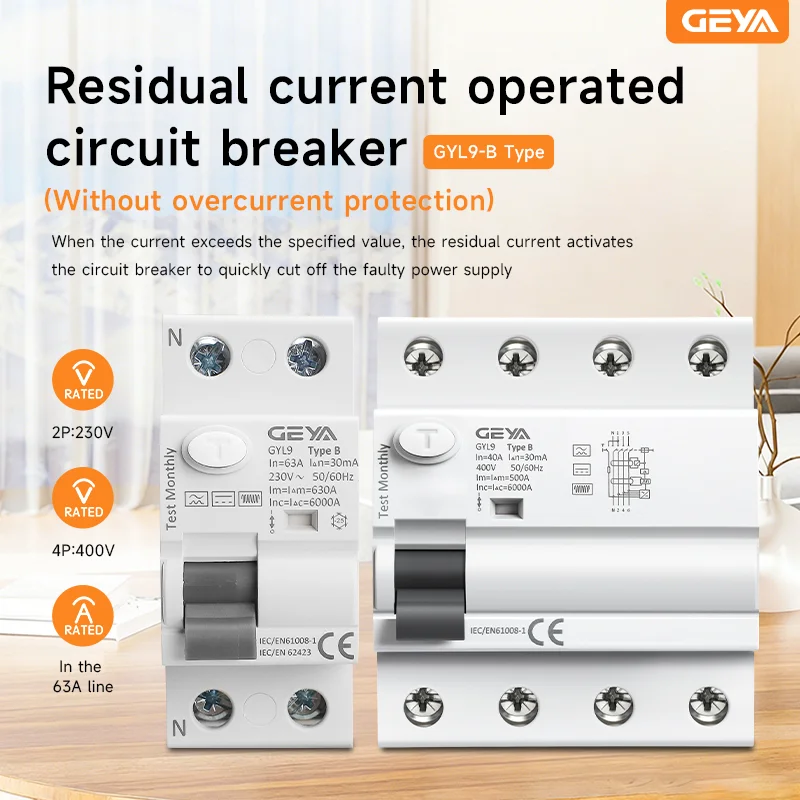
The GEYA GYL9 Type B DC Residual Current Circuit Breaker is a critical safety component engineered for advanced electrical protection in complex systems. This device specifically targets earth leakage currents, a silent but deadly threat in both AC and DC installations. It represents a significant leap beyond conventional residual current devices. Modern electrical environments demand sophisticated fault detection. The GYL9 is a specialized guardian.
Its primary function is to rapidly disconnect power when a residual current, or earth fault, is detected. This swift action prevents electrocution, minimizes fire risk, and protects sensitive equipment from damage. The GYL9 is designed for seamless integration into existing electrical panels. It offers peace of mind for installers and end-users alike. This ensures operational continuity.
Unlike standard Type AC or Type A RCDs, which are limited to detecting sinusoidal AC and pulsating DC faults, the Type B classification of the GYL9 extends its protective capabilities. This broader detection range is crucial for circuits feeding modern electronic loads. These loads often generate smooth DC or high-frequency residual currents. This is a vital distinction. It offers superior coverage.
Unpacking Type B Superiority: Beyond Basic Protection
The core strength of the GEYA GYL9 lies in its Type B residual current detection capability. This advanced feature allows the device to identify not only AC sinusoidal and pulsating DC residual currents but also smooth DC residual currents. Such comprehensive detection is indispensable for contemporary electrical systems. Many devices now incorporate power electronics. This is a crucial advantage.
Consider applications like electric vehicle (EV) charging stations, which convert AC grid power to DC for battery charging, or variable frequency drives (VFDs) used in motor control. These systems frequently produce complex fault current waveforms, including smooth DC components that can blind lesser RCDs. A standard RCD would simply fail to detect these dangerous conditions, leaving personnel and equipment vulnerable. The GYL9 ensures safety where others cannot. It protects lives and assets. This capability is non-negotiable.
Traditional Type AC RCDs are designed exclusively for purely sinusoidal AC faults, while Type A RCDs add detection for pulsating DC faults, common in rectified power supplies. Neither offers protection against smooth DC leakage, which can occur from insulation breakdown in DC circuits or from faults within power electronic converters. The GYL9's Type B designation directly addresses this critical gap, providing a robust solution for evolving electrical safety standards. This is a necessary upgrade. It closes a dangerous loophole.
Construction and Installation: Engineered for Reliability
Visually, the GEYA GYL9 presents a robust, white thermoplastic housing designed for 35mm DIN rail mounting. The terminals appear sturdy, capable of accepting appropriate wire gauges for the specified current ratings. Its compact form factor is evident across the various pole configurations, whether 2-pole or 4-pole. This design facilitates efficient panel layout. It fits standard enclosures.
The DIN rail mounting system simplifies installation significantly for qualified electricians. Units can be quickly snapped into place within standard consumer units or distribution boards, reducing installation time and effort. This modularity allows for easy expansion, modification, or replacement without extensive rewiring. Secure connections are paramount for electrical safety. The visible terminal screws suggest a reliable clamping mechanism for conductors, minimizing the risk of loose connections and subsequent overheating. This saves installation time. It ensures a firm grip.
Compared to older, screw-mount only devices, the DIN rail system offers superior flexibility and standardization, which is a hallmark of modern electrical installations. It reduces the likelihood of installation errors and ensures a consistent, professional finish across multiple devices within a panel. The visible CE marking further indicates compliance with stringent European safety directives, providing an additional layer of assurance regarding the product's quality and safety. This is a mark of quality. It signifies adherence.
Current Handling and Fault Interruption: The Core of Safety
The GEYA GYL9 is available in various rated current options, including 20A, 40A, and 63A. This range accommodates a broad spectrum of circuit requirements, from smaller dedicated loads like specific appliances to main distribution circuits within residential, commercial, or industrial settings. Its 6KA rated short-circuit breaking capacity is a critical specification that cannot be overlooked. This capacity ensures the device can safely interrupt significant fault currents without sustaining damage.
In a scenario where a severe short circuit occurs, perhaps due to insulation failure or accidental wiring contact, the 6KA breaking capacity means the RCD can withstand and clear the fault without exploding, welding contacts, or causing further damage to the electrical system. This capability is vital for maintaining system integrity and preventing catastrophic failures that could lead to extensive property damage or injury. It protects upstream components. The device acts as a last line of defense. This is crucial for resilience.
Many generic or uncertified RCDs may not possess such a robust breaking capacity, posing a significant risk in the event of a major fault. Relying on devices with insufficient breaking capacity can lead to dangerous situations where the breaker itself fails to clear the fault, potentially escalating the hazard. The GYL9's specified 6KA rating positions it as a reliable component in demanding electrical installations, ensuring that the circuit remains protected even under extreme fault conditions. Always verify breaking capacity. This ensures system resilience.
Sensitivity and Precision: Tailoring Protection
The GYL9 offers a range of rated residual operating currents: 6mA, 30mA, 100mA, and 300mA. Each sensitivity level serves a distinct protective purpose, allowing for precise application matching. A 30mA RCD is typically mandated for circuits supplying socket outlets where direct human contact is possible, offering high-level personal protection against electric shock. A 6mA variant provides even finer protection. This is for critical areas.
For highly sensitive applications, such as medical equipment in patient care areas, or specific industrial processes where even minute leakage currents could cause equipment malfunction or pose a risk, the 6mA option minimizes the risk. This ultra-sensitive setting ensures rapid disconnection at very low fault currents. Conversely, higher sensitivities like 100mA or 300mA are often used for general fire protection or upstream protection of larger installations, where a lower sensitivity might lead to nuisance tripping from cumulative minor leakages. Proper selection is key. This avoids false alarms.
Choosing the correct sensitivity is a critical design consideration for any electrical system. An RCD that is too sensitive for its application can lead to frustrating nuisance tripping, causing unnecessary downtime and inconvenience. Conversely, one that is not sensitive enough may fail to provide adequate protection against the specific hazards present. The availability of multiple options allows electricians to precisely match the device to the specific safety requirements of the circuit, balancing protection with operational stability. This prevents false alarms. It optimizes safety.
Operational Verification: The Test of Trust
A prominent "Test Monthly" button is clearly visible on the face of the GEYA GYL9. This feature is not merely a convenience; it is a fundamental safety requirement mandated by electrical standards. Activating this button simulates an earth fault by creating a small internal leakage current, causing the RCD to trip. This confirms the device's mechanical and electrical integrity. It verifies functionality.
Regular testing ensures that the internal tripping mechanism remains functional and that the RCD will operate correctly when a real fault occurs. Electrical components can degrade over time due to environmental factors like temperature fluctuations or humidity, and dust or debris can impede moving parts. A monthly test verifies readiness, confirming the RCD's ability to respond instantaneously to a fault. This simple action saves lives. It is a vital check.
Neglecting to test an RCD regularly can lead to a false sense of security. An RCD that appears to be installed correctly but fails to trip during a fault offers no protection whatsoever, rendering it useless in a dangerous situation. This makes the "Test Monthly" reminder a crucial aspect of ongoing electrical safety maintenance, ensuring that the device remains a reliable guardian against electrical hazards. Compliance is non-negotiable. This maintains vigilance.
The Upgrade Imperative: Investing in Advanced Safety
The GEYA GYL9 Type B RCD should be viewed as an essential upgrade for any modern electrical installation, particularly those incorporating DC loads or complex electronic equipment. Unlike generic RCDs that offer only partial protection against a limited range of fault currents, this device provides comprehensive fault detection across AC, pulsating DC, and smooth DC waveforms. It ensures a higher standard of safety. This is a superior solution.
Investing in a Type B RCD like the GYL9 translates into significant long-term value and a strong return on investment (ROI). It minimizes the risk of costly equipment damage due to undetected DC leakage currents and, more importantly, prevents severe injuries or fatalities from electrocution. The initial cost, while potentially higher than a basic RCD, is offset by enhanced safety, reliability, and reduced liability. This is a prudent investment. It protects your future.
The cost of inadequate electrical protection far outweighs the price of a high-quality Type B RCD. Undetected faults can lead to electrical fires, extensive equipment downtime, and significant legal liabilities for property owners and installers. By choosing the GYL9, users are not just buying a component; they are investing in the robust capability to safeguard their electrical infrastructure and personnel against the most challenging fault conditions. Safety is priceless. This choice is critical.
Final Assessment: A Prudent Choice for Evolving Electrical Demands
The GEYA GYL9 Type B DC Residual Current Circuit Breaker stands out as a highly capable and essential device for modern electrical systems. Its advanced Type B detection, robust construction, and adherence to safety standards make it a reliable choice. This RCD is designed to meet the rigorous demands of contemporary power distribution. Imagine the confidence of knowing your electrical system is protected against the most elusive and dangerous earth faults, including those generated by cutting-edge DC equipment. Picture the peace of mind that comes from safeguarding sensitive electronics and, more critically, human lives, with a device engineered for comprehensive safety and certified reliability. Envision an electrical infrastructure where the risk of fire and electrocution from complex DC and AC leakages is significantly mitigated, allowing for uninterrupted operation and secure environments for both residential and industrial applications. This is the assurance the GEYA GYL9 delivers, providing a crucial layer of protection in an increasingly complex electrical world.