GEYA Din Rail Modular AC Contactor
Official Store Deal
Expert Analysis Overview
The GEYA Din Rail Modular AC Contactor is a critical electrical switching component engineered for reliable control within household and light industrial circuits. Its design prioritizes modularity and ease of integration, making it a foundational element for automating various electrical loads. This device ensures efficient power management and enhances system longevity by providing robust switching capabilities for demanding applications. The unit's construction and listed specifications indicate a focus on safety and adherence to established electrical standards.
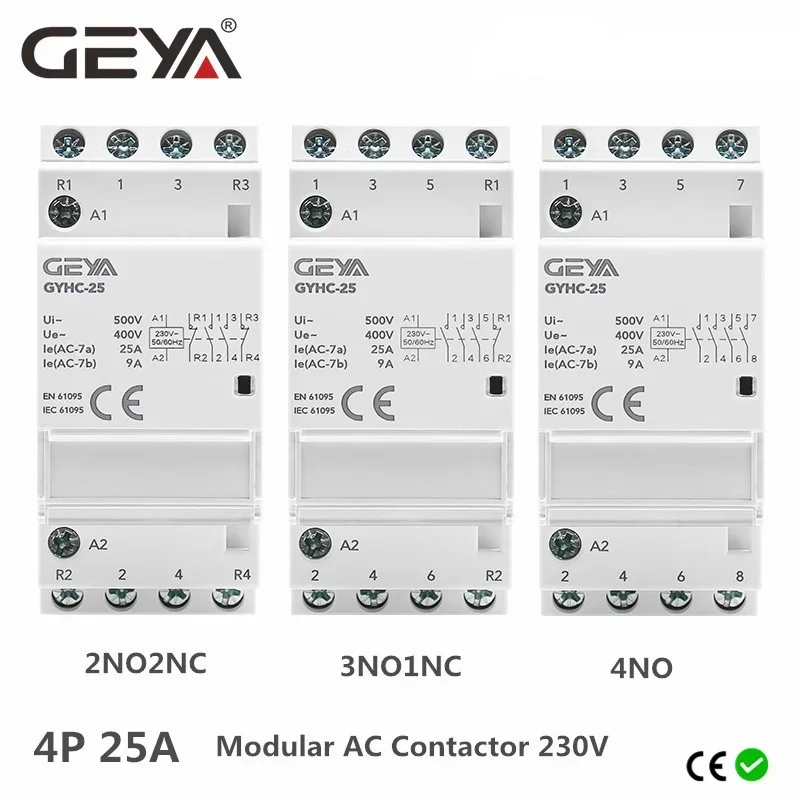
This GEYA contactor is presented as a 4-pole (4P) device, available in multiple contact configurations: 4 Normally Open (4NO), 2 Normally Open and 2 Normally Closed (2NO2NC), and 3 Normally Open and 1 Normally Closed (3NO1NC). These configurations offer flexibility. A 4-pole design allows for the simultaneous switching of multiple circuits or phases. For instance, a 4NO configuration is ideal for controlling three-phase motors or multiple single-phase loads that need to be energized concurrently. The mixed NO/NC configurations, such as 2NO2NC or 3NO1NC, provide options for interlocking circuits or creating feedback loops, which are essential in more complex automation scenarios. This versatility reduces the need for multiple specialized relays. The choice directly impacts control logic. It simplifies wiring diagrams significantly.
The availability of different contact arrangements directly addresses diverse application requirements. For example, in a heating, ventilation, and air conditioning (HVAC) system, a 3NO1NC contactor could control a three-phase compressor (using the 3NO contacts) while simultaneously signaling the status to a building management system or activating a fan (using the 1NC contact for an inverse action). This integrated approach streamlines system design. It minimizes component count. Compared to using separate single-pole relays, a multi-pole contactor like this offers a more compact footprint and reduced wiring complexity. This integrated design enhances overall system reliability by reducing potential points of failure associated with numerous individual connections.
Rated for AC230V operation at 50/60Hz, this modular contactor is designed for common residential and commercial electrical grids. The 25A (AC-7a) and 9A (AC-7b) current ratings signify its capacity to handle substantial resistive and inductive loads, respectively. AC-7a is typically for non-inductive or slightly inductive loads, like electric heaters or incandescent lighting. AC-7b is for motor loads, which present higher inrush currents and require more robust contact performance. The distinction in ratings is crucial. It informs appropriate application. This ensures the contactor is not overstressed, which could lead to premature failure or safety hazards.
Operating at 230V means it is suitable for standard European and many international single-phase systems, as well as line-to-line connections in some three-phase systems. The 50/60Hz frequency compatibility ensures global applicability. This broad compatibility makes the unit a versatile choice. It simplifies inventory management for installers. The EN 61095 and IEC 61095 standards compliance, indicated by the CE mark, confirms that the product meets European safety, health, and environmental protection requirements. These standards specifically cover electromechanical contactors for household and similar purposes. Adherence to these benchmarks provides assurance of the product's quality and safety. It is a critical safety indicator. Users can trust its performance within specified parameters.
The Din Rail mounting capability is a significant feature, streamlining installation into standard electrical enclosures. Din Rail systems are ubiquitous in modern electrical panels, offering a standardized and efficient method for organizing and securing modular components. This snap-on installation reduces labor time. It simplifies future maintenance. The modular form factor means these contactors can be easily added or removed from a Din Rail alongside other devices like circuit breakers, timers, or terminal blocks. This creates a neat and organized panel layout. A well-organized panel is easier to troubleshoot. It improves safety during servicing. The compact design of these units, as suggested by the images, allows for efficient use of space within electrical cabinets, which is often at a premium.
Unlike older, bulkier contactors that required screw-down mounting plates, the Din Rail design facilitates rapid deployment. This is particularly beneficial in scenarios requiring quick system modifications or expansions. The visible screw terminals appear robust. They accommodate standard wiring gauges. Proper torque on these terminals is essential for maintaining low resistance connections and preventing overheating. The clear labeling of terminals (e.g., A1, A2 for coil, 1, 2, 3, 4 for contacts) assists in correct wiring. This reduces installation errors. It enhances system reliability. The visual cues on the product itself, such as the wiring diagram, provide immediate guidance to technicians. This minimizes reliance on external documentation during installation.
While internal components are not visible, the external housing appears to be constructed from a durable, flame-retardant plastic. Such materials are standard in electrical equipment. They contribute to fire safety. The robust screw terminals, as observed, are crucial for long-term electrical connections. Loose connections are a common cause of electrical faults. They lead to arcing and overheating. The mechanical design of the contactor, particularly the visible operating mechanism, suggests a reliable switching action. The spring-loaded nature of contactors ensures quick make-and-break operations. This minimizes contact wear. It extends operational life. The GEYA branding, coupled with a 4.9/5.0 rating, suggests a generally positive market reception regarding durability.
Ensuring clean signal transmission is paramount in control circuits. The robust contact design within such contactors aims to minimize contact bounce and resistance. This ensures that the control signal or power flow is initiated and terminated cleanly. This clean switching prevents spurious signals. It protects sensitive downstream electronics. The specified operational frequency of 50/60Hz indicates that the internal coil and contact mechanism are designed to respond reliably to these standard AC frequencies over extended periods. Regular operation within these parameters contributes to the contactor's long-term reliability. It prevents premature mechanical fatigue. The product's ability to withstand repeated switching cycles directly impacts the longevity of the entire electrical system it controls. This component protects the overall investment.
This modular AC contactor represents a cost-effective solution for automating electrical loads, especially when compared to the potential expense of repairing or replacing larger, more complex equipment damaged by inadequate switching. By providing a dedicated, robust switching mechanism, it isolates the control circuit from the power circuit. This protects both the control electronics and the main load. The relatively affordable price point, combined with its compliance with international standards, positions it as a high-value component for electricians and system integrators. It allows for the construction of reliable control systems without excessive capital outlay. This makes advanced automation accessible.
Imagine a scenario where a critical pump in a building's water supply system needs to be controlled automatically based on water level sensors. A reliable contactor like this ensures that the high-current pump motor is switched safely and consistently, protecting the sensors and control logic from the motor's inductive kickback. The modularity means that if the system needs expansion, additional contactors can be easily integrated. This future-proofs the installation. The peace of mind that comes from using a standards-compliant, appropriately rated component for critical switching tasks is invaluable. It ensures operational continuity. It minimizes downtime. This contactor empowers users to build dependable, automated electrical systems with confidence, knowing that the core switching mechanism is engineered for consistent, long-term performance.
Operational Architecture and Switching Dynamics
This GEYA contactor is presented as a 4-pole (4P) device, available in multiple contact configurations: 4 Normally Open (4NO), 2 Normally Open and 2 Normally Closed (2NO2NC), and 3 Normally Open and 1 Normally Closed (3NO1NC). These configurations offer flexibility. A 4-pole design allows for the simultaneous switching of multiple circuits or phases. For instance, a 4NO configuration is ideal for controlling three-phase motors or multiple single-phase loads that need to be energized concurrently. The mixed NO/NC configurations, such as 2NO2NC or 3NO1NC, provide options for interlocking circuits or creating feedback loops, which are essential in more complex automation scenarios. This versatility reduces the need for multiple specialized relays. The choice directly impacts control logic. It simplifies wiring diagrams significantly.
The availability of different contact arrangements directly addresses diverse application requirements. For example, in a heating, ventilation, and air conditioning (HVAC) system, a 3NO1NC contactor could control a three-phase compressor (using the 3NO contacts) while simultaneously signaling the status to a building management system or activating a fan (using the 1NC contact for an inverse action). This integrated approach streamlines system design. It minimizes component count. Compared to using separate single-pole relays, a multi-pole contactor like this offers a more compact footprint and reduced wiring complexity. This integrated design enhances overall system reliability by reducing potential points of failure associated with numerous individual connections.
Power Handling and Regulatory Compliance
Rated for AC230V operation at 50/60Hz, this modular contactor is designed for common residential and commercial electrical grids. The 25A (AC-7a) and 9A (AC-7b) current ratings signify its capacity to handle substantial resistive and inductive loads, respectively. AC-7a is typically for non-inductive or slightly inductive loads, like electric heaters or incandescent lighting. AC-7b is for motor loads, which present higher inrush currents and require more robust contact performance. The distinction in ratings is crucial. It informs appropriate application. This ensures the contactor is not overstressed, which could lead to premature failure or safety hazards.
Operating at 230V means it is suitable for standard European and many international single-phase systems, as well as line-to-line connections in some three-phase systems. The 50/60Hz frequency compatibility ensures global applicability. This broad compatibility makes the unit a versatile choice. It simplifies inventory management for installers. The EN 61095 and IEC 61095 standards compliance, indicated by the CE mark, confirms that the product meets European safety, health, and environmental protection requirements. These standards specifically cover electromechanical contactors for household and similar purposes. Adherence to these benchmarks provides assurance of the product's quality and safety. It is a critical safety indicator. Users can trust its performance within specified parameters.
Integration Profile and Installation Ease
The Din Rail mounting capability is a significant feature, streamlining installation into standard electrical enclosures. Din Rail systems are ubiquitous in modern electrical panels, offering a standardized and efficient method for organizing and securing modular components. This snap-on installation reduces labor time. It simplifies future maintenance. The modular form factor means these contactors can be easily added or removed from a Din Rail alongside other devices like circuit breakers, timers, or terminal blocks. This creates a neat and organized panel layout. A well-organized panel is easier to troubleshoot. It improves safety during servicing. The compact design of these units, as suggested by the images, allows for efficient use of space within electrical cabinets, which is often at a premium.
Unlike older, bulkier contactors that required screw-down mounting plates, the Din Rail design facilitates rapid deployment. This is particularly beneficial in scenarios requiring quick system modifications or expansions. The visible screw terminals appear robust. They accommodate standard wiring gauges. Proper torque on these terminals is essential for maintaining low resistance connections and preventing overheating. The clear labeling of terminals (e.g., A1, A2 for coil, 1, 2, 3, 4 for contacts) assists in correct wiring. This reduces installation errors. It enhances system reliability. The visual cues on the product itself, such as the wiring diagram, provide immediate guidance to technicians. This minimizes reliance on external documentation during installation.
Durability and Long-Term Reliability
While internal components are not visible, the external housing appears to be constructed from a durable, flame-retardant plastic. Such materials are standard in electrical equipment. They contribute to fire safety. The robust screw terminals, as observed, are crucial for long-term electrical connections. Loose connections are a common cause of electrical faults. They lead to arcing and overheating. The mechanical design of the contactor, particularly the visible operating mechanism, suggests a reliable switching action. The spring-loaded nature of contactors ensures quick make-and-break operations. This minimizes contact wear. It extends operational life. The GEYA branding, coupled with a 4.9/5.0 rating, suggests a generally positive market reception regarding durability.
Ensuring clean signal transmission is paramount in control circuits. The robust contact design within such contactors aims to minimize contact bounce and resistance. This ensures that the control signal or power flow is initiated and terminated cleanly. This clean switching prevents spurious signals. It protects sensitive downstream electronics. The specified operational frequency of 50/60Hz indicates that the internal coil and contact mechanism are designed to respond reliably to these standard AC frequencies over extended periods. Regular operation within these parameters contributes to the contactor's long-term reliability. It prevents premature mechanical fatigue. The product's ability to withstand repeated switching cycles directly impacts the longevity of the entire electrical system it controls. This component protects the overall investment.
Value Proposition and System Enhancement
This modular AC contactor represents a cost-effective solution for automating electrical loads, especially when compared to the potential expense of repairing or replacing larger, more complex equipment damaged by inadequate switching. By providing a dedicated, robust switching mechanism, it isolates the control circuit from the power circuit. This protects both the control electronics and the main load. The relatively affordable price point, combined with its compliance with international standards, positions it as a high-value component for electricians and system integrators. It allows for the construction of reliable control systems without excessive capital outlay. This makes advanced automation accessible.
Imagine a scenario where a critical pump in a building's water supply system needs to be controlled automatically based on water level sensors. A reliable contactor like this ensures that the high-current pump motor is switched safely and consistently, protecting the sensors and control logic from the motor's inductive kickback. The modularity means that if the system needs expansion, additional contactors can be easily integrated. This future-proofs the installation. The peace of mind that comes from using a standards-compliant, appropriately rated component for critical switching tasks is invaluable. It ensures operational continuity. It minimizes downtime. This contactor empowers users to build dependable, automated electrical systems with confidence, knowing that the core switching mechanism is engineered for consistent, long-term performance.