Geeetech Marble PLA 3D Printer Filament
Official Store Deal
Expert Analysis Overview
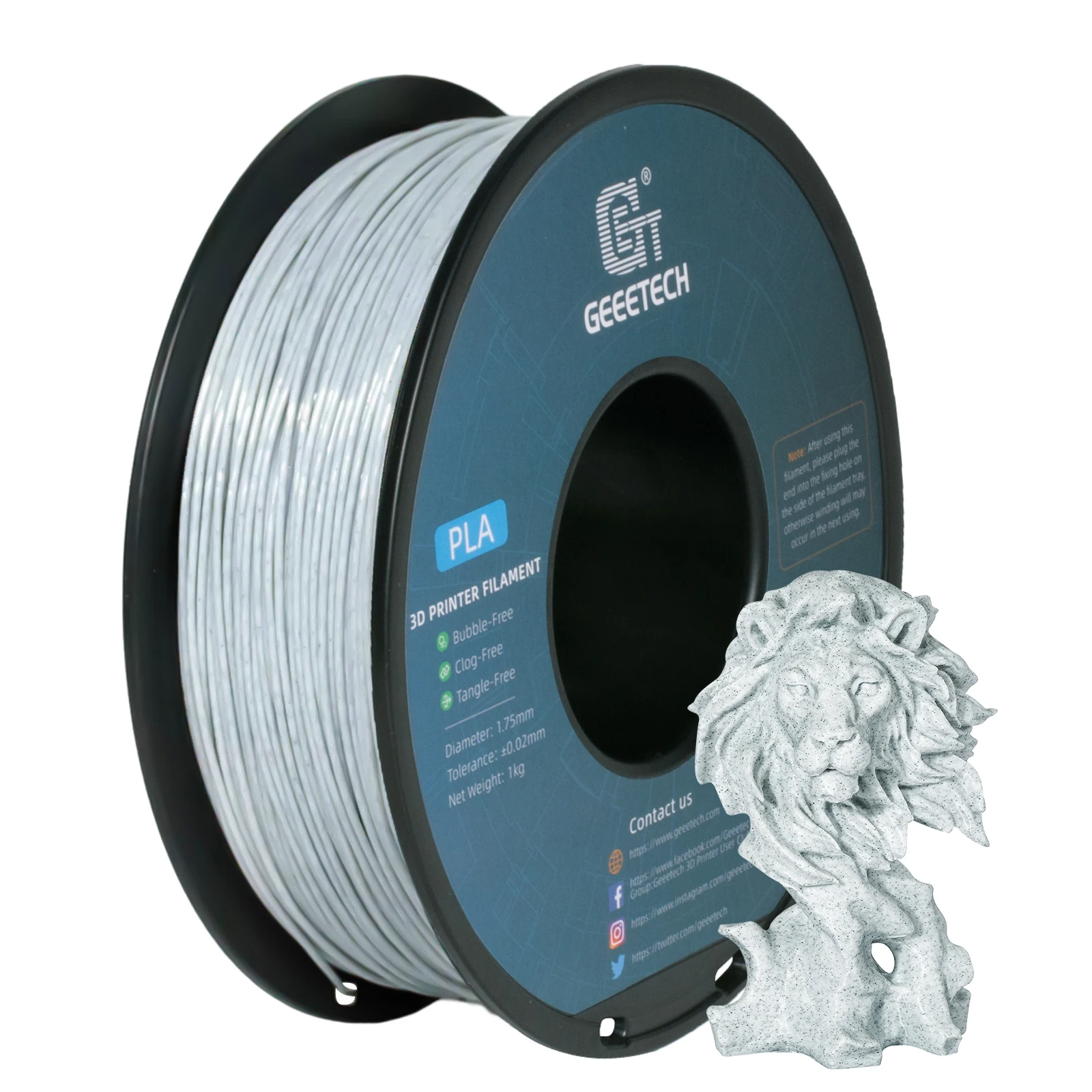
Geeetech Marble PLA 3D Printer Filament is a reliable and aesthetically pleasing material designed for educational institutions and hobbyists seeking consistent, high-quality prints with a unique finish. This filament offers a distinctive marble-like appearance, making it an excellent choice for decorative models, architectural prototypes, and artistic projects where visual appeal is paramount. Its formulation prioritizes ease of use and safety, crucial for learning environments and home workshops.
The filament is composed of Polylactic Acid (PLA), a thermoplastic polymer derived from renewable resources like corn starch. This bio-based origin makes PLA a more environmentally conscious choice compared to petroleum-based plastics. The material is known for its ease of printing, requiring lower temperatures than many other filaments, which simplifies the setup process for new users.
Understanding PLA's properties is key to successful 3D printing. Its low melting point and minimal warping tendencies contribute to a more forgiving printing experience. For educators, this means less time troubleshooting and more time focusing on design principles and creative expression. The material's inherent rigidity also allows for the creation of structurally sound models.
Unlike more advanced materials like ABS or PETG, PLA does not typically require a heated print bed, though it can improve adhesion. This simplifies the hardware requirements for 3D printers, making it accessible for a wider range of machines, including entry-level models often found in classrooms. Its biodegradability, while not immediate, offers a more sustainable end-of-life option for printed objects compared to synthetic polymers.
The Geeetech Marble PLA filament boasts a diameter of 1.75mm with a tight tolerance of ±0.03mm. This level of dimensional accuracy is critical for consistent extrusion and reliable print quality. A uniform filament diameter ensures that the printer's extruder motor can feed the material at a steady rate, preventing under-extrusion or over-extrusion issues.
In practical terms, precise dimensions translate directly to smoother prints with fewer visible layer lines and better overall part integrity. When the filament diameter fluctuates, the printer struggles to maintain a consistent flow, leading to artifacts like blobs, gaps, or even nozzle clogs. This consistency is vital for intricate designs.
Compared to standard, less precisely manufactured filaments, this tight tolerance significantly reduces the likelihood of print failures. Less precise filaments can cause frustrating issues, especially for beginners who may not immediately diagnose the filament as the root cause. This precision helps simplify the slicing workflow by reducing the need for extensive flow rate calibration.
The recommended print temperature for this PLA filament ranges from 200°C to 220°C. This temperature window is typical for PLA and allows for flexibility depending on the specific printer, nozzle size, and desired print speed. Finding the optimal temperature within this range can enhance layer adhesion and surface finish.
Operating within this temperature range ensures the filament melts consistently without degrading or causing excessive stringing. A lower temperature might result in poor layer bonding, making the print brittle, while a higher temperature could lead to oozing or burning of the material. Fine-tuning is often a small step.
Many entry-level 3D printers and those designed for educational use are optimized for PLA's lower temperature requirements. This makes the Geeetech Marble PLA a suitable match for a broad installed base of FDM machines. Its thermal stability within the recommended range contributes to predictable and repeatable printing outcomes.
The 'marble-like' finish is achieved through specific additives that create subtle speckles and variations within the filament. This gives printed objects a sophisticated, stone-like appearance without the weight or brittleness of actual marble. The visual effect adds a premium touch to models.
Objects printed with this filament can mimic the look of carved stone, making them ideal for busts, statues, architectural models, or decorative household items. This aesthetic quality opens up new creative possibilities, allowing users to produce prints that stand out from standard monochromatic PLA. The unique texture can even help mask minor layer lines.
Unlike plain colored filaments, the marble effect introduces a visual complexity that can elevate simple designs. It provides an artistic dimension that encourages experimentation with different forms and applications. Students can explore how material aesthetics influence the perception of their designs.
One significant feature highlighted is the 'Tangle-Free' winding. This refers to the careful spooling of the filament to prevent knots and overlaps that can lead to print failures. A properly wound spool ensures a smooth, uninterrupted feed to the extruder, which is paramount for long prints.
For classrooms and busy workshops, a tangle-free spool saves valuable time and reduces frustration. There is nothing more disheartening than a print failing hours in due to a filament tangle. This design choice directly addresses a common pain point for 3D printer users.
Compared to poorly spooled filaments, which can cause significant headaches and material waste, the tangle-free design offers peace of mind. It allows users, especially students, to focus on the learning process rather than constantly monitoring the filament feed. This enhances the overall reliability of the printing process.
Being derived from starch, PLA is generally considered non-toxic and emits fewer harmful fumes during printing compared to some other plastics. This makes it a safer option for use in enclosed spaces, such as classrooms or home offices, provided adequate ventilation is still maintained. Safety is always paramount.
This material choice aligns well with educational goals of promoting sustainable practices and responsible technology use. Students can learn about biodegradable materials and their role in reducing environmental impact. The reduced fume emission also contributes to a healthier learning environment.
Unlike filaments that require specialized ventilation systems or carry strong odors, PLA's relatively benign nature simplifies its integration into various settings. This ease of use and reduced safety concern makes it an accessible entry point for teaching students 3D printing without undue risk or complex safety protocols.
The filament comes in vacuum packaging, which is crucial for maintaining its quality. PLA is hygroscopic, meaning it absorbs moisture from the air. Moisture absorption can lead to issues like bubbling, stringing, and weakened prints. Vacuum sealing prevents this degradation.
Properly sealed filament ensures that the material is dry and ready to print right out of the box, preserving its optimal printing characteristics. This is particularly important for educational institutions that might store filament for extended periods. Dry filament prints better.
Many generic filaments may not always come with robust moisture protection, leading to performance issues. The vacuum packaging of the Geeetech filament demonstrates a commitment to quality control and user satisfaction. It helps ensure a consistent printing experience from the first meter to the last.
The spool size and 1.75mm diameter are standard for most FDM (Fused Deposition Modeling) 3D printers. This broad compatibility means that the filament can be used across a wide range of popular desktop 3D printer brands without requiring special adapters or modifications. It fits most FDM 3D printers.
This universal compatibility simplifies procurement for schools and hobbyists who may own different printer models. There is no need to worry about specific brand restrictions, allowing for greater flexibility in material sourcing. It's a practical choice for diverse setups.
Unlike proprietary filament cartridges or less common filament diameters, the 1.75mm standard ensures that this Geeetech PLA is a plug-and-play solution for the vast majority of consumer and prosumer 3D printers available today. This reduces barriers to entry and simplifies the supply chain for users.
For STEM educators, this filament represents an opportunity to introduce students to advanced manufacturing concepts with minimal hurdles. Its ease of printing means students can quickly move from design to physical object, fostering a sense of accomplishment and reinforcing learning outcomes. The material's properties allow for immediate feedback on design choices.
The marble aesthetic can inspire creative projects, from replicating ancient sculptures to designing unique art pieces. This encourages interdisciplinary learning, combining art, history, and engineering. Students can see their digital creations come to life with a professional finish.
Imagine students confidently operating 3D printers, producing intricate models that not only function well but also possess a striking visual appeal. This filament supports a seamless learning experience, minimizing technical frustrations and maximizing creative exploration. It allows for a focus on the 'why' and 'how' of design, rather than constant troubleshooting. The consistent performance ensures that educational projects are completed efficiently, allowing more time for iterative design and critical analysis. This is an investment in successful learning outcomes and inspires the next generation of innovators.
Unveiling the Material Science
The filament is composed of Polylactic Acid (PLA), a thermoplastic polymer derived from renewable resources like corn starch. This bio-based origin makes PLA a more environmentally conscious choice compared to petroleum-based plastics. The material is known for its ease of printing, requiring lower temperatures than many other filaments, which simplifies the setup process for new users.
Understanding PLA's properties is key to successful 3D printing. Its low melting point and minimal warping tendencies contribute to a more forgiving printing experience. For educators, this means less time troubleshooting and more time focusing on design principles and creative expression. The material's inherent rigidity also allows for the creation of structurally sound models.
Unlike more advanced materials like ABS or PETG, PLA does not typically require a heated print bed, though it can improve adhesion. This simplifies the hardware requirements for 3D printers, making it accessible for a wider range of machines, including entry-level models often found in classrooms. Its biodegradability, while not immediate, offers a more sustainable end-of-life option for printed objects compared to synthetic polymers.
Precision in Every Strand
The Geeetech Marble PLA filament boasts a diameter of 1.75mm with a tight tolerance of ±0.03mm. This level of dimensional accuracy is critical for consistent extrusion and reliable print quality. A uniform filament diameter ensures that the printer's extruder motor can feed the material at a steady rate, preventing under-extrusion or over-extrusion issues.
In practical terms, precise dimensions translate directly to smoother prints with fewer visible layer lines and better overall part integrity. When the filament diameter fluctuates, the printer struggles to maintain a consistent flow, leading to artifacts like blobs, gaps, or even nozzle clogs. This consistency is vital for intricate designs.
Compared to standard, less precisely manufactured filaments, this tight tolerance significantly reduces the likelihood of print failures. Less precise filaments can cause frustrating issues, especially for beginners who may not immediately diagnose the filament as the root cause. This precision helps simplify the slicing workflow by reducing the need for extensive flow rate calibration.
Crafting with Confidence: Printing Characteristics
The recommended print temperature for this PLA filament ranges from 200°C to 220°C. This temperature window is typical for PLA and allows for flexibility depending on the specific printer, nozzle size, and desired print speed. Finding the optimal temperature within this range can enhance layer adhesion and surface finish.
Operating within this temperature range ensures the filament melts consistently without degrading or causing excessive stringing. A lower temperature might result in poor layer bonding, making the print brittle, while a higher temperature could lead to oozing or burning of the material. Fine-tuning is often a small step.
Many entry-level 3D printers and those designed for educational use are optimized for PLA's lower temperature requirements. This makes the Geeetech Marble PLA a suitable match for a broad installed base of FDM machines. Its thermal stability within the recommended range contributes to predictable and repeatable printing outcomes.
The Aesthetics of Marble
The 'marble-like' finish is achieved through specific additives that create subtle speckles and variations within the filament. This gives printed objects a sophisticated, stone-like appearance without the weight or brittleness of actual marble. The visual effect adds a premium touch to models.
Objects printed with this filament can mimic the look of carved stone, making them ideal for busts, statues, architectural models, or decorative household items. This aesthetic quality opens up new creative possibilities, allowing users to produce prints that stand out from standard monochromatic PLA. The unique texture can even help mask minor layer lines.
Unlike plain colored filaments, the marble effect introduces a visual complexity that can elevate simple designs. It provides an artistic dimension that encourages experimentation with different forms and applications. Students can explore how material aesthetics influence the perception of their designs.
Operational Excellence and User Experience
One significant feature highlighted is the 'Tangle-Free' winding. This refers to the careful spooling of the filament to prevent knots and overlaps that can lead to print failures. A properly wound spool ensures a smooth, uninterrupted feed to the extruder, which is paramount for long prints.
For classrooms and busy workshops, a tangle-free spool saves valuable time and reduces frustration. There is nothing more disheartening than a print failing hours in due to a filament tangle. This design choice directly addresses a common pain point for 3D printer users.
Compared to poorly spooled filaments, which can cause significant headaches and material waste, the tangle-free design offers peace of mind. It allows users, especially students, to focus on the learning process rather than constantly monitoring the filament feed. This enhances the overall reliability of the printing process.
Environmental Consideration and Safety Protocols
Being derived from starch, PLA is generally considered non-toxic and emits fewer harmful fumes during printing compared to some other plastics. This makes it a safer option for use in enclosed spaces, such as classrooms or home offices, provided adequate ventilation is still maintained. Safety is always paramount.
This material choice aligns well with educational goals of promoting sustainable practices and responsible technology use. Students can learn about biodegradable materials and their role in reducing environmental impact. The reduced fume emission also contributes to a healthier learning environment.
Unlike filaments that require specialized ventilation systems or carry strong odors, PLA's relatively benign nature simplifies its integration into various settings. This ease of use and reduced safety concern makes it an accessible entry point for teaching students 3D printing without undue risk or complex safety protocols.
Packaging and Compatibility
The filament comes in vacuum packaging, which is crucial for maintaining its quality. PLA is hygroscopic, meaning it absorbs moisture from the air. Moisture absorption can lead to issues like bubbling, stringing, and weakened prints. Vacuum sealing prevents this degradation.
Properly sealed filament ensures that the material is dry and ready to print right out of the box, preserving its optimal printing characteristics. This is particularly important for educational institutions that might store filament for extended periods. Dry filament prints better.
Many generic filaments may not always come with robust moisture protection, leading to performance issues. The vacuum packaging of the Geeetech filament demonstrates a commitment to quality control and user satisfaction. It helps ensure a consistent printing experience from the first meter to the last.
Broad Printer Compatibility
The spool size and 1.75mm diameter are standard for most FDM (Fused Deposition Modeling) 3D printers. This broad compatibility means that the filament can be used across a wide range of popular desktop 3D printer brands without requiring special adapters or modifications. It fits most FDM 3D printers.
This universal compatibility simplifies procurement for schools and hobbyists who may own different printer models. There is no need to worry about specific brand restrictions, allowing for greater flexibility in material sourcing. It's a practical choice for diverse setups.
Unlike proprietary filament cartridges or less common filament diameters, the 1.75mm standard ensures that this Geeetech PLA is a plug-and-play solution for the vast majority of consumer and prosumer 3D printers available today. This reduces barriers to entry and simplifies the supply chain for users.
The Educational Edge
For STEM educators, this filament represents an opportunity to introduce students to advanced manufacturing concepts with minimal hurdles. Its ease of printing means students can quickly move from design to physical object, fostering a sense of accomplishment and reinforcing learning outcomes. The material's properties allow for immediate feedback on design choices.
The marble aesthetic can inspire creative projects, from replicating ancient sculptures to designing unique art pieces. This encourages interdisciplinary learning, combining art, history, and engineering. Students can see their digital creations come to life with a professional finish.
Imagine students confidently operating 3D printers, producing intricate models that not only function well but also possess a striking visual appeal. This filament supports a seamless learning experience, minimizing technical frustrations and maximizing creative exploration. It allows for a focus on the 'why' and 'how' of design, rather than constant troubleshooting. The consistent performance ensures that educational projects are completed efficiently, allowing more time for iterative design and critical analysis. This is an investment in successful learning outcomes and inspires the next generation of innovators.