GEEETECH 10kg Silk PLA 3D Printer Filament
Official Store Deal
Expert Analysis Overview
Precision Filament Engineering for Consistent Prototyping
The GEEETECH 10kg Silk PLA 3D Printer Filament is a substantial offering for serious prototypers and production environments, designed to deliver consistent, high-quality prints. This filament distinguishes itself through its commitment to tight manufacturing tolerances and material integrity, crucial for repeatable results. Its bulk packaging addresses the needs of users with high consumption rates, ensuring a continuous supply for extensive projects. The material properties, particularly the silk finish, provide an aesthetic advantage for display models and functional parts where visual appeal is paramount. It is a reliable choice.
Unwavering Dimensional Accuracy
The filament's diameter is precisely controlled at 1.75mm with a tolerance of ±0.03mm. This specification is critical for maintaining consistent extrusion rates throughout a print job. Deviations beyond this range can lead to under-extrusion, over-extrusion, or nozzle clogging, all of which compromise print quality and structural integrity. A tight tolerance ensures that the printer's extruder motor can feed the material uniformly, leading to predictable layer deposition.
For precision prototyping, such dimensional consistency is non-negotiable. Parts requiring exact fitment, like interlocking components or mechanical assemblies, depend heavily on the filament's uniform diameter. Without it, designers face constant calibration issues and wasted material from failed prints. This tight tolerance minimizes the need for frequent adjustments.
Compared to generic filaments that often exhibit wider tolerances (e.g., ±0.05mm or more), the GEEETECH offering provides a significant upgrade. This enhanced precision directly translates into fewer print failures and a higher success rate for complex geometries. It reduces the frustration associated with inconsistent material flow.
Optimized Material Characteristics for Print Reliability
This Silk PLA filament is engineered for better layer adhesion, less warping, and reduced stringing. These characteristics are fundamental to producing robust and aesthetically pleasing 3D prints. Superior layer adhesion ensures that printed objects possess greater strength and are less prone to delamination, a common failure point in 3D printing. This is vital for functional parts.
The reduction in warping, a common issue with many thermoplastic filaments, is achieved through careful material formulation and manufacturing processes. Warping occurs when different parts of a print cool at varying rates, causing internal stresses that pull the print away from the build plate. Minimizing this phenomenon ensures prints remain flat and dimensionally accurate, especially for larger objects. This saves time and material.
Less stringing means cleaner prints with fewer wispy threads between printed sections, reducing post-processing time. Stringing is often a result of improper retraction settings or inconsistent filament properties. The formulation of this filament aims to mitigate such issues, allowing for smoother surfaces and sharper details. This improves overall print quality.
Bulk Supply and Economic Efficiency
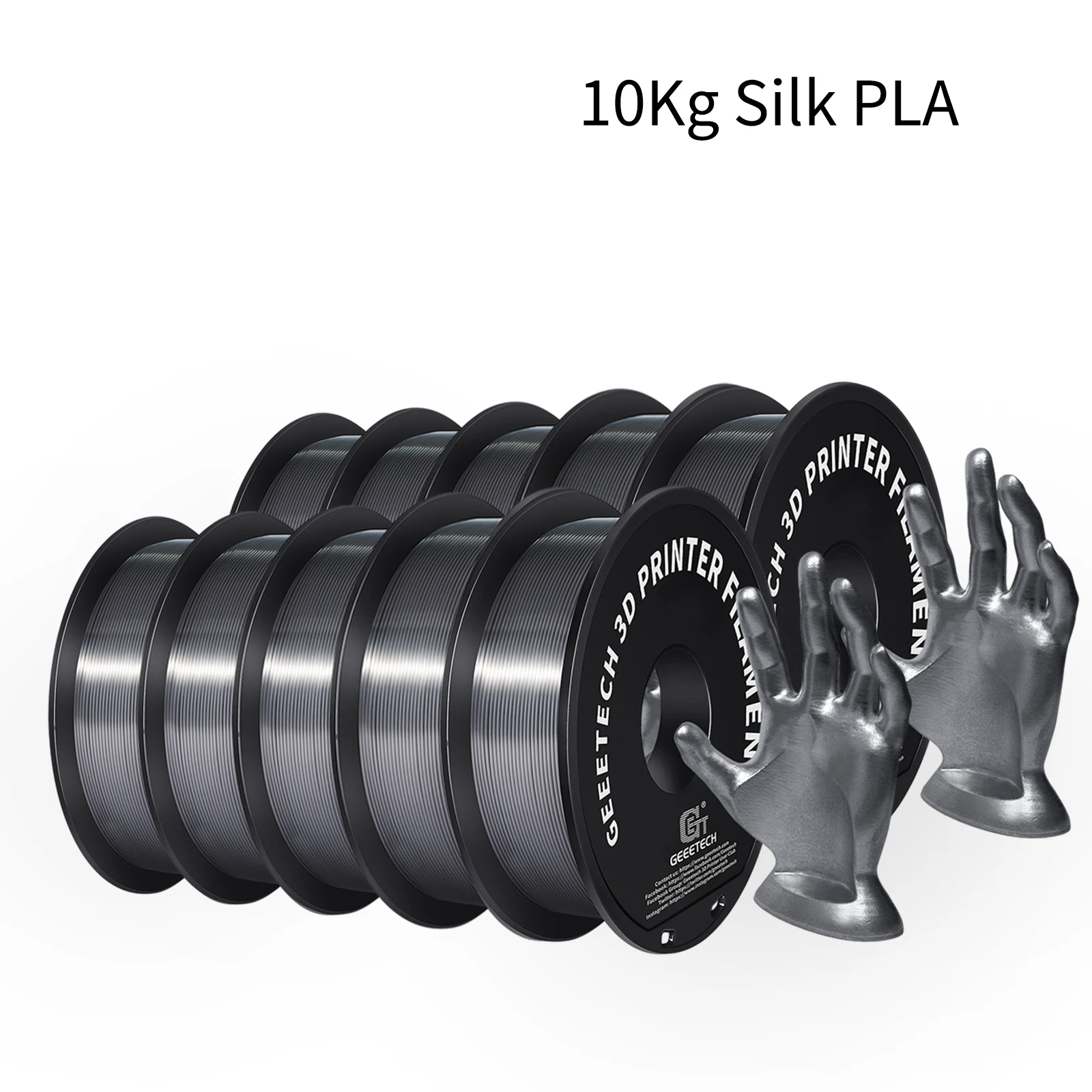
Offered in a 10kg package, this filament is designed for high-volume users. The image displays multiple individual spools, suggesting a modular approach to bulk purchasing rather than a single massive spool. This allows for easier handling and storage while still providing the cost benefits of buying in quantity. Bulk purchasing typically reduces the per-kilogram cost of filament.
For educational institutions, small businesses, or dedicated hobbyists, a 10kg supply significantly reduces the frequency of reordering and the associated shipping costs. It ensures that projects can proceed without interruption due to material shortages. This continuity is invaluable for meeting deadlines.
Unlike purchasing individual 1kg spools, which can accumulate quickly and lead to higher overall expenses, this bulk option provides a more economical solution. The long-term value proposition is clear: consistent material availability at a more favorable price point. This makes large-scale production more feasible.
Aesthetic Appeal and Surface Finish
The "Silk PLA" designation indicates a unique, glossy, and smooth surface finish that mimics the appearance of silk. This aesthetic quality is highly sought after for decorative items, artistic models, and prototypes where a premium look is desired without extensive post-processing. The reflective properties of silk PLA can enhance the visual impact of printed objects, making them stand out. It adds a touch of elegance.
This finish is achieved through specific additives and processing techniques during filament extrusion. It provides a distinct advantage over standard matte or glossy PLA, which often lacks the depth and luster of a silk finish. The material prints similarly to standard PLA, making it accessible for most FDM 3D printers without requiring specialized settings. This expands its utility.
For designers creating prototypes that need to impress clients or products intended for direct consumer use, the silk finish offers an immediate upgrade in perceived quality. It eliminates the need for painting or extensive sanding to achieve a smooth, attractive surface. This saves significant labor.
Environmental Considerations and User Experience
The filament is marketed as "Eco Friendly," which is a significant consideration for many users today. PLA (Polylactic Acid) itself is a biodegradable thermoplastic derived from renewable resources like corn starch, making it a more environmentally conscious choice compared to petroleum-based plastics like ABS. This aligns with sustainable practices.
Beyond its environmental profile, the filament is designed for a user-friendly printing experience. Features like precise winding prevent tangles and knots on the spool, which are common causes of print failures and extruder jams. This ensures a smooth feeding process from the spool to the hotend. A well-wound spool is a small but critical detail.
The absence of bubbles in the filament is another indicator of quality manufacturing. Bubbles, or voids, within the filament can cause inconsistent extrusion, leading to weak spots in prints and surface imperfections. A bubble-free filament ensures a denser, more uniform material flow. This contributes to print reliability.
Spool Design and Filament Management
The spools themselves are designed with practical dimensions: a 7-inch spool diameter, 2.75-inch spool width, and a 2.4-inch interior spindle diameter. These dimensions are largely standard for 1kg spools, ensuring compatibility with a wide range of filament holders and dry boxes. The consistent size simplifies storage and integration into existing setups. It fits most common systems.
Each 1.75mm 1kg spool provides approximately 335 meters of filament. This metric is useful for estimating material consumption for specific projects and managing inventory. Knowing the exact length helps in planning large prints that might require multiple spools. This prevents mid-print material changes.
The clear labeling on the spool, including the GEEETECH brand and "3D PRINTER FILAMENT" text, provides essential information at a glance. This helps in quick identification of material type and brand, especially in workshops with multiple filament types. Organization is key in a busy print farm.
The Engineering Advantage
This filament offers great tensile strength and flexibility, as demonstrated by the image showing the filament being bent 360 degrees without breaking. High tensile strength means printed parts can withstand significant pulling forces before fracturing, making them suitable for structural applications. Flexibility, while not as pronounced as with TPU, indicates a certain resilience that prevents brittle failures. This combination is beneficial.
For functional prototypes or end-use parts that experience moderate stress, this balance of strength and flexibility is ideal. It allows for designs that might require a slight give without immediate breakage. This expands the range of applications for PLA beyond purely aesthetic models. It is a versatile material.
Unlike standard PLA, which can sometimes be quite brittle, the Silk PLA formulation appears to offer improved mechanical properties. This makes it a more forgiving material to work with, especially for parts that might undergo some handling or minor impacts. It enhances the durability of finished prints.
Imagine completing a complex, multi-day print with confidence, knowing that the filament's consistent diameter and superior material properties will prevent common failures. Picture your finished prototypes gleaming with a professional silk luster, ready to impress. Envision a streamlined workflow where material changes are infrequent and post-processing is minimal, allowing you to focus on innovation rather than troubleshooting. This filament empowers creators to achieve their vision with greater ease and reliability.