FY-10 Digital Temperature Monitor with Remote Probe
Official Store Deal
Expert Analysis Overview
Precision Thermal Assessment for Controlled Environments
The FY-10 Digital Temperature Monitor is a utilitarian environmental sensor designed for precise, localized thermal assessment in controlled environments. This device offers a practical solution for users requiring real-time temperature data without the complexity or cost of industrial-grade systems. Its primary utility lies in applications where a specific thermal zone needs continuous observation, such as aquariums, terrariums, or refrigeration units. The external probe is a key differentiator.
Display Resolution and Readability
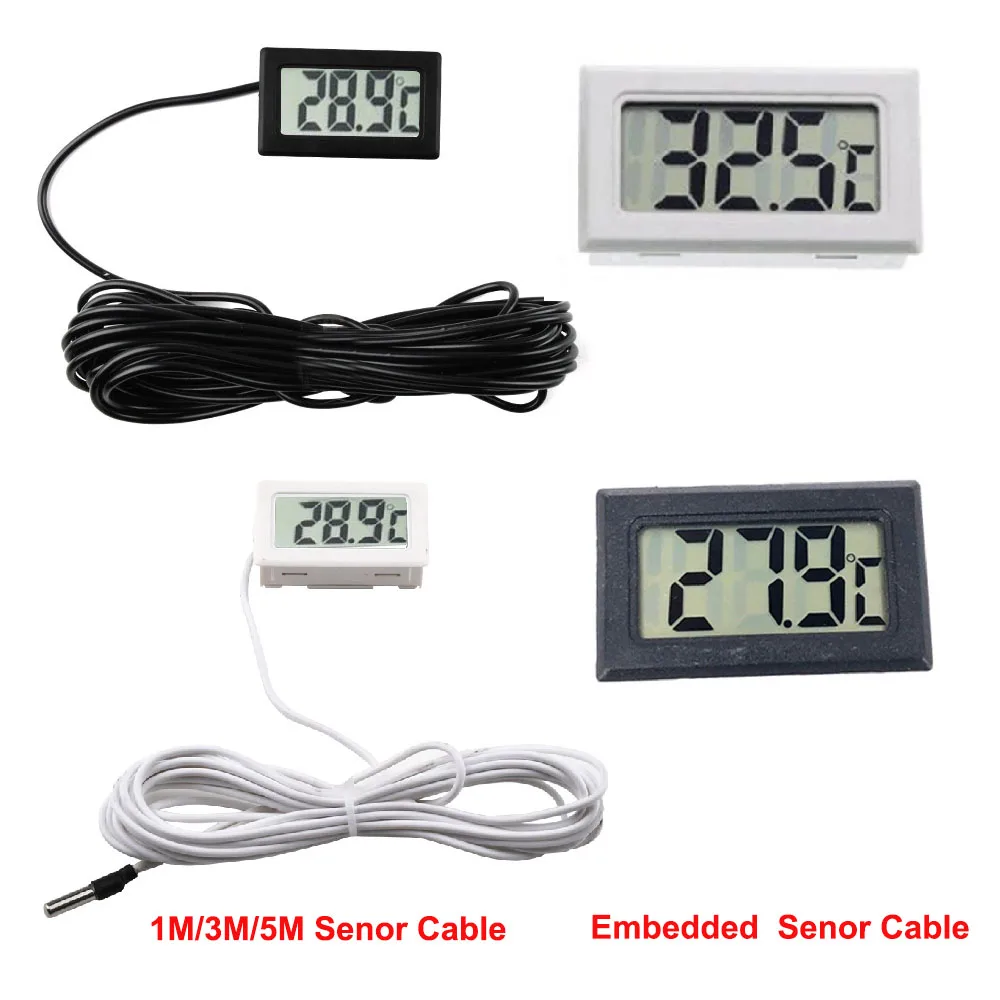
The device features a clear liquid crystal display (LCD) that presents temperature readings to one decimal place. This resolution, typically 0.1°C, allows for granular observation of thermal fluctuations. Such precision is critical for sensitive ecosystems like aquariums, where even minor temperature shifts can impact aquatic life. The numerical readout eliminates the ambiguity inherent in analog thermometers, providing immediate and unambiguous data. Users can quickly ascertain the thermal state of their environment. This direct digital representation minimizes potential human error in reading. The display contrast appears adequate for typical indoor lighting conditions.
Unlike basic analog thermometers, which often rely on mercury or bimetallic strips, this digital unit provides immediate, unambiguous numerical data. Analog scales can be difficult to read accurately, especially from a distance or in varying light. The FY-10's digital interface offers a distinct advantage in clarity and ease of interpretation. It simplifies the task of monitoring, making it accessible for a broader user base. The visual presentation is straightforward.
Sensor Integration and Placement Flexibility
A defining characteristic of the FY-10 is its external sensor probe, available with cable lengths of 1, 3, or 5 meters. This design allows the main display unit to be positioned conveniently outside the monitored environment, while the probe itself is submerged or placed directly within the target area. This separation is invaluable for applications like aquariums, where the display needs to remain dry and accessible, but the temperature must be measured accurately within the water column. The probe's compact size facilitates discreet placement. It is a significant functional advantage.
This remote sensing capability addresses a common pain point with integrated thermometers: the need to place the entire unit within the environment, often compromising readability or exposing the main electronics to adverse conditions. By isolating the sensor, the FY-10 ensures the display remains protected and easily viewable. This engineering choice enhances both the longevity of the device and the user's convenience. The extended cable options provide considerable installation flexibility. Users can tailor the setup to their specific needs.
Compared to devices with integrated sensors, which are limited to measuring the ambient temperature of their immediate surroundings, the FY-10's external probe offers superior utility. It enables precise point-of-measurement readings, crucial for maintaining stable conditions in contained systems. This capability transforms the device from a simple ambient thermometer into a specialized environmental monitor. It offers targeted thermal data.
Power Source and Operational Longevity
The FY-10 operates on two LR44 button cell batteries, a common and readily available power source. This battery-powered design ensures complete portability and eliminates the need for external power adapters or wiring, simplifying installation. The low power consumption of LCD displays typically translates to extended battery life, reducing the frequency of replacements. Battery access appears straightforward from the rear panel. This design choice prioritizes user convenience.
For continuous monitoring applications, the reliance on easily replaceable batteries is a practical consideration. Users can maintain uninterrupted operation by simply swapping out depleted cells. This contrasts with rechargeable units that might require downtime for charging or devices needing constant AC power, limiting their placement options. The self-contained power system is a benefit. It enhances deployment versatility.
While battery life is generally good for such devices, it is an operational cost that users should factor into their long-term assessment. Unlike wired sensors that draw power from a main supply, the FY-10 requires periodic battery checks and replacements. However, for its intended use cases, the convenience of battery operation often outweighs this minor maintenance requirement. The energy efficiency is notable.
Construction and Environmental Suitability
The visible casing of the display unit is constructed from a lightweight plastic, available in both black and white variants. This material choice contributes to the device's affordability and ease of handling. While the display unit itself is not designed for submersion, the sensor probe is engineered for direct contact with liquids, making it suitable for aquarium and refrigeration applications. The overall form factor is compact. It fits into small spaces.
For environments where the display unit might be exposed to splashes or high humidity, additional protective measures might be prudent, as the plastic casing does not appear to offer advanced ingress protection. However, for its primary role of monitoring internal temperatures of contained systems, the design is functionally appropriate. The probe's robust construction is key. It ensures reliable performance in wet conditions.
Compared to more ruggedized industrial thermometers, the FY-10 prioritizes cost-effectiveness and ease of use over extreme durability. Its construction is adequate for typical household or hobbyist applications, where it is not subjected to harsh physical abuse. The design strikes a balance between functionality and manufacturing economy. It serves its purpose effectively.
Metrological Considerations: Accuracy and Repeatability
As a metrologist, the primary concern for any temperature sensor is its accuracy and repeatability. While the FY-10 displays readings to 0.1°C, this resolution does not inherently guarantee accuracy. The typical accuracy for devices in this price category is often within ±1°C, which is generally sufficient for monitoring environmental parameters in aquariums or refrigerators. However, for applications demanding higher precision, such as scientific experiments or critical industrial processes, a device with a certified calibration might be necessary. The device provides a clear numerical output. Its consistency is important.
Repeatability, the ability of the sensor to provide the same reading under identical conditions, is crucial for reliable long-term monitoring. While not explicitly stated, the inherent stability of NTC thermistors, commonly used in such probes, suggests reasonable repeatability over time, provided the sensor itself is not damaged or degraded. Users should periodically cross-reference readings with a known accurate thermometer if absolute precision is paramount. This practice ensures ongoing data integrity. It builds confidence in the measurements.
Unlike laboratory-grade thermometers that come with calibration certificates traceable to national standards, the FY-10 is a consumer-grade instrument. Its value lies in providing consistent, relative temperature data for specific applications rather than absolute, high-precision measurements. For most users, the level of accuracy offered by the FY-10 is perfectly acceptable for maintaining stable thermal conditions. It offers practical utility. The cost-benefit ratio is favorable.
Installation and User Experience
Installation of the FY-10 is remarkably straightforward. The compact display unit can be mounted using adhesive pads or simply placed on a flat surface, while the sensor probe is positioned in the desired measurement area. The various cable lengths allow for flexible routing, ensuring a tidy setup. Operation is intuitive, with the temperature reading immediately visible upon power-up. There are no complex settings or calibration procedures required by the end-user. This simplicity is a major advantage. It minimizes setup time.
For users who are not technically inclined, the plug-and-play nature of this thermometer is a significant benefit. It removes barriers to entry for environmental monitoring, allowing hobbyists and casual users to quickly implement a reliable temperature tracking solution. The absence of complicated menus or buttons streamlines the user experience. It is designed for immediate utility. The learning curve is minimal.
Compared to more advanced temperature controllers or data loggers that often require programming or intricate wiring, the FY-10 offers a refreshingly simple approach. Its singular focus on displaying real-time temperature makes it an ideal choice for those who need a dedicated, easy-to-use monitor without extraneous features. This focused functionality enhances its appeal. It is a purpose-built device.
The Value Proposition for Niche Applications
The FY-10 Digital Temperature Monitor excels in niche applications where localized, real-time temperature monitoring is essential. For aquarium enthusiasts, it provides the critical data needed to maintain optimal water temperatures for fish and plants, preventing thermal shock or stress. In refrigeration, it helps ensure food safety by verifying consistent cold storage. For terrariums, it aids in replicating specific climatic conditions for reptiles or amphibians. Its utility is clear. It solves specific monitoring needs.
This device offers a compelling value proposition by providing essential monitoring capabilities at an accessible price point. The investment in an FY-10 can prevent significant losses, such as dead fish in an aquarium or spoiled food in a refrigerator, far outweighing its initial cost. It is a preventative tool. The long-term savings are substantial.
Imagine the peace of mind knowing your aquatic pets are thriving in a perfectly stable environment, or that your perishables are consistently stored at the correct temperature. The FY-10 provides that assurance, allowing you to focus on other aspects of your hobby or daily life without constant worry about thermal conditions. This device empowers informed decision-making. It simplifies environmental management.