FreeBoom UL2464 Multi-Core Tinned Copper Wire
Official Store Deal
Expert Analysis Overview
The UL2464 Multi-Core Wire is a highly adaptable electrical conductor solution designed for electronics enthusiasts, repair technicians, and DIY project builders requiring reliable signal and power transmission across various applications. Its construction emphasizes both material quality and practical utility, making it a staple for intricate wiring tasks.
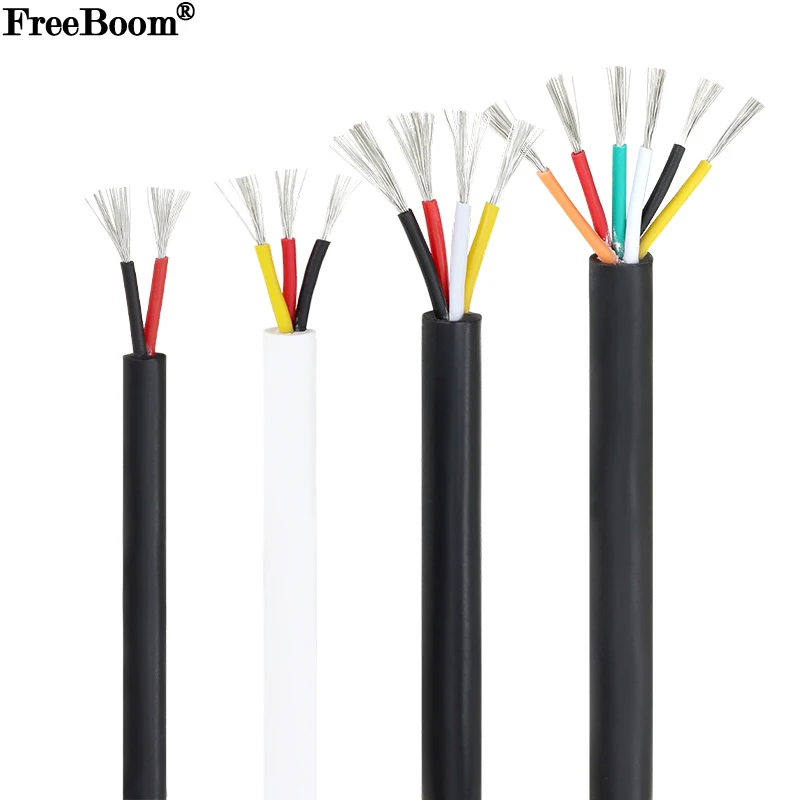
The visible conductors within this multi-core wire are explicitly identified as oxygen-free tinned copper. This material choice is not merely a superficial detail; it directly impacts the wire's performance and longevity. Oxygen-free copper inherently offers superior conductivity compared to standard copper, minimizing signal loss and ensuring efficient power delivery. The tinning process, which coats each individual copper strand with a thin layer of tin, provides a crucial protective barrier.
This tin layer significantly enhances the wire's resistance to oxidation and corrosion. In practical terms, this means connections remain stable over extended periods, even in environments with moderate humidity or exposure to certain chemicals. For soldering applications, tinned copper is a distinct advantage; the tin coating allows for quicker and more reliable solder joints, as it prevents the copper from oxidizing during the heating process, which can lead to 'cold' or brittle connections. This ease of soldering reduces assembly time and improves the overall quality of electrical work.
Compared to bare copper wires, which can tarnish rapidly when exposed to air, tinned copper maintains its solderability and electrical integrity far longer. This characteristic is particularly valuable in repair scenarios where components might be exposed during troubleshooting or in projects requiring future modifications. The initial investment in tinned copper translates into reduced rework and increased reliability for the end application.
The product offers a wide range of American Wire Gauge (AWG) options, from 30 AWG to 14 AWG, coupled with core counts spanning 2 to 10 cores. This extensive selection allows for precise matching of the wire to specific current requirements and signal complexities. A higher AWG number indicates a thinner wire, suitable for low-current signals or data transmission where space is at a premium. Conversely, a lower AWG number denotes a thicker wire, capable of handling higher currents for power delivery without excessive voltage drop or heat generation.
For example, a 30 AWG wire might be ideal for internal wiring of sensitive electronic circuits or sensor connections where minimal current flows. A 14 AWG wire, on the other hand, would be more appropriate for powering small motors, LED strips, or other components that draw more significant current. The availability of multiple cores within a single sheath simplifies cable management, reducing clutter and improving the aesthetic and functional organization of a project. Imagine a clean setup.
Generic wiring solutions often force compromises, either by providing too few cores for a complex signal path or by offering a limited range of gauges. This product's granular options ensure that technicians and hobbyists can select the exact configuration needed, avoiding the inefficiencies of using oversized wire for delicate signals or undersized wire for power, which can lead to overheating or performance degradation. This flexibility is a key differentiator.
The external insulation is constructed from environmentally friendly PVC material. Polyvinyl Chloride (PVC) is a widely recognized and trusted material in electrical applications due to its excellent dielectric properties, meaning it effectively prevents electrical current from escaping the conductors. It also provides good mechanical protection against abrasion, minor impacts, and environmental factors.
This PVC sheathing ensures that the internal tinned copper conductors are protected from external damage and short circuits. The material's flexibility allows for easier routing in tight spaces and around corners, a common challenge in many electronics projects. The specified rated temperature of 80°C indicates its suitability for a broad range of indoor and moderately demanding outdoor applications, ensuring the insulation remains stable and effective under typical operating conditions. It resists cracking.
Compared to cheaper, less robust insulation materials, the use of environmentally friendly PVC suggests a commitment to both performance and a degree of material responsibility. While not designed for extreme high-temperature industrial environments, it offers a reliable and safe solution for the vast majority of consumer electronics, automotive (non-engine bay), and general electrical wiring tasks. The material choice balances cost-effectiveness with necessary protective qualities.
The UL2464 specification indicates a rated voltage of 300V and a rated temperature of 80°C. These ratings are critical for ensuring electrical safety and long-term reliability. The 300V rating means the wire is safely insulated for applications up to this voltage, covering most low-voltage DC and common AC household applications, excluding main power lines. This makes it suitable for internal wiring of appliances, control circuits, and audio systems.
Operating within these specified limits prevents insulation breakdown and conductor overheating, which are common causes of electrical failures. Exceeding the rated voltage can lead to arcing or insulation degradation, while exceeding the rated temperature can cause the PVC to soften, melt, or become brittle, compromising its insulating properties. Adherence to these ratings is non-negotiable for safe operation. Always check your project's requirements.
Many generic wires on the market may lack clear UL certifications or specified ratings, leaving users guessing about their true capabilities. The explicit UL2464 designation provides a clear standard of quality and safety, offering peace of mind that the wire has met recognized industry benchmarks for performance under specified conditions. This transparency is a significant advantage for informed purchasing decisions.
This multi-core wire is marketed for audio and power cable applications, highlighting its versatility. The combination of various gauges and core counts makes it suitable for a multitude of uses. For audio, the tinned copper ensures clean signal transmission, crucial for minimizing interference and maintaining sound fidelity. For power, the appropriate gauge selection prevents voltage drop and ensures efficient energy delivery to components.
Consider a scenario where a custom audio setup requires both signal lines and a low-voltage power supply to an amplifier. A single multi-core cable can neatly bundle these connections, simplifying installation and reducing the number of individual wires running through a system. This integrated approach is particularly beneficial in tight enclosures or when aesthetics are a concern. It streamlines complex wiring.
Unlike single-core wires that necessitate separate runs for each connection, or specialized cables that might be overkill for general purposes, this multi-core solution offers a balanced approach. It provides the flexibility to combine different signal types or power lines within a single, manageable sheath, making it an excellent choice for robotics, custom electronics, LED installations, and even automotive accessory wiring where space and organization are paramount.
The flexibility of the PVC sheathing and the stranded nature of the tinned copper conductors contribute to ease of installation. Stranded wire is inherently more flexible than solid core wire of the same gauge, making it easier to route, bend, and terminate without breaking. This is a critical factor in applications where the wire might experience movement or needs to be installed in confined spaces.
When working with multi-core cables, proper stripping tools are essential to avoid nicking the individual conductors, which can weaken the wire and lead to premature failure. The color-coded insulation on each core simplifies identification, reducing the risk of miswiring, especially in complex circuits with many connections. This visual aid is invaluable for both initial installation and future troubleshooting. Organization is key.
Compared to stiff, poorly insulated wires that resist bending and are difficult to strip cleanly, this UL2464 wire offers a more forgiving and efficient installation experience. The clear color coding, combined with the flexible construction, minimizes frustration and the potential for errors, saving time and ensuring a more professional finish to any project. This directly impacts project timelines.
The choice of oxygen-free tinned copper and durable PVC insulation contributes significantly to the wire's expected lifespan. Tinned copper resists the environmental degradation that can plague bare copper, ensuring that the electrical properties remain stable over many years. The PVC sheathing, while not indestructible, provides adequate protection against common physical stresses and environmental factors encountered in typical applications.
Regular inspection of wiring in any electronic or electrical system is a good practice, especially in environments subject to vibration or temperature fluctuations. While this wire is designed for durability, ensuring that it is not subjected to excessive mechanical stress, sharp bends, or temperatures beyond its rated 80°C will maximize its operational life. Proper cable management, such as using cable ties or conduits, also helps prevent damage. A little care goes a long way.
Unlike uncertified or low-quality wires that may degrade quickly, leading to intermittent failures or safety hazards, this UL2464 compliant wire offers a foundation of reliability. Its construction is geared towards consistent performance, reducing the need for frequent replacements or repairs, thereby offering long-term value for any project it's integrated into. This ensures peace of mind for the user.
Imagine completing a complex electronics project, knowing that the internal wiring is not only meticulously organized but also built to last. The clean signal paths, the secure solder joints, and the robust insulation all contribute to a system that performs reliably day in and day out. This wire simplifies the often-tedious task of electrical connections, allowing you to focus on the functionality and innovation of your creations, rather than worrying about component failure. It empowers you to build with confidence, ensuring your efforts result in stable, long-lasting devices and installations that perform exactly as intended, without the frustration of intermittent faults or premature degradation. The satisfaction of a job well done, underpinned by quality components, is a tangible benefit. You will experience fewer headaches and more successful outcomes, project after project.
Core Conductor Integrity
The visible conductors within this multi-core wire are explicitly identified as oxygen-free tinned copper. This material choice is not merely a superficial detail; it directly impacts the wire's performance and longevity. Oxygen-free copper inherently offers superior conductivity compared to standard copper, minimizing signal loss and ensuring efficient power delivery. The tinning process, which coats each individual copper strand with a thin layer of tin, provides a crucial protective barrier.
This tin layer significantly enhances the wire's resistance to oxidation and corrosion. In practical terms, this means connections remain stable over extended periods, even in environments with moderate humidity or exposure to certain chemicals. For soldering applications, tinned copper is a distinct advantage; the tin coating allows for quicker and more reliable solder joints, as it prevents the copper from oxidizing during the heating process, which can lead to 'cold' or brittle connections. This ease of soldering reduces assembly time and improves the overall quality of electrical work.
Compared to bare copper wires, which can tarnish rapidly when exposed to air, tinned copper maintains its solderability and electrical integrity far longer. This characteristic is particularly valuable in repair scenarios where components might be exposed during troubleshooting or in projects requiring future modifications. The initial investment in tinned copper translates into reduced rework and increased reliability for the end application.
Gauge and Strand Count Precision
The product offers a wide range of American Wire Gauge (AWG) options, from 30 AWG to 14 AWG, coupled with core counts spanning 2 to 10 cores. This extensive selection allows for precise matching of the wire to specific current requirements and signal complexities. A higher AWG number indicates a thinner wire, suitable for low-current signals or data transmission where space is at a premium. Conversely, a lower AWG number denotes a thicker wire, capable of handling higher currents for power delivery without excessive voltage drop or heat generation.
For example, a 30 AWG wire might be ideal for internal wiring of sensitive electronic circuits or sensor connections where minimal current flows. A 14 AWG wire, on the other hand, would be more appropriate for powering small motors, LED strips, or other components that draw more significant current. The availability of multiple cores within a single sheath simplifies cable management, reducing clutter and improving the aesthetic and functional organization of a project. Imagine a clean setup.
Generic wiring solutions often force compromises, either by providing too few cores for a complex signal path or by offering a limited range of gauges. This product's granular options ensure that technicians and hobbyists can select the exact configuration needed, avoiding the inefficiencies of using oversized wire for delicate signals or undersized wire for power, which can lead to overheating or performance degradation. This flexibility is a key differentiator.
Sheathing Resilience
The external insulation is constructed from environmentally friendly PVC material. Polyvinyl Chloride (PVC) is a widely recognized and trusted material in electrical applications due to its excellent dielectric properties, meaning it effectively prevents electrical current from escaping the conductors. It also provides good mechanical protection against abrasion, minor impacts, and environmental factors.
This PVC sheathing ensures that the internal tinned copper conductors are protected from external damage and short circuits. The material's flexibility allows for easier routing in tight spaces and around corners, a common challenge in many electronics projects. The specified rated temperature of 80°C indicates its suitability for a broad range of indoor and moderately demanding outdoor applications, ensuring the insulation remains stable and effective under typical operating conditions. It resists cracking.
Compared to cheaper, less robust insulation materials, the use of environmentally friendly PVC suggests a commitment to both performance and a degree of material responsibility. While not designed for extreme high-temperature industrial environments, it offers a reliable and safe solution for the vast majority of consumer electronics, automotive (non-engine bay), and general electrical wiring tasks. The material choice balances cost-effectiveness with necessary protective qualities.
Voltage and Temperature Ratings
The UL2464 specification indicates a rated voltage of 300V and a rated temperature of 80°C. These ratings are critical for ensuring electrical safety and long-term reliability. The 300V rating means the wire is safely insulated for applications up to this voltage, covering most low-voltage DC and common AC household applications, excluding main power lines. This makes it suitable for internal wiring of appliances, control circuits, and audio systems.
Operating within these specified limits prevents insulation breakdown and conductor overheating, which are common causes of electrical failures. Exceeding the rated voltage can lead to arcing or insulation degradation, while exceeding the rated temperature can cause the PVC to soften, melt, or become brittle, compromising its insulating properties. Adherence to these ratings is non-negotiable for safe operation. Always check your project's requirements.
Many generic wires on the market may lack clear UL certifications or specified ratings, leaving users guessing about their true capabilities. The explicit UL2464 designation provides a clear standard of quality and safety, offering peace of mind that the wire has met recognized industry benchmarks for performance under specified conditions. This transparency is a significant advantage for informed purchasing decisions.
Application Versatility
This multi-core wire is marketed for audio and power cable applications, highlighting its versatility. The combination of various gauges and core counts makes it suitable for a multitude of uses. For audio, the tinned copper ensures clean signal transmission, crucial for minimizing interference and maintaining sound fidelity. For power, the appropriate gauge selection prevents voltage drop and ensures efficient energy delivery to components.
Consider a scenario where a custom audio setup requires both signal lines and a low-voltage power supply to an amplifier. A single multi-core cable can neatly bundle these connections, simplifying installation and reducing the number of individual wires running through a system. This integrated approach is particularly beneficial in tight enclosures or when aesthetics are a concern. It streamlines complex wiring.
Unlike single-core wires that necessitate separate runs for each connection, or specialized cables that might be overkill for general purposes, this multi-core solution offers a balanced approach. It provides the flexibility to combine different signal types or power lines within a single, manageable sheath, making it an excellent choice for robotics, custom electronics, LED installations, and even automotive accessory wiring where space and organization are paramount.
Installation Considerations
The flexibility of the PVC sheathing and the stranded nature of the tinned copper conductors contribute to ease of installation. Stranded wire is inherently more flexible than solid core wire of the same gauge, making it easier to route, bend, and terminate without breaking. This is a critical factor in applications where the wire might experience movement or needs to be installed in confined spaces.
When working with multi-core cables, proper stripping tools are essential to avoid nicking the individual conductors, which can weaken the wire and lead to premature failure. The color-coded insulation on each core simplifies identification, reducing the risk of miswiring, especially in complex circuits with many connections. This visual aid is invaluable for both initial installation and future troubleshooting. Organization is key.
Compared to stiff, poorly insulated wires that resist bending and are difficult to strip cleanly, this UL2464 wire offers a more forgiving and efficient installation experience. The clear color coding, combined with the flexible construction, minimizes frustration and the potential for errors, saving time and ensuring a more professional finish to any project. This directly impacts project timelines.
Longevity and Maintenance
The choice of oxygen-free tinned copper and durable PVC insulation contributes significantly to the wire's expected lifespan. Tinned copper resists the environmental degradation that can plague bare copper, ensuring that the electrical properties remain stable over many years. The PVC sheathing, while not indestructible, provides adequate protection against common physical stresses and environmental factors encountered in typical applications.
Regular inspection of wiring in any electronic or electrical system is a good practice, especially in environments subject to vibration or temperature fluctuations. While this wire is designed for durability, ensuring that it is not subjected to excessive mechanical stress, sharp bends, or temperatures beyond its rated 80°C will maximize its operational life. Proper cable management, such as using cable ties or conduits, also helps prevent damage. A little care goes a long way.
Unlike uncertified or low-quality wires that may degrade quickly, leading to intermittent failures or safety hazards, this UL2464 compliant wire offers a foundation of reliability. Its construction is geared towards consistent performance, reducing the need for frequent replacements or repairs, thereby offering long-term value for any project it's integrated into. This ensures peace of mind for the user.
Imagine completing a complex electronics project, knowing that the internal wiring is not only meticulously organized but also built to last. The clean signal paths, the secure solder joints, and the robust insulation all contribute to a system that performs reliably day in and day out. This wire simplifies the often-tedious task of electrical connections, allowing you to focus on the functionality and innovation of your creations, rather than worrying about component failure. It empowers you to build with confidence, ensuring your efforts result in stable, long-lasting devices and installations that perform exactly as intended, without the frustration of intermittent faults or premature degradation. The satisfaction of a job well done, underpinned by quality components, is a tangible benefit. You will experience fewer headaches and more successful outcomes, project after project.