FPC FFC Flexible Flat Cables (0.5mm Pitch, A/B Type)
Official Store Deal
Expert Analysis Overview
The FPC FFC Flexible Flat Cables are essential interconnect solutions for compact electronic assemblies, offering precise signal transmission in space-constrained environments. These components are critical for maintaining signal integrity and ensuring the long-term reliability of miniaturized devices. Their standardized design facilitates broad compatibility across various electronic platforms.
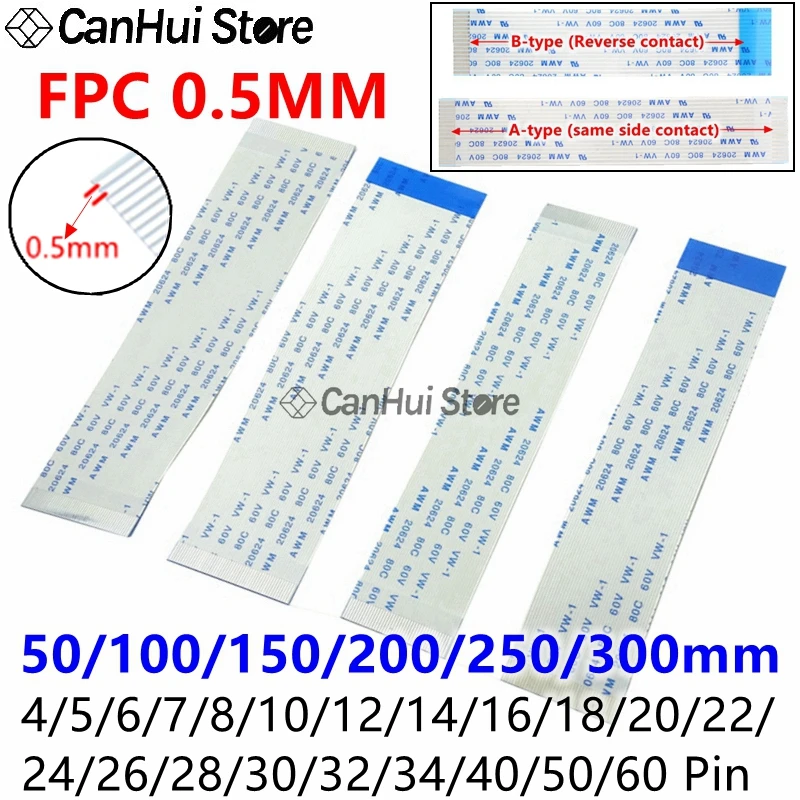
These flexible flat cables (FFC) are specified with a 0.5mm pitch, a common standard in modern compact electronics. This fine pitch allows for a high density of conductors within a minimal footprint, which is indispensable for devices where board space is at a premium. The visual evidence confirms the consistent spacing and clean termination points, crucial for reliable electrical contact.
In practical applications, a 0.5mm pitch cable is often found in laptop displays, optical drives, digital cameras, and other portable consumer electronics. The precise alignment required for such small contacts necessitates careful manufacturing to prevent short circuits or intermittent connections. These cables are designed to meet those stringent requirements, providing a stable electrical pathway.
Compared to traditional round wire bundles, FFCs offer significant advantages in terms of space-saving and flexibility. Their flat profile allows them to be routed in tight enclosures and bent around corners without compromising performance. This makes them a superior choice over bulkier alternatives, especially when designing for miniaturization.
The cables prominently display "AWM 20624 80C 60V VW-1" markings. This designation is a critical indicator of their adherence to recognized safety and performance standards. AWM stands for Appliance Wiring Material, signifying that these cables are manufactured to specific UL (Underwriters Laboratories) standards for internal wiring in appliances.
Specifically, UL Style 20624 indicates a flexible flat cable suitable for internal wiring. The "80C" rating specifies a maximum operating temperature of 80 degrees Celsius, ensuring thermal stability under typical operating conditions. The "60V" rating denotes the maximum voltage the cable is designed to safely handle, preventing insulation breakdown and potential electrical hazards. The "VW-1" rating confirms the cable's compliance with a vertical wire flame test, indicating a degree of flame resistance. This is a crucial safety feature.
Unlike generic, unmarked flexible cables, these FPC/FFC cables feature clear AWM 20624 markings, ensuring adherence to recognized safety and performance standards for reliable electronic integration. This transparency in specification provides a significant advantage, allowing engineers and technicians to integrate these components with confidence, knowing they meet established benchmarks for safety and performance. The visible markings are a clear differentiator.
The product offers both A-type (same side contact) and B-type (reverse contact) configurations. This distinction is fundamental for proper connection in various FFC/FPC connectors. A-type cables have contacts on the same side at both ends, while B-type cables have contacts on opposite sides, effectively providing a 180-degree twist in the connection plane. This versatility is key.
Understanding the contact orientation is paramount during installation. Using the wrong type can lead to non-functional connections or even damage to the cable or connector. The availability of both types within this offering ensures compatibility with a wider range of electronic designs and repair scenarios, reducing the need to source different cable types separately.
Many electronic designs utilize specific connector orientations, making the availability of both A and B types a practical necessity. This contrasts with single-type offerings that might force users to search for alternative suppliers or resort to complex workarounds. The comprehensive selection simplifies procurement and ensures project flexibility.
These cables are available in a wide array of pin counts, ranging from 4-pin to 60-pin configurations. This extensive selection covers the vast majority of common FFC/FPC applications, from simple power or data lines to complex display interfaces. The variety is impressive.
For instance, a 4-pin cable might be suitable for basic sensor connections or power delivery, while a 60-pin cable could handle high-bandwidth video signals for a laptop display. This broad spectrum of options means that designers and repair technicians can find the exact cable needed for their specific application without compromise. The right pin count is vital.
Furthermore, the available lengths—50mm, 100mm, 150mm, 200mm, 250mm, and 300mm—provide flexibility for routing within enclosures of varying sizes. This eliminates the need for custom cable fabrication in many cases, saving time and cost. The ability to select the precise length minimizes excess cable, improving airflow and reducing electromagnetic interference within compact devices. This range of options surpasses many standard offerings.
While the specific material composition is not explicitly detailed beyond the AWM rating, the visual appearance suggests a standard flexible polymer substrate with copper conductors. The flexibility inherent in FFCs is a key characteristic, allowing them to withstand repeated bending cycles without conductor fatigue, within reasonable limits. The construction appears robust.
For applications involving dynamic movement, such as hinges in clamshell devices, the durability of the flexible material is paramount. The AWM 20624 rating implies a certain level of material integrity and manufacturing quality, suggesting these cables are designed for a reasonable service life under their specified conditions. Proper handling extends life.
Compared to rigid PCB traces or traditional wire harnesses, FFCs are inherently more resistant to vibration and mechanical stress in certain axes. Their uniform construction and thin profile contribute to a predictable mechanical performance, making them a reliable choice for internal connections in portable and consumer electronics. This design choice offers distinct advantages.
Installation of FFCs requires careful attention to detail, particularly with the 0.5mm pitch. The cables are designed to be inserted into zero insertion force (ZIF) or low insertion force (LIF) connectors. Proper alignment and gentle insertion are critical to avoid bending or damaging the delicate contacts. Precision is key.
Compatibility is primarily determined by the pitch, pin count, and A/B type. Verifying these parameters against the existing connector or design specifications is essential before purchase and installation. The standardized nature of FFCs generally ensures broad compatibility within the 0.5mm pitch ecosystem, provided the other parameters match.
This ease of integration, coupled with the wide range of configurations, makes these cables a practical choice for both original equipment manufacturing and aftermarket repairs. They offer a standardized solution that simplifies the design and maintenance process, reducing potential compatibility headaches often associated with proprietary connectors. The standardized approach is beneficial.
Imagine a device operating flawlessly, free from intermittent connection issues, thanks to these reliable cables. The precise signal transmission and robust construction ensure that your electronic projects and repairs achieve optimal performance and longevity. These cables provide the foundational reliability for complex electronic systems, allowing for seamless operation and peace of mind.
Precision Interconnection Engineering
These flexible flat cables (FFC) are specified with a 0.5mm pitch, a common standard in modern compact electronics. This fine pitch allows for a high density of conductors within a minimal footprint, which is indispensable for devices where board space is at a premium. The visual evidence confirms the consistent spacing and clean termination points, crucial for reliable electrical contact.
In practical applications, a 0.5mm pitch cable is often found in laptop displays, optical drives, digital cameras, and other portable consumer electronics. The precise alignment required for such small contacts necessitates careful manufacturing to prevent short circuits or intermittent connections. These cables are designed to meet those stringent requirements, providing a stable electrical pathway.
Compared to traditional round wire bundles, FFCs offer significant advantages in terms of space-saving and flexibility. Their flat profile allows them to be routed in tight enclosures and bent around corners without compromising performance. This makes them a superior choice over bulkier alternatives, especially when designing for miniaturization.
Electrical Integrity and Safety Standards
The cables prominently display "AWM 20624 80C 60V VW-1" markings. This designation is a critical indicator of their adherence to recognized safety and performance standards. AWM stands for Appliance Wiring Material, signifying that these cables are manufactured to specific UL (Underwriters Laboratories) standards for internal wiring in appliances.
Specifically, UL Style 20624 indicates a flexible flat cable suitable for internal wiring. The "80C" rating specifies a maximum operating temperature of 80 degrees Celsius, ensuring thermal stability under typical operating conditions. The "60V" rating denotes the maximum voltage the cable is designed to safely handle, preventing insulation breakdown and potential electrical hazards. The "VW-1" rating confirms the cable's compliance with a vertical wire flame test, indicating a degree of flame resistance. This is a crucial safety feature.
Unlike generic, unmarked flexible cables, these FPC/FFC cables feature clear AWM 20624 markings, ensuring adherence to recognized safety and performance standards for reliable electronic integration. This transparency in specification provides a significant advantage, allowing engineers and technicians to integrate these components with confidence, knowing they meet established benchmarks for safety and performance. The visible markings are a clear differentiator.
Versatility in Configuration
The product offers both A-type (same side contact) and B-type (reverse contact) configurations. This distinction is fundamental for proper connection in various FFC/FPC connectors. A-type cables have contacts on the same side at both ends, while B-type cables have contacts on opposite sides, effectively providing a 180-degree twist in the connection plane. This versatility is key.
Understanding the contact orientation is paramount during installation. Using the wrong type can lead to non-functional connections or even damage to the cable or connector. The availability of both types within this offering ensures compatibility with a wider range of electronic designs and repair scenarios, reducing the need to source different cable types separately.
Many electronic designs utilize specific connector orientations, making the availability of both A and B types a practical necessity. This contrasts with single-type offerings that might force users to search for alternative suppliers or resort to complex workarounds. The comprehensive selection simplifies procurement and ensures project flexibility.
Extensive Pin Count and Length Options
These cables are available in a wide array of pin counts, ranging from 4-pin to 60-pin configurations. This extensive selection covers the vast majority of common FFC/FPC applications, from simple power or data lines to complex display interfaces. The variety is impressive.
For instance, a 4-pin cable might be suitable for basic sensor connections or power delivery, while a 60-pin cable could handle high-bandwidth video signals for a laptop display. This broad spectrum of options means that designers and repair technicians can find the exact cable needed for their specific application without compromise. The right pin count is vital.
Furthermore, the available lengths—50mm, 100mm, 150mm, 200mm, 250mm, and 300mm—provide flexibility for routing within enclosures of varying sizes. This eliminates the need for custom cable fabrication in many cases, saving time and cost. The ability to select the precise length minimizes excess cable, improving airflow and reducing electromagnetic interference within compact devices. This range of options surpasses many standard offerings.
Material Quality and Durability Considerations
While the specific material composition is not explicitly detailed beyond the AWM rating, the visual appearance suggests a standard flexible polymer substrate with copper conductors. The flexibility inherent in FFCs is a key characteristic, allowing them to withstand repeated bending cycles without conductor fatigue, within reasonable limits. The construction appears robust.
For applications involving dynamic movement, such as hinges in clamshell devices, the durability of the flexible material is paramount. The AWM 20624 rating implies a certain level of material integrity and manufacturing quality, suggesting these cables are designed for a reasonable service life under their specified conditions. Proper handling extends life.
Compared to rigid PCB traces or traditional wire harnesses, FFCs are inherently more resistant to vibration and mechanical stress in certain axes. Their uniform construction and thin profile contribute to a predictable mechanical performance, making them a reliable choice for internal connections in portable and consumer electronics. This design choice offers distinct advantages.
Installation and Compatibility
Installation of FFCs requires careful attention to detail, particularly with the 0.5mm pitch. The cables are designed to be inserted into zero insertion force (ZIF) or low insertion force (LIF) connectors. Proper alignment and gentle insertion are critical to avoid bending or damaging the delicate contacts. Precision is key.
Compatibility is primarily determined by the pitch, pin count, and A/B type. Verifying these parameters against the existing connector or design specifications is essential before purchase and installation. The standardized nature of FFCs generally ensures broad compatibility within the 0.5mm pitch ecosystem, provided the other parameters match.
This ease of integration, coupled with the wide range of configurations, makes these cables a practical choice for both original equipment manufacturing and aftermarket repairs. They offer a standardized solution that simplifies the design and maintenance process, reducing potential compatibility headaches often associated with proprietary connectors. The standardized approach is beneficial.
Imagine a device operating flawlessly, free from intermittent connection issues, thanks to these reliable cables. The precise signal transmission and robust construction ensure that your electronic projects and repairs achieve optimal performance and longevity. These cables provide the foundational reliability for complex electronic systems, allowing for seamless operation and peace of mind.