FPC/FFC Adapter Board 0.5mm to 2.54mm Pitch Converter
Official Store Deal
Expert Analysis Overview
The FPC/FFC Adapter Board is an essential micro-electronics component, critically bridging fine-pitch Flexible Printed Circuit (FPC) and Flexible Flat Cable (FFC) interfaces to standard 2.54mm prototyping environments. This board is designed for electronics repair technicians and embedded system developers who require precise, reliable connections for delicate ribbon cables.
This adapter board facilitates the conversion from a 0.5mm pitch FPC/FFC connector to a more common 2.54mm (0.1-inch) pin header pitch. FPC and FFC cables are ubiquitous in modern compact electronics, connecting displays, touchpads, and various sub-assemblies within tight enclosures. Direct manipulation of these fine-pitch cables for prototyping or repair is often impractical and risky.
The 0.5mm pitch represents a significant miniaturization. Standard breadboards and many development modules utilize a 2.54mm pitch. This board acts as a crucial translator. It simplifies complex connections.
Unlike attempting to solder directly to an FPC cable, which can easily damage the delicate traces or the cable itself, these adapter boards provide a robust intermediate solution. The pre-soldered FPC/FFC connector ensures a secure mechanical and electrical bond, mitigating common failure points associated with manual fine-pitch soldering.
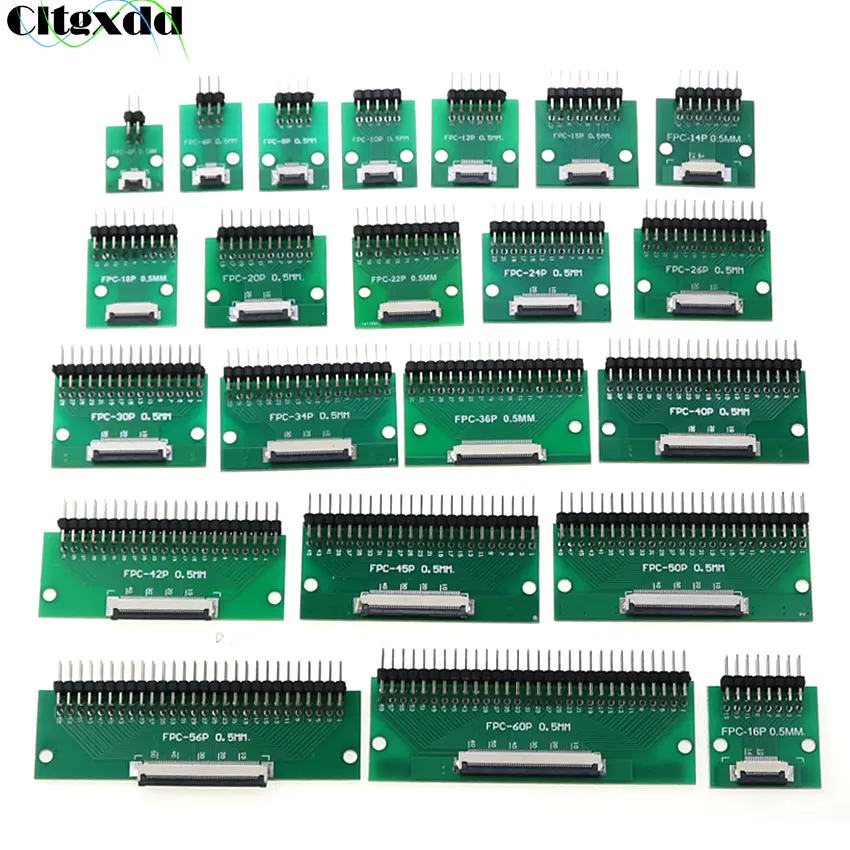
The adapter boards are constructed from a FR-4 fiberglass reinforced epoxy laminate, identifiable by the characteristic green solder mask. This material choice provides excellent electrical insulation and mechanical stability, crucial for repeated handling in a workshop environment.
Visible solder joints for the FPC/FFC connector appear clean and well-formed. Proper soldering is paramount. This indicates a manufacturing process focused on connection reliability.
The through-hole pads for the 2.54mm pin headers are generously sized. This design choice simplifies the subsequent soldering of standard male or female headers by the user, reducing the risk of cold joints or solder bridges. The board's compact footprint also minimizes signal path length, which is beneficial for maintaining signal integrity.
A comprehensive range of pin counts is available, spanning from 4-pin up to 36-pin configurations. This broad selection ensures compatibility with a vast array of FPC/FFC cables found in consumer electronics, industrial equipment, and custom projects.
Having multiple pin count options eliminates the need for custom PCB fabrication for each specific FPC cable. This saves significant time. It also reduces costs in both development and repair scenarios.
Compared to generic adapter solutions that might offer only a few common pin counts, this product's extensive range provides unparalleled flexibility. Technicians can stock a single type of adapter board, confident it will meet most FPC/FFC interfacing needs.
The PCB traces connecting the FPC/FFC connector to the 2.54mm pin headers are short and direct. This minimalist routing design is critical for preserving signal integrity, especially when dealing with high-frequency data lines or sensitive analog signals.
Clean signal transmission is vital. Any impedance mismatch or excessive trace length can introduce noise. This can lead to data corruption or unreliable operation in the connected device.
Unlike improvised wiring solutions that often suffer from signal degradation due to varying wire lengths and poor shielding, these adapter boards offer a controlled signal environment. The consistent trace widths and direct paths minimize parasitic capacitance and inductance, ensuring that signals arrive at their destination as intended.
In a scenario where a laptop screen's FPC cable needs to be tested or a broken connector on a motherboard requires a temporary bypass, these adapter boards become indispensable. They allow for easy connection to diagnostic equipment or custom test jigs.
For embedded system developers, these boards enable rapid prototyping with components that utilize FPC interfaces, such as small LCDs, camera modules, or custom sensor arrays. Development cycles shorten significantly. This accelerates project timelines.
Imagine debugging a new touchscreen interface for a custom device. Without these adapters, connecting the fine-pitch display cable to a microcontroller development board would be a tedious and error-prone task. These boards streamline the process, allowing engineers to focus on functionality rather than intricate wiring.
Installation of the adapter board typically involves soldering the user's choice of 2.54mm pin headers (male or female) into the provided through-holes. The board's clear silkscreen markings indicate pin numbering, simplifying correct orientation and connection.
Careful attention to soldering technique for the pin headers is recommended. A well-ventilated workspace is important. Use appropriate soldering tools.
Once the headers are soldered, the board integrates seamlessly into breadboards, perfboards, or custom PCBs. The dual mounting holes visible on many variants allow for secure mechanical fastening, preventing accidental disconnections during testing or operation.
The robust FR-4 construction and quality soldering imply a high degree of durability. These boards are designed for repeated use in a laboratory or repair shop setting, making them a cost-effective investment for professionals.
Repeated insertion and removal of FPC/FFC cables into the connector should be performed with care. The FPC/FFC connector's latching mechanism is delicate. However, the board itself is built to withstand general handling.
Unlike cheaper, flimsy prototyping boards that might warp or delaminate over time, these adapters present a professional-grade solution. Their longevity contributes to a lower total cost of ownership, making them a smart choice for continuous use.
These FPC/FFC adapter boards represent a practical and reliable solution for interfacing fine-pitch flexible cables with standard prototyping and repair setups. Their wide range of pin counts, robust construction, and focus on signal integrity make them an invaluable tool for any electronics technician or developer. The ability to quickly and safely connect delicate FPC cables to standard 2.54mm pitch systems dramatically streamlines debugging, testing, and development processes. Imagine the efficiency gained when you can effortlessly integrate a new display or sensor into your project, knowing the connection is stable and reliable. This capability saves both time and prevents potential damage to sensitive components, ultimately enhancing productivity and the success rate of complex electronic endeavors. This is an indispensable tool for modern electronics work.
Precision Interfacing Capabilities
This adapter board facilitates the conversion from a 0.5mm pitch FPC/FFC connector to a more common 2.54mm (0.1-inch) pin header pitch. FPC and FFC cables are ubiquitous in modern compact electronics, connecting displays, touchpads, and various sub-assemblies within tight enclosures. Direct manipulation of these fine-pitch cables for prototyping or repair is often impractical and risky.
The 0.5mm pitch represents a significant miniaturization. Standard breadboards and many development modules utilize a 2.54mm pitch. This board acts as a crucial translator. It simplifies complex connections.
Unlike attempting to solder directly to an FPC cable, which can easily damage the delicate traces or the cable itself, these adapter boards provide a robust intermediate solution. The pre-soldered FPC/FFC connector ensures a secure mechanical and electrical bond, mitigating common failure points associated with manual fine-pitch soldering.
Construction and Material Integrity
The adapter boards are constructed from a FR-4 fiberglass reinforced epoxy laminate, identifiable by the characteristic green solder mask. This material choice provides excellent electrical insulation and mechanical stability, crucial for repeated handling in a workshop environment.
Visible solder joints for the FPC/FFC connector appear clean and well-formed. Proper soldering is paramount. This indicates a manufacturing process focused on connection reliability.
The through-hole pads for the 2.54mm pin headers are generously sized. This design choice simplifies the subsequent soldering of standard male or female headers by the user, reducing the risk of cold joints or solder bridges. The board's compact footprint also minimizes signal path length, which is beneficial for maintaining signal integrity.
Versatility Across Pin Configurations
A comprehensive range of pin counts is available, spanning from 4-pin up to 36-pin configurations. This broad selection ensures compatibility with a vast array of FPC/FFC cables found in consumer electronics, industrial equipment, and custom projects.
Having multiple pin count options eliminates the need for custom PCB fabrication for each specific FPC cable. This saves significant time. It also reduces costs in both development and repair scenarios.
Compared to generic adapter solutions that might offer only a few common pin counts, this product's extensive range provides unparalleled flexibility. Technicians can stock a single type of adapter board, confident it will meet most FPC/FFC interfacing needs.
Signal Path Reliability
The PCB traces connecting the FPC/FFC connector to the 2.54mm pin headers are short and direct. This minimalist routing design is critical for preserving signal integrity, especially when dealing with high-frequency data lines or sensitive analog signals.
Clean signal transmission is vital. Any impedance mismatch or excessive trace length can introduce noise. This can lead to data corruption or unreliable operation in the connected device.
Unlike improvised wiring solutions that often suffer from signal degradation due to varying wire lengths and poor shielding, these adapter boards offer a controlled signal environment. The consistent trace widths and direct paths minimize parasitic capacitance and inductance, ensuring that signals arrive at their destination as intended.
Application Scenarios in Repair and Development
In a scenario where a laptop screen's FPC cable needs to be tested or a broken connector on a motherboard requires a temporary bypass, these adapter boards become indispensable. They allow for easy connection to diagnostic equipment or custom test jigs.
For embedded system developers, these boards enable rapid prototyping with components that utilize FPC interfaces, such as small LCDs, camera modules, or custom sensor arrays. Development cycles shorten significantly. This accelerates project timelines.
Imagine debugging a new touchscreen interface for a custom device. Without these adapters, connecting the fine-pitch display cable to a microcontroller development board would be a tedious and error-prone task. These boards streamline the process, allowing engineers to focus on functionality rather than intricate wiring.
Installation and Integration Considerations
Installation of the adapter board typically involves soldering the user's choice of 2.54mm pin headers (male or female) into the provided through-holes. The board's clear silkscreen markings indicate pin numbering, simplifying correct orientation and connection.
Careful attention to soldering technique for the pin headers is recommended. A well-ventilated workspace is important. Use appropriate soldering tools.
Once the headers are soldered, the board integrates seamlessly into breadboards, perfboards, or custom PCBs. The dual mounting holes visible on many variants allow for secure mechanical fastening, preventing accidental disconnections during testing or operation.
Long-Term Durability and Reusability
The robust FR-4 construction and quality soldering imply a high degree of durability. These boards are designed for repeated use in a laboratory or repair shop setting, making them a cost-effective investment for professionals.
Repeated insertion and removal of FPC/FFC cables into the connector should be performed with care. The FPC/FFC connector's latching mechanism is delicate. However, the board itself is built to withstand general handling.
Unlike cheaper, flimsy prototyping boards that might warp or delaminate over time, these adapters present a professional-grade solution. Their longevity contributes to a lower total cost of ownership, making them a smart choice for continuous use.
Final Assessment
These FPC/FFC adapter boards represent a practical and reliable solution for interfacing fine-pitch flexible cables with standard prototyping and repair setups. Their wide range of pin counts, robust construction, and focus on signal integrity make them an invaluable tool for any electronics technician or developer. The ability to quickly and safely connect delicate FPC cables to standard 2.54mm pitch systems dramatically streamlines debugging, testing, and development processes. Imagine the efficiency gained when you can effortlessly integrate a new display or sensor into your project, knowing the connection is stable and reliable. This capability saves both time and prevents potential damage to sensitive components, ultimately enhancing productivity and the success rate of complex electronic endeavors. This is an indispensable tool for modern electronics work.