FNIRSI HS02A 3D Hot Melt Nut Insertion Kit
Official Store Deal
Expert Analysis Overview
The FNIRSI HS02A 3D Hot Melt Nut Insertion Kit is a specialized thermal tooling solution engineered for precision embedding of threaded inserts into 3D printed components, offering a refined alternative to traditional post-processing methods. This kit moves beyond simple fastening, allowing creators to integrate robust, reusable threads directly into plastic structures with artistic finesse.
This specialized kit addresses the common challenge of creating durable threaded connections in 3D printed parts. Flimsy printed threads often fail under stress. The HS02A provides a clean, reliable method to embed brass nuts, significantly enhancing structural integrity.
It ensures a flush, professional finish every time. Unlike relying on basic soldering iron tips that deform plastic and create uneven seating, the HS02A's precision-machined tips ensure consistent heat transfer and perfectly flush insert placement. This dedicated approach prevents material distortion around the insert, maintaining the aesthetic integrity of the printed object.
Compared to merely screwing into plastic or using epoxy, thermal insertion offers superior pull-out strength and resistance to stripping, making assemblies far more dependable. This is a critical upgrade for any serious 3D printing enthusiast or professional.
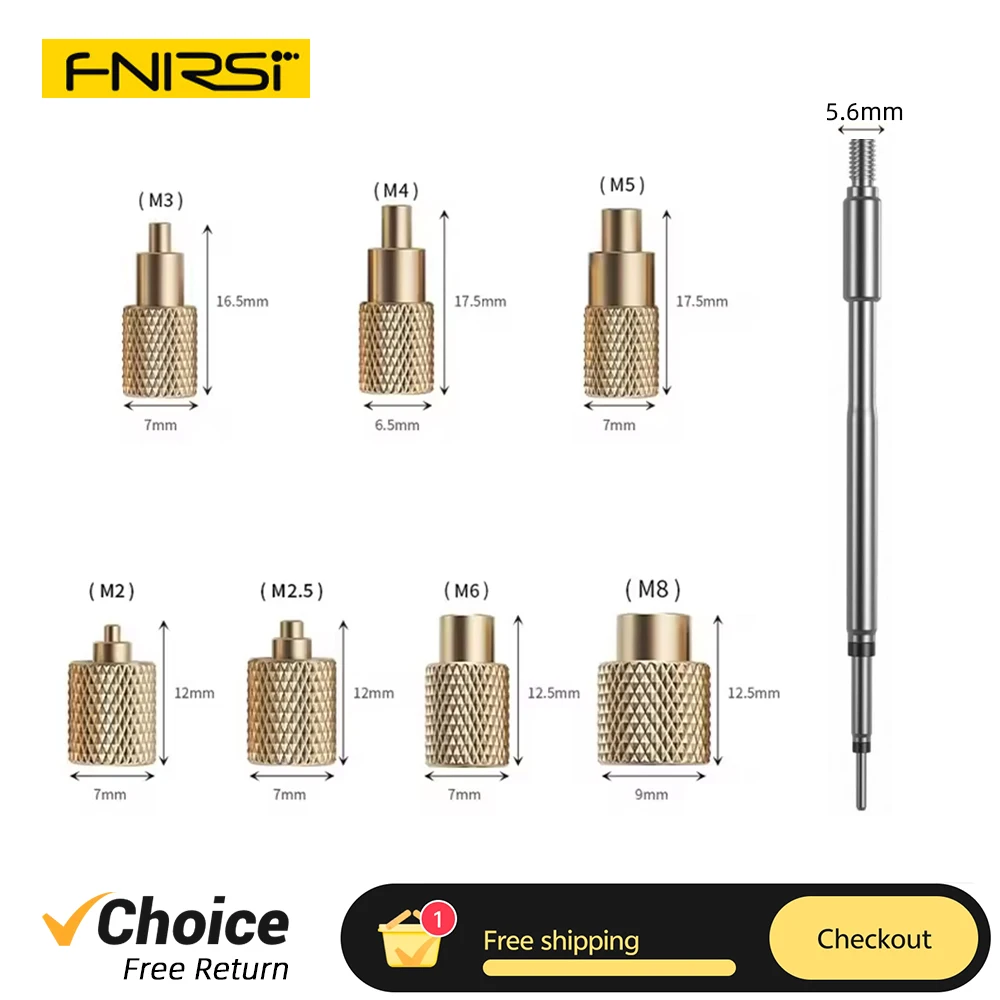
The kit prominently features a set of knurled brass hot melt nut tips, ranging from M2 to M8. Brass is an excellent choice for thermal tips due to its superior thermal conductivity and heat retention properties. This material ensures that heat is transferred efficiently and evenly to the nut, allowing for controlled melting of the surrounding plastic.
Each tip is precision-machined. The knurled surface of the tips is designed to press against the knurling of the brass insert, ensuring maximum contact and efficient heat transfer. This small detail prevents the nut from spinning on the tip during insertion, a common frustration with generic tools.
These tips attach to a standard soldering iron, transforming it into a dedicated nut insertion tool. The modular design is practical. The main shaft measures 97mm in length with a 5.6mm diameter, providing sufficient reach and stability for various applications.
Effective heat management is paramount for successful hot melt nut insertion. The HS02A tips, when paired with a temperature-controlled soldering iron, allow for precise control over the melting process. This prevents overheating the plastic, which can lead to unsightly discoloration or structural weakening.
Different plastics, such as PLA, ABS, PETG, and Nylon, require varying temperatures for optimal melting. The thermal mass of the brass tips helps to maintain a consistent temperature during insertion, even when encountering thicker sections of plastic. This consistency is key to a clean, strong bond.
Compared to an unregulated heat source, the controlled heating provided by these tips minimizes material stress and ensures that the plastic flows smoothly around the insert. This creates a homogeneous bond that is both strong and visually appealing.
The brass construction of these tips provides exceptional durability. Brass resists wear and tear much better than softer metals or coated alternatives commonly found on cheaper soldering iron tips. This means a longer lifespan for the tools, even with frequent use.
Regular cleaning of the tips is straightforward. The smooth, machined surfaces are easy to wipe free of residual plastic, maintaining optimal performance over time. This extends the life of the tips considerably.
Unlike lower-quality tips that might deform or pit after repeated heating cycles, these brass tips are built to withstand the rigors of thermal insertion. They represent a long-term investment for any maker or workshop.
The comprehensive range of tip sizes, from M2 to M8, offers significant versatility. This covers the most common metric screw and bolt sizes used in 3D printing projects. Users can tackle a wide array of assembly requirements.
Whether constructing intricate enclosures, assembling robotic components, or creating custom jigs and fixtures, the appropriate tip size is readily available. This eliminates the need for multiple specialized tools.
This versatility extends to various project types, from hobbyist endeavors to more demanding prototypes and functional parts. The kit allows for seamless integration of hardware into designs, opening up new possibilities for structural complexity and repairability.
The FNIRSI HS02A kit represents a significant value proposition. For a relatively modest investment, users gain a specialized toolset that dramatically improves the quality and durability of their 3D printed assemblies. This kit reduces wasted prints.
By ensuring strong, reliable threaded connections, it minimizes the need for rework and component replacement. This saves both time and expensive filament. The precision results translate directly into a higher perceived value for finished products.
Considering the potential for failed prints and the frustration of weak connections, the efficiency and quality gained from this kit quickly outweigh its initial cost. It is an indispensable tool for achieving professional-grade results in 3D printing.
Imagine the satisfaction of assembling a complex 3D printed mechanism where every threaded connection feels solid, secure, and perfectly flush. Picture prototypes that hold up to rigorous testing, or custom enclosures that assemble with the confidence of injection-molded parts. This kit empowers creators to build with unparalleled strength and aesthetic precision, transforming ambitious designs into robust, functional realities that stand the test of time.
Crafting Precision: The HS02A's Role in 3D Printing Aesthetics
This specialized kit addresses the common challenge of creating durable threaded connections in 3D printed parts. Flimsy printed threads often fail under stress. The HS02A provides a clean, reliable method to embed brass nuts, significantly enhancing structural integrity.
It ensures a flush, professional finish every time. Unlike relying on basic soldering iron tips that deform plastic and create uneven seating, the HS02A's precision-machined tips ensure consistent heat transfer and perfectly flush insert placement. This dedicated approach prevents material distortion around the insert, maintaining the aesthetic integrity of the printed object.
Compared to merely screwing into plastic or using epoxy, thermal insertion offers superior pull-out strength and resistance to stripping, making assemblies far more dependable. This is a critical upgrade for any serious 3D printing enthusiast or professional.
The Art of Thermal Integration: Design and Materiality
The kit prominently features a set of knurled brass hot melt nut tips, ranging from M2 to M8. Brass is an excellent choice for thermal tips due to its superior thermal conductivity and heat retention properties. This material ensures that heat is transferred efficiently and evenly to the nut, allowing for controlled melting of the surrounding plastic.
Each tip is precision-machined. The knurled surface of the tips is designed to press against the knurling of the brass insert, ensuring maximum contact and efficient heat transfer. This small detail prevents the nut from spinning on the tip during insertion, a common frustration with generic tools.
These tips attach to a standard soldering iron, transforming it into a dedicated nut insertion tool. The modular design is practical. The main shaft measures 97mm in length with a 5.6mm diameter, providing sufficient reach and stability for various applications.
Orchestrating Heat: Performance and Control
Effective heat management is paramount for successful hot melt nut insertion. The HS02A tips, when paired with a temperature-controlled soldering iron, allow for precise control over the melting process. This prevents overheating the plastic, which can lead to unsightly discoloration or structural weakening.
Different plastics, such as PLA, ABS, PETG, and Nylon, require varying temperatures for optimal melting. The thermal mass of the brass tips helps to maintain a consistent temperature during insertion, even when encountering thicker sections of plastic. This consistency is key to a clean, strong bond.
Compared to an unregulated heat source, the controlled heating provided by these tips minimizes material stress and ensures that the plastic flows smoothly around the insert. This creates a homogeneous bond that is both strong and visually appealing.
Beyond the Surface: Durability and Longevity
The brass construction of these tips provides exceptional durability. Brass resists wear and tear much better than softer metals or coated alternatives commonly found on cheaper soldering iron tips. This means a longer lifespan for the tools, even with frequent use.
Regular cleaning of the tips is straightforward. The smooth, machined surfaces are easy to wipe free of residual plastic, maintaining optimal performance over time. This extends the life of the tips considerably.
Unlike lower-quality tips that might deform or pit after repeated heating cycles, these brass tips are built to withstand the rigors of thermal insertion. They represent a long-term investment for any maker or workshop.
Sculpting Functionality: Versatility in Application
The comprehensive range of tip sizes, from M2 to M8, offers significant versatility. This covers the most common metric screw and bolt sizes used in 3D printing projects. Users can tackle a wide array of assembly requirements.
Whether constructing intricate enclosures, assembling robotic components, or creating custom jigs and fixtures, the appropriate tip size is readily available. This eliminates the need for multiple specialized tools.
This versatility extends to various project types, from hobbyist endeavors to more demanding prototypes and functional parts. The kit allows for seamless integration of hardware into designs, opening up new possibilities for structural complexity and repairability.
The Investment in Excellence: Value and Practicality
The FNIRSI HS02A kit represents a significant value proposition. For a relatively modest investment, users gain a specialized toolset that dramatically improves the quality and durability of their 3D printed assemblies. This kit reduces wasted prints.
By ensuring strong, reliable threaded connections, it minimizes the need for rework and component replacement. This saves both time and expensive filament. The precision results translate directly into a higher perceived value for finished products.
Considering the potential for failed prints and the frustration of weak connections, the efficiency and quality gained from this kit quickly outweigh its initial cost. It is an indispensable tool for achieving professional-grade results in 3D printing.
Imagine the satisfaction of assembling a complex 3D printed mechanism where every threaded connection feels solid, secure, and perfectly flush. Picture prototypes that hold up to rigorous testing, or custom enclosures that assemble with the confidence of injection-molded parts. This kit empowers creators to build with unparalleled strength and aesthetic precision, transforming ambitious designs into robust, functional realities that stand the test of time.