Flashforge Adventurer 5M 3D Printer
Official Store Deal
Expert Analysis Overview
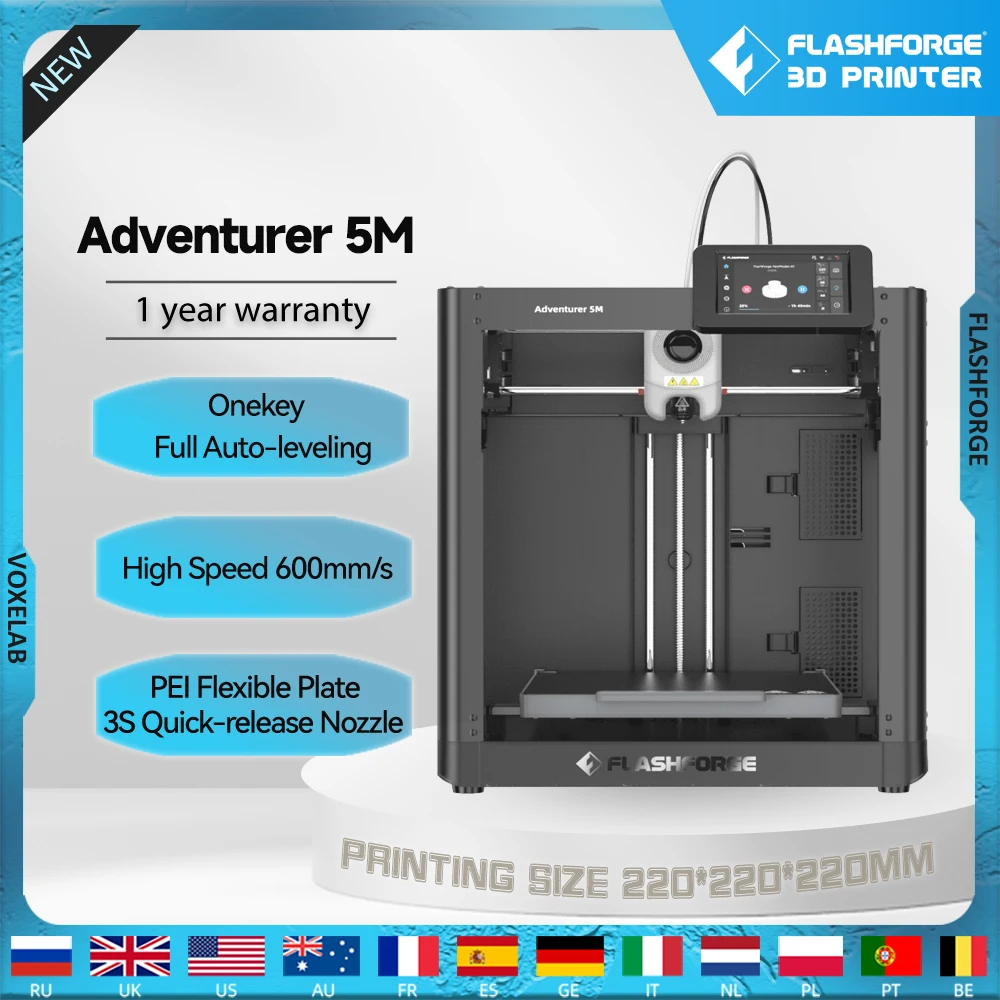
The Flashforge Adventurer 5M 3D Printer is a highly capable and user-friendly additive manufacturing tool, specifically designed for makers who prioritize rapid prototyping and consistent print quality without extensive manual calibration. This machine clearly targets enthusiasts and small businesses seeking to accelerate their production workflow while maintaining a high degree of print fidelity. Its feature set suggests a strong emphasis on ease of use, making it accessible even for those relatively new to high-speed 3D printing, yet robust enough for experienced users to appreciate.
The Adventurer 5M incorporates a direct extruder system. This design choice is fundamental. Direct extrusion places the motor directly above the hotend, pushing filament through a much shorter path than a Bowden setup.
This proximity means significantly better control over filament flow, especially critical for flexible materials like TPU. Users experience fewer clogs and more consistent extrusion, leading to cleaner prints. It handles a wider range of materials.
Compared to Bowden extruders common in many entry-level printers, the direct drive minimizes retraction issues and stringing. It is a noticeable improvement for print quality and reliability.
One of the standout features is the one-key full auto-leveling system. This completely automates the bed leveling process. Manual calibration is a common pain point for many 3D printer users.
For a maker, this means less time fiddling with paper tests and more time designing and printing. The printer handles the intricate measurements itself. First layers are consistently perfect.
Many printers, even mid-range models, still require some degree of manual intervention for bed leveling. The Adventurer 5M's fully automated approach sets a high standard for user convenience, eliminating a significant barrier to entry.
The printer utilizes a flexible PEI plate as its build surface. PEI (Polyetherimide) is known for its excellent adhesion properties when heated.
Once a print cools, the flexible nature of the plate allows users to simply bend it, causing the printed object to pop off with minimal effort. This prevents damage to delicate prints and reduces the need for scrapers.
Traditional rigid build plates often require considerable force or tools for print removal, sometimes leading to warped prints or scratched surfaces. The PEI flexible plate offers a much gentler and more efficient removal process.
A maximum extruder speed of 600mm/s is advertised for the Adventurer 5M. This is an exceptionally high speed for a consumer-grade 3D printer.
Such high speeds translate directly into significantly reduced print times, allowing for rapid iteration of designs and quicker project completion. Complex parts finish in a fraction of the time.
Many standard desktop 3D printers typically operate in the 50-150mm/s range. The Adventurer 5M pushes the boundaries, offering a speed profile that rivals much more expensive professional machines, making it a strong contender for those needing fast output.
For the tinkerer, the Adventurer 5M presents a compelling platform. While the core machine offers advanced features out of the box, the nature of 3D printing often invites modification. The underlying architecture and software, potentially based on Klipper firmware given its speed capabilities, often allow for deep customization.
Community forums and online groups for Flashforge printers are typically active, providing a rich resource for users looking to optimize their machines. Sharing custom profiles, discussing firmware tweaks, and showcasing hardware upgrades are common activities. This collective knowledge base can significantly enhance the printer's long-term utility. Users can find solutions to unique printing challenges or discover ways to push the printer's limits beyond factory settings.
Compared to closed-ecosystem machines, the Adventurer 5M's likely compatibility with standard G-code and common slicers (like Cura or PrusaSlicer via profiles) means a maker is not locked into proprietary software. This flexibility is crucial for experimenting with new features, testing different slicer algorithms, or integrating the printer into a custom smart workshop setup. The ability to modify and adapt the machine ensures it remains relevant as new printing techniques and materials emerge, truly making it a long-term investment for the curious mind.
The quick-release nozzle system, advertised with a 3-second change time, is a significant advantage for hardware modification. This design makes swapping out nozzles for different materials or print resolutions incredibly easy.
This simple upgrade path allows users to quickly adapt the printer for various tasks, from fine detail work with a 0.25mm nozzle to rapid, rough prototypes with a 0.8mm nozzle. It's a pragmatic approach to versatility.
Many printers require tools, heating, and careful handling to swap nozzles, a process that can be time-consuming and risks damage. The Adventurer 5M's system simplifies this, encouraging experimentation with different nozzle sizes and types without hassle.
The inclusion of power loss recovery is a critical, often overlooked, feature. An unexpected power outage during a long print can lead to hours of wasted material and time.
This functionality allows the printer to resume a print from where it left off after power is restored. It mitigates the risk of failed prints due to electrical interruptions. This saves significant filament and time.
Many budget printers lack this essential feature, making them less suitable for unattended long prints. The Adventurer 5M's integration of power loss recovery provides a layer of security and peace of mind for users, especially when printing large, multi-hour projects.
The visual information suggests a well-integrated control panel, likely a touchscreen, for intuitive operation. The
Precision in Motion: The Core Mechanics
The Adventurer 5M incorporates a direct extruder system. This design choice is fundamental. Direct extrusion places the motor directly above the hotend, pushing filament through a much shorter path than a Bowden setup.
This proximity means significantly better control over filament flow, especially critical for flexible materials like TPU. Users experience fewer clogs and more consistent extrusion, leading to cleaner prints. It handles a wider range of materials.
Compared to Bowden extruders common in many entry-level printers, the direct drive minimizes retraction issues and stringing. It is a noticeable improvement for print quality and reliability.
Effortless Beginnings: Setup and Calibration
One of the standout features is the one-key full auto-leveling system. This completely automates the bed leveling process. Manual calibration is a common pain point for many 3D printer users.
For a maker, this means less time fiddling with paper tests and more time designing and printing. The printer handles the intricate measurements itself. First layers are consistently perfect.
Many printers, even mid-range models, still require some degree of manual intervention for bed leveling. The Adventurer 5M's fully automated approach sets a high standard for user convenience, eliminating a significant barrier to entry.
Building Blocks of Creation: Material Handling
The printer utilizes a flexible PEI plate as its build surface. PEI (Polyetherimide) is known for its excellent adhesion properties when heated.
Once a print cools, the flexible nature of the plate allows users to simply bend it, causing the printed object to pop off with minimal effort. This prevents damage to delicate prints and reduces the need for scrapers.
Traditional rigid build plates often require considerable force or tools for print removal, sometimes leading to warped prints or scratched surfaces. The PEI flexible plate offers a much gentler and more efficient removal process.
Speed Demon: Accelerating Production
A maximum extruder speed of 600mm/s is advertised for the Adventurer 5M. This is an exceptionally high speed for a consumer-grade 3D printer.
Such high speeds translate directly into significantly reduced print times, allowing for rapid iteration of designs and quicker project completion. Complex parts finish in a fraction of the time.
Many standard desktop 3D printers typically operate in the 50-150mm/s range. The Adventurer 5M pushes the boundaries, offering a speed profile that rivals much more expensive professional machines, making it a strong contender for those needing fast output.
The Community Canvas: Openness and Modification
For the tinkerer, the Adventurer 5M presents a compelling platform. While the core machine offers advanced features out of the box, the nature of 3D printing often invites modification. The underlying architecture and software, potentially based on Klipper firmware given its speed capabilities, often allow for deep customization.
Community forums and online groups for Flashforge printers are typically active, providing a rich resource for users looking to optimize their machines. Sharing custom profiles, discussing firmware tweaks, and showcasing hardware upgrades are common activities. This collective knowledge base can significantly enhance the printer's long-term utility. Users can find solutions to unique printing challenges or discover ways to push the printer's limits beyond factory settings.
Compared to closed-ecosystem machines, the Adventurer 5M's likely compatibility with standard G-code and common slicers (like Cura or PrusaSlicer via profiles) means a maker is not locked into proprietary software. This flexibility is crucial for experimenting with new features, testing different slicer algorithms, or integrating the printer into a custom smart workshop setup. The ability to modify and adapt the machine ensures it remains relevant as new printing techniques and materials emerge, truly making it a long-term investment for the curious mind.
Future-Proofing Your Workshop: Upgrade Pathways
The quick-release nozzle system, advertised with a 3-second change time, is a significant advantage for hardware modification. This design makes swapping out nozzles for different materials or print resolutions incredibly easy.
This simple upgrade path allows users to quickly adapt the printer for various tasks, from fine detail work with a 0.25mm nozzle to rapid, rough prototypes with a 0.8mm nozzle. It's a pragmatic approach to versatility.
Many printers require tools, heating, and careful handling to swap nozzles, a process that can be time-consuming and risks damage. The Adventurer 5M's system simplifies this, encouraging experimentation with different nozzle sizes and types without hassle.
Reliability Under Pressure: Power Management
The inclusion of power loss recovery is a critical, often overlooked, feature. An unexpected power outage during a long print can lead to hours of wasted material and time.
This functionality allows the printer to resume a print from where it left off after power is restored. It mitigates the risk of failed prints due to electrical interruptions. This saves significant filament and time.
Many budget printers lack this essential feature, making them less suitable for unattended long prints. The Adventurer 5M's integration of power loss recovery provides a layer of security and peace of mind for users, especially when printing large, multi-hour projects.
Crafting Comfort: User Interface and Experience
The visual information suggests a well-integrated control panel, likely a touchscreen, for intuitive operation. The