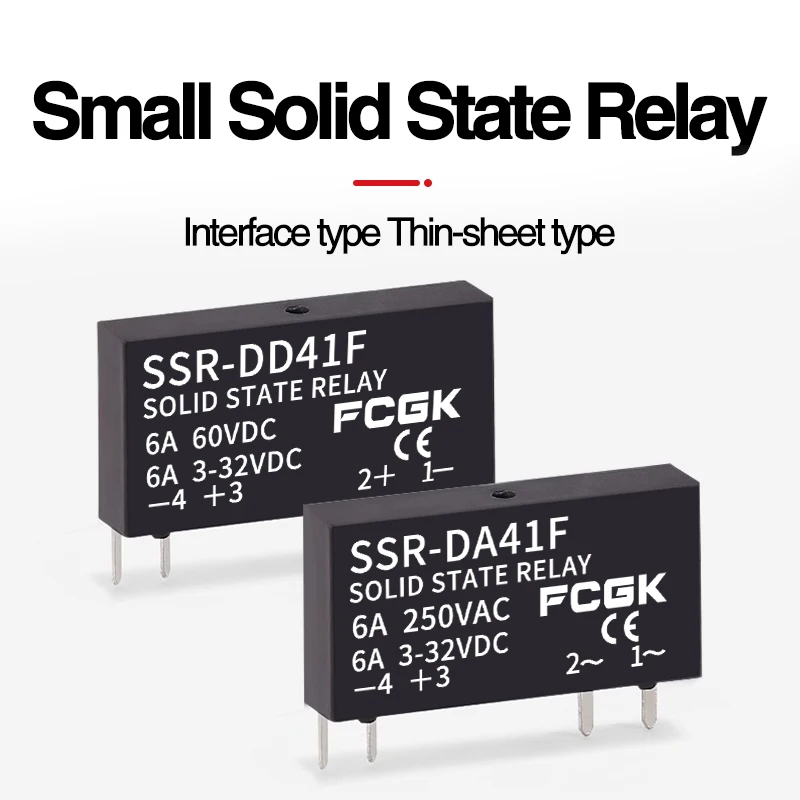
FCGK Slim Solid State Relay (SSR-DA41F/DD41F)
Official Store Deal
Expert Analysis Overview
The Silent Switch: Core Functionality and Design
The FCGK Slim Solid State Relay (SSR-DA41F/DD41F) is a compact, high-performance switching component engineered for precise control in industrial and automation applications. Its solid-state design eliminates mechanical wear, a critical factor for long-term reliability in systems requiring frequent switching cycles. This design represents a significant upgrade over traditional electromechanical relays, which are prone to contact degradation and audible operation over time.Unlike bulky, wear-prone electromechanical relays, these slim solid-state units utilize semiconductor switching to provide silent, high-speed, and virtually limitless operational cycles. The absence of moving parts ensures a much longer operational lifespan, drastically reducing maintenance requirements and the potential for unexpected system failures. This inherent durability makes them ideal for demanding environments where consistent performance is paramount.
Compared to older relay technologies, the solid-state construction offers superior resistance to shock and vibration. This enhances their suitability for mobile applications or machinery subject to dynamic forces. The compact footprint, measuring 28mm x 14.5mm, allows for high-density installations within control panels, optimizing space utilization without compromising performance. Small footprint, big impact.
Precision Under Control: Input and Output Dynamics
These relays are offered in two primary configurations: the SSR-DA41F for DC controlled AC loads and the SSR-DD41F for DC controlled DC loads. Both models accept a wide control voltage range of 3-32VDC, making them highly compatible with standard PLC outputs, microcontrollers, and other low-voltage control circuits. This broad compatibility simplifies integration into existing control systems.When a control signal is applied, the relay switches almost instantaneously. The off-state time is specified at ≤10ms, which is significantly faster than the typical response times of mechanical relays. This rapid switching capability is crucial for applications requiring precise timing and quick response, such as in motor control, lighting systems, or heating elements. Fast switching is key.
For the SSR-DA41F, the load voltage handles 24-250VAC at 6A, while the SSR-DD41F manages 5-60VDC at 6A. This clear distinction allows engineers to select the exact model required for their specific AC or DC load requirements, ensuring optimal performance and safety. The 6A current rating provides sufficient capacity for a wide array of small to medium power loads, preventing the need for oversized components.
Endurance in the Field: Reliability and Installation
The robust construction of these solid-state relays is designed for sustained operation in industrial settings. The internal components are encapsulated, offering protection against dust, moisture, and other environmental contaminants that can degrade the performance of open-contact mechanical relays. This sealed design contributes directly to their long-term reliability.Installation is designed for convenience, with a rail mounting capability. This allows for quick and secure integration into standard DIN rail systems commonly found in industrial control cabinets. The pin configuration is standard for interface relays, simplifying wiring and reducing installation time. Setup is straightforward.
Imagine a complex automation line where hundreds of switching operations occur every minute. Mechanical relays would quickly wear out, leading to costly downtime and frequent replacements. These solid-state units, however, are built to withstand millions of cycles without degradation, ensuring uninterrupted operation and a significantly lower total cost of ownership over their lifespan. This capability directly translates into higher productivity and reduced operational expenses for industrial users.
Thermal Considerations: Managing Operational Heat
While solid-state relays offer numerous advantages, they do generate heat during operation due to the resistance of the semiconductor switching elements. The 6A current rating, while moderate, still necessitates proper thermal management to ensure the relay operates within its specified temperature limits and achieves its maximum lifespan. Heat dissipation is critical.Effective heat sinking is often required, especially when operating at the upper end of the current or voltage specifications, or in environments with elevated ambient temperatures. The slim profile of these relays means they have a smaller surface area for passive cooling compared to larger, chassis-mounted SSRs. This is a logical trade-off for their compact size and high-density installation capability.
Compared to mechanical relays which dissipate heat primarily through their contacts and coil, SSRs rely on their internal semiconductor junctions. Understanding this difference is vital for proper system design. Overlooking thermal management can lead to premature failure, even with the inherent durability of solid-state technology. Proper ventilation and, if necessary, external heat sinks or forced air cooling, are essential for maintaining optimal performance and longevity.
Application Versatility: Where These Relays Shine
The versatility of these slim solid-state relays makes them suitable for a broad spectrum of applications. The SSR-DA41F, with its DC control and AC load capability, is perfect for switching AC motors, solenoids, heating elements, or lighting circuits from a low-voltage DC control signal. This is a common requirement in building automation, HVAC systems, and industrial machinery.Conversely, the SSR-DD41F, controlling DC loads with a DC signal, finds its niche in applications such as controlling DC motors, actuators, LED lighting arrays, or other DC-powered components. Its ability to handle up to 60VDC makes it suitable for many automotive, marine, and specialized industrial DC power systems. Diverse applications benefit.
Consider a scenario where sensitive electronic equipment needs to be isolated from noisy power circuits. The solid-state design provides excellent electrical isolation between the control and load circuits, protecting delicate control electronics from voltage spikes or interference originating from the load side. This isolation is a fundamental safety and reliability feature, often superior to the limited isolation offered by some mechanical relays.
The Long-Term Equation: Value Beyond Initial Cost
While the initial purchase price of a solid-state relay might be slightly higher than a basic electromechanical relay, the long-term value proposition is compelling. The extended lifespan, reduced maintenance, and improved reliability translate into significant operational savings over the life of the equipment. This is a cost-effective choice.Minimizing downtime is a primary concern in industrial operations. A failed relay can halt an entire production line, leading to substantial financial losses. By investing in durable solid-state components, businesses can mitigate these risks and ensure continuous operation. The cost of a single hour of downtime often far exceeds the price difference between a mechanical and a solid-state relay.
Furthermore, the silent operation and lack of electrical arcing (which can occur with mechanical contacts) contribute to a cleaner electromagnetic environment. This is beneficial for sensitive electronic equipment operating nearby, reducing the potential for interference. The overall system stability and reduced noise contribute to a more efficient and reliable control system, justifying the investment for critical infrastructure.