EVEPS EV24-A121202 AC-DC 12V Buck Converter Module
Official Store Deal
Expert Analysis Overview
Precision Power Transformation
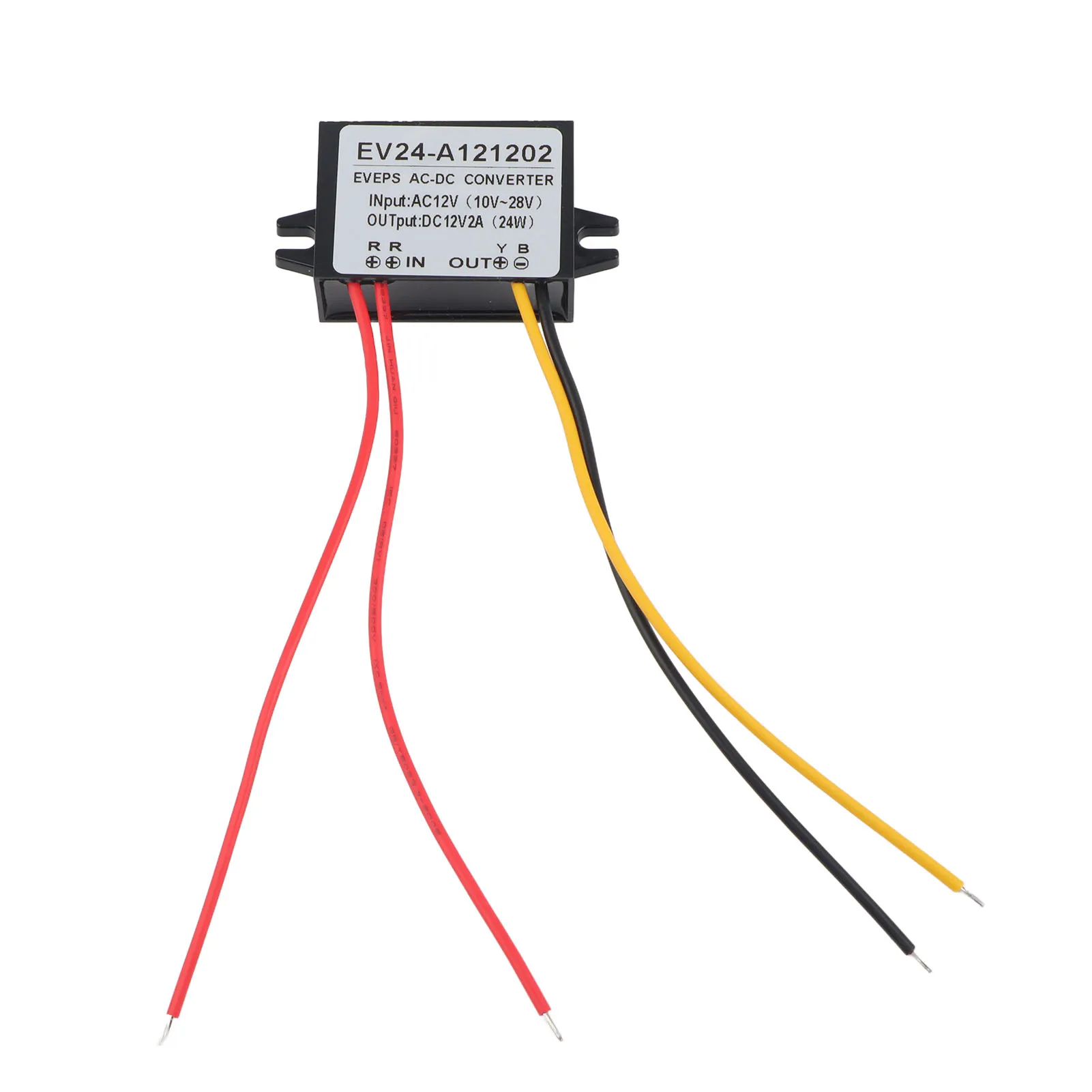
The EV24-A121202 AC-DC 12V Buck Converter is a compact and essential power regulation module designed for integrating stable 12V DC power into existing AC systems, particularly where space and cost-efficiency are critical. This module efficiently converts a fluctuating AC input into a steady DC output. It is a fundamental component for many electronic projects and repairs. The visible black plastic enclosure houses the conversion circuitry.This device addresses the common challenge of sourcing reliable DC power from an AC supply without the bulk of a traditional power adapter. Its small form factor allows for integration into tight spaces. The module's primary function is to step down and rectify alternating current to direct current. This capability is crucial for powering sensitive electronic loads.
Unlike generic linear regulators that dissipate excess energy as heat, this buck converter operates with higher efficiency. This means less wasted energy and reduced thermal stress on the component. The design prioritizes functional integration over elaborate external features.
Robust Regulation in Miniature
The module's label clearly specifies an input range of AC 10V-28V, delivering an output of DC 12V at 2A (24W). This wide input voltage tolerance makes the converter highly adaptable to various AC sources. The output specification indicates suitability for a broad array of low to medium-power 12V DC devices.Such specifications imply that the module can handle common AC inputs, including those from small transformers or existing AC lines in various equipment. The 2A output current is sufficient for powering LEDs, small motors, microcontrollers, and other common electronic loads. It provides a consistent power source. This consistency is vital for stable operation.
Compared to fixed-input power supplies, this module's broad AC input range offers significant flexibility. It eliminates the need for multiple specific power adapters for different AC voltages. This versatility reduces inventory and simplifies design choices for repair technicians.
Seamless System Integration
Wiring is straightforward, with two red wires designated for AC input and a yellow and black pair for DC output. The input wires are clearly marked 'IN' and the output 'OUT'. This color-coding simplifies installation. Proper polarity must be observed for the DC output.The simple wiring scheme facilitates quick integration into existing circuits or new projects. Users can easily connect the AC input to their power source and the DC output to the load. This direct connection minimizes installation complexity. The module is designed for embedded applications.
Many off-the-shelf power supplies come with proprietary connectors or bulky enclosures. This barebones module offers a direct, wire-to-wire connection. This approach is ideal for custom builds or replacing internal power components within existing enclosures. It offers a clean solution.
Sustained Current Delivery
The 24W power rating (12V at 2A) suggests the module can sustain its specified output under continuous load. Adequate thermal management is always a consideration for power converters, even compact ones. While no large heatsink is visible, the power rating implies a design capable of handling its rated output.For applications requiring continuous 2A draw, ensuring proper ventilation around the module is prudent. Overloading the converter beyond its 2A capacity will lead to overheating and potential failure. Users must verify their load requirements. This prevents premature component degradation.
Unlike under-specced power supplies that quickly fail under load, this module's 2A rating provides a reasonable margin for typical low-power applications. It offers a reliable current source for its intended use. The consistent output protects connected devices.
Longevity Considerations
The visible construction appears standard for this type of encapsulated power module. The wires are directly soldered to the internal board and exit through the plastic casing. The encapsulation provides a degree of protection against dust and minor environmental factors.Directly soldered wires imply a permanent connection, which can be beneficial for long-term reliability by eliminating potential loose connections from screw terminals. However, it also means that wire replacement requires desoldering. The overall build suggests a focus on functional durability.
Compared to modules with exposed components, the encapsulated design offers enhanced protection against accidental shorts or environmental ingress. This contributes to a longer operational lifespan in less-than-ideal conditions. The design prioritizes internal component safety.
Application Versatility
This buck converter is particularly useful for repairing expensive equipment where the original power supply has failed. Instead of replacing an entire costly assembly, this module can often serve as a direct replacement for the faulty power conversion stage. It offers a cost-effective repair solution.Consider a scenario where a specific 12V DC component in a larger system, such as an industrial control panel or a specialized lighting fixture, requires a stable power source derived from an AC input. This module provides that precise capability. Its small size allows it to fit into tight enclosures. This makes it an ideal choice for embedded applications.
Many DIY electronics projects also benefit from such a compact and reliable power solution. From home automation systems to custom LED installations, the ability to convert readily available AC power to a stable 12V DC is invaluable. It simplifies power architecture. This module is a versatile building block.
Wiring and Installation Best Practices
Proper installation is paramount for both safety and performance. The red wires should be connected to the AC input, ensuring a secure, insulated connection. The yellow wire typically represents the positive DC output, and the black wire the negative or ground. Verifying polarity before connecting the load is essential.In environments with significant electrical noise, adding input and output filtering capacitors might be beneficial, although not explicitly required by the module itself. This can further ensure a clean signal transmission to sensitive components. Clean power is crucial for digital circuits.
Assessing the long-term reliability of connections involves proper crimping or soldering techniques. Loose connections can lead to intermittent power, arcing, and potential fire hazards. Secure, insulated connections are non-negotiable. This ensures operational safety.
Imagine powering a custom smart home device, where consistent 12V DC is needed from a hidden AC line. This module integrates seamlessly, providing the necessary power without drawing attention to itself. The device functions flawlessly. This enables discreet installations.