ESP32-WROOM-32 WiFi BT BLE MCU Development Board
Official Store Deal
Expert Analysis Overview
The ESP32-WROOM-32 development board is a highly integrated, versatile microcontroller unit designed for rapid prototyping and deployment in IoT, smart home, and mobile applications. This board consolidates essential wireless communication capabilities with robust processing power, making it a cornerstone for modern embedded projects. Its compact footprint belies a powerful feature set, providing a solid foundation for complex systems.
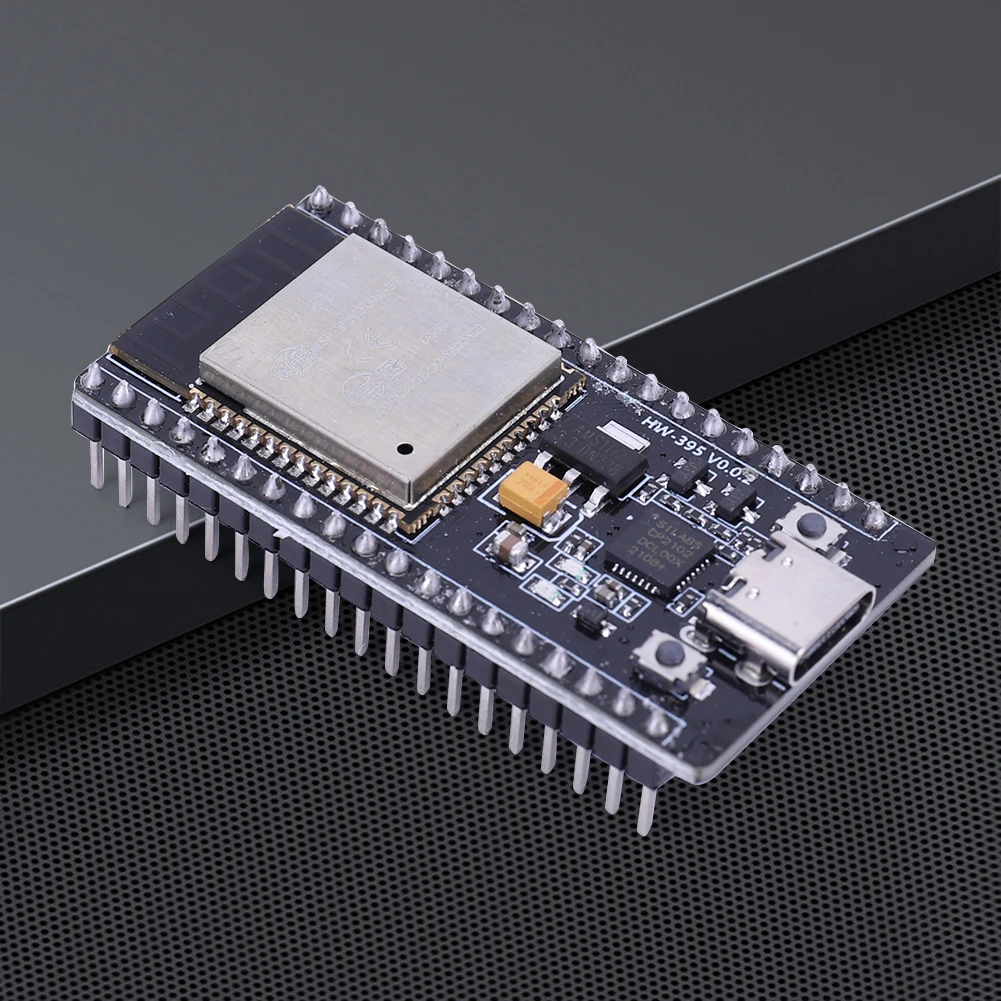
The central component is the ESP32-WROOM-32 module, a highly capable System-on-Chip (SoC) that integrates Wi-Fi and Bluetooth Low Energy (BLE) connectivity. This module is shielded by a metal casing, a critical design choice for electromagnetic interference (EMI) suppression. The integrated wireless capabilities eliminate the need for external transceivers, simplifying circuit design and reducing the overall bill of materials for projects. This is a significant advantage for space-constrained applications.
This integration means developers can focus on application logic rather than intricate radio frequency (RF) circuit design. The ESP32's dual-core Tensilica Xtensa LX6 microprocessor provides ample computational horsepower for concurrent tasks, such as managing network stacks and processing sensor data simultaneously. Unlike older, single-core microcontrollers that often struggle with the overhead of Wi-Fi communication, the ESP32 handles these demands with ease, ensuring smoother operation and more responsive applications.
Compared to standalone microcontrollers requiring separate Wi-Fi modules, this integrated solution offers superior signal integrity and reduced power consumption. It streamlines the development process considerably. The 32Mbit (4MB) SPI flash memory provides ample space for firmware, web servers, and data storage, accommodating more complex applications than boards with lesser memory. This capacity is crucial for over-the-air (OTA) updates, allowing for seamless firmware upgrades without physical access to the device.
The board features a USB Type-C port, which serves as both the power input and the primary data interface for programming and serial communication. The adoption of USB-C is a welcome upgrade, offering reversible plug orientation and greater durability compared to older micro-USB ports. This modern connector ensures broad compatibility with contemporary power supplies and data cables, simplifying connectivity for developers.
This choice of connector enhances the user experience by reducing frustration during setup. A single cable handles power and data. The onboard CP2102 USB-to-UART bridge chip facilitates reliable serial communication between the host computer and the ESP32. This chip provides a stable virtual COM port, essential for flashing firmware and debugging applications. Its robust performance ensures consistent data transfer rates, crucial for large firmware uploads.
Many entry-level development boards still rely on micro-USB, which is prone to wear and tear. The USB-C implementation on this board represents a forward-thinking design choice, improving both convenience and the long-term reliability of the physical connection. It also supports higher current delivery, which can be beneficial for powering external peripherals directly from the board during development.
Power regulation is handled by an onboard 3.3V LDO regulator, which converts the 5V input from the USB port or external power supply to the 3.3V required by the ESP32 module. This regulator ensures a stable and clean power supply, critical for the reliable operation of the sensitive Wi-Fi and Bluetooth radios. Clean power prevents unexpected resets or erratic behavior, a common issue with poorly regulated boards.
Stable power delivery is paramount for any embedded system, especially those involving wireless communication. Fluctuations can lead to dropped connections or corrupted data. The presence of a dedicated regulator simplifies power management for the user. It means less external circuitry is required.
Unlike minimalist boards that might omit robust power regulation, this integrated solution provides a ready-to-use power infrastructure. The board breaks out nearly all of the ESP32's GPIO pins to dual-row header pins, spaced for breadboard compatibility. These pins allow for easy connection to sensors, actuators, and other peripheral devices. The clear pin labeling on the silkscreen aids in rapid prototyping and reduces wiring errors.
The soldering quality observed on the board appears consistent with automated manufacturing processes. Solder joints for the surface-mount components, including the ESP32 module and the USB-C connector, exhibit clean fillets and proper alignment. This level of precision is vital for ensuring long-term electrical contact and mechanical stability of components. Poor soldering can lead to intermittent connections or premature component failure.
Reliable solder joints are the backbone of any electronic circuit. They ensure that power and signals flow consistently. The visible quality suggests a low probability of cold solder joints or bridging, which are common failure points in less carefully manufactured boards. The through-hole header pins are also securely soldered, providing robust anchor points for external wiring or breadboard insertion.
Compared to hand-soldered or lower-quality machine-assembled boards, the visible manufacturing consistency implies enhanced durability. The PCB material is standard FR-4, a widely used and robust substrate for electronics. The black solder mask provides a clean aesthetic and protects the copper traces from environmental factors. The board's compact dimensions (approximately 50mm x 25mm) make it suitable for integration into small enclosures or portable projects.
The board includes BOOT and EN (Reset) buttons, which are essential for programming the ESP32 and resetting the module. The BOOT button places the ESP32 into programming mode, allowing new firmware to be flashed via the serial interface. The EN button performs a hardware reset, useful for restarting the application after programming or during debugging. These physical controls simplify the development workflow significantly.
These buttons provide direct hardware control, which is often more reliable than software-based resets during development. Their tactile feedback confirms activation. The clear labeling and accessible placement of these buttons prevent accidental presses while still being easy to reach when needed. This thoughtful design contributes to a smoother debugging and deployment experience.
Many custom ESP32 circuits require manual manipulation of GPIO pins to enter boot mode, which can be cumbersome. The dedicated buttons on this development board streamline this process, saving valuable development time. The various silkscreen markings (Mode A, B, C) on the ESP32 module itself, while randomly delivered, indicate minor internal revisions of the ESP32-WROOM-32 module, all maintaining the core functionality and pinout. This transparency about potential variations is helpful for managing expectations.
The ESP32 platform is renowned for its extensive software ecosystem, including support for the Arduino IDE, ESP-IDF (Espressif IoT Development Framework), and MicroPython. This broad compatibility means developers can choose their preferred programming environment, leveraging existing skills and libraries. The availability of comprehensive documentation and a large community further accelerates project development.
Choosing a platform with strong software support is as important as the hardware itself. It ensures access to examples, tutorials, and troubleshooting resources. The ESP32's popularity translates into a vibrant community. This collective knowledge base is invaluable for overcoming development challenges.
Unlike proprietary systems with limited toolchains, the open-source nature of the ESP32 ecosystem fosters innovation and flexibility. This board is particularly well-suited for projects requiring both Wi-Fi and Bluetooth connectivity, such as smart home devices, wearable electronics, industrial automation, and remote monitoring systems. Its low power consumption in deep sleep modes makes it viable for battery-powered applications where longevity is critical.
Imagine bringing your most ambitious IoT concepts to life with a platform that handles complex wireless communication and processing with ease. Picture a smart sensor network seamlessly reporting data, or a home automation system responding instantly to commands, all powered by a compact, reliable core. This board empowers creators to move beyond theoretical designs into tangible, functional prototypes, accelerating the path from idea to deployment. It's an investment in efficiency, enabling you to build sophisticated connected devices that truly make an impact.
The Integrated IoT Core
The central component is the ESP32-WROOM-32 module, a highly capable System-on-Chip (SoC) that integrates Wi-Fi and Bluetooth Low Energy (BLE) connectivity. This module is shielded by a metal casing, a critical design choice for electromagnetic interference (EMI) suppression. The integrated wireless capabilities eliminate the need for external transceivers, simplifying circuit design and reducing the overall bill of materials for projects. This is a significant advantage for space-constrained applications.
This integration means developers can focus on application logic rather than intricate radio frequency (RF) circuit design. The ESP32's dual-core Tensilica Xtensa LX6 microprocessor provides ample computational horsepower for concurrent tasks, such as managing network stacks and processing sensor data simultaneously. Unlike older, single-core microcontrollers that often struggle with the overhead of Wi-Fi communication, the ESP32 handles these demands with ease, ensuring smoother operation and more responsive applications.
Compared to standalone microcontrollers requiring separate Wi-Fi modules, this integrated solution offers superior signal integrity and reduced power consumption. It streamlines the development process considerably. The 32Mbit (4MB) SPI flash memory provides ample space for firmware, web servers, and data storage, accommodating more complex applications than boards with lesser memory. This capacity is crucial for over-the-air (OTA) updates, allowing for seamless firmware upgrades without physical access to the device.
Architectural Foundation and Connectivity
The board features a USB Type-C port, which serves as both the power input and the primary data interface for programming and serial communication. The adoption of USB-C is a welcome upgrade, offering reversible plug orientation and greater durability compared to older micro-USB ports. This modern connector ensures broad compatibility with contemporary power supplies and data cables, simplifying connectivity for developers.
This choice of connector enhances the user experience by reducing frustration during setup. A single cable handles power and data. The onboard CP2102 USB-to-UART bridge chip facilitates reliable serial communication between the host computer and the ESP32. This chip provides a stable virtual COM port, essential for flashing firmware and debugging applications. Its robust performance ensures consistent data transfer rates, crucial for large firmware uploads.
Many entry-level development boards still rely on micro-USB, which is prone to wear and tear. The USB-C implementation on this board represents a forward-thinking design choice, improving both convenience and the long-term reliability of the physical connection. It also supports higher current delivery, which can be beneficial for powering external peripherals directly from the board during development.
Power Delivery and Peripheral Interfacing
Power regulation is handled by an onboard 3.3V LDO regulator, which converts the 5V input from the USB port or external power supply to the 3.3V required by the ESP32 module. This regulator ensures a stable and clean power supply, critical for the reliable operation of the sensitive Wi-Fi and Bluetooth radios. Clean power prevents unexpected resets or erratic behavior, a common issue with poorly regulated boards.
Stable power delivery is paramount for any embedded system, especially those involving wireless communication. Fluctuations can lead to dropped connections or corrupted data. The presence of a dedicated regulator simplifies power management for the user. It means less external circuitry is required.
Unlike minimalist boards that might omit robust power regulation, this integrated solution provides a ready-to-use power infrastructure. The board breaks out nearly all of the ESP32's GPIO pins to dual-row header pins, spaced for breadboard compatibility. These pins allow for easy connection to sensors, actuators, and other peripheral devices. The clear pin labeling on the silkscreen aids in rapid prototyping and reduces wiring errors.
Build Integrity and Longevity
The soldering quality observed on the board appears consistent with automated manufacturing processes. Solder joints for the surface-mount components, including the ESP32 module and the USB-C connector, exhibit clean fillets and proper alignment. This level of precision is vital for ensuring long-term electrical contact and mechanical stability of components. Poor soldering can lead to intermittent connections or premature component failure.
Reliable solder joints are the backbone of any electronic circuit. They ensure that power and signals flow consistently. The visible quality suggests a low probability of cold solder joints or bridging, which are common failure points in less carefully manufactured boards. The through-hole header pins are also securely soldered, providing robust anchor points for external wiring or breadboard insertion.
Compared to hand-soldered or lower-quality machine-assembled boards, the visible manufacturing consistency implies enhanced durability. The PCB material is standard FR-4, a widely used and robust substrate for electronics. The black solder mask provides a clean aesthetic and protects the copper traces from environmental factors. The board's compact dimensions (approximately 50mm x 25mm) make it suitable for integration into small enclosures or portable projects.
Development Workflow Streamlining
The board includes BOOT and EN (Reset) buttons, which are essential for programming the ESP32 and resetting the module. The BOOT button places the ESP32 into programming mode, allowing new firmware to be flashed via the serial interface. The EN button performs a hardware reset, useful for restarting the application after programming or during debugging. These physical controls simplify the development workflow significantly.
These buttons provide direct hardware control, which is often more reliable than software-based resets during development. Their tactile feedback confirms activation. The clear labeling and accessible placement of these buttons prevent accidental presses while still being easy to reach when needed. This thoughtful design contributes to a smoother debugging and deployment experience.
Many custom ESP32 circuits require manual manipulation of GPIO pins to enter boot mode, which can be cumbersome. The dedicated buttons on this development board streamline this process, saving valuable development time. The various silkscreen markings (Mode A, B, C) on the ESP32 module itself, while randomly delivered, indicate minor internal revisions of the ESP32-WROOM-32 module, all maintaining the core functionality and pinout. This transparency about potential variations is helpful for managing expectations.
Strategic Deployment Considerations
The ESP32 platform is renowned for its extensive software ecosystem, including support for the Arduino IDE, ESP-IDF (Espressif IoT Development Framework), and MicroPython. This broad compatibility means developers can choose their preferred programming environment, leveraging existing skills and libraries. The availability of comprehensive documentation and a large community further accelerates project development.
Choosing a platform with strong software support is as important as the hardware itself. It ensures access to examples, tutorials, and troubleshooting resources. The ESP32's popularity translates into a vibrant community. This collective knowledge base is invaluable for overcoming development challenges.
Unlike proprietary systems with limited toolchains, the open-source nature of the ESP32 ecosystem fosters innovation and flexibility. This board is particularly well-suited for projects requiring both Wi-Fi and Bluetooth connectivity, such as smart home devices, wearable electronics, industrial automation, and remote monitoring systems. Its low power consumption in deep sleep modes makes it viable for battery-powered applications where longevity is critical.
The Future of Connected Projects
Imagine bringing your most ambitious IoT concepts to life with a platform that handles complex wireless communication and processing with ease. Picture a smart sensor network seamlessly reporting data, or a home automation system responding instantly to commands, all powered by a compact, reliable core. This board empowers creators to move beyond theoretical designs into tangible, functional prototypes, accelerating the path from idea to deployment. It's an investment in efficiency, enabling you to build sophisticated connected devices that truly make an impact.