Eoopee Lead-Free Soldering Tip Tinner
Official Store Deal
Expert Analysis Overview
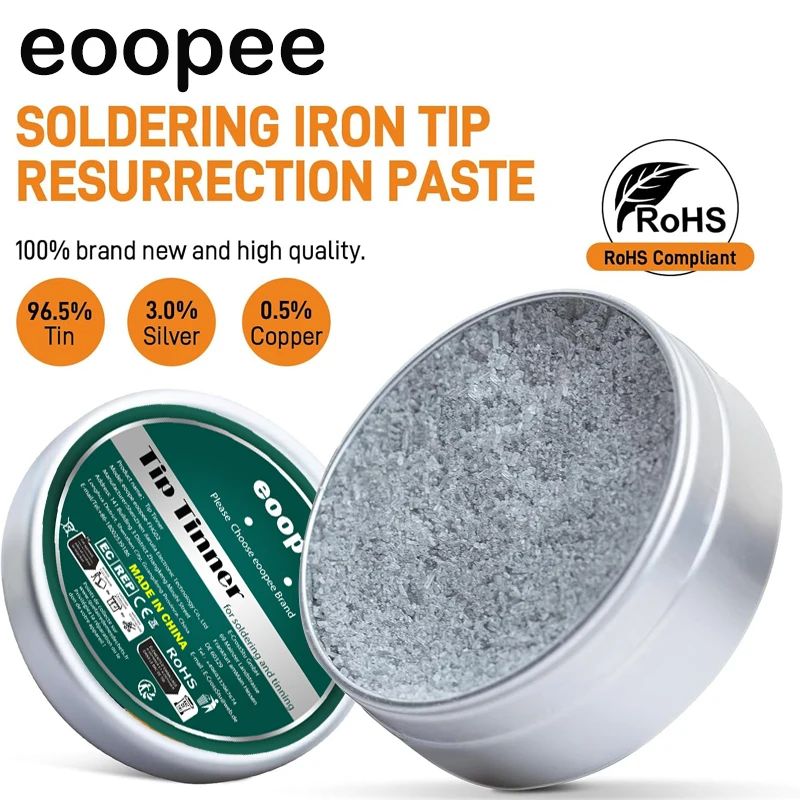
The Eoopee Lead-Free Soldering Tip Tinner is an indispensable maintenance solution specifically engineered for electronics hobbyists and professional technicians battling common soldering tip degradation. This specialized paste, visible in a compact metal tin, is formulated to restore the critical functionality of oxidized soldering iron tips, which often lose their ability to accept solder. Its primary purpose is to rejuvenate tips that have become blackened and non-wetting due to prolonged use or exposure to corrosive fluxes. This product offers a direct, effective method for tip resuscitation, ensuring consistent, high-quality solder joints. The very act of soldering relies on a tip's pristine condition, making this tinner a foundational element in any serious electronics toolkit. It is a critical workshop item.
Soldering iron tips are the workhorses of electronics assembly, yet they are highly susceptible to oxidation. This process involves the hot metal surface reacting with oxygen in the air, forming a layer of metal oxide. On a soldering tip, this oxide layer manifests as a dull, black coating that prevents new solder from adhering properly. A tip's ability to "wet" – to draw and hold molten solder – is paramount for effective heat transfer to the joint. Without proper wetting, the tip cannot efficiently conduct heat, leading to cold solder joints, prolonged heating times, and potential damage to sensitive components. This paste directly addresses that fundamental issue. The phenomenon of oxidation is a natural chemical reaction, but on a soldering tip, it becomes a significant impediment to precise work.
The visual evidence clearly indicates a product designed to combat these common ailments. The imagery shows a dull, blackened tip before treatment and a shiny, re-tinned tip afterward. This stark contrast highlights the tinner's core promise: restoring the tip's metallic luster and, more importantly, its functional integrity. The challenge for many users lies in identifying when a tip is truly oxidized versus merely dirty. A dirty tip might be cleaned with a sponge; an oxidized one requires a more aggressive approach, as the oxide layer is chemically bonded to the tip surface. This distinction is critical for effective maintenance.
Unlike simple cleaning methods, which might only remove surface debris, this tinner actively works to strip away the stubborn oxide layer. Generic cleaning sponges or brass wools are essential for daily maintenance, but they often fall short when the oxidation becomes severe, failing to chemically break down the tenacious oxide. This product bridges that gap, offering a restorative treatment rather than just a superficial clean. It is a targeted solution for a specific problem, allowing for the complete renewal of the tip's working surface.
Central to the Eoopee tinner's efficacy is its carefully balanced composition. The product explicitly states a lead-free formulation comprising 96.5% Tin, 3.0% Silver, and 0.5% Copper. This blend is not arbitrary; each component plays a crucial role in the re-tinning process. Tin, being the primary component, is the material that forms the new, protective layer on the tip surface, providing the essential wettability. Silver enhances the solder's flow characteristics and strength, contributing to a more robust and aesthetically pleasing joint, while copper improves thermal conductivity and helps prevent erosion of the base metal, extending the tip's structural life. This specific alloy ensures a robust and conductive re-tinned surface, essential for efficient heat transfer.
The "Lead-Free" and "RoHS Compliant" labels are significant. RoHS, or Restriction of Hazardous Substances, is a European Union directive that restricts the use of certain hazardous materials in electrical and electronic products. For users, this means a safer working environment and compliance with modern environmental standards, especially critical for those working on commercial or consumer electronics where such regulations are mandatory. Working with lead-free materials reduces health risks associated with lead exposure, a known neurotoxin, making the workshop a healthier place. It also aligns with contemporary manufacturing practices globally.
Traditional leaded solders and tinners, while still used in some specialized applications, are increasingly being phased out due to health and environmental concerns. This lead-free formulation represents an upgrade from older, less safe alternatives, providing a modern solution without compromising performance. The material choice is deliberate, reflecting a commitment to both effectiveness and user well-being. Furthermore, the inclusion of silver and copper, typically found in higher-quality solder alloys, suggests a superior re-tinning capability compared to basic tin-only compounds.
The operational mechanics of this tip tinner are straightforward, making it accessible even for beginners. The process involves heating the soldering iron tip to a specific temperature range, typically 300-320°C (572-608°F), then gently dipping and rubbing it into the granular paste. The heat activates the tinner, allowing its chemical and mild abrasive properties to work in tandem. The paste's granular texture provides a gentle scrubbing action, physically assisting in the removal of the loosened oxide layer. This combination of thermal activation, chemical reaction, and mechanical action ensures comprehensive cleaning.
In a scenario where a soldering tip has developed a stubborn black oxide layer, simply wiping it on a wet sponge will be ineffective because the oxide is chemically bonded and not merely a surface contaminant. The tinner, upon contact with the hot tip, chemically reacts with the oxide, breaking it down into a more manageable form. Simultaneously, the fine metallic particles within the paste provide a gentle mechanical abrasion, helping to dislodge the loosened oxide and prepare the surface for a fresh tin layer. This dual action is key to its effectiveness, ensuring that even heavily oxidized tips can be restored. The result is a clean, shiny surface, ready to accept solder.
Compared to purely abrasive methods like filing or sanding a tip – which can severely damage the tip's plating and geometry, leading to premature failure – this paste offers a controlled and less destructive approach. It targets the oxide layer without excessively wearing down the tip's base material or its protective iron plating. This preserves the tip's shape, crucial for precise soldering, and extends the overall service life of the component. It is a far superior method to crude mechanical removal.
The images clearly illustrate a four-step re-tinning operation, emphasizing precision and safety in the workshop. The first step involves adjusting the soldering tip temperature to the recommended range of 300-320°C (572-608°F). This specific temperature is crucial for activating the tinner's chemical properties without overheating the tip, which could lead to further oxidation or damage to the tip's internal heating element. Accurate temperature control is vital for both efficacy and tip preservation. Operating outside this range may reduce the tinner's effectiveness or accelerate tip wear.
The second step instructs the user to insert the hot soldering tip into the Tip Tinner and rub it for 3-4 seconds. This brief contact time is usually sufficient for the paste to react with and remove the oxide layer. The rubbing action ensures even coverage of the tinner across the tip's working surface and helps dislodge stubborn deposits that might cling to the tip. This interaction is quick and effective, minimizing the time the tip spends exposed to the abrasive action.
Following the re-tinning, the third step involves cleaning the soldering tip with a cleaning sponge or steel ball. This crucial step removes any residue from the tinner itself, along with the dislodged oxides, leaving a pristine surface ready for soldering. Neglecting this step could leave behind contaminants that affect solder joint quality. A clean tip is a functional tip, free from any extraneous material.
The final, crucial step confirms the outcome: a re-tinned soldering tip with a solid oxide protective tin layer. This new layer is vital for preventing immediate re-oxidation and ensuring optimal solder wetting for subsequent soldering tasks. This protective coating is a significant benefit, as it not only restores current functionality but also provides a degree of protection against future issues, prolonging the interval between re-tinning operations. It is a proactive measure.
As with any tool or chemical used in electronics work, responsible usage and safety precautions are paramount. The product, while lead-free, still involves working with high temperatures and potentially irritating fumes. Proper ventilation is not merely a recommendation; it is a necessity. Using this tinner in a well-ventilated area helps dissipate any fumes generated during the re-tinning process, protecting the user's respiratory health from potential irritants. Safety glasses are also a must to protect eyes from splashes or debris.
Consider a scenario where a user is working in a small, enclosed space without adequate airflow, perhaps a hobbyist's basement workshop. The accumulation of fumes could lead to discomfort or even health issues over time, such as headaches or respiratory irritation. A simple desk fan directed away from the user or opening a window can significantly improve air circulation, making the workspace safer. This small step makes a big difference in preventing exposure.
Unlike completely inert cleaning agents, this paste is an active chemical compound designed to react with metal oxides. While designed for safe use on soldering tips, direct skin contact or ingestion should be avoided. Always handle the product with care, using gloves if preferred, and keep it out of reach of children and pets to prevent accidental exposure. This ensures a safe environment for everyone in the vicinity of the workbench.
The primary benefit of using a product like the Eoopee Tip Tinner extends beyond immediate cleaning; it significantly contributes to the longevity of expensive soldering iron tips. Soldering tips, especially those with specialized coatings like iron plating, can be costly to replace, particularly for high-end soldering stations. Regular re-tinning prevents permanent damage that would necessitate premature replacement, thereby maximizing the return on investment for each tip. This saves money over time.
Imagine the frustration of a professional technician whose soldering tips degrade rapidly due to neglect, leading to frequent purchases and unexpected expenses. Frequent tip replacement not only incurs direct costs but also leads to downtime and reduced productivity while waiting for new tips to arrive or being forced to work with suboptimal equipment. This tinner acts as a preventative measure, ensuring tips remain in optimal working condition for longer periods, maintaining workflow efficiency. It is an investment in tool health and operational continuity.
Compared to the cost of purchasing new soldering tips, which can range from a few dollars to upwards of twenty or thirty dollars per tip depending on the brand and type, the relatively low price of this tinner makes it an economically sound choice. It transforms a consumable item into a more durable asset by extending its functional lifespan. This extends the useful life of the tip, reduces waste, and contributes to a more sustainable workshop practice.
The value proposition of the Eoopee Lead-Free Soldering Tip Tinner is clear: it offers a cost-effective solution for maintaining peak performance of soldering equipment. At its price point, it presents a minimal investment for a significant return in terms of extended tip life and improved soldering quality. This is an efficient use of resources, ensuring that every dollar spent on soldering tips yields maximum utility. The consistent performance it enables also reduces rework, saving both time and materials.
For students learning soldering, having consistently clean and wettable tips is crucial for developing good technique. A poorly maintained tip can lead to frustration, inconsistent results, and the development of incorrect soldering practices, hindering learning progress. This product ensures a reliable starting point for every project, allowing students to focus on mastering the skill rather than battling faulty equipment. It fosters better learning outcomes and builds confidence.
The alternative to using such a tinner is often discarding oxidized tips prematurely or struggling with inefficient soldering that produces poor quality joints. Neither option is desirable, as both result in wasted resources and subpar work. The tinner provides a practical, affordable way to keep tools sharp and ready for action, allowing for consistent, high-quality output. It maximizes utility and minimizes frustration.
From an instructor's perspective, teaching students safely and effectively requires reliable tools. A soldering iron with a clean, properly tinned tip ensures reliable "arc starts" – or, in this context, reliable solder wetting and heat transfer. This consistency is vital for beginners to understand the nuances of heat transfer and solder flow without battling a problematic tip that refuses to accept solder. Durable controls on the soldering station, while not directly applicable to the tinner itself, relate to the overall reliability of the soldering setup, and this tinner contributes to maintaining the most critical part of that setup: the tip.
The ease of use of this product means less time spent troubleshooting equipment issues during a lesson and more time focused on the actual soldering task and theoretical concepts. The visual clarity of the before-and-after images, prominently displayed in the product's marketing, serves as an excellent teaching aid, demonstrating the immediate and tangible impact of proper tip maintenance. It reinforces good habits from the outset, which are crucial for long-term success in electronics.
This product is not just a cleaning agent; it is a fundamental component of a comprehensive soldering maintenance regimen. It ensures that the soldering iron, the primary tool, performs at its best, allowing the user to focus on the task at hand rather than fighting their equipment. This promotes efficiency and quality, making it an invaluable asset in any educational or professional workshop.
Imagine the satisfaction of approaching every soldering project with confidence, knowing your tools are in prime condition. Picture effortlessly creating strong, shiny solder joints, free from the frustration of a stubborn, non-wetting tip. This tinner ensures that your soldering iron is always ready for precision work, extending its life and enhancing your craft. You will experience fewer failed joints, quicker project completion, and the enduring quality that comes from well-maintained equipment. Your workbench will become a place of reliable execution, not constant equipment struggle, allowing you to focus purely on the intricate details of your electronic creations.
The Crucible's Rebirth: Understanding Tip Degradation
Soldering iron tips are the workhorses of electronics assembly, yet they are highly susceptible to oxidation. This process involves the hot metal surface reacting with oxygen in the air, forming a layer of metal oxide. On a soldering tip, this oxide layer manifests as a dull, black coating that prevents new solder from adhering properly. A tip's ability to "wet" – to draw and hold molten solder – is paramount for effective heat transfer to the joint. Without proper wetting, the tip cannot efficiently conduct heat, leading to cold solder joints, prolonged heating times, and potential damage to sensitive components. This paste directly addresses that fundamental issue. The phenomenon of oxidation is a natural chemical reaction, but on a soldering tip, it becomes a significant impediment to precise work.
The visual evidence clearly indicates a product designed to combat these common ailments. The imagery shows a dull, blackened tip before treatment and a shiny, re-tinned tip afterward. This stark contrast highlights the tinner's core promise: restoring the tip's metallic luster and, more importantly, its functional integrity. The challenge for many users lies in identifying when a tip is truly oxidized versus merely dirty. A dirty tip might be cleaned with a sponge; an oxidized one requires a more aggressive approach, as the oxide layer is chemically bonded to the tip surface. This distinction is critical for effective maintenance.
Unlike simple cleaning methods, which might only remove surface debris, this tinner actively works to strip away the stubborn oxide layer. Generic cleaning sponges or brass wools are essential for daily maintenance, but they often fall short when the oxidation becomes severe, failing to chemically break down the tenacious oxide. This product bridges that gap, offering a restorative treatment rather than just a superficial clean. It is a targeted solution for a specific problem, allowing for the complete renewal of the tip's working surface.
The Alchemy of Re-Tinning: Composition and Compliance
Central to the Eoopee tinner's efficacy is its carefully balanced composition. The product explicitly states a lead-free formulation comprising 96.5% Tin, 3.0% Silver, and 0.5% Copper. This blend is not arbitrary; each component plays a crucial role in the re-tinning process. Tin, being the primary component, is the material that forms the new, protective layer on the tip surface, providing the essential wettability. Silver enhances the solder's flow characteristics and strength, contributing to a more robust and aesthetically pleasing joint, while copper improves thermal conductivity and helps prevent erosion of the base metal, extending the tip's structural life. This specific alloy ensures a robust and conductive re-tinned surface, essential for efficient heat transfer.
The "Lead-Free" and "RoHS Compliant" labels are significant. RoHS, or Restriction of Hazardous Substances, is a European Union directive that restricts the use of certain hazardous materials in electrical and electronic products. For users, this means a safer working environment and compliance with modern environmental standards, especially critical for those working on commercial or consumer electronics where such regulations are mandatory. Working with lead-free materials reduces health risks associated with lead exposure, a known neurotoxin, making the workshop a healthier place. It also aligns with contemporary manufacturing practices globally.
Traditional leaded solders and tinners, while still used in some specialized applications, are increasingly being phased out due to health and environmental concerns. This lead-free formulation represents an upgrade from older, less safe alternatives, providing a modern solution without compromising performance. The material choice is deliberate, reflecting a commitment to both effectiveness and user well-being. Furthermore, the inclusion of silver and copper, typically found in higher-quality solder alloys, suggests a superior re-tinning capability compared to basic tin-only compounds.
Beyond the Blackened Tip: Operational Mechanics
The operational mechanics of this tip tinner are straightforward, making it accessible even for beginners. The process involves heating the soldering iron tip to a specific temperature range, typically 300-320°C (572-608°F), then gently dipping and rubbing it into the granular paste. The heat activates the tinner, allowing its chemical and mild abrasive properties to work in tandem. The paste's granular texture provides a gentle scrubbing action, physically assisting in the removal of the loosened oxide layer. This combination of thermal activation, chemical reaction, and mechanical action ensures comprehensive cleaning.
In a scenario where a soldering tip has developed a stubborn black oxide layer, simply wiping it on a wet sponge will be ineffective because the oxide is chemically bonded and not merely a surface contaminant. The tinner, upon contact with the hot tip, chemically reacts with the oxide, breaking it down into a more manageable form. Simultaneously, the fine metallic particles within the paste provide a gentle mechanical abrasion, helping to dislodge the loosened oxide and prepare the surface for a fresh tin layer. This dual action is key to its effectiveness, ensuring that even heavily oxidized tips can be restored. The result is a clean, shiny surface, ready to accept solder.
Compared to purely abrasive methods like filing or sanding a tip – which can severely damage the tip's plating and geometry, leading to premature failure – this paste offers a controlled and less destructive approach. It targets the oxide layer without excessively wearing down the tip's base material or its protective iron plating. This preserves the tip's shape, crucial for precise soldering, and extends the overall service life of the component. It is a far superior method to crude mechanical removal.
Precision in Practice: The Re-Tinning Procedure
The images clearly illustrate a four-step re-tinning operation, emphasizing precision and safety in the workshop. The first step involves adjusting the soldering tip temperature to the recommended range of 300-320°C (572-608°F). This specific temperature is crucial for activating the tinner's chemical properties without overheating the tip, which could lead to further oxidation or damage to the tip's internal heating element. Accurate temperature control is vital for both efficacy and tip preservation. Operating outside this range may reduce the tinner's effectiveness or accelerate tip wear.
The second step instructs the user to insert the hot soldering tip into the Tip Tinner and rub it for 3-4 seconds. This brief contact time is usually sufficient for the paste to react with and remove the oxide layer. The rubbing action ensures even coverage of the tinner across the tip's working surface and helps dislodge stubborn deposits that might cling to the tip. This interaction is quick and effective, minimizing the time the tip spends exposed to the abrasive action.
Following the re-tinning, the third step involves cleaning the soldering tip with a cleaning sponge or steel ball. This crucial step removes any residue from the tinner itself, along with the dislodged oxides, leaving a pristine surface ready for soldering. Neglecting this step could leave behind contaminants that affect solder joint quality. A clean tip is a functional tip, free from any extraneous material.
The final, crucial step confirms the outcome: a re-tinned soldering tip with a solid oxide protective tin layer. This new layer is vital for preventing immediate re-oxidation and ensuring optimal solder wetting for subsequent soldering tasks. This protective coating is a significant benefit, as it not only restores current functionality but also provides a degree of protection against future issues, prolonging the interval between re-tinning operations. It is a proactive measure.
Safety in the Workshop: Responsible Usage
As with any tool or chemical used in electronics work, responsible usage and safety precautions are paramount. The product, while lead-free, still involves working with high temperatures and potentially irritating fumes. Proper ventilation is not merely a recommendation; it is a necessity. Using this tinner in a well-ventilated area helps dissipate any fumes generated during the re-tinning process, protecting the user's respiratory health from potential irritants. Safety glasses are also a must to protect eyes from splashes or debris.
Consider a scenario where a user is working in a small, enclosed space without adequate airflow, perhaps a hobbyist's basement workshop. The accumulation of fumes could lead to discomfort or even health issues over time, such as headaches or respiratory irritation. A simple desk fan directed away from the user or opening a window can significantly improve air circulation, making the workspace safer. This small step makes a big difference in preventing exposure.
Unlike completely inert cleaning agents, this paste is an active chemical compound designed to react with metal oxides. While designed for safe use on soldering tips, direct skin contact or ingestion should be avoided. Always handle the product with care, using gloves if preferred, and keep it out of reach of children and pets to prevent accidental exposure. This ensures a safe environment for everyone in the vicinity of the workbench.
Longevity Through Care: Extending Tool Life
The primary benefit of using a product like the Eoopee Tip Tinner extends beyond immediate cleaning; it significantly contributes to the longevity of expensive soldering iron tips. Soldering tips, especially those with specialized coatings like iron plating, can be costly to replace, particularly for high-end soldering stations. Regular re-tinning prevents permanent damage that would necessitate premature replacement, thereby maximizing the return on investment for each tip. This saves money over time.
Imagine the frustration of a professional technician whose soldering tips degrade rapidly due to neglect, leading to frequent purchases and unexpected expenses. Frequent tip replacement not only incurs direct costs but also leads to downtime and reduced productivity while waiting for new tips to arrive or being forced to work with suboptimal equipment. This tinner acts as a preventative measure, ensuring tips remain in optimal working condition for longer periods, maintaining workflow efficiency. It is an investment in tool health and operational continuity.
Compared to the cost of purchasing new soldering tips, which can range from a few dollars to upwards of twenty or thirty dollars per tip depending on the brand and type, the relatively low price of this tinner makes it an economically sound choice. It transforms a consumable item into a more durable asset by extending its functional lifespan. This extends the useful life of the tip, reduces waste, and contributes to a more sustainable workshop practice.
The Economic Advantage: Value Proposition
The value proposition of the Eoopee Lead-Free Soldering Tip Tinner is clear: it offers a cost-effective solution for maintaining peak performance of soldering equipment. At its price point, it presents a minimal investment for a significant return in terms of extended tip life and improved soldering quality. This is an efficient use of resources, ensuring that every dollar spent on soldering tips yields maximum utility. The consistent performance it enables also reduces rework, saving both time and materials.
For students learning soldering, having consistently clean and wettable tips is crucial for developing good technique. A poorly maintained tip can lead to frustration, inconsistent results, and the development of incorrect soldering practices, hindering learning progress. This product ensures a reliable starting point for every project, allowing students to focus on mastering the skill rather than battling faulty equipment. It fosters better learning outcomes and builds confidence.
The alternative to using such a tinner is often discarding oxidized tips prematurely or struggling with inefficient soldering that produces poor quality joints. Neither option is desirable, as both result in wasted resources and subpar work. The tinner provides a practical, affordable way to keep tools sharp and ready for action, allowing for consistent, high-quality output. It maximizes utility and minimizes frustration.
The Instructor's Perspective: A Critical Tool
From an instructor's perspective, teaching students safely and effectively requires reliable tools. A soldering iron with a clean, properly tinned tip ensures reliable "arc starts" – or, in this context, reliable solder wetting and heat transfer. This consistency is vital for beginners to understand the nuances of heat transfer and solder flow without battling a problematic tip that refuses to accept solder. Durable controls on the soldering station, while not directly applicable to the tinner itself, relate to the overall reliability of the soldering setup, and this tinner contributes to maintaining the most critical part of that setup: the tip.
The ease of use of this product means less time spent troubleshooting equipment issues during a lesson and more time focused on the actual soldering task and theoretical concepts. The visual clarity of the before-and-after images, prominently displayed in the product's marketing, serves as an excellent teaching aid, demonstrating the immediate and tangible impact of proper tip maintenance. It reinforces good habits from the outset, which are crucial for long-term success in electronics.
This product is not just a cleaning agent; it is a fundamental component of a comprehensive soldering maintenance regimen. It ensures that the soldering iron, the primary tool, performs at its best, allowing the user to focus on the task at hand rather than fighting their equipment. This promotes efficiency and quality, making it an invaluable asset in any educational or professional workshop.
The Future of Your Soldering Station
Imagine the satisfaction of approaching every soldering project with confidence, knowing your tools are in prime condition. Picture effortlessly creating strong, shiny solder joints, free from the frustration of a stubborn, non-wetting tip. This tinner ensures that your soldering iron is always ready for precision work, extending its life and enhancing your craft. You will experience fewer failed joints, quicker project completion, and the enduring quality that comes from well-maintained equipment. Your workbench will become a place of reliable execution, not constant equipment struggle, allowing you to focus purely on the intricate details of your electronic creations.