Electrician's Dual-Head Tester Screwdriver Set
Official Store Deal
Expert Analysis Overview
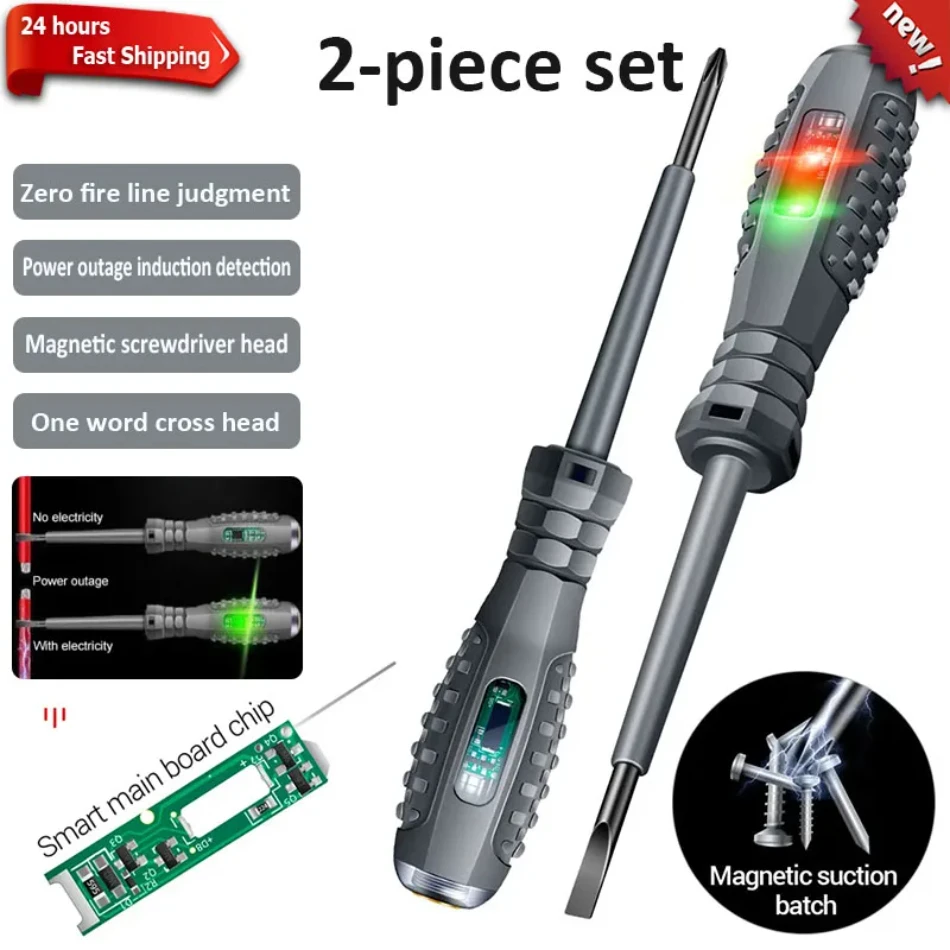
The Electrician's Dual-Head Tester is a practical, no-nonsense tool designed for tradesmen who value both utility and safety in their daily electrical work. This isn't some flimsy gadget; it's built to get the job done, offering essential voltage detection alongside basic fastening capabilities. It targets the professional or serious DIYer who needs reliable feedback without unnecessary complexity. This set provides a straightforward solution for identifying live wires and ensuring circuits are dead before work begins, a fundamental requirement in any electrical task.
At its heart, this tool serves a dual purpose: a standard screwdriver and a voltage tester. The primary function of the integrated voltage tester is to provide quick, visual confirmation of electrical presence. It's a critical first line of defense before touching any wiring. The design integrates this testing capability directly into the handle, making it a convenient all-in-one unit. This eliminates the need to carry separate tools for basic voltage checks and fastening.
This isn't a multimeter, but it doesn't pretend to be. It offers a clear, binary indication: live or not. For many quick checks, this simplicity is a virtue. The tool's ability to detect both zero and live lines is crucial. A green light signals a zero line, while a red light indicates a live firewire. This visual feedback is instantaneous. It provides a quick, unambiguous answer to a critical safety question.
Compared to older, single-function neon-bulb testers, these LED indicators are far more visible in varying light conditions. The clarity of the red/green system reduces guesswork. Traditional testers often require specific angles or dim lighting to confirm a glow, which can be a real pain. This modern approach offers a distinct advantage in terms of user experience and safety, making it a more reliable option for everyday use.
Voltage detection is handled through induction, meaning it can sense voltage without direct contact in some scenarios, or with minimal contact for precise readings. The advertised range of 12-220V AC/DC covers most common household and light commercial applications. This broad range ensures its utility across various low-voltage and standard line-voltage circuits. It's a versatile piece of kit.
When testing, the user touches the top cap with a finger, completing the circuit for accurate readings. This method is standard for pen-style testers. It ensures proper grounding for the internal smart chip to function correctly. The sensitivity of the induction detection allows for quick identification of power outages or live wires within a circuit. This capability saves time and prevents potential hazards.
Many basic testers struggle with lower voltage detection, often requiring a stronger current to register. This tool's claim of detecting down to 12V suggests a more sensitive internal circuit. This expanded capability means it's useful for automotive electrical work or low-voltage control systems, not just standard wall outlets. It extends its practical applications beyond typical residential wiring.
Each screwdriver in the 2-piece set features an alloy steel bit, designed for durability and resistance to wear. The bits are interchangeable, offering both cross (Phillips) and one-word (slotted) heads. This covers the most common screw types encountered in electrical work. A magnetic tip is integrated, a small but significant detail. It keeps screws from dropping into inaccessible places, a common frustration.
The handle design appears to prioritize grip and user comfort. It features a textured, presumably rubberized, surface that provides a secure hold. A solid grip is essential when working with electricity, as slippage can lead to dangerous mistakes. The overall construction suggests a tool meant for regular use, not just occasional light duty. The robust handle helps prevent hand fatigue during extended tasks.
Compared to cheap, smooth plastic handles that offer little purchase, this textured grip is a welcome improvement. It allows for better torque application without the hand slipping. The material choice for the handle also implies some level of insulation, critical for electrical tools. A good handle isn't just about comfort; it's about control and safety. This design aims for both.
Inside the handle, a smart main board chip is responsible for the voltage detection logic. This chip processes the electrical signals and controls the LED indicators. Its inclusion suggests a more precise and stable testing experience compared to purely mechanical or simpler electronic designs. The reliability of this chip is paramount for accurate readings. It's the brains of the operation.
Power for the electronics comes from three LR41 button batteries. These are common and relatively easy to replace. The use of standard, accessible batteries is a practical choice. It ensures the tool remains functional for a long time. The internal components are housed within the robust handle, protecting them from typical workshop wear and tear. This design choice contributes to the tool's overall longevity.
Many budget tools cut corners on internal components, leading to erratic performance or short lifespans. The explicit mention of a
Core Functionality: More Than Just a Screwdriver
At its heart, this tool serves a dual purpose: a standard screwdriver and a voltage tester. The primary function of the integrated voltage tester is to provide quick, visual confirmation of electrical presence. It's a critical first line of defense before touching any wiring. The design integrates this testing capability directly into the handle, making it a convenient all-in-one unit. This eliminates the need to carry separate tools for basic voltage checks and fastening.
This isn't a multimeter, but it doesn't pretend to be. It offers a clear, binary indication: live or not. For many quick checks, this simplicity is a virtue. The tool's ability to detect both zero and live lines is crucial. A green light signals a zero line, while a red light indicates a live firewire. This visual feedback is instantaneous. It provides a quick, unambiguous answer to a critical safety question.
Compared to older, single-function neon-bulb testers, these LED indicators are far more visible in varying light conditions. The clarity of the red/green system reduces guesswork. Traditional testers often require specific angles or dim lighting to confirm a glow, which can be a real pain. This modern approach offers a distinct advantage in terms of user experience and safety, making it a more reliable option for everyday use.
Voltage Detection Reliability
Voltage detection is handled through induction, meaning it can sense voltage without direct contact in some scenarios, or with minimal contact for precise readings. The advertised range of 12-220V AC/DC covers most common household and light commercial applications. This broad range ensures its utility across various low-voltage and standard line-voltage circuits. It's a versatile piece of kit.
When testing, the user touches the top cap with a finger, completing the circuit for accurate readings. This method is standard for pen-style testers. It ensures proper grounding for the internal smart chip to function correctly. The sensitivity of the induction detection allows for quick identification of power outages or live wires within a circuit. This capability saves time and prevents potential hazards.
Many basic testers struggle with lower voltage detection, often requiring a stronger current to register. This tool's claim of detecting down to 12V suggests a more sensitive internal circuit. This expanded capability means it's useful for automotive electrical work or low-voltage control systems, not just standard wall outlets. It extends its practical applications beyond typical residential wiring.
Build and Ergonomics: A Grip That Matters
Each screwdriver in the 2-piece set features an alloy steel bit, designed for durability and resistance to wear. The bits are interchangeable, offering both cross (Phillips) and one-word (slotted) heads. This covers the most common screw types encountered in electrical work. A magnetic tip is integrated, a small but significant detail. It keeps screws from dropping into inaccessible places, a common frustration.
The handle design appears to prioritize grip and user comfort. It features a textured, presumably rubberized, surface that provides a secure hold. A solid grip is essential when working with electricity, as slippage can lead to dangerous mistakes. The overall construction suggests a tool meant for regular use, not just occasional light duty. The robust handle helps prevent hand fatigue during extended tasks.
Compared to cheap, smooth plastic handles that offer little purchase, this textured grip is a welcome improvement. It allows for better torque application without the hand slipping. The material choice for the handle also implies some level of insulation, critical for electrical tools. A good handle isn't just about comfort; it's about control and safety. This design aims for both.
Internal Engineering and Durability
Inside the handle, a smart main board chip is responsible for the voltage detection logic. This chip processes the electrical signals and controls the LED indicators. Its inclusion suggests a more precise and stable testing experience compared to purely mechanical or simpler electronic designs. The reliability of this chip is paramount for accurate readings. It's the brains of the operation.
Power for the electronics comes from three LR41 button batteries. These are common and relatively easy to replace. The use of standard, accessible batteries is a practical choice. It ensures the tool remains functional for a long time. The internal components are housed within the robust handle, protecting them from typical workshop wear and tear. This design choice contributes to the tool's overall longevity.
Many budget tools cut corners on internal components, leading to erratic performance or short lifespans. The explicit mention of a