Official Store Deal
Expert Analysis Overview
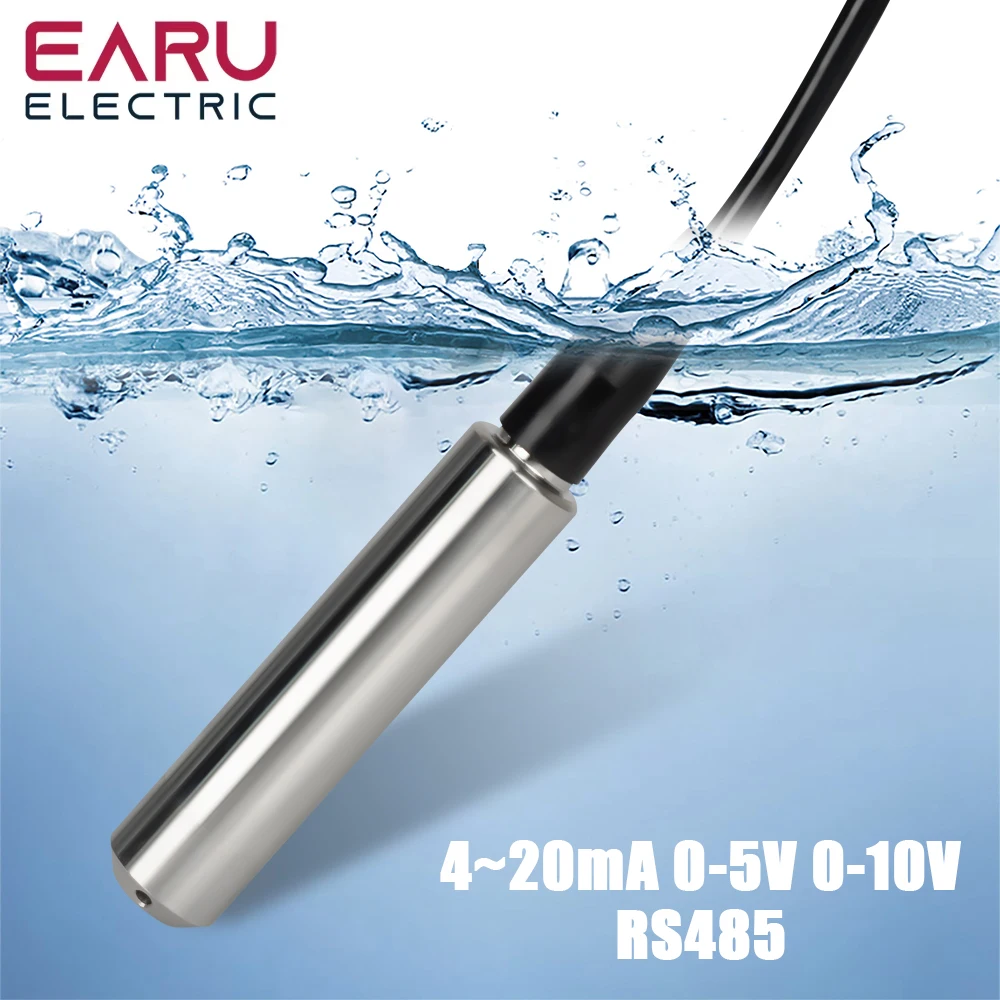
Precision in Fluid Dynamics\nThe EARU Submersible Liquid Level Transmitter is a specialized metrological instrument designed for accurate and reliable liquid level measurement in various industrial and environmental applications. This device excels in providing repeatable results. Its robust construction and versatile output options position it as a superior alternative to standard float switches, which often lack the precision and data logging capabilities required for critical monitoring. The transmitter's core function is to convert liquid level into a standardized electrical signal, enabling seamless integration with control systems and data acquisition platforms.\n\nMaterial Science and Longevity\nThe physical integrity of any submerged sensor is paramount. This transmitter features a 304 stainless steel shell, providing excellent resistance to corrosion in a wide range of non-corrosive liquid media. The internal diaphragm, critical for pressure sensing, is constructed from 316 stainless steel, offering enhanced chemical resistance compared to the 304SS shell. This material selection ensures prolonged operational life. Standard sensors often utilize less durable plastics or lower-grade stainless steels, which can degrade rapidly in challenging environments. The use of 316SS for the diaphragm is a significant upgrade, directly impacting the sensor's longevity and measurement stability. This choice minimizes material fatigue. It also reduces the risk of contamination from sensor degradation.\n\n### Measurement Precision and Accuracy\nAccuracy is the cornerstone of metrology. The EARU transmitter boasts an impressive 0.5%FS accuracy level, with a default setting of 0.2%FS. This level of precision is crucial for applications where even minor deviations in liquid level can have significant consequences. For instance, in chemical processing or water treatment plants, precise level control prevents overflows or dry-running conditions. The device also exhibits a stable performance of ±0.1%FS per year, indicating minimal long-term drift. This stability reduces the frequency of recalibration. Temperature drift is specified at ±0.02%FS/°C, demonstrating its capability to maintain accuracy across varying medium temperatures (0-50°C). Many entry-level sensors offer only 1%FS accuracy or higher drift rates, making them unsuitable for demanding industrial control. This sensor provides reliable data. It ensures operational consistency.\n\n### Interfacing with Industrial Control\nVersatility in output signals is a key advantage for integration into diverse control architectures. This transmitter supports multiple industry-standard outputs: 4-20mA, 0-5V, 0-10V, and RS485. The 4-20mA current loop is widely used for its noise immunity and ability to transmit signals over long distances without significant loss. Voltage outputs (0-5V, 0-10V) are common for direct connection to PLCs or data loggers. RS485 offers digital communication, allowing for multiple sensors on a single bus and providing more detailed diagnostic information. This broad compatibility eliminates the need for signal converters in many setups. It simplifies system design. Generic sensors often limit users to a single output type, forcing additional hardware and complexity. The EARU transmitter offers flexibility. It streamlines integration efforts.\n\n### Operational Envelope and Adaptability\nAn effective level sensor must adapt to varying application requirements. The EARU transmitter features an adjustable measuring range from 0-300 meters. This wide range makes it suitable for everything from shallow tanks to deep wells or reservoirs. Users can select a proper measurement range based on the actual liquid level, optimizing resolution for specific needs. The sensor is designed for non-corrosive liquids compatible with stainless steel, which covers a vast array of industrial fluids, water, and wastewater. Its overload capacity is <1.5 times the range, providing a safety margin against unexpected pressure spikes. This adaptability contrasts sharply with fixed-range sensors that require specific models for different depths. It offers significant operational flexibility. This reduces inventory requirements.\n\n### Installation Mechanics\nEase of installation contributes to overall system efficiency. The transmitter incorporates a custom 19mm probe diameter, making it compact and suitable for installation in confined spaces or existing pipework. The screw installation method ensures a secure and straightforward mounting process. Its block design further simplifies integration. This thoughtful design minimizes installation time and effort. It reduces potential points of failure. Many sensors require complex mounting brackets or specialized tools, increasing setup costs and complexity. This design is user-friendly.\n\n### Environmental Fortification\nDurability in harsh environments is non-negotiable for submerged sensors. The EARU transmitter boasts an IP68 protection class, signifying complete protection against dust ingress and continuous immersion in water under specified conditions. This rating ensures reliable operation even when fully submerged for extended periods. The connecting cable is a polyurethane shielded wire, known for its excellent abrasion resistance, chemical resistance, and flexibility, crucial for long-term deployment in liquid environments. This robust construction prevents environmental factors from compromising sensor performance. It ensures data integrity. Lesser sensors often fail due to inadequate sealing or cable degradation.\n\n### Core Processing and Responsiveness\nThe internal components dictate the sensor's performance characteristics. This device utilizes an imported chip, which is fundamental to its high accuracy and stable performance. It incorporates anti-overload and anti-shock features, protecting the sensor from damage due to sudden pressure changes or physical impacts. The fast response time of 10ms (50ms for RS485) ensures that liquid level changes are detected and transmitted almost instantaneously, providing real-time data for critical control applications. This rapid response is vital. It allows for immediate system adjustments. Many budget sensors exhibit slower response times, leading to lags in control loops. This sensor provides timely data.\n\n### Long-Term Measurement Economy\nInvesting in a high-quality level transmitter like the EARU model translates into significant long-term savings. Its superior accuracy reduces product waste and optimizes process efficiency. The robust construction and high-grade materials minimize maintenance requirements and extend the sensor's lifespan, reducing replacement costs. The versatile output options simplify integration, cutting down on engineering and installation expenses. While the initial price point may be higher than basic float switches, the return on investment (ROI) through improved operational reliability, reduced downtime, and precise control makes it a cost-effective solution over its operational life. This device is an investment. It pays dividends in performance and reliability. It prevents costly errors.\n\nImagine a scenario where your critical liquid storage tanks are monitored with unwavering precision, providing real-time data that allows for proactive management and optimized resource allocation. This transmitter integrates seamlessly into your existing infrastructure, delivering the confidence that comes from accurate, reliable measurements, day in and day out. Your operations become more efficient, your processes more controlled, and your peace of mind significantly enhanced.