EARU DPNLE-32 1P+N RCBO with Overload and Leakage Protection
Official Store Deal
Expert Analysis Overview
Precision Circuit Safeguarding: The EARU DPNLE-32 RCBO
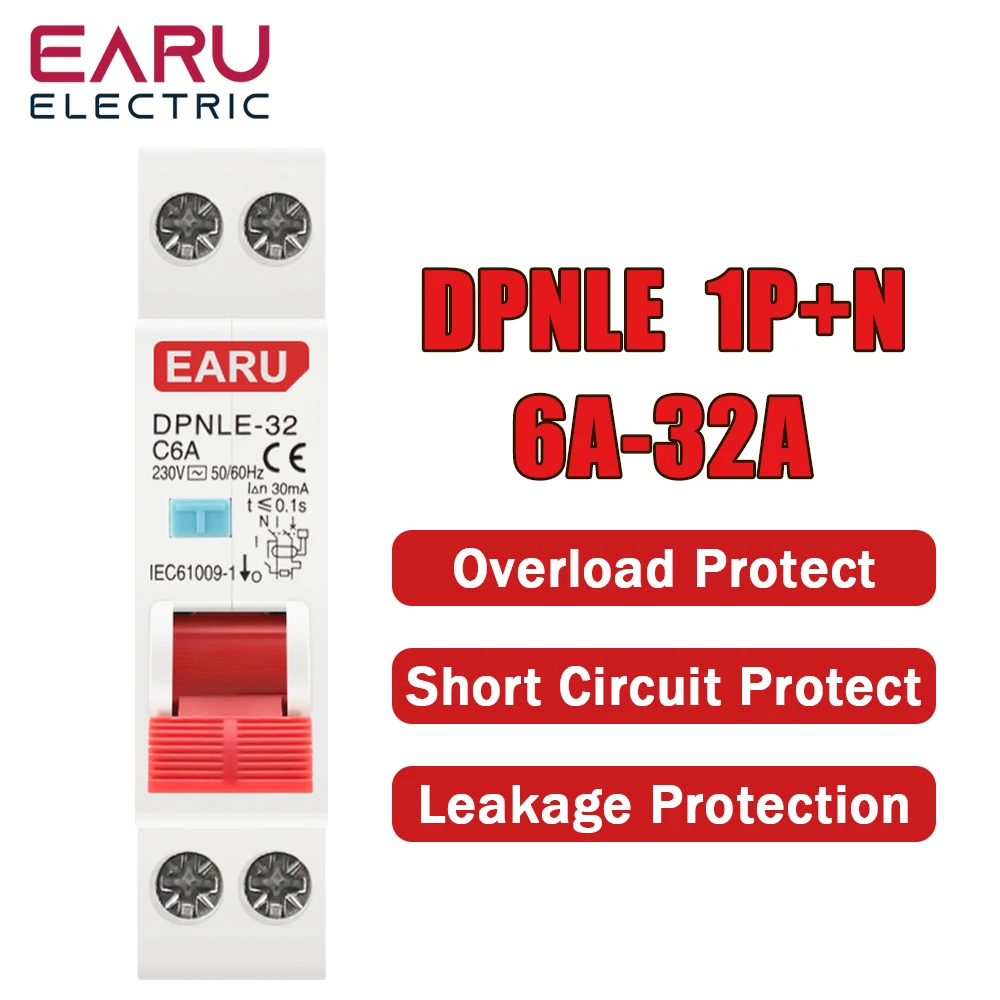
The EARU DPNLE-32 RCBO is a compact, single-module residual current circuit breaker with overload protection, essential for modern residential and light commercial electrical safety. This device integrates multiple critical protection functions into a single, space-saving unit, addressing common electrical hazards effectively. Its design prioritizes both operational reliability and ease of installation within standard distribution boards. The unit's adherence to international safety standards provides a foundational layer of trust for electrical installations.Integrated Protection Capabilities
This RCBO offers a triple threat of electrical protection: overload protection, short circuit protection, and residual current (leakage) protection. Overload protection prevents damage to circuits and appliances when excessive current flows due to too many devices operating simultaneously. Short circuit protection rapidly disconnects power during a sudden, dangerous surge, often caused by faulty wiring. Leakage protection, the hallmark of an RCBO, detects even small imbalances in current flow, indicating a potential shock hazard or insulation fault. This comprehensive approach minimizes the risk of electrical fires and personal injury.Generic circuit breakers often require separate components for these functions, increasing panel complexity. The DPNLE-32 consolidates these, simplifying wiring and reducing installation time. This integration is a significant advantage for electricians. It streamlines the setup process considerably.
Robust Construction and Dimensional Efficiency
The physical dimensions of the DPNLE-32 are notably compact, measuring 18mm in width, 72mm in height, and 60mm in depth. This single-module form factor is ideal for modern consumer units where space is often at a premium. The housing is constructed from flame-retardant material, a critical safety feature that helps contain potential electrical fires within the device itself. The visible terminals appear robust, designed for secure wire connections.Such compact design allows for more efficient use of panel space. This is a practical benefit for installers. It also enables upgrades without extensive panel modifications. The flame-retardant housing is not merely a feature; it is a fundamental safety requirement, especially in enclosed electrical environments. Unlike many basic circuit breakers that may use less resilient plastics, the specified flame-retardant housing offers an enhanced layer of fire safety, crucial for preventing the spread of electrical incidents. This material choice directly contributes to the overall safety profile of the installation.
Performance Under Stress: Tripping Characteristics
The RCBO is rated for a breaking capacity of 6000A (6kA), indicating its ability to safely interrupt high fault currents without sustaining damage. It operates on AC 230V at 50/60Hz, making it suitable for standard residential and light commercial electrical systems in many regions. The device features a C-type tripping characteristic, meaning it is designed to trip between 5 and 10 times its rated current for short-circuit protection. This characteristic is common for general-purpose circuits, balancing nuisance tripping with effective protection.Understanding tripping characteristics is vital for proper circuit design. A C-type curve offers a good balance. It protects against overloads and short circuits in typical domestic settings. For instance, in a scenario where a motor starts up, drawing a brief surge of current, a C-type breaker is less likely to trip unnecessarily compared to a more sensitive B-type. This prevents inconvenient power interruptions. The 6kA breaking capacity is a standard for many residential and small commercial applications, ensuring the device can handle significant fault currents without catastrophic failure, a key aspect of electrical system integrity. This capacity is a direct measure of its reliability during fault conditions.
Durability and Compliance Standards
With a mechanical lifespan of 20,000 cycles, the DPNLE-32 is engineered for long-term reliability. This indicates the number of times the operating handle can be switched on and off without mechanical failure. The device is compliant with IEC61009-1 standards and carries CE certification, affirming its adherence to rigorous international safety and performance benchmarks. These certifications are not merely labels; they represent a commitment to quality and safety, verified by independent testing bodies.Such a high mechanical lifespan ensures consistent operation over many years. This reduces the need for premature replacement. It also provides peace of mind for the end-user. The IEC61009-1 standard specifically covers residual current operated circuit-breakers with integral overcurrent protection for household and similar uses. This compliance means the device has undergone stringent tests for its ability to detect and interrupt both overcurrents and earth leakage currents safely. The CE mark further confirms its conformity with European health, safety, and environmental protection standards, making it suitable for a wide range of markets. These certifications are non-negotiable for safe electrical installations.
Installation and Operational Simplicity
The RCBO features clearly labeled wiring terminals at both the top and bottom, indicating the neutral (N) and live (L) connections. The operating handle is prominently red, providing a clear visual indication of the breaker's status (on/off). A test button is included, allowing for periodic verification of the residual current detection function, a crucial maintenance step for ensuring ongoing safety. The design includes tighten screws for secure wire connections, emphasizing the importance of proper torque to prevent loose connections and potential arcing.Ease of installation is a significant factor for electricians. Clear labeling simplifies wiring. The test button is a vital safety feature. Regular testing confirms the leakage protection remains active. This proactive maintenance is critical for preventing electrical shocks. Unlike older designs that might have ambiguous labeling or less accessible test functions, the DPNLE-32 prioritizes user-friendly operation and maintenance. The secure screw terminals are fundamental to preventing overheating and ensuring reliable electrical contact, directly impacting the long-term safety and performance of the circuit. Proper tightening is paramount.