EARU Din Rail Manual Transfer Switch
Official Store Deal
Expert Analysis Overview
The EARU Manual Transfer Switch is a critical safety component engineered for seamless and secure power source transitions in residential and light commercial electrical systems. This device provides a reliable method for switching between a primary power source and a standby generator or alternative supply, mitigating the risks associated with power interruptions. Its design prioritizes operational safety and adherence to established electrical standards, making it an essential installation for maintaining continuous power. This switch is a foundational element for any robust backup power strategy.
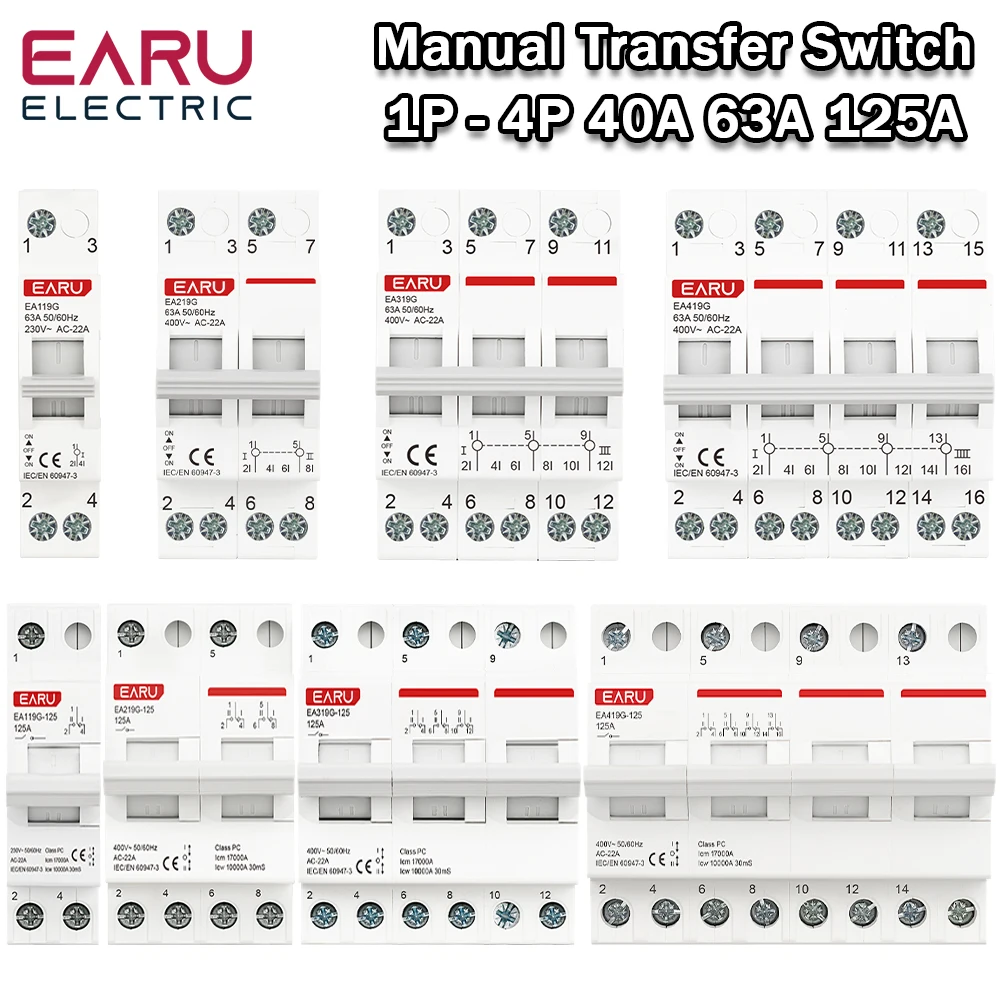
The visual data presents a range of EARU manual transfer switches, available in 1-pole (1P), 2-pole (2P), 3-pole (3P), and 4-pole (4P) configurations. These variations accommodate diverse electrical system requirements, from single-phase residential applications to three-phase commercial setups. The modular design is evident.
The implication of such a broad range of pole configurations is direct adaptability. Users can select the precise switch needed for their specific electrical panel, ensuring proper isolation and transfer for all active conductors, including neutral in some 4-pole systems. This prevents improper cross-connection.
Compared to rudimentary or non-compliant switching methods, these dedicated manual transfer switches offer a standardized and safe mechanism. They eliminate the inherent dangers of backfeeding the grid or creating hazardous electrical conditions during power outages. Safety is paramount.
The operating instructions clearly illustrate a three-position switch: 'Common Power' (Position I), 'Disconnect' (Middle), and 'Standby Power' (Position II). This intuitive design simplifies the transfer process for the end-user. Each position is distinct.
This clear operational sequence ensures that the primary and standby power sources are never simultaneously connected, preventing dangerous short circuits or damage to connected equipment. The 'Disconnect' position offers a critical safety interlock, fully isolating the load. This is a vital safety feature.
Unlike older, less defined transfer mechanisms, this switch provides unambiguous visual and tactile feedback for its current state. The large D-shaped handle further enhances this clarity, making operation straightforward even under stressful conditions. It is easy to use.
Product images highlight the use of PC flame-retardant material for the switch housing. This material choice is critical for electrical safety, designed to resist ignition and prevent the spread of fire in the event of an electrical fault. Fire safety is non-negotiable.
The implication of using flame-retardant material is a significantly reduced risk of electrical fires originating from the switch itself. This provides an essential layer of protection for the entire electrical system and the property it serves. It protects the installation.
Compared to generic plastics that may not meet stringent fire safety standards, PC flame-retardant material offers superior thermal stability and self-extinguishing properties. This material choice aligns with modern electrical safety regulations. It is a responsible material choice.
The switches feature tunnel-type terminal blocks, designed to tightly wrap around wires for reliable wiring connections. The specifications indicate terminal/cable sizes of 16mm² for 40A/63A models and 35mm² for 125A models. Proper wire termination is crucial.
The implication of robust tunnel-type terminals is a secure, low-resistance connection that minimizes the risk of loose wires, arcing, and overheating. Correct wire gauge selection for these terminals is essential to maintain circuit integrity and prevent thermal issues. Secure connections are vital.
Unlike spring-clip terminals or less substantial screw terminals, tunnel-type blocks provide a firm, consistent grip on the conductor, reducing the likelihood of connection failure over time. This design supports the specified current ratings effectively. It ensures long-term stability.
The product is designed for 35mm DIN rail mounting, a standard installation method for circuit breakers and other modular electrical components within distribution boxes. Securing clips facilitate easy installation. This is a common mounting standard.
This standard rail mounting simplifies integration into existing or new electrical panels, allowing for a neat and organized installation. The modular nature means it can be easily added alongside other protective devices. Installation is straightforward.
Compared to custom-mount or panel-mount switches that require specific enclosures or drilling, DIN rail compatibility offers universal fitment in most modern electrical enclosures. This reduces installation time and complexity. It fits standard setups.
The available current ratings are 40A, 63A, and 125A, catering to a wide spectrum of load requirements. Rated voltages are 1P: AC230V and 2P/3P/4P: AC400V, suitable for both single-phase and three-phase systems. A broad range is offered.
The implication of this amperage and voltage versatility is that the switch can be precisely matched to the specific electrical demands of the installation, ensuring optimal performance without oversizing or undersizing. This prevents unnecessary cost or inadequate protection. Correct sizing is important.
Unlike single-amperage or single-phase-only switches, this series provides a comprehensive solution for various electrical environments, from small residential backup systems to larger commercial generator installations. It covers many applications.
Product parameters explicitly state compliance with standard IEC/EN 60947-3. This international standard specifies requirements for switch-disconnectors, disconnectors, and fuse-combination units. Compliance is a key indicator.
Adherence to IEC/EN 60947-3 signifies that the switch has undergone rigorous testing and meets established safety and performance benchmarks for low-voltage switchgear. This provides assurance regarding its reliability and safety in operation. It meets strict criteria.
Compared to uncertified or generic electrical components, a switch compliant with IEC/EN 60947-3 offers a higher degree of confidence in its design, construction, and operational integrity. This is crucial for preventing electrical hazards. Certification matters greatly.
The protection degree is listed as IP20, indicating protection against solid objects larger than 12.5mm but no protection against water. The ambient temperature range is -5°C to 40°C. Environmental limits are defined.
An IP20 rating implies that the switch is intended for indoor use within a protected enclosure, such as a distribution box, where it will not be exposed to moisture or excessive dust. Operating within the specified temperature range ensures optimal performance and longevity. Proper environment is key.
Unlike outdoor-rated or higher IP-rated devices, this switch is specifically designed for controlled indoor environments. Users must ensure the installation location aligns with the IP20 rating to prevent premature failure or safety issues. It is for indoor use.
Electrical life is rated at 1500 operations, and mechanical life at 8500 operations. The rated frequency is 50/60Hz, accommodating global electrical standards. These figures indicate durability.
The implication of these life ratings is that the switch is designed for infrequent but critical operations, typical of manual transfer applications during power outages. The mechanical life ensures the physical mechanism remains functional over many cycles. It is built to last.
Compared to standard circuit breakers designed for frequent tripping and resetting, a manual transfer switch prioritizes robust, reliable operation for its specific duty cycle. This ensures it performs when needed most. It is reliable for its purpose.
This EARU Manual Transfer Switch series offers a robust and compliant solution for managing critical power transitions. Its adherence to international standards, flame-retardant construction, and clear operational mechanism provide a high degree of safety and reliability. The range of pole configurations and current ratings ensures suitability for diverse applications, from residential backup power to light commercial installations. By integrating this switch, users gain peace of mind, knowing their electrical system is equipped for secure power source management during unforeseen outages. Imagine the confidence of knowing your essential circuits can be safely and quickly switched to a backup generator, maintaining critical operations without compromise or hazard. This device ensures that power continuity is not just a hope, but a controlled reality, safeguarding both equipment and personnel. It is a smart investment for any property owner seeking enhanced electrical resilience.
Ensuring Uninterrupted Power Flow: A Core Function
The visual data presents a range of EARU manual transfer switches, available in 1-pole (1P), 2-pole (2P), 3-pole (3P), and 4-pole (4P) configurations. These variations accommodate diverse electrical system requirements, from single-phase residential applications to three-phase commercial setups. The modular design is evident.
The implication of such a broad range of pole configurations is direct adaptability. Users can select the precise switch needed for their specific electrical panel, ensuring proper isolation and transfer for all active conductors, including neutral in some 4-pole systems. This prevents improper cross-connection.
Compared to rudimentary or non-compliant switching methods, these dedicated manual transfer switches offer a standardized and safe mechanism. They eliminate the inherent dangers of backfeeding the grid or creating hazardous electrical conditions during power outages. Safety is paramount.
Operational Clarity and Mechanism
The operating instructions clearly illustrate a three-position switch: 'Common Power' (Position I), 'Disconnect' (Middle), and 'Standby Power' (Position II). This intuitive design simplifies the transfer process for the end-user. Each position is distinct.
This clear operational sequence ensures that the primary and standby power sources are never simultaneously connected, preventing dangerous short circuits or damage to connected equipment. The 'Disconnect' position offers a critical safety interlock, fully isolating the load. This is a vital safety feature.
Unlike older, less defined transfer mechanisms, this switch provides unambiguous visual and tactile feedback for its current state. The large D-shaped handle further enhances this clarity, making operation straightforward even under stressful conditions. It is easy to use.
Robust Construction for Electrical Integrity
Product images highlight the use of PC flame-retardant material for the switch housing. This material choice is critical for electrical safety, designed to resist ignition and prevent the spread of fire in the event of an electrical fault. Fire safety is non-negotiable.
The implication of using flame-retardant material is a significantly reduced risk of electrical fires originating from the switch itself. This provides an essential layer of protection for the entire electrical system and the property it serves. It protects the installation.
Compared to generic plastics that may not meet stringent fire safety standards, PC flame-retardant material offers superior thermal stability and self-extinguishing properties. This material choice aligns with modern electrical safety regulations. It is a responsible material choice.
Terminal Quality and Wire Management
The switches feature tunnel-type terminal blocks, designed to tightly wrap around wires for reliable wiring connections. The specifications indicate terminal/cable sizes of 16mm² for 40A/63A models and 35mm² for 125A models. Proper wire termination is crucial.
The implication of robust tunnel-type terminals is a secure, low-resistance connection that minimizes the risk of loose wires, arcing, and overheating. Correct wire gauge selection for these terminals is essential to maintain circuit integrity and prevent thermal issues. Secure connections are vital.
Unlike spring-clip terminals or less substantial screw terminals, tunnel-type blocks provide a firm, consistent grip on the conductor, reducing the likelihood of connection failure over time. This design supports the specified current ratings effectively. It ensures long-term stability.
Installation and Operational Simplicity
The product is designed for 35mm DIN rail mounting, a standard installation method for circuit breakers and other modular electrical components within distribution boxes. Securing clips facilitate easy installation. This is a common mounting standard.
This standard rail mounting simplifies integration into existing or new electrical panels, allowing for a neat and organized installation. The modular nature means it can be easily added alongside other protective devices. Installation is straightforward.
Compared to custom-mount or panel-mount switches that require specific enclosures or drilling, DIN rail compatibility offers universal fitment in most modern electrical enclosures. This reduces installation time and complexity. It fits standard setups.
Amperage Versatility and System Compatibility
The available current ratings are 40A, 63A, and 125A, catering to a wide spectrum of load requirements. Rated voltages are 1P: AC230V and 2P/3P/4P: AC400V, suitable for both single-phase and three-phase systems. A broad range is offered.
The implication of this amperage and voltage versatility is that the switch can be precisely matched to the specific electrical demands of the installation, ensuring optimal performance without oversizing or undersizing. This prevents unnecessary cost or inadequate protection. Correct sizing is important.
Unlike single-amperage or single-phase-only switches, this series provides a comprehensive solution for various electrical environments, from small residential backup systems to larger commercial generator installations. It covers many applications.
Safety Protocols and Compliance Standards
Product parameters explicitly state compliance with standard IEC/EN 60947-3. This international standard specifies requirements for switch-disconnectors, disconnectors, and fuse-combination units. Compliance is a key indicator.
Adherence to IEC/EN 60947-3 signifies that the switch has undergone rigorous testing and meets established safety and performance benchmarks for low-voltage switchgear. This provides assurance regarding its reliability and safety in operation. It meets strict criteria.
Compared to uncertified or generic electrical components, a switch compliant with IEC/EN 60947-3 offers a higher degree of confidence in its design, construction, and operational integrity. This is crucial for preventing electrical hazards. Certification matters greatly.
Environmental and Durability Considerations
The protection degree is listed as IP20, indicating protection against solid objects larger than 12.5mm but no protection against water. The ambient temperature range is -5°C to 40°C. Environmental limits are defined.
An IP20 rating implies that the switch is intended for indoor use within a protected enclosure, such as a distribution box, where it will not be exposed to moisture or excessive dust. Operating within the specified temperature range ensures optimal performance and longevity. Proper environment is key.
Unlike outdoor-rated or higher IP-rated devices, this switch is specifically designed for controlled indoor environments. Users must ensure the installation location aligns with the IP20 rating to prevent premature failure or safety issues. It is for indoor use.
Long-Term Reliability in Critical Applications
Electrical life is rated at 1500 operations, and mechanical life at 8500 operations. The rated frequency is 50/60Hz, accommodating global electrical standards. These figures indicate durability.
The implication of these life ratings is that the switch is designed for infrequent but critical operations, typical of manual transfer applications during power outages. The mechanical life ensures the physical mechanism remains functional over many cycles. It is built to last.
Compared to standard circuit breakers designed for frequent tripping and resetting, a manual transfer switch prioritizes robust, reliable operation for its specific duty cycle. This ensures it performs when needed most. It is reliable for its purpose.
This EARU Manual Transfer Switch series offers a robust and compliant solution for managing critical power transitions. Its adherence to international standards, flame-retardant construction, and clear operational mechanism provide a high degree of safety and reliability. The range of pole configurations and current ratings ensures suitability for diverse applications, from residential backup power to light commercial installations. By integrating this switch, users gain peace of mind, knowing their electrical system is equipped for secure power source management during unforeseen outages. Imagine the confidence of knowing your essential circuits can be safely and quickly switched to a backup generator, maintaining critical operations without compromise or hazard. This device ensures that power continuity is not just a hope, but a controlled reality, safeguarding both equipment and personnel. It is a smart investment for any property owner seeking enhanced electrical resilience.