EARU 1P+N Residual Current Circuit Breaker with Overload & Leakage Protection
Official Store Deal
Expert Analysis Overview
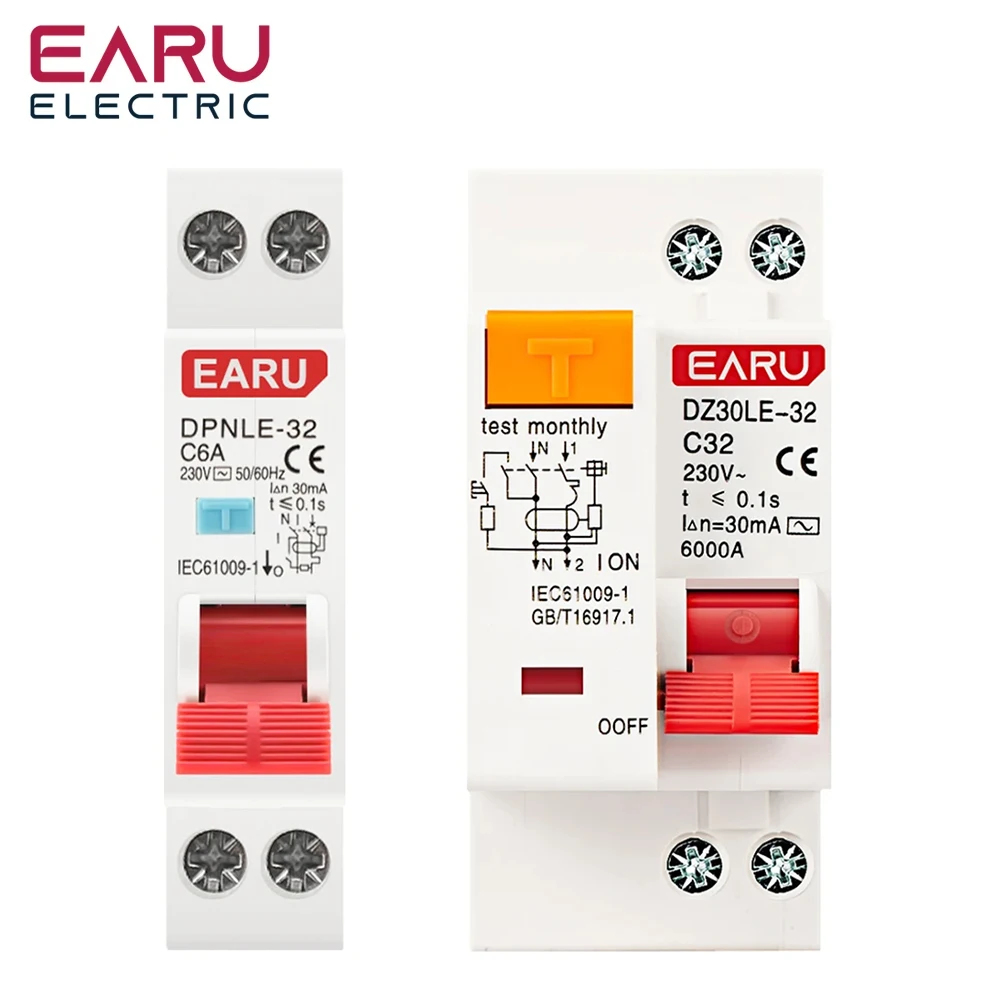
The EARU DPNLE-32 and DZ30LE/DZ40LE series of residual current circuit breakers (RCCBs) are essential safety components designed for comprehensive electrical protection in residential and light commercial settings. These devices integrate overload, short circuit, and leakage current protection into a single, compact unit, providing a significant upgrade over standard miniature circuit breakers (MCBs) that only address overcurrents. The visible construction implies a focus on reliable operation and user safety, critical for safeguarding both electrical installations and human life.
The DPNLE-32 model, with its 18mm width, represents a compact solution for single-phase circuits requiring combined overcurrent and earth leakage protection. This narrow profile allows for efficient use of space within consumer units or distribution boards, a common challenge in modern electrical installations. Its design integrates the functions typically found in a separate MCB and Residual Current Device (RCD) into one module.
This integrated approach simplifies wiring and reduces the overall footprint, which is particularly beneficial in crowded electrical panels. Unlike installations requiring separate MCB and RCD units, this combined breaker streamlines the protection scheme. The reduction in component count also inherently minimizes potential points of failure, contributing to a more reliable system.
Compared to standard MCBs that only protect against overloads and short circuits, the inclusion of residual current detection in the DPNLE-32 offers a superior layer of safety. This ensures protection against hazardous earth leakage currents, which can cause electric shock or fire. It is a crucial distinction for modern safety standards.
The product line offers a wide range of rated currents, from 6A to 63A, accommodating diverse circuit requirements. The DPNLE-32 is available in lower current ratings, while the DZ30LE/DZ40LE series covers the higher end, including 40A, 50A, and 63A. This versatility allows for precise matching of the breaker to the specific load and wiring gauge of the circuit it protects.
Selecting the correct current rating is paramount for effective protection. An appropriately rated breaker prevents conductor overheating under overload conditions, preserving insulation integrity and preventing fire. This ensures the longevity of the electrical wiring.
Generic circuit breakers often force installers to choose between limited current ranges or multiple product lines. This comprehensive range simplifies inventory and selection for electricians. It offers flexibility for various domestic and light industrial applications.
Both series feature a 30mA residual operating current, a standard sensitivity for human protection against electric shock. This low trip threshold ensures that even small leakage currents, potentially indicative of insulation failure or direct contact, will quickly interrupt the circuit. Rapid interruption is key to preventing severe injury.
This sensitivity is critical for personal safety in environments like bathrooms, kitchens, and outdoor circuits. It provides a level of protection significantly beyond that offered by overcurrent devices alone. The device acts swiftly.
Unlike older installations that might rely solely on grounding and bonding, these RCCBs actively monitor for current imbalances. This proactive detection and interruption mechanism minimizes the duration of exposure to dangerous currents. It is a vital safety feature.
A 6000A breaking capacity indicates the maximum short-circuit current the breaker can safely interrupt without sustaining damage. This rating is typical for residential and light commercial applications, providing robust protection against common fault currents. A higher breaking capacity ensures the device can handle severe electrical faults.
This capability is a direct measure of the breaker's resilience under extreme fault conditions. It prevents catastrophic failure of the breaker itself, maintaining the integrity of the electrical distribution system. The device handles high current surges.
Compared to devices with lower breaking capacities, which might weld contacts or fail to clear a severe fault, these breakers offer enhanced system reliability. This translates to greater safety and reduced risk of equipment damage. It is a critical safety specification.
The visible flame retardant housing material is a crucial safety feature, minimizing the risk of fire propagation in the event of an internal fault or external heat source. This material choice is standard for quality electrical components, enhancing overall system safety. Fire safety is paramount.
Such housing materials are engineered to self-extinguish or significantly slow flame spread. This design consideration protects adjacent components and the surrounding environment from potential electrical fires. It adds a layer of passive protection.
Unlike cheaper alternatives that might use less robust plastics, the use of flame-retardant materials aligns with stringent electrical safety standards. This commitment to material quality reflects a broader focus on product reliability and user safety. It is a non-negotiable safety feature.
Compliance with IEC61009-1 and GB/T16917.1 standards and CE certification confirms that these breakers meet international and Chinese safety and performance requirements. These certifications are not merely labels; they signify that the product has undergone rigorous testing. Standards ensure product quality.
Adherence to these standards guarantees that the device performs as specified under various conditions, including tripping characteristics, breaking capacity, and environmental resilience. This provides assurance of the product's quality and safety. It is a mark of reliability.
Many generic electrical components lack such comprehensive certification, making their performance and safety questionable. These certifications provide a clear benchmark for quality and safety. They offer peace of mind to installers and end-users.
The mechanical lifespan of 20,000 operating cycles indicates a high degree of durability for the internal switching mechanism. This robust design ensures long-term reliability, even with frequent tripping or manual operation. Longevity is a key factor.
This extended lifespan means the breaker can withstand numerous fault clearances and routine maintenance operations without degradation. It reduces the need for premature replacement, offering a better return on investment. The device is built to last.
Compared to components with shorter operational lifespans, which might fail prematurely, this rating suggests a well-engineered and durable product. This is particularly important for critical circuits where reliability is paramount. It ensures consistent protection.
The presence of testing buttons on the DZ30LE/DZ40LE models allows for periodic verification of the residual current detection mechanism. Regular testing is crucial to ensure the RCD function remains operational and sensitive. Testing ensures functionality.
This user-accessible test function empowers homeowners and electricians to confirm the device's protective capabilities without specialized equipment. It is a simple yet vital safety check. Regular checks are recommended.
Unlike some simpler MCBs, the integrated test button on these RCCBs provides immediate feedback on the leakage protection circuit. This direct verification method is a significant advantage for ongoing safety assurance. It confirms active protection.
These EARU residual current circuit breakers offer a compelling solution for upgrading or installing new electrical systems where safety is a top priority. Their combined protection capabilities streamline installations and enhance overall system integrity. The compact form factor of the DPNLE-32 is particularly advantageous for space-constrained panels, while the broader current range of the DZ30LE/DZ40LE series provides flexibility for various load requirements.
The adherence to international standards and the robust mechanical lifespan underscore the product's reliability and durability. For electrical repair technicians and homeowners alike, these breakers represent a cost-effective method to achieve advanced electrical safety, protecting both valuable equipment and, more importantly, human lives. The integrated overload, short circuit, and leakage protection ensures that a single component addresses multiple common electrical hazards, simplifying design and maintenance while providing superior peace of mind.
Imagine the assurance of knowing your home or workshop is safeguarded by a device engineered to detect and interrupt even the most subtle electrical faults. Visualize a system where critical appliances are protected from damaging surges and where the risk of electrical shock is significantly mitigated. This level of integrated protection allows for uninterrupted focus on tasks, free from concerns about electrical safety, knowing that the infrastructure is robustly secured against common and dangerous electrical anomalies.
Protective Architecture and Operational Integrity
The DPNLE-32 model, with its 18mm width, represents a compact solution for single-phase circuits requiring combined overcurrent and earth leakage protection. This narrow profile allows for efficient use of space within consumer units or distribution boards, a common challenge in modern electrical installations. Its design integrates the functions typically found in a separate MCB and Residual Current Device (RCD) into one module.
This integrated approach simplifies wiring and reduces the overall footprint, which is particularly beneficial in crowded electrical panels. Unlike installations requiring separate MCB and RCD units, this combined breaker streamlines the protection scheme. The reduction in component count also inherently minimizes potential points of failure, contributing to a more reliable system.
Compared to standard MCBs that only protect against overloads and short circuits, the inclusion of residual current detection in the DPNLE-32 offers a superior layer of safety. This ensures protection against hazardous earth leakage currents, which can cause electric shock or fire. It is a crucial distinction for modern safety standards.
Current Management Capabilities
The product line offers a wide range of rated currents, from 6A to 63A, accommodating diverse circuit requirements. The DPNLE-32 is available in lower current ratings, while the DZ30LE/DZ40LE series covers the higher end, including 40A, 50A, and 63A. This versatility allows for precise matching of the breaker to the specific load and wiring gauge of the circuit it protects.
Selecting the correct current rating is paramount for effective protection. An appropriately rated breaker prevents conductor overheating under overload conditions, preserving insulation integrity and preventing fire. This ensures the longevity of the electrical wiring.
Generic circuit breakers often force installers to choose between limited current ranges or multiple product lines. This comprehensive range simplifies inventory and selection for electricians. It offers flexibility for various domestic and light industrial applications.
Fault Detection and Interruption Performance
Both series feature a 30mA residual operating current, a standard sensitivity for human protection against electric shock. This low trip threshold ensures that even small leakage currents, potentially indicative of insulation failure or direct contact, will quickly interrupt the circuit. Rapid interruption is key to preventing severe injury.
This sensitivity is critical for personal safety in environments like bathrooms, kitchens, and outdoor circuits. It provides a level of protection significantly beyond that offered by overcurrent devices alone. The device acts swiftly.
Unlike older installations that might rely solely on grounding and bonding, these RCCBs actively monitor for current imbalances. This proactive detection and interruption mechanism minimizes the duration of exposure to dangerous currents. It is a vital safety feature.
Breaking Capacity and Durability
A 6000A breaking capacity indicates the maximum short-circuit current the breaker can safely interrupt without sustaining damage. This rating is typical for residential and light commercial applications, providing robust protection against common fault currents. A higher breaking capacity ensures the device can handle severe electrical faults.
This capability is a direct measure of the breaker's resilience under extreme fault conditions. It prevents catastrophic failure of the breaker itself, maintaining the integrity of the electrical distribution system. The device handles high current surges.
Compared to devices with lower breaking capacities, which might weld contacts or fail to clear a severe fault, these breakers offer enhanced system reliability. This translates to greater safety and reduced risk of equipment damage. It is a critical safety specification.
Construction and Compliance
The visible flame retardant housing material is a crucial safety feature, minimizing the risk of fire propagation in the event of an internal fault or external heat source. This material choice is standard for quality electrical components, enhancing overall system safety. Fire safety is paramount.
Such housing materials are engineered to self-extinguish or significantly slow flame spread. This design consideration protects adjacent components and the surrounding environment from potential electrical fires. It adds a layer of passive protection.
Unlike cheaper alternatives that might use less robust plastics, the use of flame-retardant materials aligns with stringent electrical safety standards. This commitment to material quality reflects a broader focus on product reliability and user safety. It is a non-negotiable safety feature.
Standards Adherence and Certification
Compliance with IEC61009-1 and GB/T16917.1 standards and CE certification confirms that these breakers meet international and Chinese safety and performance requirements. These certifications are not merely labels; they signify that the product has undergone rigorous testing. Standards ensure product quality.
Adherence to these standards guarantees that the device performs as specified under various conditions, including tripping characteristics, breaking capacity, and environmental resilience. This provides assurance of the product's quality and safety. It is a mark of reliability.
Many generic electrical components lack such comprehensive certification, making their performance and safety questionable. These certifications provide a clear benchmark for quality and safety. They offer peace of mind to installers and end-users.
Installation and Maintenance Considerations
The mechanical lifespan of 20,000 operating cycles indicates a high degree of durability for the internal switching mechanism. This robust design ensures long-term reliability, even with frequent tripping or manual operation. Longevity is a key factor.
This extended lifespan means the breaker can withstand numerous fault clearances and routine maintenance operations without degradation. It reduces the need for premature replacement, offering a better return on investment. The device is built to last.
Compared to components with shorter operational lifespans, which might fail prematurely, this rating suggests a well-engineered and durable product. This is particularly important for critical circuits where reliability is paramount. It ensures consistent protection.
User Interface and Testing
The presence of testing buttons on the DZ30LE/DZ40LE models allows for periodic verification of the residual current detection mechanism. Regular testing is crucial to ensure the RCD function remains operational and sensitive. Testing ensures functionality.
This user-accessible test function empowers homeowners and electricians to confirm the device's protective capabilities without specialized equipment. It is a simple yet vital safety check. Regular checks are recommended.
Unlike some simpler MCBs, the integrated test button on these RCCBs provides immediate feedback on the leakage protection circuit. This direct verification method is a significant advantage for ongoing safety assurance. It confirms active protection.
Application and Value Proposition
These EARU residual current circuit breakers offer a compelling solution for upgrading or installing new electrical systems where safety is a top priority. Their combined protection capabilities streamline installations and enhance overall system integrity. The compact form factor of the DPNLE-32 is particularly advantageous for space-constrained panels, while the broader current range of the DZ30LE/DZ40LE series provides flexibility for various load requirements.
The adherence to international standards and the robust mechanical lifespan underscore the product's reliability and durability. For electrical repair technicians and homeowners alike, these breakers represent a cost-effective method to achieve advanced electrical safety, protecting both valuable equipment and, more importantly, human lives. The integrated overload, short circuit, and leakage protection ensures that a single component addresses multiple common electrical hazards, simplifying design and maintenance while providing superior peace of mind.
Imagine the assurance of knowing your home or workshop is safeguarded by a device engineered to detect and interrupt even the most subtle electrical faults. Visualize a system where critical appliances are protected from damaging surges and where the risk of electrical shock is significantly mitigated. This level of integrated protection allows for uninterrupted focus on tasks, free from concerns about electrical safety, knowing that the infrastructure is robustly secured against common and dangerous electrical anomalies.