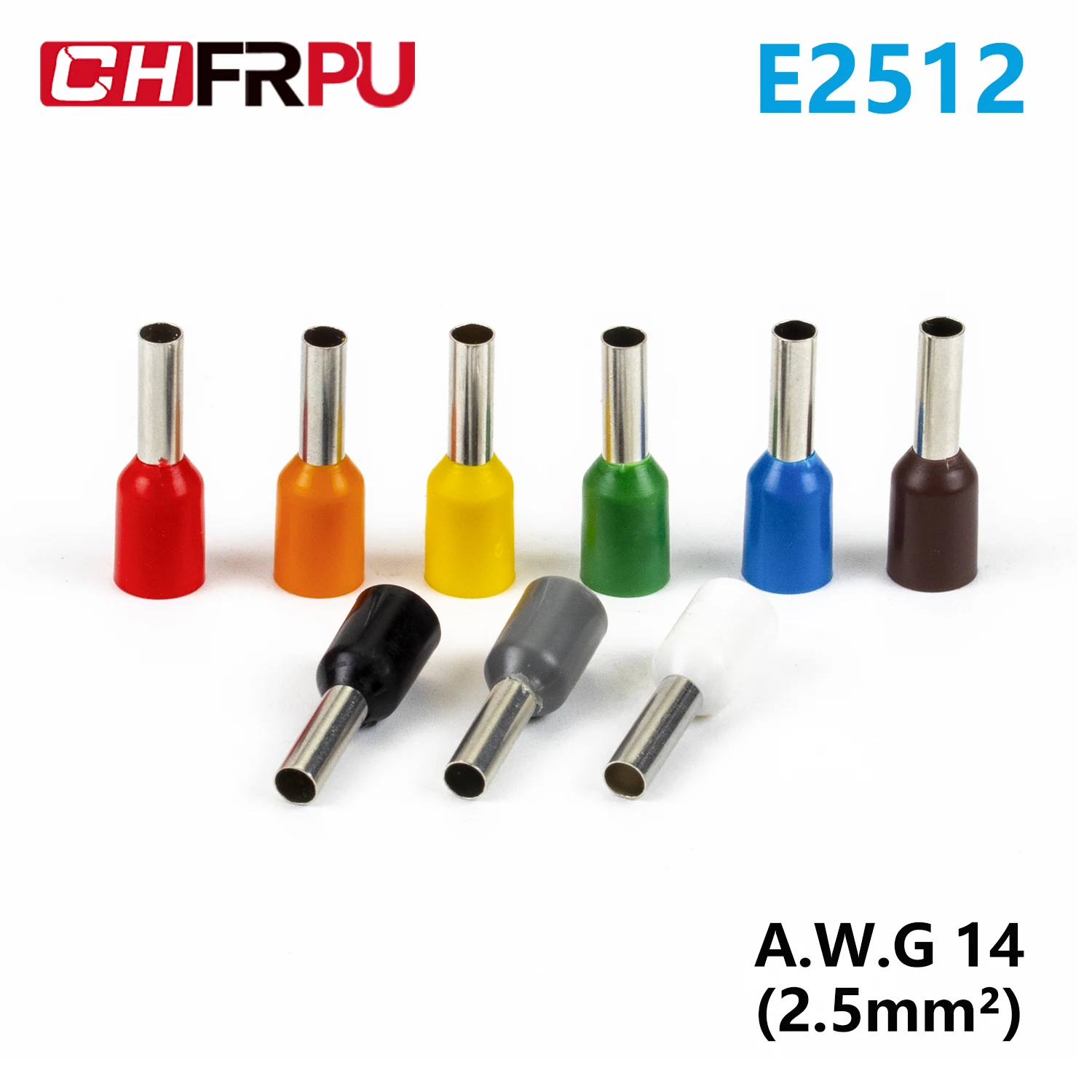
E2512 Insulated Wire Ferrules (AWG 14, 2.5mm²)
Official Store Deal
Expert Analysis Overview
The Foundation of Secure Connections
The E2512 Insulated Wire Ferrule is a critical component for any electrician or serious hobbyist seeking to establish robust and safe electrical terminations. This specific ferrule, designed for 2.5mm² (AWG 14) wire, addresses a fundamental vulnerability in electrical systems: the integrity of stranded wire connections. Unlike simply twisting wire strands or relying on screw terminals to clamp directly onto bare wire, these ferrules encapsulate the conductor, preventing fraying and ensuring consistent, low-resistance contact. This is a significant upgrade.Poor wire termination is a leading cause of electrical faults. Loose strands can lead to intermittent connections, increased resistance, and localized heating, which are precursors to equipment malfunction or, worse, electrical fires. The E2512 ferrule provides a professional, engineered solution to this pervasive problem. It ensures that every strand of the wire contributes to the current path, maximizing conductivity and minimizing potential hot spots. This small component plays a large role in system reliability.
Compared to traditional methods like tinning wire ends with solder, ferrules offer a superior mechanical connection that is less prone to fatigue and embrittlement. Solder can cold flow under pressure, leading to loose connections over time, especially in high-vibration environments. Ferrules maintain their form and contact pressure, providing a stable interface between the wire and the terminal block. This enhances long-term performance.
Precision Engineering for Conductive Integrity
The core of the E2512 ferrule is its tin-plated copper tube. Copper is renowned for its excellent electrical conductivity, ensuring minimal voltage drop and efficient power transfer. The tin plating serves a dual purpose: it enhances corrosion resistance and facilitates a better, more consistent crimp. Corrosion, particularly in humid or chemically active environments, can significantly increase contact resistance, leading to power loss and heat generation. Tin plating acts as a protective barrier.Precision sizing is paramount for effective wire termination. The E2512 designation specifically indicates compatibility with 2.5mm² wire, which corresponds to 14 AWG in the American Wire Gauge standard. This exact match ensures that the ferrule snugly fits the wire, allowing for a proper crimp that compresses the strands into a solid, unified mass. An undersized ferrule will not accommodate all strands, while an oversized one will result in a loose, ineffective crimp. Correct sizing is non-negotiable.
When installed correctly with a suitable crimping tool, the ferrule creates a gas-tight connection. This means that oxygen and moisture are excluded from the wire-to-ferrule interface, further preventing oxidation and maintaining low contact resistance over the lifespan of the connection. This level of protection is crucial for industrial control panels and sensitive electronic equipment. It ensures signal integrity.
The Shield of Safety: PVC Insulation
Beyond the conductive element, the insulated sheath of these ferrules is a critical safety feature. Made from flame-retardant PVC material, this insulation provides an essential barrier against accidental short circuits. In crowded terminal blocks or control cabinets, where wires are often routed in close proximity, the risk of an exposed conductor touching another live part is ever-present. The insulation mitigates this risk.The flame-retardant property of the PVC is a significant advantage. As demonstrated in the visual input, the material resists ignition and exhibits transient self-extinguishing characteristics when exposed to flame. This feature is vital in preventing the propagation of fire in the event of an electrical fault or external heat source. Electrical safety standards often mandate such material properties for components used in critical applications. It adds a layer of protection.
Furthermore, the availability of multi-color options for these E2512 ferrules is not merely aesthetic; it is a practical aid for organized and compliant wiring practices. Electricians often use color-coding to identify different phases, functions, or circuits within a system (e.g., red for L1, yellow for L2, blue for L3 in a three-phase system, or specific colors for control signals). This visual distinction simplifies installation, troubleshooting, and maintenance, reducing the likelihood of human error. Clear identification saves time and prevents mistakes.
Mastering the Crimp: A Professional Standard
The effectiveness of any ferrule connection hinges on the crimping method. The provided schematic diagram clearly outlines the four essential steps: preparing the terminals, inserting the stripped wire, securing with crimping pliers, and verifying the complete crimp. This process, while adding a minor step to wiring, is fundamental for achieving a reliable connection. Proper technique is key.Using a dedicated ferrule crimping tool is not optional; it is a requirement for a professional and safe installation. Unlike general-purpose pliers or wire strippers, a proper ferrule crimper applies uniform pressure around the ferrule, deforming the copper tube onto the wire strands in a controlled manner. This creates the necessary mechanical and electrical bond. An improper crimp, often resulting from using the wrong tool, can lead to a loose connection, high resistance, and potential overheating. Invest in the right tool.
The crimping process consolidates the individual strands of the wire into a single, solid-like pin. This prevents stray strands from causing short circuits and ensures that the entire cross-sectional area of the conductor is utilized for current flow. This is particularly important in applications where vibration or movement could otherwise cause strands to break or work loose from a screw terminal. A solid connection endures.
Longevity in Electrical Systems
The design of these ferrules directly contributes to the longevity and reliability of electrical systems. By protecting the delicate wire strands from the direct clamping force of screw terminals, ferrules prevent mechanical damage and fatigue. Repeated tightening or loosening of screw terminals on bare wire can weaken strands, leading to eventual breakage. Ferrules act as a buffer.In environments subject to vibration, such as industrial machinery or vehicles, bare wire connections are particularly susceptible to loosening. The encapsulated and crimped wire within a ferrule provides a more resilient termination that can withstand mechanical stress without compromising electrical contact. This reduces the need for frequent maintenance and re-tightening of terminals. Stability is paramount.
Furthermore, the consistent contact area provided by a properly crimped ferrule minimizes localized heating. Hot spots in electrical connections accelerate material degradation, leading to premature failure of both the wire and the terminal block. By distributing the current evenly across all wire strands and ensuring a low-resistance interface, ferrules help maintain cooler operating temperatures, extending the life of the entire electrical assembly. Cooler connections last longer.
Beyond the Basics: Real-World Applications
These E2512 ferrules find their most significant utility in applications involving terminal blocks, particularly in control panels, Programmable Logic Controllers (PLCs), motor control centers, and power distribution units. In these environments, numerous wires terminate into compact spaces, and reliability is non-negotiable. The ferrules provide a clean, organized, and secure interface.Consider a complex industrial control panel with hundreds of connections. Using ferrules ensures that each wire termination is uniform, professional, and easily identifiable by color. This not only speeds up the initial wiring process but also drastically simplifies troubleshooting when a fault occurs. An organized panel is a functional panel.
For hobbyists or DIY enthusiasts working on home automation projects, custom wiring harnesses, or automotive electrical repairs, these ferrules offer a significant upgrade in safety and professionalism. While perhaps not strictly required for every low-voltage application, adopting professional termination practices elevates the quality and safety of any electrical work. It's about doing it right.
The Investment in Reliability
At a price point of approximately 1.84 USD for 100 pieces, these E2512 insulated ferrules represent an exceptionally cost-effective investment in electrical safety and system reliability. The cost per termination is minimal, especially when weighed against the potential expenses associated with troubleshooting intermittent faults, repairing damaged equipment, or, in the worst case, addressing electrical fires. Prevention is cheaper than cure.Framing this purchase as an investment in long-term value, rather than a mere expense, highlights its true benefit. The time saved during installation due to organized wiring, the reduced downtime from reliable connections, and the peace of mind derived from enhanced safety all contribute to a significant return on investment. This small component delivers big returns.
Compared to the hidden costs of poor wiring practices—such as increased energy consumption from high-resistance connections, premature component failure, or the labor involved in repeatedly fixing loose wires—the initial outlay for these ferrules is negligible. They are a foundational element for any robust electrical system. Secure connections are efficient connections.