E-Simpo Multi-Pitch Breakaway Pin Headers
Official Store Deal
Expert Analysis Overview
The E-Simpo Multi-Pitch Breakaway Pin Header assortment is a critical component collection for electronics enthusiasts and professionals requiring versatile, reliable board-to-board or wire-to-board connections. This comprehensive set addresses a wide spectrum of prototyping and repair needs, offering a practical solution for integrating various PCB designs. The selection of pitches and configurations ensures broad compatibility across different electronic platforms, making it an indispensable resource for any workbench.
This collection features pin headers in four distinct pitches: 1.0mm, 1.27mm, 2.0mm, and 2.54mm. Each pitch serves a specific purpose in circuit design and integration. The 2.54mm pitch is the industry standard, widely recognized for its use with breadboards, Arduino boards, and general-purpose prototyping. It offers robust connections and is forgiving for manual soldering.
In contrast, the 2.0mm pitch provides a more compact footprint, suitable for designs where space is at a premium but still requires a relatively easy-to-handle component. This size is often found in smaller development boards and custom embedded systems. The pins are easily integrated.
Moving to even finer resolutions, the 1.27mm pitch (often referred to as 0.050-inch) is a common choice for high-density applications, frequently seen in surface-mount technology (SMT) conversion boards and compact microcontroller modules. This pitch demands greater precision during assembly. Finally, the 1.0mm pitch represents a micro-scale solution, ideal for the most space-constrained designs, such as miniature sensors or highly integrated custom PCBs. These varied pitches ensure that a designer is not limited by component availability when working on projects with diverse spatial requirements.
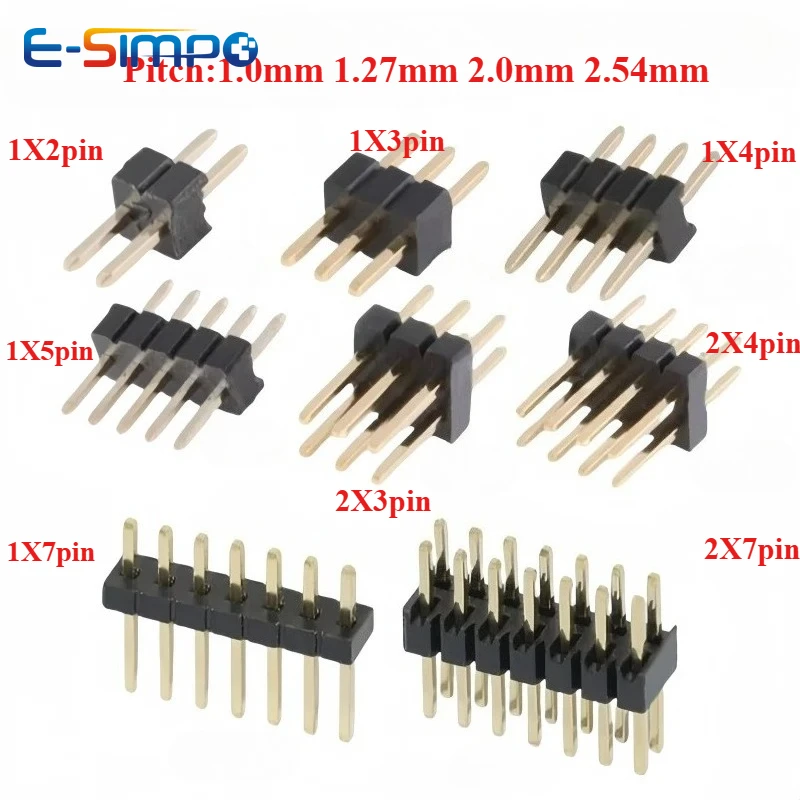
Visually, the pin headers feature gold-plated pins, which are critical for long-term connection reliability. Gold plating offers excellent corrosion resistance, preventing oxidation that can degrade signal integrity over time. This is a significant upgrade over tin-plated alternatives, which can tarnish and introduce intermittent connection issues, especially in humid or corrosive environments. The black plastic housing appears to be a standard high-temperature thermoplastic, likely PBT (Polybutylene Terephthalate) or Nylon, materials known for their electrical insulation properties and mechanical stability.
The pins themselves are straight, implying through-hole mounting. This method provides a strong mechanical connection to the PCB, crucial for components that might experience physical stress or vibration. Unlike surface-mount components, through-hole pins are less susceptible to detachment under moderate mechanical strain. This robust mounting method ensures the header remains firmly seated.
When compared to generic, unplated headers, the gold-plated pins offer superior electrical conductivity and a lower contact resistance. This translates directly into cleaner signal transmission, a vital factor for sensitive analog signals or high-speed digital data. The material choice directly impacts the longevity and performance of the electronic assembly, making these headers a more reliable choice for critical applications.
The assortment includes both single-row and double-row configurations, ranging from 1x2 (2-pin) up to 2x40 (80-pin) headers. This extensive range of pin counts provides immense flexibility for various applications. Single-row headers are perfect for simple connections, power distribution, or creating custom jumpers. They are straightforward to integrate.
Double-row headers, on the other hand, are essential for connecting larger integrated circuits, microcontrollers, or creating bus interfaces. Their parallel pin arrangement allows for compact, high-density connections, minimizing board space while maximizing connectivity. The breakaway design means users can snap off the exact number of pins required for a project, reducing waste and increasing cost-effectiveness. This modularity is a key advantage for prototyping.
In a scenario where a specific pin count is needed, the ability to break off sections prevents the need to stock numerous fixed-length headers. This flexibility streamlines inventory management for hobbyists and small-scale manufacturers. Unlike fixed-length headers that often lead to unused pins or require awkward modifications, these breakaway strips provide an exact fit every time, enhancing assembly efficiency.
Soldering these pin headers requires attention to detail, particularly with the finer pitches. For 2.54mm and 2.0mm pitches, standard soldering irons with fine tips are generally sufficient. Proper heat management is crucial to prevent cold solder joints or damage to the plastic housing. The gold plating facilitates excellent solder wetting, making the process smoother.
For 1.27mm and 1.0mm pitches, a finer tip soldering iron, possibly with temperature control, is recommended. A steady hand and good lighting are paramount to ensure each pin is properly connected without bridging adjacent pads. Using flux can significantly aid in achieving clean solder joints on these smaller components. Signal integrity is paramount.
Maintaining clean signal transmission is a primary concern for any connector. The gold-plated pins inherently reduce noise and impedance issues, which is especially beneficial in applications involving high-frequency signals or sensitive analog measurements. Unlike connectors with inferior plating that can introduce signal degradation, these headers provide a stable, low-resistance path, ensuring the integrity of data and power lines across the connection. This directly contributes to the overall reliability of the circuit.
This collection of pin headers offers significant long-term value, particularly for electronics repair and prototyping. Instead of replacing entire PCB assemblies due to a damaged connector, these affordable components allow for precise, localized repairs. This approach can save considerable expense, especially when dealing with specialized or vintage equipment. The cost-per-use becomes exceptionally low.
For prototyping, the versatility of pitches and pin counts means a single purchase can support numerous projects, from simple sensor interfaces to complex microcontroller breakouts. The ability to break off specific lengths minimizes material waste, further enhancing the economic efficiency. This strategic investment prevents future project delays caused by a lack of the correct connector. It is a smart investment.
Compared to purchasing individual, fixed-length headers, this assortment provides a comprehensive solution that adapts to evolving project requirements. The initial investment is quickly recouped through avoided costs of replacement parts and the efficiency gained in having the right component readily available. This makes the E-Simpo Multi-Pitch Breakaway Pin Headers a cost-effective and highly functional choice for any electronics professional or hobbyist.
Imagine the seamless integration of custom modules into your next embedded system, free from the frustration of incompatible connectors. Picture the satisfaction of reviving a valuable piece of equipment by simply replacing a worn-out header, extending its lifespan and functionality. This collection empowers precise, reliable connections, transforming complex electronic challenges into manageable tasks and ensuring your projects proceed with confidence and efficiency.
Precision in Pin Pitch: Adapting to Diverse Circuitry
This collection features pin headers in four distinct pitches: 1.0mm, 1.27mm, 2.0mm, and 2.54mm. Each pitch serves a specific purpose in circuit design and integration. The 2.54mm pitch is the industry standard, widely recognized for its use with breadboards, Arduino boards, and general-purpose prototyping. It offers robust connections and is forgiving for manual soldering.
In contrast, the 2.0mm pitch provides a more compact footprint, suitable for designs where space is at a premium but still requires a relatively easy-to-handle component. This size is often found in smaller development boards and custom embedded systems. The pins are easily integrated.
Moving to even finer resolutions, the 1.27mm pitch (often referred to as 0.050-inch) is a common choice for high-density applications, frequently seen in surface-mount technology (SMT) conversion boards and compact microcontroller modules. This pitch demands greater precision during assembly. Finally, the 1.0mm pitch represents a micro-scale solution, ideal for the most space-constrained designs, such as miniature sensors or highly integrated custom PCBs. These varied pitches ensure that a designer is not limited by component availability when working on projects with diverse spatial requirements.
Structural Integrity and Connection Reliability
Visually, the pin headers feature gold-plated pins, which are critical for long-term connection reliability. Gold plating offers excellent corrosion resistance, preventing oxidation that can degrade signal integrity over time. This is a significant upgrade over tin-plated alternatives, which can tarnish and introduce intermittent connection issues, especially in humid or corrosive environments. The black plastic housing appears to be a standard high-temperature thermoplastic, likely PBT (Polybutylene Terephthalate) or Nylon, materials known for their electrical insulation properties and mechanical stability.
The pins themselves are straight, implying through-hole mounting. This method provides a strong mechanical connection to the PCB, crucial for components that might experience physical stress or vibration. Unlike surface-mount components, through-hole pins are less susceptible to detachment under moderate mechanical strain. This robust mounting method ensures the header remains firmly seated.
When compared to generic, unplated headers, the gold-plated pins offer superior electrical conductivity and a lower contact resistance. This translates directly into cleaner signal transmission, a vital factor for sensitive analog signals or high-speed digital data. The material choice directly impacts the longevity and performance of the electronic assembly, making these headers a more reliable choice for critical applications.
Versatility in Configuration: Single and Double Row Options
The assortment includes both single-row and double-row configurations, ranging from 1x2 (2-pin) up to 2x40 (80-pin) headers. This extensive range of pin counts provides immense flexibility for various applications. Single-row headers are perfect for simple connections, power distribution, or creating custom jumpers. They are straightforward to integrate.
Double-row headers, on the other hand, are essential for connecting larger integrated circuits, microcontrollers, or creating bus interfaces. Their parallel pin arrangement allows for compact, high-density connections, minimizing board space while maximizing connectivity. The breakaway design means users can snap off the exact number of pins required for a project, reducing waste and increasing cost-effectiveness. This modularity is a key advantage for prototyping.
In a scenario where a specific pin count is needed, the ability to break off sections prevents the need to stock numerous fixed-length headers. This flexibility streamlines inventory management for hobbyists and small-scale manufacturers. Unlike fixed-length headers that often lead to unused pins or require awkward modifications, these breakaway strips provide an exact fit every time, enhancing assembly efficiency.
Assembly Considerations and Signal Integrity
Soldering these pin headers requires attention to detail, particularly with the finer pitches. For 2.54mm and 2.0mm pitches, standard soldering irons with fine tips are generally sufficient. Proper heat management is crucial to prevent cold solder joints or damage to the plastic housing. The gold plating facilitates excellent solder wetting, making the process smoother.
For 1.27mm and 1.0mm pitches, a finer tip soldering iron, possibly with temperature control, is recommended. A steady hand and good lighting are paramount to ensure each pin is properly connected without bridging adjacent pads. Using flux can significantly aid in achieving clean solder joints on these smaller components. Signal integrity is paramount.
Maintaining clean signal transmission is a primary concern for any connector. The gold-plated pins inherently reduce noise and impedance issues, which is especially beneficial in applications involving high-frequency signals or sensitive analog measurements. Unlike connectors with inferior plating that can introduce signal degradation, these headers provide a stable, low-resistance path, ensuring the integrity of data and power lines across the connection. This directly contributes to the overall reliability of the circuit.
Value Proposition for Prototyping and Repair
This collection of pin headers offers significant long-term value, particularly for electronics repair and prototyping. Instead of replacing entire PCB assemblies due to a damaged connector, these affordable components allow for precise, localized repairs. This approach can save considerable expense, especially when dealing with specialized or vintage equipment. The cost-per-use becomes exceptionally low.
For prototyping, the versatility of pitches and pin counts means a single purchase can support numerous projects, from simple sensor interfaces to complex microcontroller breakouts. The ability to break off specific lengths minimizes material waste, further enhancing the economic efficiency. This strategic investment prevents future project delays caused by a lack of the correct connector. It is a smart investment.
Compared to purchasing individual, fixed-length headers, this assortment provides a comprehensive solution that adapts to evolving project requirements. The initial investment is quickly recouped through avoided costs of replacement parts and the efficiency gained in having the right component readily available. This makes the E-Simpo Multi-Pitch Breakaway Pin Headers a cost-effective and highly functional choice for any electronics professional or hobbyist.
Imagine the seamless integration of custom modules into your next embedded system, free from the frustration of incompatible connectors. Picture the satisfaction of reviving a valuable piece of equipment by simply replacing a worn-out header, extending its lifespan and functionality. This collection empowers precise, reliable connections, transforming complex electronic challenges into manageable tasks and ensuring your projects proceed with confidence and efficiency.